
The short answer
Thailand’s March 1992 election produced a 195-seat pro-military coalition but no majority party. When that coalition replaced its elected nominee with coup leader Suchinda Kraprayoon—who had not stood for parliament—the constitutional compromise collapsed into protest, Black May and a second election.
Election results
The leading parties in the March 1992 House
A fragmented result left coalition negotiations—and the constitutional rules for choosing a premier—decisive.
| Political party | Seats | Vote share | Political alignment |
|---|---|---|---|
| Samakkhi Tham Party | 79 | 21.9% | Pro-military coalition |
| Chart Thai Party | 74 | 20.6% | Pro-military coalition |
| New Aspiration Party | 72 | 20.0% | Opposition |
| Democrat Party | 44 | 12.2% | Opposition |
| Palang Dharma Party | 41 | 11.4% | Opposition |
Chronology
A timeline of the turning points
The NPKC removes Chatichai
A military council dissolved the elected parliament and ended the government formed after the 1988 election.
A permanent constitution takes effect
The charter provided for a 360-seat elected House but left the premiership open to a non-MP.
Voters elect a new House
More than 2,800 candidates from fifteen groups contested 360 seats under the post-coup order.
Samakkhi Tham finishes first
The air-force-backed party won 79 seats; four allies brought the pro-military bloc to 195.
Narong Wongwan is nominated
Coalition parties first proposed the elected Samakkhi Tham leader for prime minister.
Suchinda becomes prime minister
The coup leader and army commander accepted office despite not having stood in the election.
Black May exposes the succession crisis
Mass protest against an unelected premier met lethal military force in Bangkok.
Suchinda resigns
The prime minister left office after forty-seven days amid public and coalition pressure.
The constitution is amended
The amended rule required the prime minister to be an elected member of parliament.
The House is dissolved
Anand Panyarachun’s interim government prepared another election for September.
Why was an election held after the 1991 coup?
The National Peace Keeping Council removed Chatichai Choonhavan’s elected coalition on 23 February 1991. It abolished the constitution and parliament, then appointed a legislature while Anand Panyarachun led an interim cabinet. The coup leaders promised that this period would end with a new constitutional order and national election.
The December 1991 Constitution created an elected House of Representatives but retained an appointed Senate and did not require the prime minister to hold an elected seat. That omission became the central flaw in the transition: voters could choose MPs, yet the military leadership preserved a path to the premiership outside the ballot.
Who contested the March 1992 election?
Fifteen political groups and more than 2,800 candidates competed for 360 seats. Samakkhi Tham, Chart Thai, Social Action, Thai Citizens and Rassadorn formed the core pro-military alignment. New Aspiration, the Democrats and Palang Dharma were presented as the principal opposition groups, although party factions and provincial networks complicated any simple two-bloc picture.
Palang Dharma’s anti-corruption campaign was especially successful in Bangkok. Led by former governor Chamlong Srimuang, it won 32 of the capital’s 35 constituencies. New Aspiration, created by former army commander Chavalit Yongchaiyudh, also demonstrated that senior military figures could build electoral parties outside the coup council’s preferred vehicle.
What were the election results?
Samakkhi Tham became the largest party with 79 seats and 21.9 per cent of votes. Chart Thai won 74, New Aspiration 72, the Democrats 44 and Palang Dharma 41. The pro-military five-party coalition controlled 195 seats—54 per cent of the House—but no individual party approached the 181 seats required for a majority.
The IPU recorded 32,432,087 registered electors and 19,224,201 voters, a turnout of 59.27 per cent. It also recorded 832,350 blank or invalid ballots and only twelve women among the 360 MPs. The figures show a competitive election inside institutions still designed by the coup authorities.
Why did Narong Wongwan not become prime minister?
Coalition negotiators nominated Samakkhi Tham leader Narong Wongwan on 25 March. The choice offered an elected route to the premiership and reflected his party’s first-place finish. Within two weeks, however, allegations linking him to the drug trade made the nomination politically and internationally difficult. Narong denied wrongdoing, but the coalition replaced him.
The episode transferred leverage from parliament back to the coup leadership. It did not legally force the choice of an unelected general; it made that outcome possible within a constitution that had deliberately left the qualification open.
How did Suchinda become prime minister?
Suchinda Kraprayoon, a principal architect of the 1991 coup and commander of the army, became prime minister on 7 April even though he had not contested the election. He had earlier indicated that he would not seek the post. His appointment therefore appeared to many voters as a broken promise and as evidence that the election had legitimised a military succession rather than transferred power.
A cabinet announced on 17 April rested on the 195-seat coalition. Formal parliamentary support was real, but so was the democratic objection: the executive leader had not asked voters for a mandate, while the appointed Senate contained a large military and police presence.
How did the election lead to Black May?
Campaigns demanding an elected prime minister grew through April and May. Chamlong became the most visible leader, but students, professionals, civic organisations, opposition parties and ordinary Bangkok residents formed a much broader movement. On 17 May, a major demonstration near Democracy Monument became a confrontation with security forces.
Troops used lethal force, arrests and censorship over the following days. The crisis de-escalated after a televised royal audience involving King Bhumibol, Suchinda and Chamlong, but public and coalition pressure continued. Suchinda resigned on 24 May, only weeks after the coalition installed him.
What changed after the March election failed?
Parliament amended the constitution on 10 June so that the prime minister had to be an elected MP. Anand returned as interim premier, reduced the military’s immediate political role and dissolved the House at the end of June. A second election was set for 13 September.
The March election remains important because it was neither simply fraudulent nor fully democratic. Votes and party results mattered, but institutional rules let a coup leader bypass electoral accountability. The confrontation between those two forms of authority produced Black May and made the elected-premier principle a durable public expectation.
Continue the chronology
Related history guides
The 1991 Thai Coup
Begin with the intervention and constitution that structured the March vote.
Read the timeline17–20 May 1992Black May 1992
Follow the mass protest and lethal crackdown produced by the unelected succession.
Read the timeline13 September 1992The September 1992 Thai General Election
Continue to the second vote and Chuan Leekpai’s civilian coalition.
Read the timeline1851–todayThailand History Timeline
Place the two 1992 elections inside Thailand’s longer constitutional sequence.
Read the timeline1932–presentPrime Ministers of Thailand
Compare Suchinda’s route to office with every officially numbered premier.
Read the timelineConnected biographies
Six biographies connecting the post-coup election, premiership crisis and democratic response
 Thailand · Politics
1933—2025
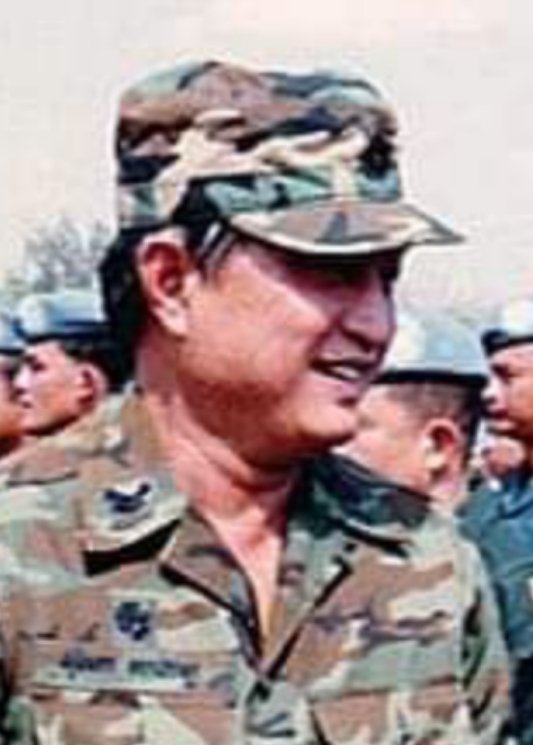
Suchinda Kraprayoon
Army commander, 1991 coup leader and former prime ministerThe army commander who helped lead the 1991 coup, became prime minister without winning a House seat and resigned after the Black May violence of 1992.Read biography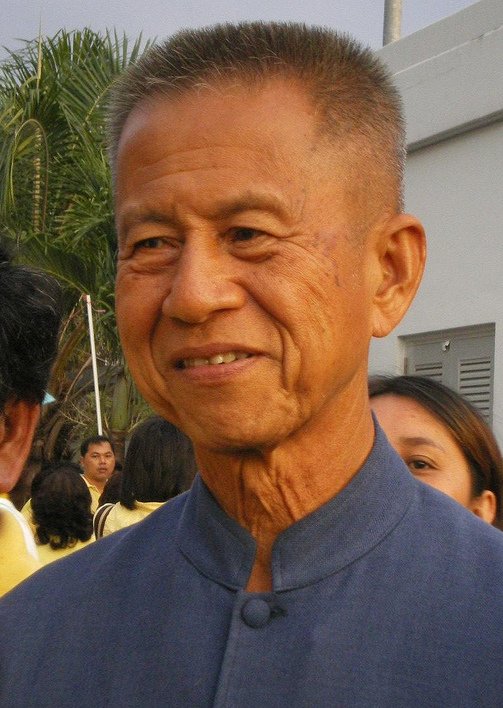 Thailand · Politics
1935—
Chamlong Srimuang
Former Bangkok governor, party leader and democracy activistThe former general and Bangkok governor whose austere public-service image, Palang Dharma movement and Black May leadership made him a major democratic campaigner.Read biography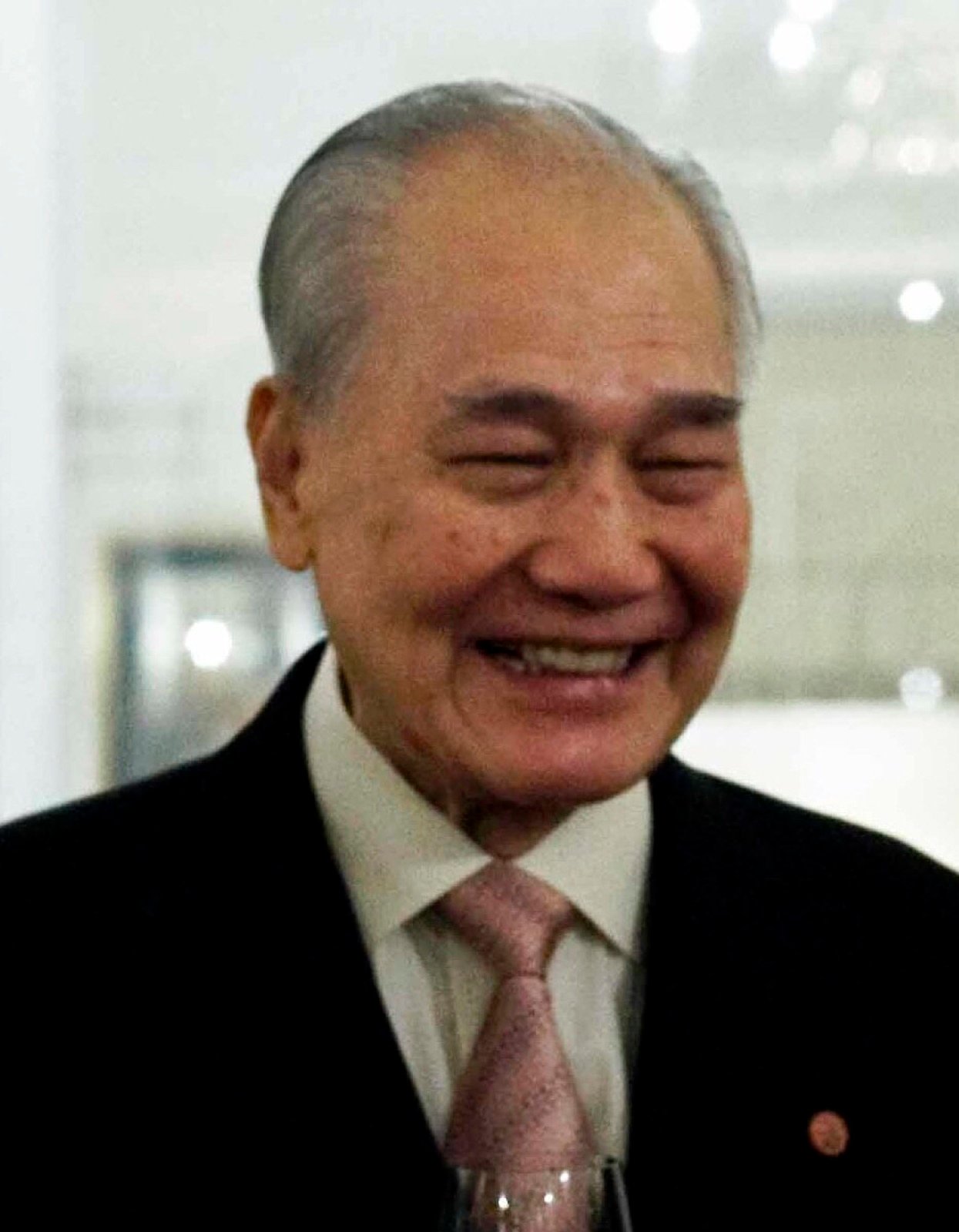 Thailand · Politics
1932—
Anand Panyarachun
Diplomat, business executive and former prime ministerA career diplomat and business leader who headed two appointed governments in 1991 and 1992 and later chaired major national and United Nations reform work.Read biography Thailand · Politics
1932—
Chavalit Yongchaiyudh
Retired general and former prime ministerA former army commander who entered electoral politics, formed the New Aspiration Party and served as prime minister as the baht crisis became a regional financial shock.Read biography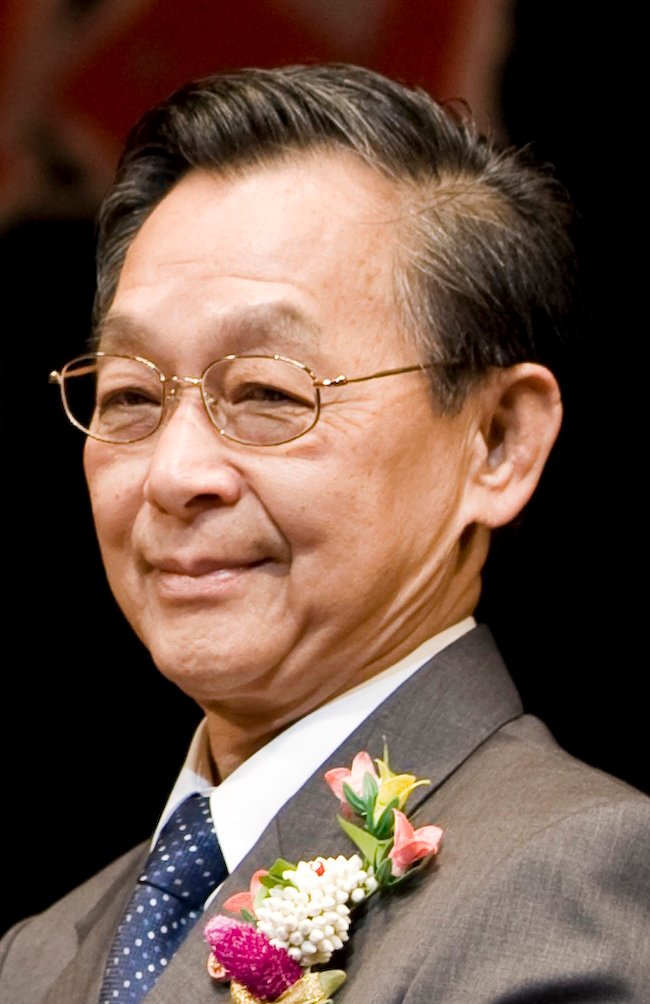 Thailand · Politics
1938—
Chuan Leekpai
20th Prime Minister of Thailand, 1992–1995 and 1997–2001The lawyer and veteran parliamentarian who led Thailand after the 1992 democratic transition and returned during the Asian financial crisis.Read biography Thailand · Politics
1927—2016
Bhumibol Adulyadej
King of Thailand, 1946–2016Thailand’s longest-reigning monarch, whose seven decades on the throne spanned rapid development, repeated political crises and profound social change.Read biographyQuick answers
Common questions
- When was Thailand’s first 1992 general election?
- It was held on 22 March 1992 under the constitution adopted after the February 1991 coup.
- Which party won the most seats in March 1992?
- Samakkhi Tham won 79 of 360 seats, ahead of Chart Thai on 74 and New Aspiration on 72.
- What was voter turnout?
- The Inter-Parliamentary Union recorded 19,224,201 voters and turnout of 59.27 per cent.
- Did Suchinda Kraprayoon run in the election?
- No. He was army commander and a 1991 coup leader, but the 1991 Constitution allowed a non-MP to become prime minister.
- Why was there another election in September 1992?
- Black May forced Suchinda’s resignation, the constitution was amended to require an elected premier and the House was dissolved for a new vote.
- How many seats did the pro-military coalition control?
- Samakkhi Tham and four allied parties held 195 of 360 seats, about 54 per cent of the House.
Primary and institutional sources
How this history was checked
Dates, legal milestones and historical claims are checked against the official and institutional records below. This article was reviewed on 3 October 2026.
- Inter-Parliamentary UnionThailand parliamentary election, 22 March 1992
- ConstitutionNet · International IDEAConstitutional history of Thailand
- Human Rights WatchWorld Report 1993: Thailand
- Amnesty InternationalArrests and killings during Thailand’s May 1992 demonstrations
- Secretariat of the Prime Minister of ThailandOfficial directory of prime ministers of Thailand
- Associated PressFormer Prime Minister Suchinda Kraprayoon dies at 91
- Wikimedia CommonsSuchinda Kraprayoon portrait and licence record