In this biography
Quick facts
- Born
- 6 August 1933
- Died
- 10 June 2025
- Birthplace
- Thonburi, Siam
- Country
- Thailand
- Nationality
- Thai
- Known for
- A seven-week premiership that ended after the Black May crackdown
- Military office
- Army commander-in-chief, 1990–1992
- Coup role
- NPKC member, February 1991
- Prime minister
- 7 April – 24 May 1992
- Died
- 10 June 2025, aged 91
Why this life matters
Suchinda’s brief government became the central test of whether post-coup military authority could be converted into a civilian premiership without a direct electoral mandate.
Timeline
Key moments
Born in Thonburi
Born on 6 August in what is now part of Bangkok.
Entered the professional army
Studied at Chulachomklao Royal Military Academy and began a career in the Royal Thai Army.
Became army commander
Succeeded Chavalit Yongchaiyudh as commander-in-chief during the elected Chatichai government.
Helped lead a military coup
The National Peace Keeping Council removed Chatichai Choonhavan and installed an interim political order.
A general election returns a fragmented House
Parties associated with the coup coalition secured enough support to nominate Suchinda despite his not standing for election.
Became prime minister
Accepted appointment as Thailand’s nineteenth officially numbered prime minister.
Black May protests are violently suppressed
Security forces fired on demonstrators opposing an unelected military leader as prime minister.
Resigned from office
Left the premiership after the crackdown, a televised royal audience and continued political pressure.
Died in Bangkok
Died at Phramongkutklao Hospital on 10 June at the age of ninety-one.
A career built inside the armed forces
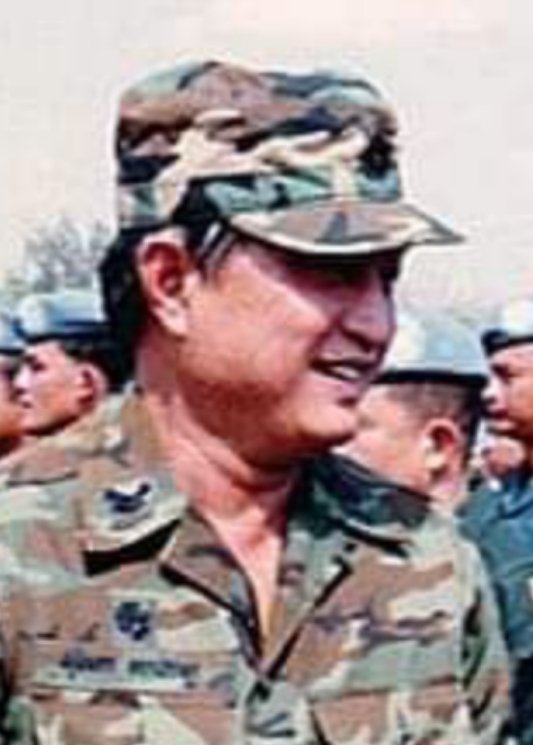
Suchinda Kraprayoon was born in Thonburi on 6 August 1933. He studied briefly at Chulalongkorn University before entering Chulachomklao Royal Military Academy. His army career included command and staff education, service during Thailand’s Cold War security campaigns and promotion through a generation of officers who became influential in the late 1980s and early 1990s.
He became army commander-in-chief in April 1990 and later supreme commander. Those offices placed him at the centre of civil–military relations during Chatichai Choonhavan’s elected coalition, which senior officers accused of corruption and interference in military affairs. Such criticisms became the public justification for direct intervention.
The 1991 coup and Anand interim government
On 23 February 1991, the National Peace Keeping Council overthrew Chatichai while he was travelling to meet the king. Suchinda was a leading member of the coup group, although armed-forces supreme commander Sunthorn Kongsompong served as its formal head. The council repealed the constitution, dissolved parliament and detained the prime minister.
The military selected Anand Panyarachun to head an interim civilian cabinet. Anand’s government pursued administrative and economic changes while a new constitution and election rules were prepared under coup authority. Suchinda remained army commander and one of the most powerful figures behind the transition, making the question of who would lead the post-election government unavoidable.
From coup authority to the premiership
The March 1992 election produced a fragmented House. A coalition of parties associated with the military nominated Suchinda even though he had not stood as a candidate or won a seat. His acceptance contradicted earlier expectations that the prime minister would be an elected politician and gave the opposition a clear focus: the constitutional issue was not only whether parliament had voted, but whether a coup leader could use that parliament to legitimise military succession.
King Bhumibol appointed Suchinda prime minister on 7 April. He also held the defence portfolio and formed a cabinet that included politicians criticised for their links to the coup order. Demonstrations grew in Bangkok, with former governor Chamlong Srimuang becoming the most visible protest leader and beginning a hunger strike for constitutional change.
Black May and a seven-week government
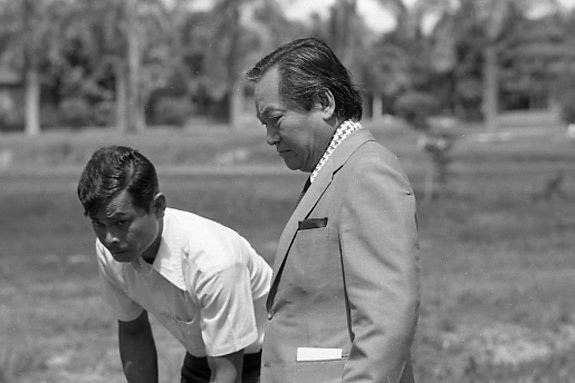
On 17 May, a very large rally moved from Sanam Luang toward Government House. Confrontations near Phan Fa Bridge were followed by gunfire, arrests, beatings and military operations over several days. Official figures recorded at least fifty-two deaths, hundreds of injuries and many missing people; medical volunteers and rights monitors believed the true death toll was higher.
The government restricted news coverage and detained Chamlong, but images and testimony spread internationally. On 20 May, a televised royal audience showed Suchinda and Chamlong kneeling before King Bhumibol, who urged an end to the confrontation. The intervention helped open a route out of the immediate crisis, but mass mobilisation, casualties, institutional pressure and the loss of political support had already made the government untenable. Suchinda resigned on 24 May.
Amnesty, retirement and historical responsibility
An amnesty decree protected those involved in the confrontation from ordinary prosecution, and no senior commander was convicted for the deaths. Anand returned as interim prime minister, constitutional amendments strengthened the expectation that a premier should be an elected MP, and the September election produced a Democrat-led coalition under Chuan Leekpai.
Suchinda withdrew from frontline politics and rarely addressed the events publicly. He died in Bangkok on 10 June 2025 at ninety-one. His record remains inseparable from both the 1991 overthrow and the 1992 crackdown: a short premiership whose failure shifted public expectations toward elected civilian leadership without permanently ending military intervention in Thai politics.
Quick answers
Frequently asked questions about Suchinda Kraprayoon
- Who was Suchinda Kraprayoon?
- Suchinda Kraprayoon was an army commander, 1991 coup leader and former prime minister. Suchinda’s brief government became the central test of whether post-coup military authority could be converted into a civilian premiership without a direct electoral mandate.
- What is Suchinda Kraprayoon best known for?
- Suchinda Kraprayoon is best known for a seven-week premiership that ended after the Black May crackdown.
- When and where was Suchinda Kraprayoon born?
- Suchinda Kraprayoon was born on 6 August 1933 in Thonburi, Siam.
- When did Suchinda Kraprayoon die?
- Suchinda Kraprayoon died on 10 June 2025.
Sources and further reading
How this biography was checked
Core dates and offices are checked against the sources below. This profile was last reviewed on 3 October 2026.
- Associated PressThailand’s former Prime Minister Suchinda Kraprayoon dies at 91
- Secretariat of the Prime Minister of ThailandOfficial directory of prime ministers of Thailand
- Amnesty InternationalChamlong Srimuang and others arrested or killed during protest demonstrations
- Inter-Parliamentary UnionThailand parliamentary election archive, 1992
- Wikimedia CommonsBlack May 1992 event photograph and licence record
- Wikimedia CommonsSuchinda Kraprayoon portrait and licence record