In this biography
Quick facts
- Born
- 5 July 1935
- Birthplace
- Thonburi, Siam
- Country
- Thailand
- Nationality
- Thai
- Known for
- Leading the mass campaign against Suchinda’s unelected premiership in 1992
- Born
- 5 July 1935, Thonburi
- Bangkok governor
- 1985–1992
- Party founded
- Palang Dharma Party, 1988
- Award
- Ramon Magsaysay Award for Government Service, 1992
Why this life matters
Chamlong connected elected urban government, moral reform politics and nonviolent mass mobilisation, then later became a controversial leader of anti-government protest alliances.
Timeline
Key moments
Born in Thonburi
Born on 5 July to a family of modest means in what is now Bangkok.
Graduated from military academy
Completed Chulachomklao Royal Military Academy and entered army service.
Joined the prime minister’s office
Served as executive secretary to Prime Minister Prem Tinsulanonda before returning to the army.
Won election as Bangkok governor
Resigned from the army and defeated established political organisations with a clean-government campaign.
Founded Palang Dharma
Turned a civic network into the Moral Force party and expanded from city administration into national politics.
Won a second term as governor
Secured re-election after campaigns on services, probity and citizen participation.
Led the Black May mobilisation
Used a hunger strike and mass rallies to oppose Suchinda Kraprayoon’s unelected premiership and was detained during the crackdown.
Received the Magsaysay Award
Was recognised for public service and his insistence that elections were the legitimate route to political power.
Joined a new protest alliance
Became a leader of the People’s Alliance for Democracy in campaigns against Thaksin- and People Power Party-led governments.
Military training and an austere public ethic
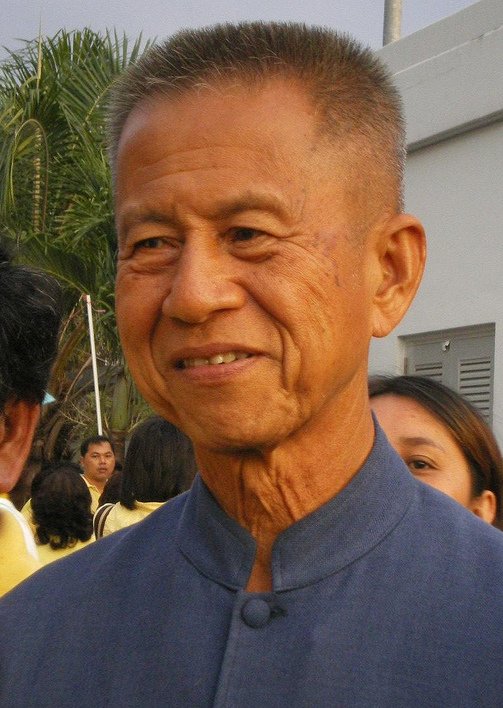
Chamlong Srimuang was born in Thonburi on 5 July 1935 and worked through school before entering Chulachomklao Royal Military Academy. His army career included service connected to conflicts in Laos and Vietnam and further study in management. By 1980 he was executive secretary to Prime Minister Prem Tinsulanonda, placing him close to the centre of the semi-democratic political system of the period.
Chamlong practised the disciplined, vegetarian and materially simple life associated with the Santi Asoke Buddhist movement. Supporters saw this austerity as evidence that moral self-control could make government less corrupt. Critics later questioned whether a politics framed in moral absolutes left enough room for compromise, but the personal example was central to his electoral appeal.
An elected governor promising clean government
He resigned from the army and ran for Bangkok governor in 1985 without the machinery of an established national party. His campaign rejected vote buying, personal attacks and large political donations. He won and built an administration associated with stricter financial conduct, stronger tax collection, street and market management, flood and traffic measures, and highly visible appeals for citizens to take responsibility for the city.
Chamlong refused his official salary and many of the privileges attached to office. The symbolism sometimes overshadowed the mixed practical results of city policy, but voters returned him in a landslide in 1990. His success showed that an executive office chosen directly by urban voters could become a national platform independent of military appointment or a traditional party machine.
Palang Dharma and the Black May campaign
Chamlong founded the Palang Dharma Party in 1988. In the March 1992 election, it won thirty-two of Bangkok’s thirty-five House seats, making his movement the capital’s dominant electoral force even though it did not control parliament nationally. When coup leader Suchinda Kraprayoon accepted the premiership without winning a seat, Chamlong resigned the governorship and became the most visible organiser demanding an elected prime minister.
He began a hunger strike and led mass demonstrations that grew through May. Security forces fired on protesters after the 17 May march, and authorities detained Chamlong the next day. His televised appearance with Suchinda before King Bhumibol on 20 May became the best-known image of the crisis. Suchinda resigned four days later, but the transition resulted from sustained mobilisation, deaths, institutional pressure and political defections as well as the royal intervention.
Award, parliamentary politics and Thaksin’s rise
The Ramon Magsaysay Award Foundation honoured Chamlong for Government Service in 1992, citing both his Bangkok record and insistence on elections as the legitimate route to power. He later served as deputy prime minister in Chuan Leekpai’s coalition. Palang Dharma struggled outside Bangkok, and internal disputes weakened it as a national organisation.
Chamlong brought telecommunications entrepreneur Thaksin Shinawatra into party politics and eventually transferred party leadership to him. Thaksin later left to create Thai Rak Thai, while Palang Dharma disappeared. The relationship became historically ironic: the mentor who helped open a route for Thaksin would later mobilise against his governments and political network.
PAD leadership and a contested democratic legacy
From 2006, Chamlong became one of the leaders of the People’s Alliance for Democracy. The movement accused Thaksin of corruption and abuse of power and helped build the mobilisation preceding the 2006 coup. In 2008, PAD occupied Government House and Bangkok’s airports while demanding the fall of elected, Thaksin-aligned administrations. Chamlong was arrested during that confrontation and continued to defend the campaign as resistance to corrupt rule.
Those later actions complicate the democratic reputation created in 1992. Chamlong championed elections against a military premier, yet subsequently worked with a movement willing to obstruct elections and call for partially appointed representation. His biography therefore shows how moral reform, electoral legitimacy and extra-parliamentary protest can align in one crisis and pull in different directions in another.
Quick answers
Frequently asked questions about Chamlong Srimuang
- Who is Chamlong Srimuang?
- Chamlong Srimuang is a former Bangkok governor, party leader and democracy activist. Chamlong connected elected urban government, moral reform politics and nonviolent mass mobilisation, then later became a controversial leader of anti-government protest alliances.
- What is Chamlong Srimuang best known for?
- Chamlong Srimuang is best known for leading the mass campaign against Suchinda’s unelected premiership in 1992.
- When and where was Chamlong Srimuang born?
- Chamlong Srimuang was born on 5 July 1935 in Thonburi, Siam.
Sources and further reading
How this biography was checked
Core dates and offices are checked against the sources below. This profile was last reviewed on 3 October 2026.
- Ramon Magsaysay Award FoundationChamlong Srimuang: 1992 Ramon Magsaysay Awardee
- South East Asia ResearchThe Three Paths of Major-General Chamlong Srimuang
- Amnesty InternationalChamlong Srimuang and others arrested or killed during protest demonstrations
- Associated PressThailand’s former Prime Minister Suchinda Kraprayoon dies at 91
- Human Rights WatchWorld Report 2009: Thailand
- Wikimedia CommonsChamlong Srimuang portrait and licence record