
The short answer
The 1991 coup removed an elected coalition just as parliamentary politicians were gaining authority over Thailand’s government and regional economic policy. Military leaders promised cleaner rule and a rapid return to elections. Instead, the post-coup constitution enabled army commander Suchinda Kraprayoon to become an unelected prime minister—and the experiment ended in the Black May killings.
Chronology
A timeline of the turning points
An election strengthens parliamentary politicians
Chart Thai emerged as the largest party and Chatichai Choonhavan formed a multiparty coalition after Prem Tinsulanonda declined to remain prime minister.
Chatichai becomes prime minister
An elected party leader replaced a military figure who had governed through parliamentary support for eight years.
Economic diplomacy and coalition patronage expand
Rapid growth accompanied the “battlefields into marketplaces” strategy, while allegations of corruption and disputes over contracts intensified.
Army leadership changes
Suchinda Kraprayoon succeeded Chavalit Yongchaiyudh as commander-in-chief as civil–military relations deteriorated.
The armed forces remove Chatichai
The National Peace Keeping Council detained the prime minister, abolished the constitution, dissolved parliament and imposed martial law.
The NPKC consolidates authority
Supreme commander Sunthorn Kongsompong formally headed the council, with army chief Suchinda among its most powerful leaders.
Anand Panyarachun forms an interim government
The respected diplomat and business leader headed a civilian-labelled cabinet operating under coup authority.
A new constitution is promulgated
The charter restored an elected House but did not require the prime minister to be a member of parliament.
Thailand holds a general election
Military-aligned parties assembled a House majority but struggled to agree on a premier from among elected politicians.
Suchinda accepts the premiership
The coup leader became prime minister without contesting the election, triggering a growing legitimacy crisis.
Black May ends the succession project
Troops killed protesters opposing an unelected premier; Suchinda resigned and Anand returned for a second interim administration.
What political order did the coup overthrow?
Thailand’s July 1988 election brought Chatichai Choonhavan’s Chart Thai Party to the head of a multiparty coalition. Prem Tinsulanonda had governed since 1980 without leading an electoral party, supported by parliament, senior officers and palace networks. Chatichai’s appointment therefore marked a stronger role for elected politicians in cabinet formation.
His government presided over rapid economic growth and a foreign-policy turn toward trade with Cambodia, Laos and Vietnam. Yet coalition bargaining also generated persistent accusations that ministers divided contracts and concessions as spoils. The “buffet cabinet” label captured public concern about corruption, but it later became part of the military’s argument that an elected government should be displaced rather than challenged through parliament, investigation or the next election.
Why did military leaders intervene?
Coup leaders publicly accused the government of unusually extensive corruption, attacking independent institutions and attempting to interfere in military affairs. Tension over promotions and command succession mattered as much as abstract concern for clean administration. By 1990, army command had passed to Suchinda Kraprayoon and a tightly connected group of senior officers.
Chatichai’s effort to shift authority over security and economic policy toward politicians threatened established military influence. Academic studies therefore treat the coup as both a response to coalition misconduct and a struggle over which institution controlled the state. Allegations against ministers were politically serious, but the armed forces did not wait for judicial findings, a confidence vote or an election to resolve them.
Who carried out the 23 February coup?
The takeover was announced in the name of the National Peace Keeping Council. Armed-forces supreme commander Sunthorn Kongsompong served as its formal head. Army commander Suchinda Kraprayoon, air force and navy leaders and other senior officers formed the council’s core, making it an intervention by the top command rather than a rebellious junior faction.
Forces occupied strategic sites while Chatichai was detained. The council abolished the 1978 Constitution, dissolved the elected House and Senate, imposed martial law and restricted political activity. The seizure itself met little armed resistance, but describing it simply as bloodless hides the coercion built into detention, censorship and the elimination of an elected constitutional order—and the lethal outcome of the succession plan one year later.
Why was Anand appointed prime minister?
The NPKC selected Anand Panyarachun, a former diplomat and business leader, to head an interim cabinet on 2 March. He was not a member of the coup group and brought domestic and international credibility that uniformed leaders lacked. His technocratic government pursued changes in taxation, competition, environmental policy and administrative practice while preparing a new constitutional framework.
Anand’s relative independence did not transform the origin of his authority: the elected legislature had been abolished, and an appointed assembly operated under the post-coup order. His premiership demonstrates why “civilian government” and “democratic government” are not synonyms. Capable ministers could make reforms while the military still controlled the timetable and basic rules of political return.
How did the coup lead to Black May?
The December 1991 Constitution restored an elected House but allowed a prime minister who was not an MP. After the March 1992 election, five parties assembled a majority. Their first prospective nominee became politically untenable, and the coalition then turned to Suchinda, who had not contested a seat and had previously encouraged expectations that he would not take the office.
Suchinda’s appointment converted a debate over constitutional wording into a direct question of military succession. Chamlong Srimuang, opposition parties, students and civic groups demanded a premier with an elected mandate. Troops opened fire during the May confrontation, at least fifty-two people died according to official figures and hundreds were injured. Suchinda resigned on 24 May, and Anand returned while amendments strengthened the expectation that a prime minister should come from the elected House.
What is the coup’s longer legacy?
Black May badly damaged the military’s claim that the 1991 intervention had restored honest and orderly government. The September 1992 election produced a civilian coalition under Chuan Leekpai, and direct military rule receded for more than a decade. The crisis also strengthened public attachment to an elected prime minister even though later constitutions changed the formal rule more than once.
The armed forces returned through coups in 2006 and 2014, again citing corruption, conflict and political paralysis. The 1991 episode remains a useful warning against reading a coup only at the moment tanks appear: its most important consequences emerged through the appointed interim order, constitutional design, managed election and failed attempt to convert military power into a parliamentary premiership.
Continue the chronology
Related history guides
The 1983 Thai General Election
Begin with the constitutional and electoral development of Prem’s hybrid order.
Read the timeline9 September 1985The 1985 Thai Coup Attempt
Compare the failed one-day rebellion with the wider command coalition assembled in 1991.
Read the timeline27 July 1986The 1986 Thai General Election
Trace the coalition and army realignment that shaped the end of the Prem era.
Read the timeline24 July 1988The 1988 Thai General Election
Read the election, Prem–Chatichai transfer and politician-led government the coup ended.
Read the timeline22 March 1992The March 1992 Thai General Election
Follow the post-coup election, coalition result and Suchinda’s appointment.
Read the timeline17–20 May 1992Black May 1992
Follow the mass campaign, military crackdown and resignation that ended the coup leaders’ succession project.
Read the timeline1932–presentPrime Ministers of Thailand
Compare elected coalition leaders, coup-era appointees and repeat terms across the full officeholder list.
Read the timeline1851–presentThailand History Timeline
Place the 1991 takeover inside the longer contest over military, electoral and royal authority.
Read the timeline19 September 2006The 2006 Thai Coup
Compare the later intervention’s justification, constitutional repeal and appointed transition.
Read the timelineConnected biographies
Six lives connecting elected government, military command, interim rule and the Black May challenge
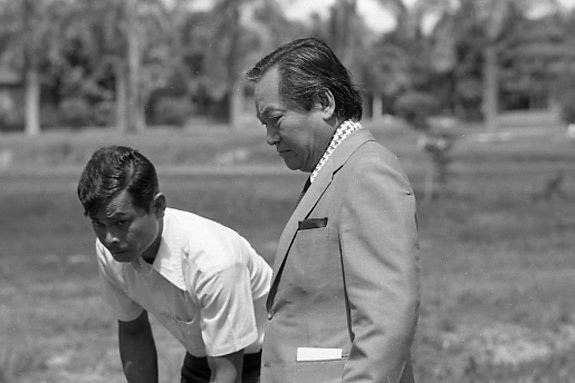 Thailand · Politics
1920—1998
Chatichai Choonhavan
Diplomat, party leader and former prime ministerThe elected prime minister who accelerated economic diplomacy with Indochina and led a booming coalition government until the military removed it in February 1991.Read biography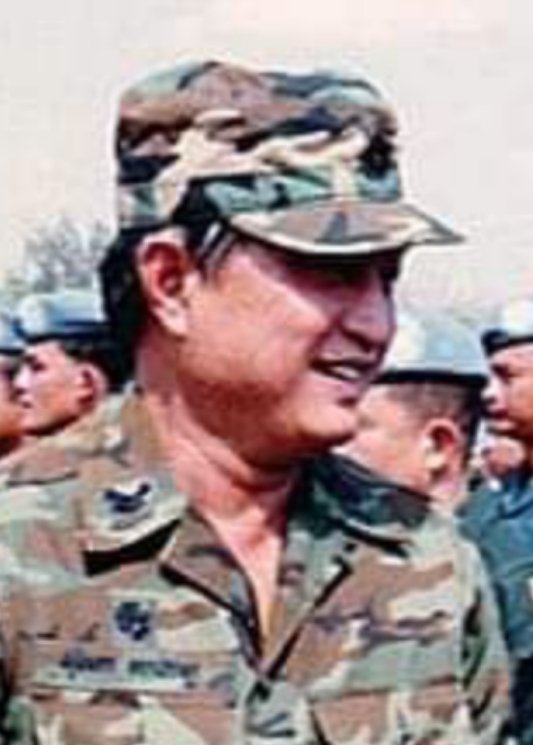 Thailand · Politics
1933—2025
Suchinda Kraprayoon
Army commander, 1991 coup leader and former prime ministerThe army commander who helped lead the 1991 coup, became prime minister without winning a House seat and resigned after the Black May violence of 1992.Read biography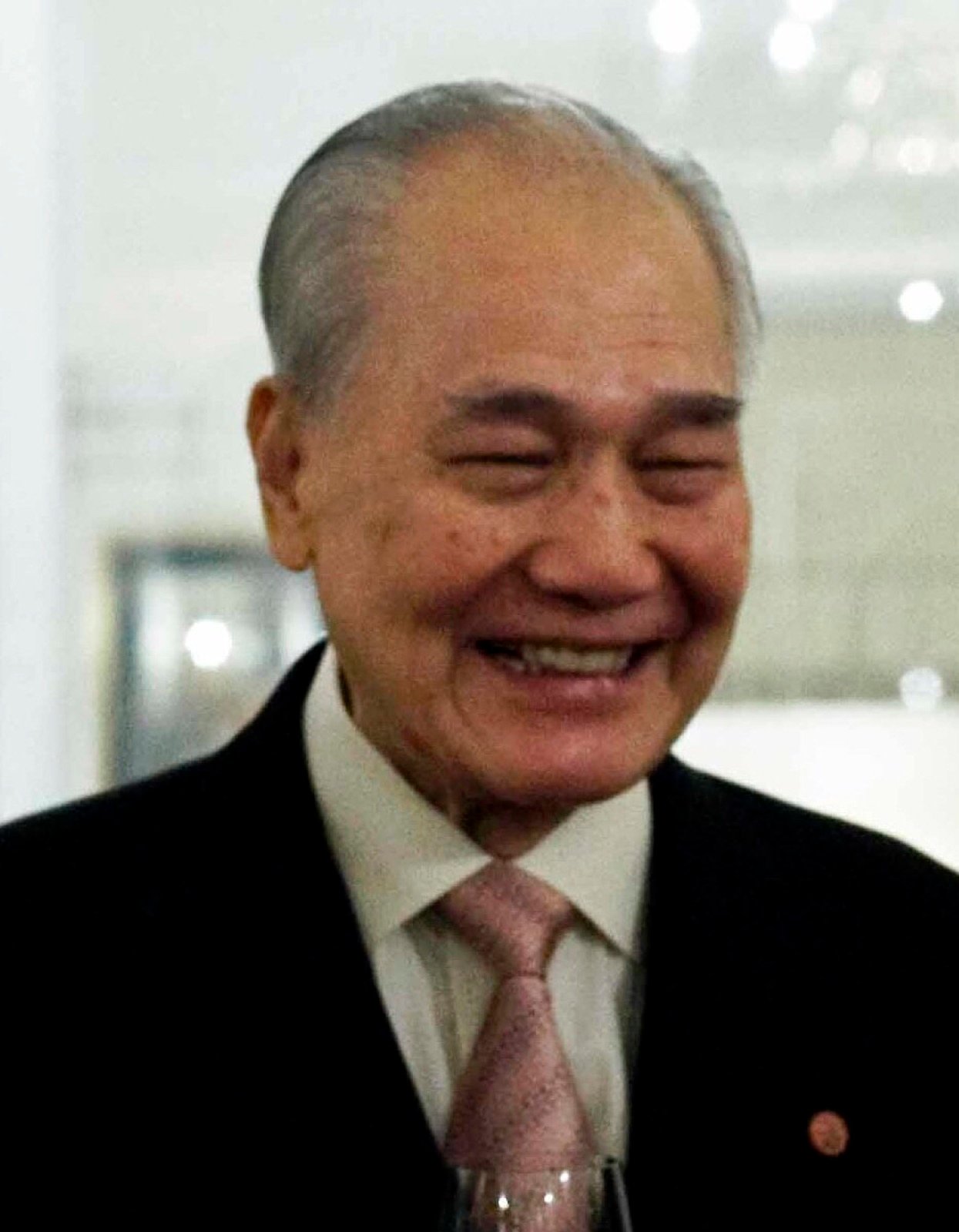 Thailand · Politics
1932—
Anand Panyarachun
Diplomat, business executive and former prime ministerA career diplomat and business leader who headed two appointed governments in 1991 and 1992 and later chaired major national and United Nations reform work.Read biography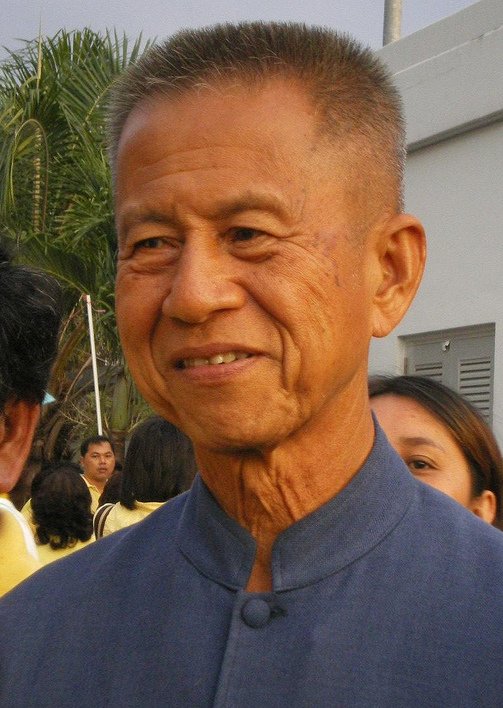 Thailand · Politics
1935—
Chamlong Srimuang
Former Bangkok governor, party leader and democracy activistThe former general and Bangkok governor whose austere public-service image, Palang Dharma movement and Black May leadership made him a major democratic campaigner.Read biography Thailand · Politics
1932—
Chavalit Yongchaiyudh
Retired general and former prime ministerA former army commander who entered electoral politics, formed the New Aspiration Party and served as prime minister as the baht crisis became a regional financial shock.Read biography Thailand · Politics
1927—2016
Bhumibol Adulyadej
King of Thailand, 1946–2016Thailand’s longest-reigning monarch, whose seven decades on the throne spanned rapid development, repeated political crises and profound social change.Read biographyQuick answers
Common questions
- When did the 1991 Thai coup happen?
- The armed forces removed Prime Minister Chatichai Choonhavan on 23 February 1991.
- Who led the 1991 coup in Thailand?
- Supreme commander Sunthorn Kongsompong formally headed the National Peace Keeping Council. Army commander Suchinda Kraprayoon was one of its most powerful leaders and later became prime minister.
- Why was Chatichai Choonhavan overthrown?
- The military cited corruption, attacks on institutions and interference in armed-forces affairs. Academic accounts also emphasise conflict over promotions, command and the transfer of state authority toward elected politicians.
- Who became prime minister after the coup?
- Anand Panyarachun became interim prime minister on 2 March 1991 and headed a civilian cabinet under the post-coup political order.
- Did the coup cause Black May 1992?
- It created the political order that enabled coup leader Suchinda Kraprayoon to become prime minister without winning a parliamentary seat. Opposition to that succession drove the protests that culminated in Black May.
- Was the 1991 coup bloodless?
- The initial seizure encountered little armed resistance, but it detained political leaders, abolished constitutional institutions and produced a succession crisis whose May 1992 crackdown killed at least fifty-two people by official figures.
Primary and institutional sources
How this history was checked
Dates, legal milestones and historical claims are checked against the official and institutional records below. This article was reviewed on 3 October 2026.
- Secretariat of the Prime Minister of ThailandOfficial directory of prime ministers of Thailand
- Kasetsart Journal of Social SciencesHistorical Position of the Coup d’État on 23 February 1991 in the Process of Thai Historical Development
- Southeast Asian Studies, Kyoto UniversityCoups in Thailand, 1980–1991
- University of LeedsLessons of the 23 February 1991 Coup
- Human Rights WatchWorld Report 1993: Thailand
- Inter-Parliamentary UnionThailand parliamentary election archive, 1992
- Wikimedia CommonsChatichai Choonhavan photograph and licence record