
The short answer
EDSA II began as an impeachment crisis and ended with a change of president. Mass protest, cabinet resignations and the military’s withdrawal of support brought Gloria Macapagal Arroyo to office; the Supreme Court then held that Joseph Estrada had resigned and that the succession was constitutional.
Chronology
A timeline of the turning points
Chavit Singson makes public allegations
The Ilocos Sur governor accused President Joseph Estrada of receiving money from illegal gambling and tobacco taxes.
The House transmits articles of impeachment
Enough representatives endorsed the complaint to send it directly to the Senate for trial.
The Senate trial begins hearing evidence
Senators sat as impeachment judges in nationally televised proceedings.
The Senate blocks a second envelope
By 11 votes to 10, senators declined to open evidence that prosecutors said was material; the prosecution panel withdrew.
Mass protest grows at the EDSA Shrine
Crowds gathered as cabinet members resigned and military and police leaders withdrew support from Estrada.
Gloria Macapagal Arroyo takes the oath
The vice president was sworn in as president at noon; Estrada left Malacañang later that afternoon.
The Supreme Court upholds the succession
Estrada v. Desierto held that Estrada had resigned and that Arroyo was the lawful president rather than merely an acting president.
How did an impeachment trial become a street crisis?
Joseph Estrada won the presidency in 1998 with a large populist mandate. In October 2000, Governor Luis “Chavit” Singson publicly accused him of receiving illegal gambling proceeds and diverted tobacco-tax funds. The allegations rapidly moved from political controversy to constitutional process.
The House transmitted articles of impeachment to the Senate, where a televised trial began. On 16 January 2001, the Senate voted 11–10 not to open a sealed envelope that prosecutors said contained important evidence. The prosecution panel walked out and public confidence in completing the case through the trial collapsed.
What happened at EDSA?
Protesters gathered around the EDSA Shrine after the envelope vote. Political leaders, civil-society organisations, religious figures and media networks helped sustain a mobilisation that borrowed the location and symbolism of the 1986 People Power Revolution.
Cabinet resignations and the withdrawal of support by the armed forces and national police on 19 January transformed the balance of power. The next day, Chief Justice Hilario Davide Jr. administered the presidential oath to Vice President Gloria Macapagal Arroyo, and Estrada left the presidential palace.
Was EDSA II a revolution or a constitutional succession?
Estrada argued that he had not resigned and that Arroyo was at most an acting president. In Estrada v. Desierto, the Supreme Court examined his public statements, final acts and departure, concluding that he had resigned and that Arroyo had become president under the Constitution.
The Court distinguished EDSA I, which it described as an extra-constitutional revolution that replaced the old order, from EDSA II, which it treated as an exercise of speech and assembly within the existing constitutional framework. That legal classification remains central to understanding the succession.
Why does EDSA II remain contested?
Supporters view EDSA II as a legitimate response to failed accountability and presidential loss of authority. Critics argue that street mobilisation, elite realignment and military withdrawal displaced a leader chosen by a national election before the impeachment court reached a verdict.
Both perspectives point to a real institutional tension. The succession was upheld through constitutional interpretation, yet it also depended on forces outside the courtroom and legislature. Later mobilisation by Estrada supporters and continuing disputes over legitimacy showed that a legal ruling could stabilise office without producing universal political consent.
Continue the chronology
Related history guides
The People Power Revolution
Compare the earlier mobilisation and extra-constitutional change.
Read the timeline1986–1987The 1987 Philippine Constitution
The framework for vice-presidential succession and impeachment.
Read the timeline1986—todayPost-EDSA Philippine Politics
Connect the crisis to the presidents and opposition leaders after democratic restoration.
Read the timelineConnected biographies
The president, successor, prosecutors and political actors in the 2001 crisis
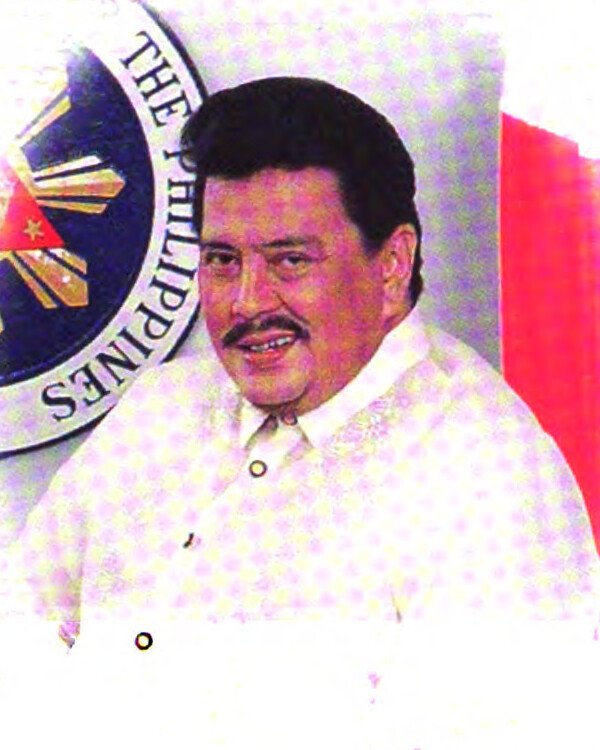 Philippines · Politics
1937—
Joseph Estrada
President of the Philippines, 1998–2001The film star and populist politician who became president in 1998, left office amid impeachment and protest, and later returned as mayor of Manila.Read biography Philippines · Politics
1947—
Gloria Macapagal Arroyo
President of the Philippines, 2001–2010The economist, senator and vice president who led the Philippines from 2001 to 2010 and later returned to Congress as a Pampanga representative.Read biography Philippines · Politics
1927—2015
Joker Arroyo
Human-rights lawyer, representative and senatorA human-rights lawyer who challenged martial-law abuses, became Corazon Aquino’s executive secretary and spent two decades in the restored Congress.Read biography Philippines · Politics
1924—2025
Juan Ponce Enrile
Defence minister and Senate presidentThe lawyer and defence minister whose career stretched from the declaration of martial law to the EDSA breakaway, four Senate terms and the Senate presidency.Read biography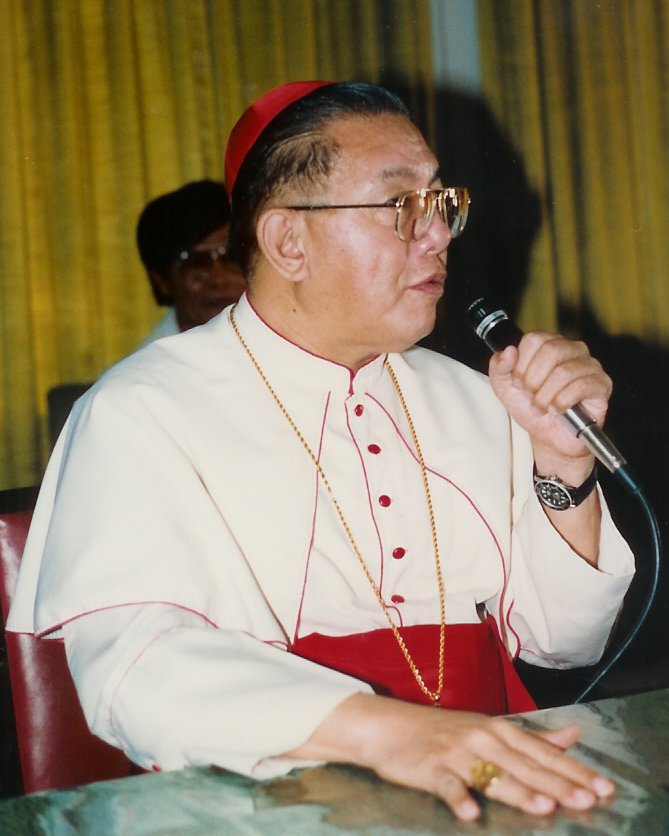 Philippines · Politics
1928—2005
Jaime Cardinal Sin
Cardinal and Archbishop of ManilaThe Archbishop of Manila whose religious authority, democratic advocacy and Radio Veritas appeal helped bring civilians onto EDSA in February 1986.Read biographyQuick answers
Common questions
- When did EDSA II happen?
- The decisive mobilisation ran from 17 to 20 January 2001, after the impeachment trial’s envelope vote on 16 January.
- Why was Joseph Estrada being impeached?
- The articles concerned allegations including bribery, corruption, betrayal of public trust and culpable violation of the Constitution.
- Did Joseph Estrada resign?
- Estrada disputed that he had resigned. In Estrada v. Desierto, the Supreme Court assessed the surrounding acts and statements and held that resignation had occurred.
- Who became president after EDSA II?
- Vice President Gloria Macapagal Arroyo took the presidential oath on 20 January 2001 and was recognised by the Supreme Court as president.
- How was EDSA II different from EDSA I?
- The Supreme Court described EDSA I as an extra-constitutional revolution that created a new government, while treating EDSA II as political expression within the 1987 constitutional order.
Primary and institutional sources
How this history was checked
Dates, legal milestones and historical claims are checked against the official and institutional records below. This article was reviewed on 9 September 2026.