
The short answer
Before dawn on 9 September 1985, several hundred troops and twenty-two tanks moved against Prem Tinsulanonda’s government while the premier and senior commanders were abroad. The rebels announced a Revolutionary Council but failed to win wider military or political support. Loyal forces retained communications, fighting killed seven people and the takeover collapsed within a day.
Chronology
A timeline of the turning points
The Young Turks’ first challenge fails
Class 7 officers lost their commands after trying to remove Prem, but important personal and unit loyalties survived.
Military factions reorganise
Arthit Kamlang-ek rose to army command while Prem balanced competing officers and parliamentary allies.
Economic and command disputes sharpen
A difficult economy, currency devaluation and tension over senior succession formed the background to renewed conspiracy.
Rebel units move into Bangkok
Several hundred soldiers and twenty-two tanks occupied strategic locations while Prem and senior commanders were abroad.
A Revolutionary Council is announced
Former commanders fronted the declaration while Manoonkrit Roopkachorn provided an operational link to the 1981 plotters.
Government radio remains on air
Loyal officers challenged the takeover publicly and coordinated units that had not joined the rebellion.
Fighting reaches the broadcast area
Clashes around military communications killed soldiers, a civilian and two foreign journalists and wounded many others.
The rebels surrender
The attempt collapsed after roughly ten hours when wider army, air-force and political support failed to materialise.
Senior officers face investigation and trial
Former commanders and Kriangsak were among those detained, while Manoonkrit left the country.
Chavalit becomes army commander
The loyalist reorganisation weakened the old Young Turks network but did not remove factional politics from the armed forces.
Who attempted the 1985 coup?
The operational core included Manoonkrit Roopkachorn, then widely known as Manoon, and officers linked to the Young Turks network that had failed against Prem Tinsulanonda in 1981. They drew on personnel from an armoured unit and air-force security forces, but the public leadership also featured retired senior commanders.
Former supreme commander Serm Na Nakhorn was presented as head of the Revolutionary Council. Former prime minister Kriangsak Chamanan and other retired or serving officers were later detained or tried over alleged involvement. Evidence and responsibility remained contested, so the presence of senior names should not be treated as proof that every accused figure directed the operation.
Why was Prem vulnerable on 9 September?
Prem was on an official visit to Indonesia, army and supreme commander Arthit Kamlang-ek was in Europe, and the royal family was outside Bangkok. Plotters chose a moment when the most recognisable centres of authority were physically dispersed and expected rapid control of communications to create political acceptance.
The attempt also followed economic austerity, a baht devaluation and disputes over military procurement and promotions. These tensions supplied grievances but do not by themselves explain the coup. The Kyoto University study emphasises competition among academy classes and command factions rather than a single policy dispute.
What did the rebels capture?
Several hundred troops and twenty-two tanks moved before dawn to occupy strategic sites in the capital. The rebels detained some senior officers and broadcast a claim that they had taken power. Their armour made the challenge dangerous even though the force was far smaller than the coalition mobilised in 1981.
They did not secure the entire communications system or chain of command. Government-aligned officers continued broadcasting and contacting units, which prevented a brief seizure of installations from becoming an accepted national government.
Why did the coup fail?
The plotters expected additional units and senior supporters to join once the operation began. That support did not arrive. Loyal forces under acting commanders retained access to radio, coordinated a counter-response and demonstrated that the rebel council did not control the armed forces as a whole.
Political and royal recognition also remained with the constitutional government. Prem could direct the response from abroad and return as prime minister rather than as a displaced exile. With no expanding coalition and a growing risk of destructive intra-military fighting, the rebels negotiated surrender after about ten hours.
How violent was the attempt?
Unlike the largely bloodless end of the 1981 attempt, fighting in Bangkok caused documented deaths and injuries. The Library of Congress country study records seven people killed and scores wounded. Two of the dead were foreign journalists covering the clashes, including Australian cameraman Neil Davis.
Casualty accounts vary in how they classify soldiers and civilians. The defensible conclusion is that the attempt produced lethal urban combat even though it lasted less than a day. Treating it as merely another failed announcement would obscure the human cost.
What happened to the accused leaders?
Manoonkrit and his brother escaped abroad under arrangements intended to stop further bloodshed. Authorities detained senior retired officers, including Kriangsak, along with active personnel. Court proceedings and later political rehabilitation made the aftermath less final than the government’s immediate victory suggested.
The accusations also deepened distrust between Prem and Arthit. Scholarship cautions against assuming a single hidden commander behind the plot, but the crisis exposed how retirement schedules, promotion blocs and rival academy networks could become questions of government survival.
How did the coup reshape the army?
Chavalit Yongchaiyudh worked with officers from Class 5 in the loyalist response and became army commander in 1986. His subsequent balancing of promotions sought to reduce open factional conflict and improve relations between the government and military leadership.
That settlement helped Prem complete the rest of his premiership and oversee two more elections. It did not establish permanent civilian control: Class 5 officers later became central to the successful 1991 coup against Chatichai Choonhavan.
Why does the 1985 attempt matter?
The failure demonstrated that armour in Bangkok, senior names and a broadcast declaration were insufficient without a broad command coalition. Prem’s hybrid government survived while remaining neither a purely elected cabinet nor a military dictatorship.
It also connected three moments often studied separately: the defeated Young Turks of 1981, the strengthened parliamentary sequence of 1983–1988 and the factional realignment that made the 1991 takeover possible. The attempt was therefore a bridge in the institutional history of the Prem era, not an isolated mutiny.
Continue the chronology
Related history guides
The 1981 Young Turks Coup Attempt
Begin with the earlier rebellion that displaced the same officer network from command.
Read the timeline18 April 1983The 1983 Thai General Election
Read the parliamentary and constitutional setting challenged two years later.
Read the timeline27 July 1986The 1986 Thai General Election
Continue through military reorganisation, early dissolution and Prem’s final coalition.
Read the timeline23 February 1991The 1991 Thai Coup
Compare the failed rebellion with the later intervention that secured wider command support.
Read the timeline1932–presentPrime Ministers of Thailand
Place Prem and Kriangsak inside the full sequence of coups, appointments and elected coalitions.
Read the timelineConnected biographies
Four biographies connecting the challenged government, accused former premier, loyalist reorganisation and royal authority
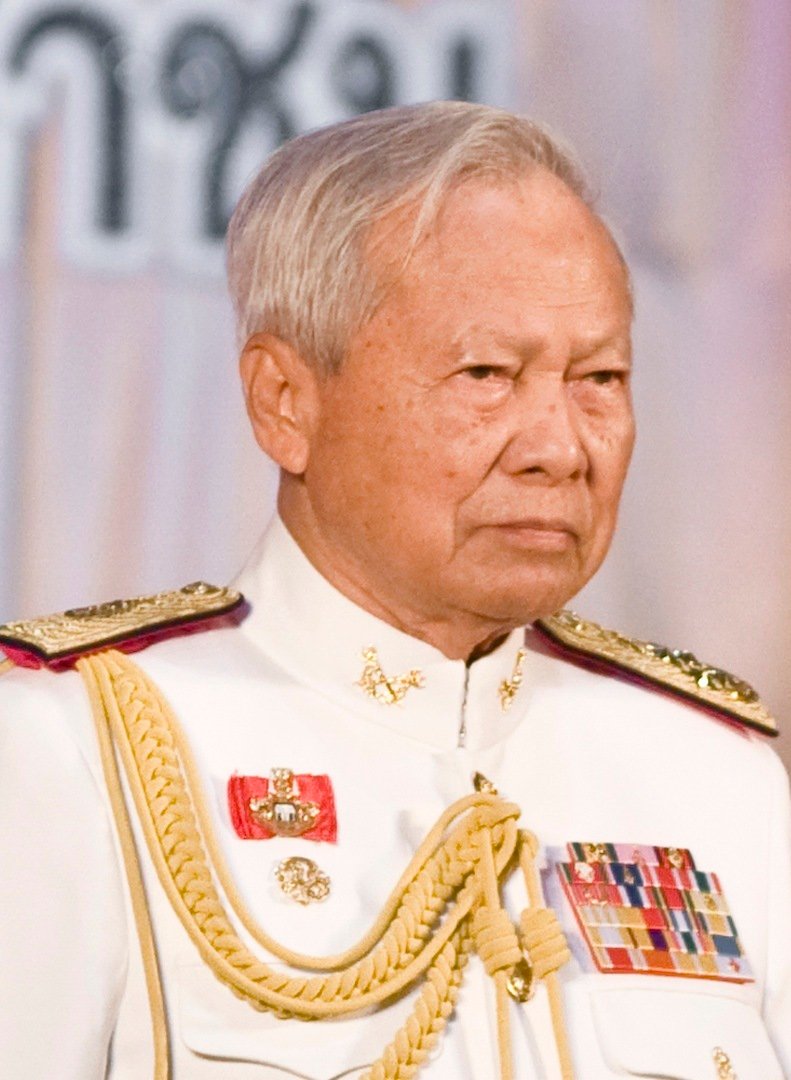 Thailand · Politics
1920—2019
Prem Tinsulanonda
16th Prime Minister of Thailand, 1980–1988The army commander who led Thailand through eight years of parliamentary coalition government before becoming a long-serving royal adviser and regent.Read biography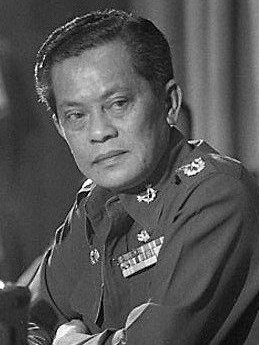 Thailand · Politics
1917—2003
Kriangsak Chamanan
15th Prime Minister of Thailand and military officerThe general who emerged from the October 1977 coup, relaxed parts of Thanin-era repression, restored an elected House and governed during the Indochina refugee crisis.Read biography Thailand · Politics
1932—
Chavalit Yongchaiyudh
Retired general and former prime ministerA former army commander who entered electoral politics, formed the New Aspiration Party and served as prime minister as the baht crisis became a regional financial shock.Read biography Thailand · Politics
1927—2016
Bhumibol Adulyadej
King of Thailand, 1946–2016Thailand’s longest-reigning monarch, whose seven decades on the throne spanned rapid development, repeated political crises and profound social change.Read biographyQuick answers
Common questions
- When was the 1985 Thai coup attempt?
- It began before dawn on 9 September 1985 and collapsed later the same day after roughly ten hours.
- Who led the attempted coup?
- Manoonkrit Roopkachorn was a central organiser, while retired General Serm Na Nakhorn headed the announced Revolutionary Council.
- Was Prem Tinsulanonda in Thailand?
- No. Prem was visiting Indonesia, but loyal officials maintained the government and coordinated resistance until the rebels surrendered.
- How many troops and tanks were involved?
- The Library of Congress account describes several hundred troops and twenty-two tanks participating in the predawn move.
- Were people killed?
- Yes. The Library of Congress country study records seven deaths and scores of injuries, including two foreign journalists killed while covering the fighting.
- Why did the coup fail?
- The rebels could not secure national military, political or royal acceptance, while loyal forces retained communications and organised a counter-response.
Primary and institutional sources
How this history was checked
Dates, legal milestones and historical claims are checked against the official and institutional records below. This article was reviewed on 3 October 2026.
- Southeast Asian Studies, Kyoto UniversityCoups in Thailand, 1980–1991: Classmates and military factions
- Library of CongressThailand: A Country Study
- Institute of Public Policy StudiesThailand: State-Building, Democracy and Globalization
- The Washington PostCoup in Thailand collapses, 10 September 1985
- The Washington PostTop officers involved in Thai coup effort
- The Guardian ArchiveThailand crushes coup plotters
- Secretariat of the Prime Minister of ThailandOfficial directory of prime ministers of Thailand
- Wikimedia CommonsKriangsak Chamanan portrait and CC BY 2.0 licence record