
The short answer
Indonesia has had eight officially numbered presidents. Sukarno founded the office in 1945, Suharto held it for more than three decades, three Reformasi-era transitions reshaped the constitutional order, and voters have chosen president–vice-president tickets directly since 2004. Prabowo Subianto is the current and eighth president.
Complete officeholder table
Every Indonesian president, term and route to office
Indonesia officially numbers eight presidents. The table uses 12 March 1967 for the start of Suharto’s presidency because that is when the MPRS appointed him acting president; he was confirmed as full president in March 1968. Two later presidents—Habibie and Megawati—entered office through constitutional succession rather than a new presidential election.
| President | No. | Term | Vice president(s) | Route to office |
|---|---|---|---|---|
| Sukarno | 1 | 18 Aug 1945–12 Mar 1967 | Mohammad Hatta (1945–1956); vacant thereafter | Selected by the PPKI |
| Suharto | 2 | 12 Mar 1967–21 May 1998 | Vacant to 1973; six vice presidents followed | MPRS appointment; later MPR re-elections |
| B. J. Habibie | 3 | 21 May 1998–20 Oct 1999 | Vacant | Constitutional succession |
| Abdurrahman Wahid | 4 | 20 Oct 1999–23 Jul 2001 | Megawati Sukarnoputri | Elected by the MPR |
| Megawati Sukarnoputri | 5 | 23 Jul 2001–20 Oct 2004 | Vacant briefly; then Hamzah Haz | Constitutional succession |
| Susilo Bambang Yudhoyono | 6 | 20 Oct 2004–20 Oct 2014 | Jusuf Kalla; Boediono | Directly elected twice |
| Joko Widodo | 7 | 20 Oct 2014–20 Oct 2024 | Jusuf Kalla; Ma’ruf Amin | Directly elected twice |
| Prabowo Subianto | 8 | 20 Oct 2024–present | Gibran Rakabuming Raka | Directly elected |
Chronology
A timeline of the turning points
Sukarno becomes the first president
The Preparatory Committee for Indonesian Independence selected Sukarno and Mohammad Hatta one day after they proclaimed independence.
Sukarno leads the federal Republic of the United States of Indonesia
During the short federal period, Sukarno remained the head of the sovereign federation while Assaat served as acting president of its Republic of Indonesia component.
The Supersemar accelerates the transfer of authority
Sukarno authorised Lieutenant General Suharto to take measures to restore security and order, a document that became central to the transfer of effective power.
Suharto becomes acting president
The MPRS removed Sukarno’s governing authority and appointed Suharto acting president; the Assembly confirmed him as full president on 27 March 1968.
Habibie succeeds after Suharto resigns
The vice president immediately took the presidential oath under Article 8, opening the first phase of the Reformasi transition.
The MPR elects Abdurrahman Wahid
Indonesia’s first freely elected post–New Order legislature produced an MPR that selected Wahid as president and Megawati as vice president.
Megawati succeeds Wahid
After the MPR ended Wahid’s presidency, Vice President Megawati Sukarnoputri took the oath as Indonesia’s fifth and first woman president.
Yudhoyono begins the direct-election era
Susilo Bambang Yudhoyono took office after defeating Megawati in Indonesia’s first direct presidential election.
Joko Widodo completes a direct civilian transition
The former Surakarta mayor and Jakarta governor succeeded Yudhoyono after winning a two-ticket national election.
Prabowo Subianto becomes the eighth president
Prabowo and Gibran Rakabuming Raka were inaugurated after winning the 2024 election in one round with 58.59 percent of valid votes.
How was Indonesia’s presidency created?
Indonesia proclaimed independence on 17 August 1945 and adopted the 1945 Constitution the next day. The Preparatory Committee for Indonesian Independence, commonly known by its Indonesian abbreviation PPKI, then selected Sukarno as president and Mohammad Hatta as vice president. The founding choice connected the executive office to the two men who had signed the proclamation, but it took place before a national election could be organised during revolution and returning Dutch military power.
The constitutional design made the president head of government as well as head of state. In practice, Indonesia experimented with parliamentary cabinets soon after independence, became a federal state from late 1949 to August 1950, returned to a unitary parliamentary republic and then moved into Sukarno’s Guided Democracy after 1959. The title stayed constant while the balance between president, cabinet, parliament and armed forces changed substantially.
Why do sources give different dates for the Sukarno–Suharto transition?
The transition was a process rather than a single handover. On 11 March 1966, the document known as the Supersemar authorised Suharto to act to restore security and order. Suharto used the authority to reshape the political system while Sukarno formally remained president. In March 1967, the Provisional People’s Consultative Assembly withdrew Sukarno’s mandate and appointed Suharto acting president.
Suharto was confirmed as full president in March 1968. That is why an archive may label Sukarno’s service 1945–1966 and Suharto’s 1968–1998, while an officeholder chronology uses 12 March 1967 as the boundary between the first and second presidencies. This page states both milestones instead of presenting the transfer of effective power and the later confirmation as the same event.
How were presidents selected during the New Order?
Under the original constitutional structure, the People’s Consultative Assembly selected the president and vice president. During Suharto’s New Order, tightly managed legislative elections supplied an Assembly dominated by Golkar, the armed forces and aligned groups. The MPR repeatedly returned Suharto to office, while the presidency accumulated power over appointments, security policy, development planning and the permitted boundaries of political competition.
Suharto’s long tenure did not end through a scheduled presidential contest. The Asian financial crisis, inflation, unemployment, elite defections and nationwide protest made his position untenable. His resignation on 21 May 1998 activated the succession rule: Vice President B. J. Habibie took the oath as president without a separate MPR election for the office.
What happened during the Reformasi presidential transitions?
Habibie liberalised party and press rules, organised the 1999 election and accepted an East Timor referendum, but the MPR rejected his accountability speech and he did not seek election to a full term. The Assembly instead elected Abdurrahman Wahid president and Megawati Sukarnoputri vice president. The result demonstrated that the leading party in a legislative election did not automatically control the presidency under the MPR system.
Conflict between Wahid and the legislature culminated in the July 2001 special session. The MPR removed Wahid and established Megawati as president under the constitutional succession rule. These rapid transitions—Suharto to Habibie, Habibie to Wahid and Wahid to Megawati—are the reason the Reformasi period contains three short presidencies before the first direct national vote.
How has Indonesia elected its president since 2004?
Constitutional amendments transformed the office after 1998. Article 6A requires candidates for president and vice president to run together and be elected directly by the people. Article 7 limits each officeholder to two five-year terms. Article 8 states that the vice president replaces a president who dies, resigns, is removed or cannot perform the duties of office.
Indonesia first applied direct presidential voting in 2004. Yudhoyono and Jusuf Kalla won a runoff, and Yudhoyono won a second term with Boediono in 2009. Joko Widodo won in 2014 and 2019 with two different running mates. Prabowo Subianto, after losing to Jokowi twice, won the 2024 contest with Gibran Rakabuming Raka. These elections created regular five-year mandates and peaceful transfers, although candidate eligibility, coalition building, campaign resources and court challenges remain central political disputes.
Why is Assaat not in the official list of eight presidents?
The answer lies in Indonesia’s short federal phase. When Dutch sovereignty was transferred in December 1949, Sukarno became president of the Republic of the United States of Indonesia. Assaat became acting president of the Republic of Indonesia, which was then one constituent state inside that federation. He performed a real head-of-state role for the component republic until the unitary state was restored in August 1950.
Official national numbering nevertheless continues directly from Sukarno to Suharto because Sukarno remained head of the sovereign Indonesian federation and resumed the presidency of the restored unitary republic. Assaat is therefore essential to a precise constitutional history but is not counted as one of the eight officially numbered presidents of the Republic of Indonesia.
Continue the chronology
Related history guides
Indonesian Presidents: Biography Archive
Move from the officeholder table into every president’s sourced biography, life chronology and references.
Read the timeline1945–presentVice Presidents of Indonesia
Compare all fourteen vice-presidential terms, the presidents served and the two successions to the presidency.
Read the timeline1945–1949Indonesian Independence
Place the creation of the presidency inside proclamation, revolution, diplomacy and sovereignty transfer.
Read the timeline1965–1998Indonesia’s New Order Era
Follow the transfer from Sukarno, Suharto’s institutions and the crisis that ended his rule.
Read the timeline1997–2004Reformasi and Democratic Transition
Trace three presidential transitions, constitutional amendments and the move to direct election.
Read the timeline2004–2024Indonesian Presidential Elections
Compare every direct presidential contest, official result and connected candidate biography.
Read the timelineConnected biographies
The eight people in Indonesia’s official presidential sequence
 Indonesia · Politics
1901—1970
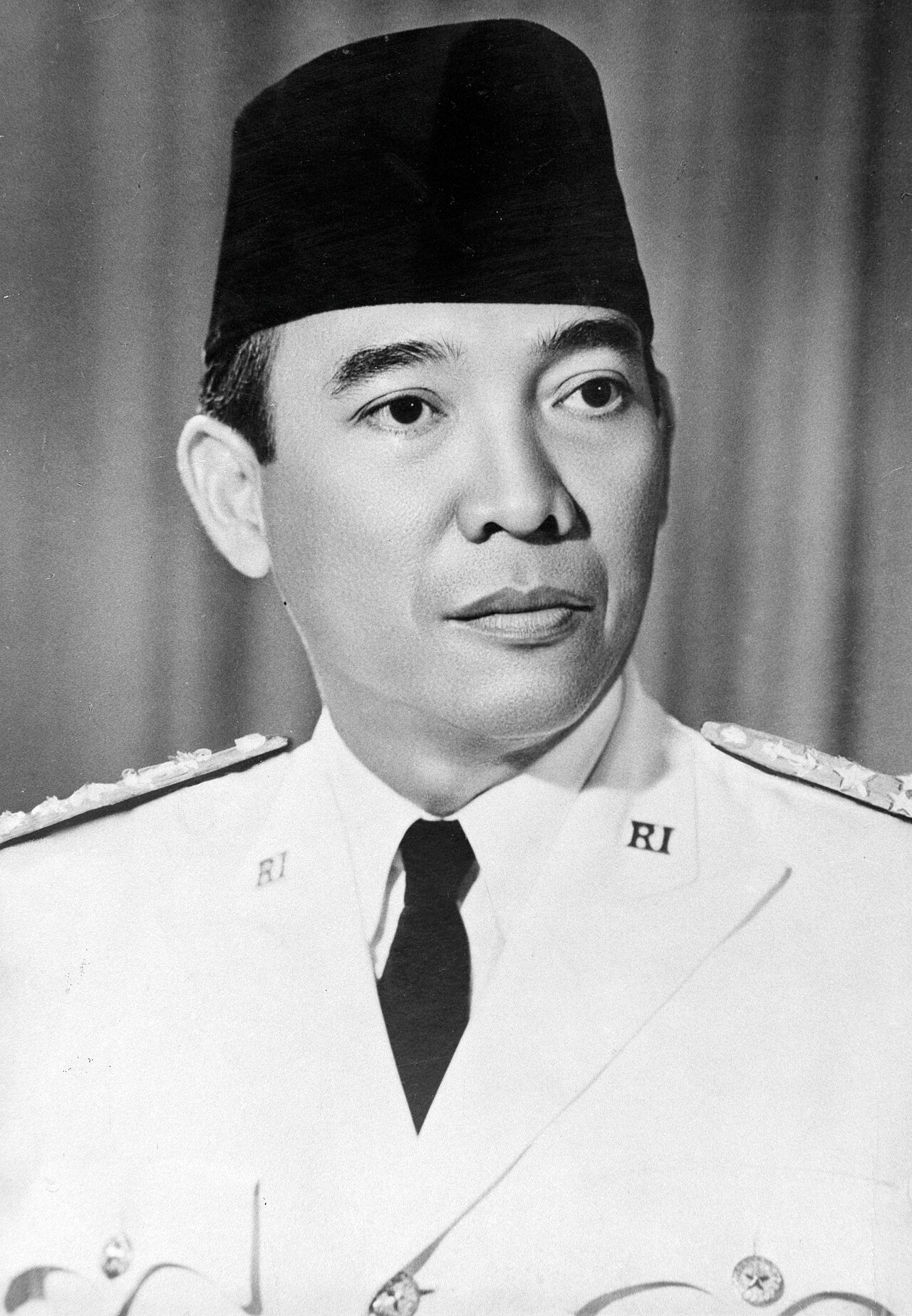
Sukarno
First President of IndonesiaAn independence leader, orator and Indonesia’s first president, who helped unite a vast archipelago around a new republic.Read biography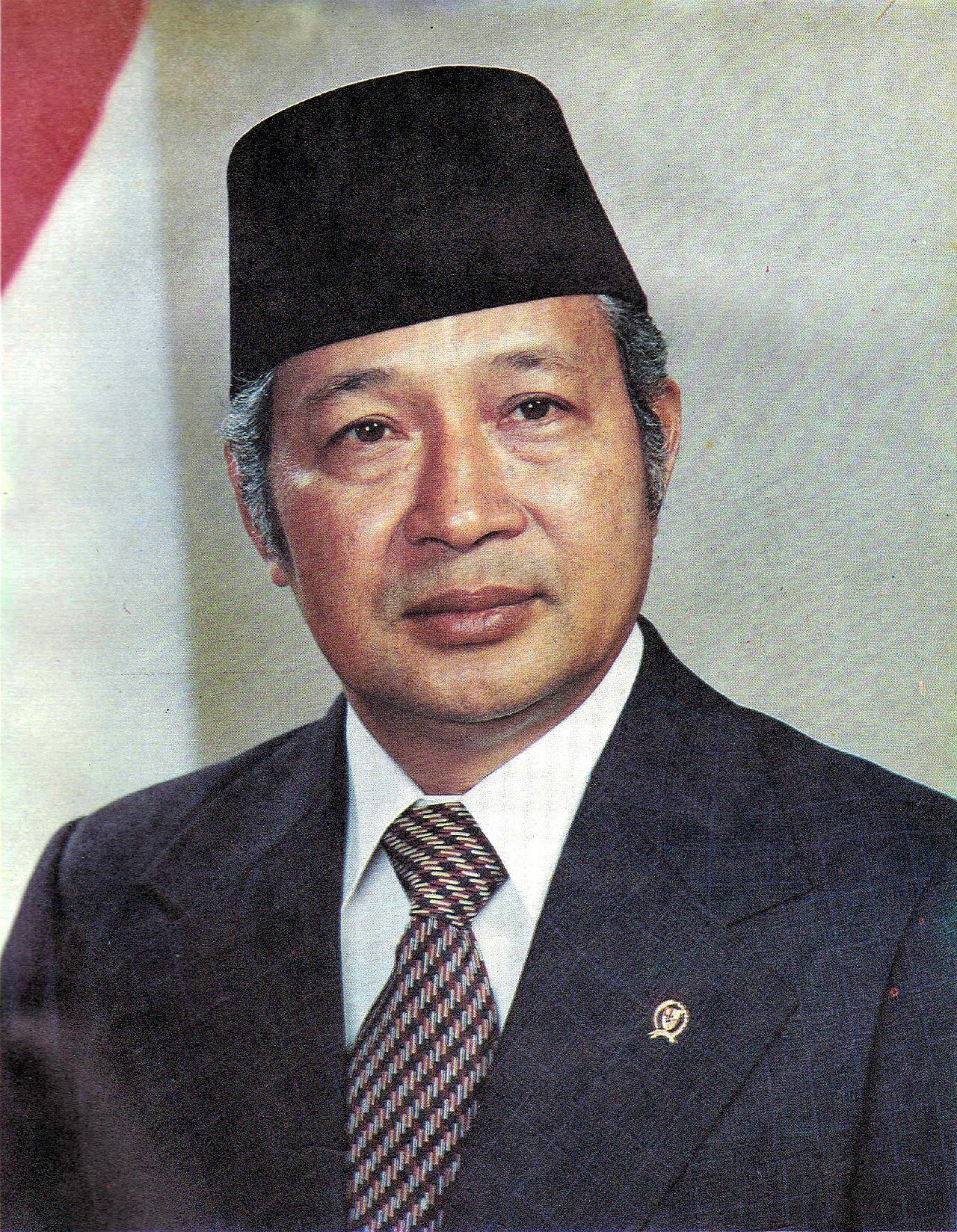 Indonesia · Politics
1921—2008
Suharto
Second President of IndonesiaThe army general who displaced Sukarno and led Indonesia’s New Order from 1967 to 1998, combining economic growth with authoritarian rule.Read biography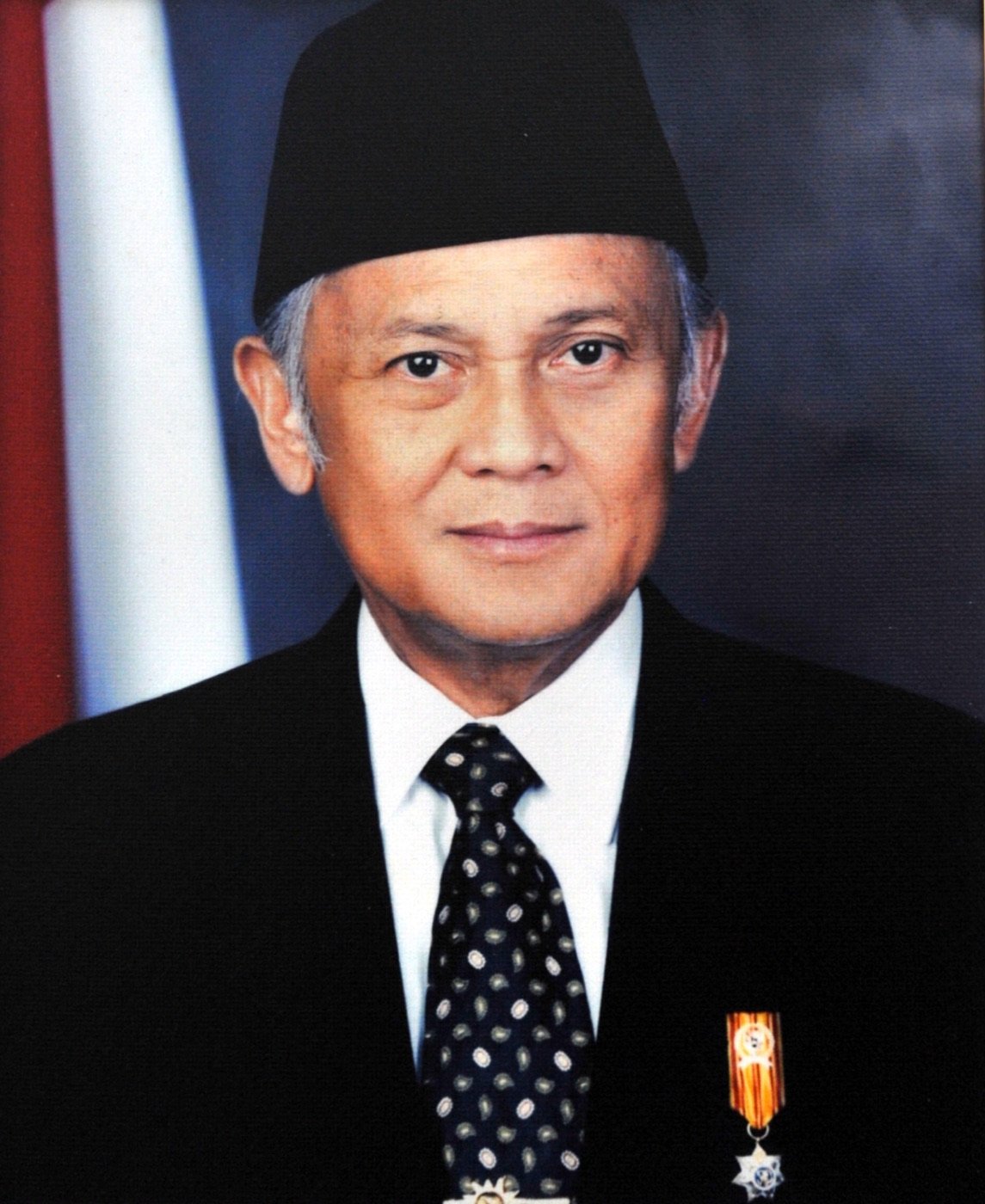 Indonesia · Politics
1936—2019
B. J. Habibie
Third President of Indonesia and aerospace engineerThe aerospace engineer and technology minister who succeeded Suharto in 1998 and opened Indonesia’s first transition from New Order rule.Read biography Indonesia · Politics
1940—2009
Abdurrahman Wahid
Fourth President of Indonesia and Muslim intellectualThe Muslim intellectual known as Gus Dur who led Nahdlatul Ulama, defended pluralism and served as Indonesia’s fourth president from 1999 to 2001.Read biography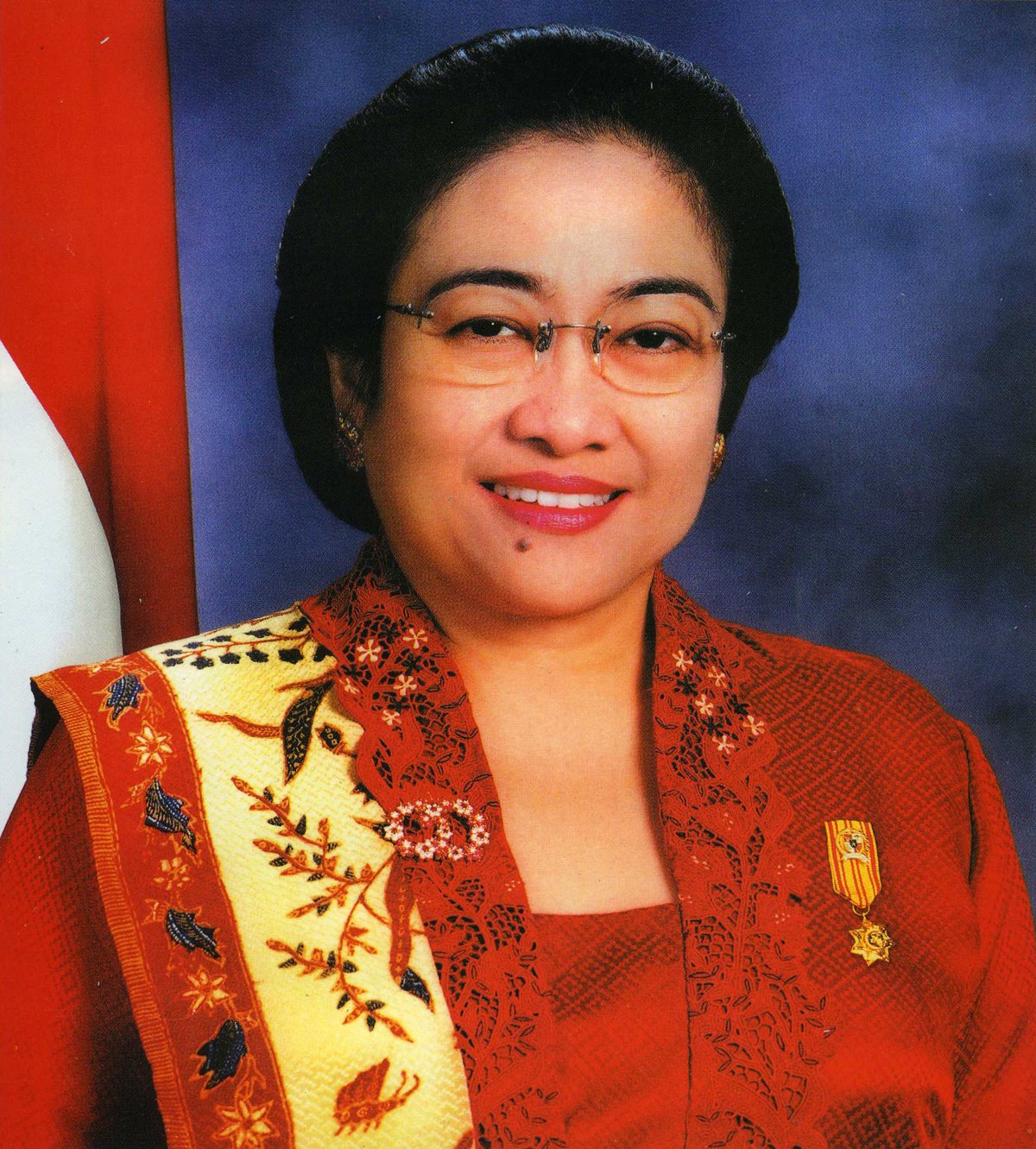 Indonesia · Politics
1947—
Megawati Sukarnoputri
Former president of Indonesia and chair of PDI-PIndonesia’s first woman president, an opposition symbol under Suharto and the PDI-P chair who remains central to post-Reformasi politics.Read biography Indonesia · Politics
1949—
Susilo Bambang Yudhoyono
Sixth President of IndonesiaThe retired general known as SBY who won Indonesia’s first direct presidential election and led the country from 2004 to 2014.Read biography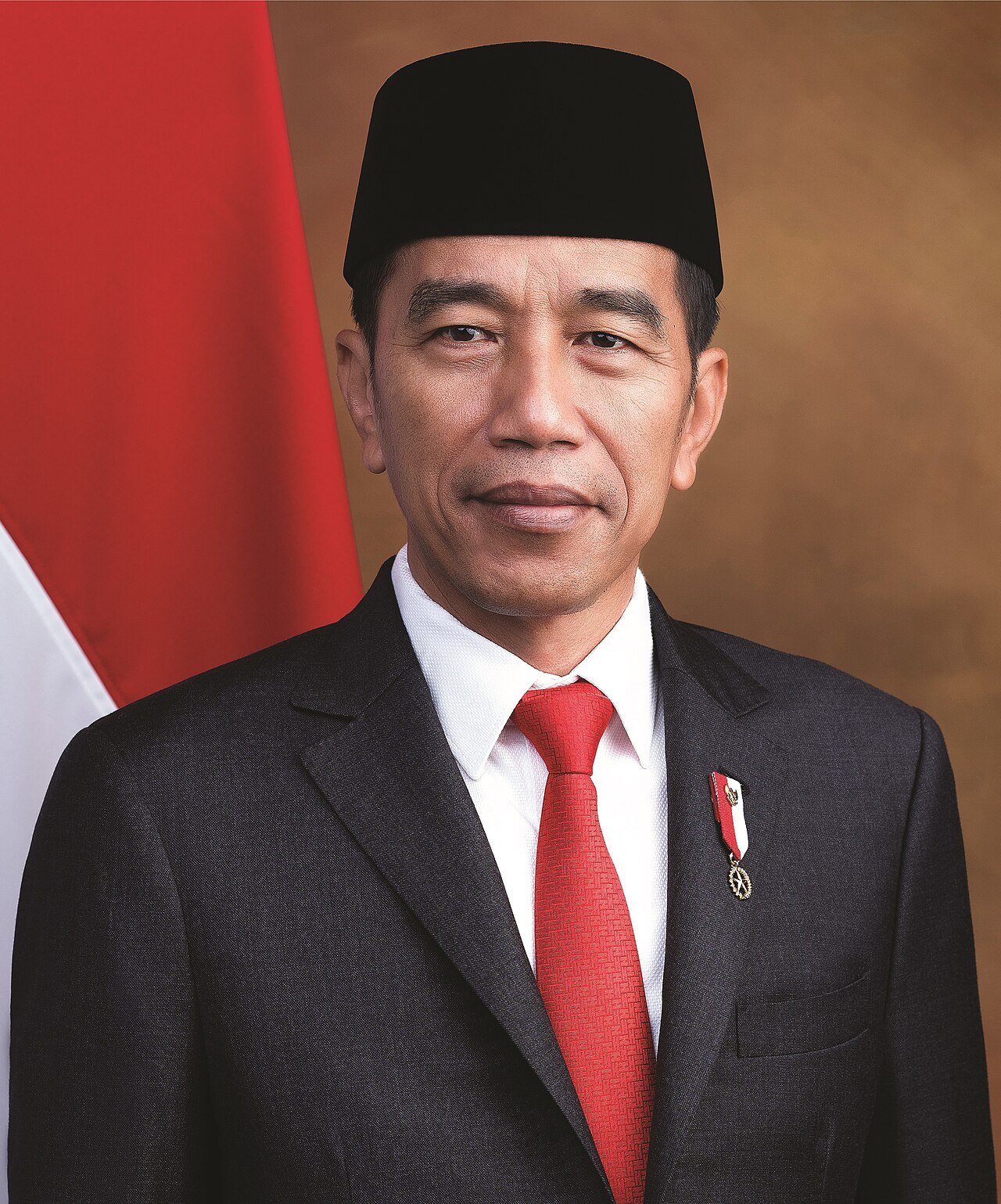 Indonesia · Politics
1961—
Joko Widodo
Seventh president of Indonesia and PSI memberIndonesia’s seventh president, a former furniture exporter and city mayor whose decade in office reshaped infrastructure, industry and succession.Read biography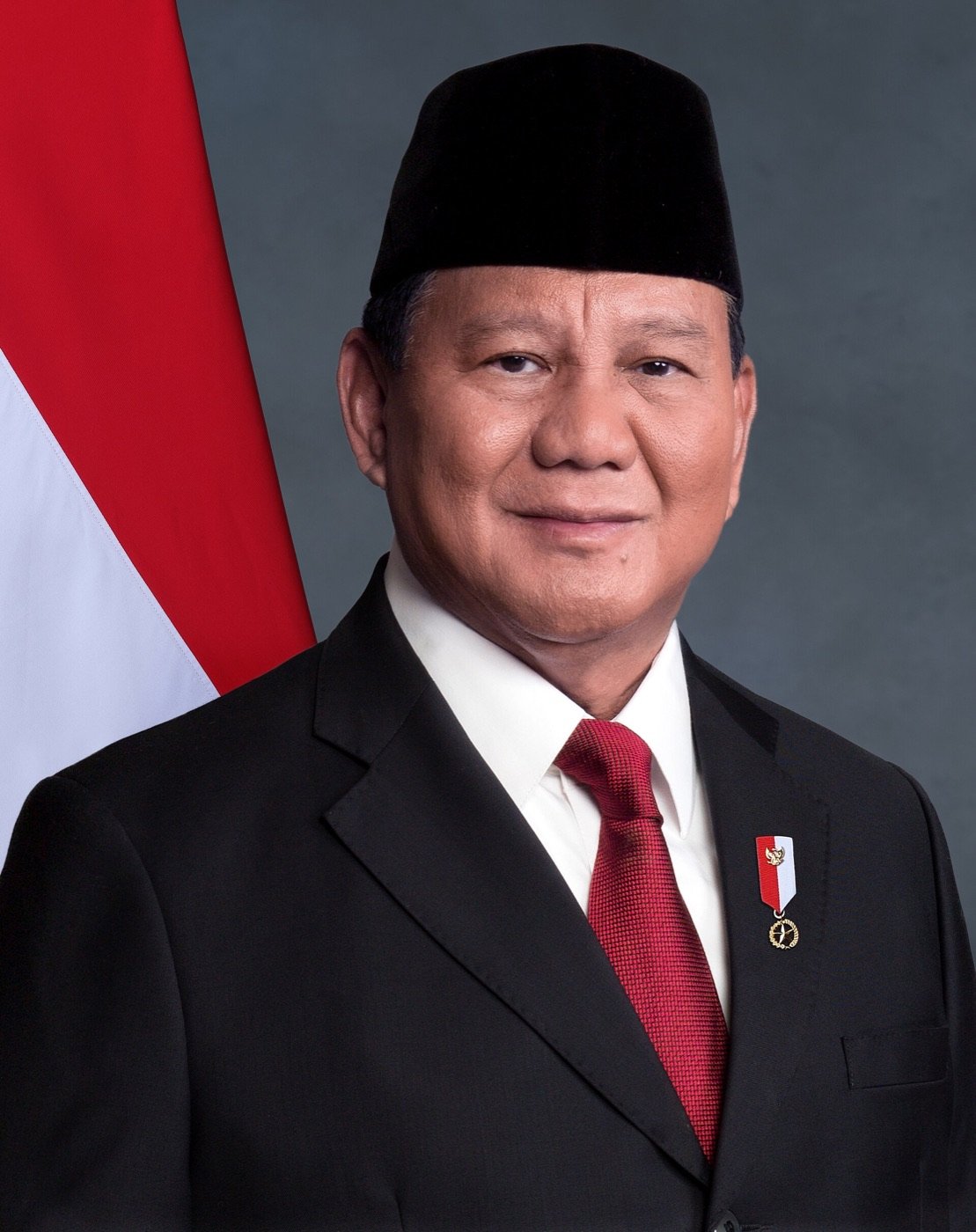 Indonesia · Politics
1951—
Prabowo Subianto
Eighth President of IndonesiaThe former special-forces commander and defence minister who won Indonesia’s 2024 election and became its eighth president.Read biographyQuick answers
Common questions
- Who was the first president of Indonesia?
- Sukarno became Indonesia’s first president on 18 August 1945, one day after he and Mohammad Hatta proclaimed independence.
- Who is the current president of Indonesia?
- As reviewed on 3 October 2026, Prabowo Subianto is Indonesia’s eighth president. He took office with Vice President Gibran Rakabuming Raka on 20 October 2024.
- How many presidents has Indonesia had?
- Indonesia has had eight officially numbered presidents: Sukarno, Suharto, B. J. Habibie, Abdurrahman Wahid, Megawati Sukarnoputri, Susilo Bambang Yudhoyono, Joko Widodo and Prabowo Subianto.
- Who was Indonesia’s longest-serving president?
- Suharto was the longest-serving president. He became acting president in March 1967, was confirmed as full president in March 1968 and resigned on 21 May 1998.
- Who was Indonesia’s first directly elected president?
- Susilo Bambang Yudhoyono became the first directly elected president after winning the two-round 2004 election with Jusuf Kalla.
- Who was Indonesia’s first woman president?
- Megawati Sukarnoputri became Indonesia’s first woman president on 23 July 2001 after succeeding Abdurrahman Wahid.
- Can an Indonesian president serve more than two terms?
- No. Article 7 of the amended 1945 Constitution allows a president and vice president to be re-elected to the same office only once, creating a maximum of two terms.
Primary and institutional sources
How this history was checked
Dates, legal milestones and historical claims are checked against the official and institutional records below. This article was reviewed on 3 October 2026.
- Presidential Archives Study Centre, National Archives of IndonesiaPresidenpedia: presidential archive and biographies
- National Archives of IndonesiaArchive guide to President Sukarno, 1945–1967
- Presidential Archives Study Centre, National Archives of IndonesiaPresidential archive for the Suharto era
- Presidential Archives Study Centre, National Archives of IndonesiaPresidential archive for B. J. Habibie
- People’s Consultative Assembly of IndonesiaTAP MPR No. III/MPR/2001 establishing Megawati as president
- House of Representatives of IndonesiaThe 1945 Constitution of the Republic of Indonesia
- General Elections Commission of IndonesiaHistory of the 2004 election and first direct presidential vote
- General Elections Commission of IndonesiaKPU Decision No. 504 of 2024 — elected presidential ticket
- State Secretariat of IndonesiaInauguration of President Prabowo and Vice President Gibran