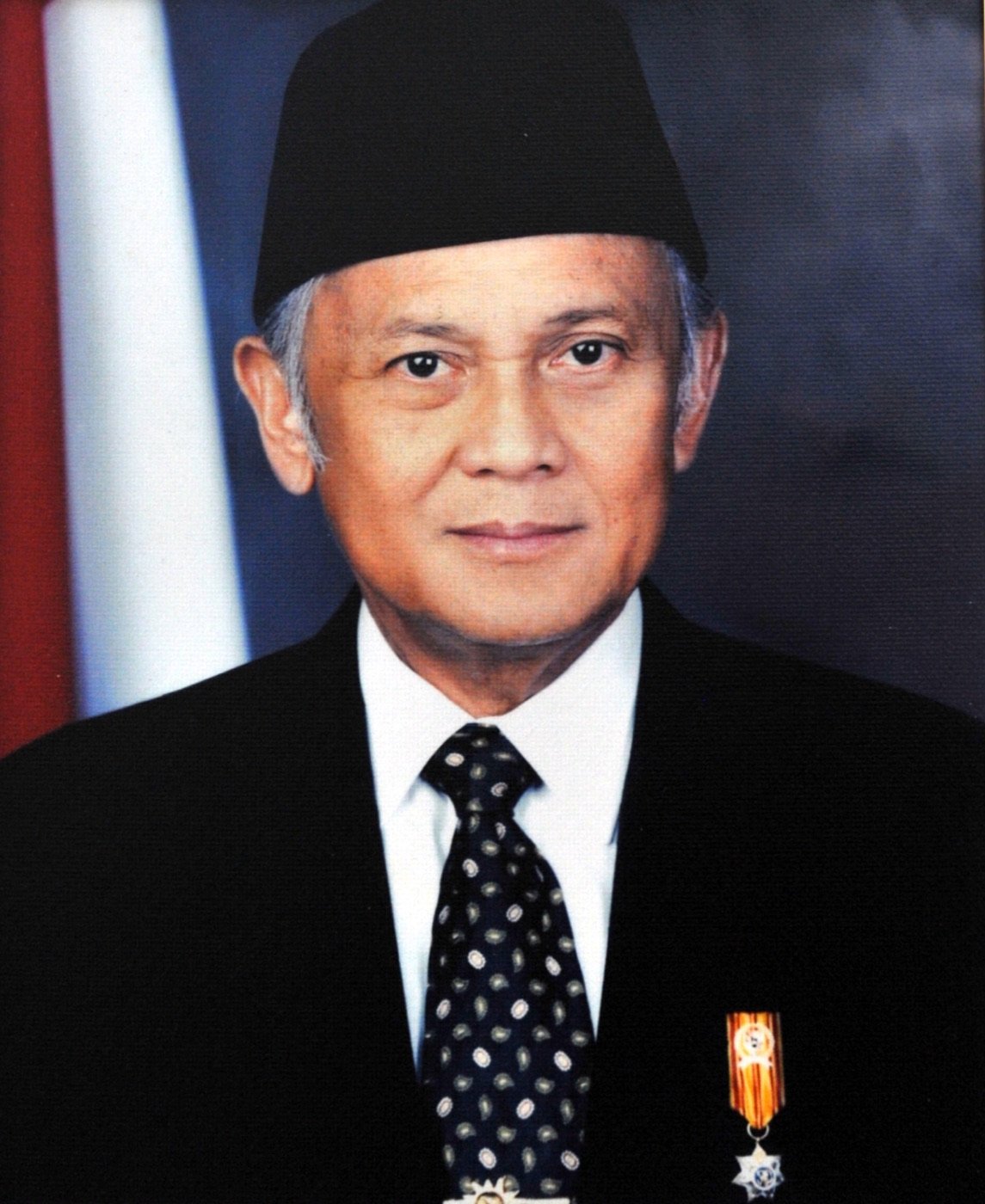
In this biography
Quick facts
- Born
- 25 June 1936
- Died
- 11 September 2019
- Birthplace
- Parepare, South Sulawesi
- Country
- Indonesia
- Nationality
- Indonesian
- Known for
- Leading Indonesia’s first Reformasi transition government and developing its aerospace industry
- Office
- President, 21 May 1998–20 October 1999
- Earlier office
- Vice President, March–May 1998
- Technology role
- Research and technology minister, 1978–1998
- Industrial programme
- IPTN and the N-250 aircraft
Why this life matters
Habibie joined an ambitious state-led technology project to a short presidency that liberalised parties and the press, held competitive elections and permitted East Timor’s UN-supervised vote.
Timeline
Key moments
Completed an engineering doctorate
Earned a doctorate in aircraft construction at RWTH Aachen in West Germany.
Returned to Indonesia
Joined the government’s effort to build national technological and industrial capacity.
Led IPTN
Became president director of the state aircraft manufacturer later known as Indonesian Aerospace.
Saw the N-250 take flight
Indonesia’s domestically developed turboprop completed its first flight on 10 August.
Succeeded Suharto
Moved from the vice presidency to the presidency when Suharto resigned on 21 May.
Held elections and left office
Competitive legislative elections preceded the MPR’s selection of Abdurrahman Wahid in October.
An engineer inside the New Order
Bacharuddin Jusuf Habibie studied engineering in Bandung and West Germany, then worked on aircraft structures at Messerschmitt-Bölkow-Blohm. Suharto invited him home in the 1970s to help build a national technology programme.
As research and technology minister and head of strategic industries, Habibie became closely associated with IPTN. The N-250’s first flight in 1995 symbolised the programme’s ambition, even as critics debated its cost and dependence on state direction.
A presidency born from crisis
Habibie became vice president in March 1998. Ten weeks later, economic collapse, demonstrations and political pressure forced Suharto to resign, and constitutional succession made Habibie Indonesia’s third president.
His government removed important restrictions on political parties and publishing, released political prisoners and brought forward elections. The transition remained turbulent, and institutions, security forces and violence inherited from the New Order did not disappear with a change of president.
Reformasi and East Timor
The June 1999 election was Indonesia’s first competitive national vote since 1955. Habibie also accepted a UN-supervised consultation in East Timor; voters rejected autonomy and chose a path to independence amid militia violence and a severe security crisis.
After the MPR rejected his accountability speech, Habibie withdrew from the presidential contest. His seventeen-month term is remembered as both an improvised succession and a decisive opening through which later democratic institutions emerged.
Quick answers
Frequently asked questions about B. J. Habibie
- Who was B. J. Habibie?
- B. J. Habibie was a third President of Indonesia and aerospace engineer. Habibie joined an ambitious state-led technology project to a short presidency that liberalised parties and the press, held competitive elections and permitted East Timor’s UN-supervised vote.
- What is B. J. Habibie best known for?
- B. J. Habibie is best known for leading Indonesia’s first Reformasi transition government and developing its aerospace industry.
- When and where was B. J. Habibie born?
- B. J. Habibie was born on 25 June 1936 in Parepare, South Sulawesi.
- When did B. J. Habibie die?
- B. J. Habibie died on 11 September 2019.
Sources and further reading
How this biography was checked
Core dates and offices are checked against the sources below. This profile was last reviewed on 8 September 2026.