The short answer
Ratified on 2 February 1987, the Constitution rebuilt elected and independent institutions after authoritarian rule. It restored a bicameral Congress, strengthened the Bill of Rights, limited presidents to one six-year term and subjected martial-law powers to time limits and review.
Chronology
A timeline of the turning points
Corazon Aquino takes office
The People Power Revolution ended Ferdinand Marcos’s rule. Aquino’s government began dismantling authoritarian structures and planning a return to constitutional government.
The Freedom Constitution takes effect
Proclamation No. 3 adopted a provisional constitution. It gave the president legislative authority during a transition while promising a commission to draft a permanent charter.
Rules for the Constitutional Commission are issued
Proclamation No. 9 organised a commission of national, regional and sectoral representatives and established its procedure, independence and timetable.
The Constitutional Commission convenes
Forty-eight appointed commissioners began public deliberations. Former Supreme Court justice Cecilia Muñoz Palma served as president of the body.
The final draft is approved
The commission approved the proposed constitution after months of committee work and plenary debate.
Commissioners sign the charter
The completed constitution was signed and prepared for a national information campaign and plebiscite.
Voters ratify the constitution
A national plebiscite returned 16,622,111 affirmative votes and 4,953,375 negative votes. The Supreme Court later confirmed that the constitution took effect on this date.
Ratification is officially proclaimed
Proclamation No. 58 announced the certified result and declared the constitution effective and in full force.
Congressional elections are held
Elections filled the restored Senate and House of Representatives, putting the charter’s bicameral legislature into operation.
Why was a new constitution written?
The 1973 Constitution had operated through extensive amendments and decrees under Marcos, and many democratic institutions had been weakened or reshaped during authoritarian rule. After People Power, Aquino’s government needed both an interim legal order and a durable framework for elections, rights and separated powers.
The March 1986 Freedom Constitution was deliberately provisional. It preserved parts of the previous charter, authorised the president to legislate during the transition and directed the creation of a commission for a new constitution. The central challenge was to restore representative institutions without leaving the transition itself without legal authority.
How the Constitutional Commission worked
Aquino appointed forty-eight commissioners drawn from law, politics, religion, education, labour, business and other sectors. The body used committees and public plenary sessions to draft, debate and vote on each part. Its members included people with different views of presidential power, economic policy, social justice and the role of the military.
Because the commission was appointed rather than elected, ratification by voters supplied the charter’s direct democratic approval. The plebiscite asked the public to accept or reject the complete document, not individual articles. More than sixteen million affirmative votes produced a clear majority on 2 February 1987.
Rights, institutions and presidential limits
The constitution restored a presidential system with a bicameral Congress and an independent judiciary. Its Bill of Rights protects due process, equal protection, speech, religion, assembly, privacy and safeguards for accused persons. It also constitutionalised independent commissions for elections, civil service and audit, and created the Commission on Human Rights.
A president is elected for a single six-year term and cannot be re-elected. The vice president may serve two successive terms. These rules responded to the concentration and extension of presidential power under Marcos, while provisions on accountability, impeachment, public disclosure and the ban on political dynasties—subject to legislation—addressed broader concerns about abuse of office.
What changed about martial law?
The president remains commander-in-chief and may proclaim martial law or suspend the privilege of the writ of habeas corpus in cases of invasion or rebellion when public safety requires it. The constitution, however, limits an initial declaration or suspension to sixty days and requires a report to Congress within forty-eight hours.
Congress may revoke or extend the measure, and the Supreme Court may review the sufficiency of its factual basis. Martial law does not suspend the constitution, replace civil courts where they can function or automatically suspend habeas corpus. These express safeguards reflect the experience of the declaration made in 1972.
Durability, amendments and continuing debate
The 1987 Constitution has lasted longer than the transitional order that preceded it and remains the foundation of Philippine government. It can be amended through Congress acting as a constituent assembly, a constitutional convention or a people’s initiative, followed in each case by ratification in a plebiscite.
Debates over federalism, economic restrictions, term limits and the distribution of power regularly produce proposals for charter change. Supporters of revision argue that institutions must adapt; opponents warn that amendment can be used to weaken safeguards or extend incumbents’ power. Understanding the document therefore requires both its post-authoritarian origins and the political interests surrounding later reform efforts.
Continue the chronology
Related history guides
The 1973 Philippine Constitution
Compare the authoritarian-era charter and its disputed ratification with the post-EDSA settlement.
Read the timeline1521—presentPhilippines History Timeline
Connect constitutional restoration to the country’s longer political history.
Read the timeline19 biographiesPeople Power and Philippine Democracy Figures
Meet the jurists, political leaders, advocates and organisers across the transition.
Read the timeline24 biographiesDemocracy, Dictatorship and Restoration
Follow the people who contested constitutional authority from 1969 through democratic restoration.
Read the timeline22—25 Feb 1986The People Power Revolution
See the democratic mobilisation and transfer of power that opened the transition.
Read the timeline1972—1986The Marcos Martial Law Era
Understand the experience that shaped the charter’s limits on executive power.
Read the timelineConnected biographies
Eight biographies behind the constitutional transition
 Philippines · Politics
1933—2009
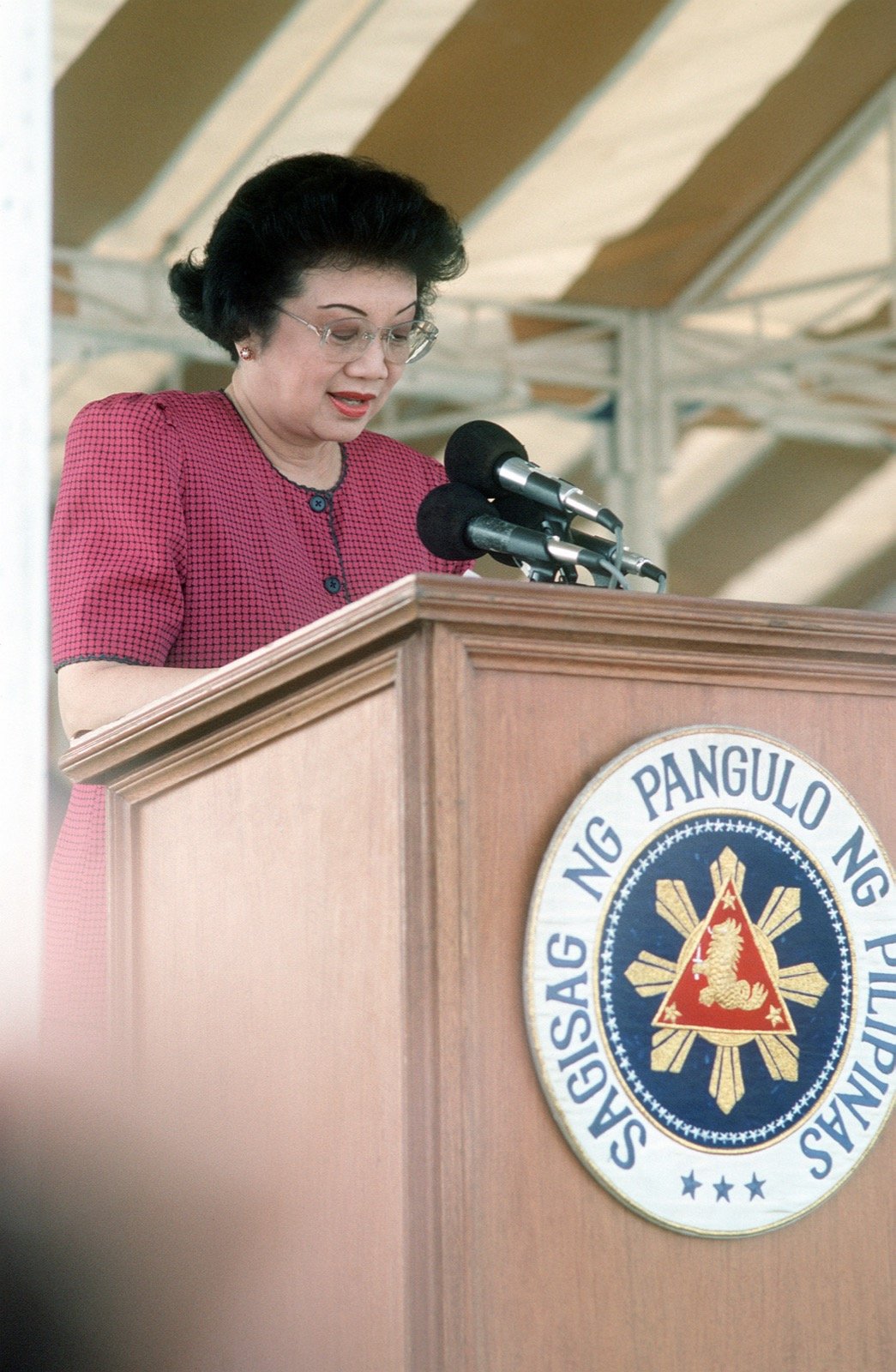
Corazon Aquino
President of the Philippines, 1986–1992The opposition leader who became president after People Power and restored constitutional government following the Marcos dictatorship.Read biography Philippines · Politics
1917—1989
Ferdinand Marcos
President of the Philippines, 1965–1986A president who imposed martial law, dismantled democratic checks and ruled for two decades before the 1986 People Power Revolution forced him from office.Read biography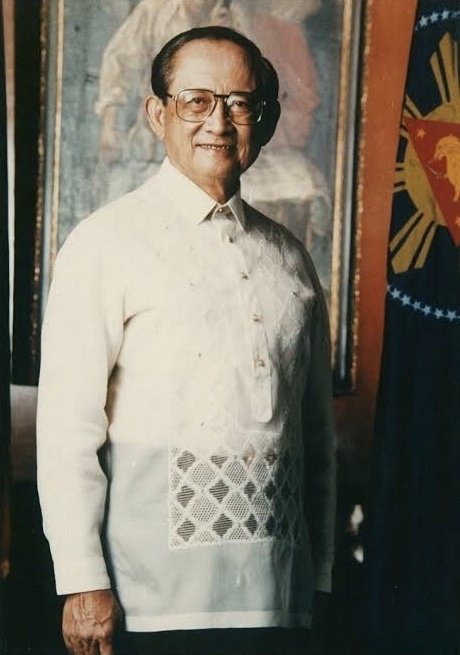 Philippines · Politics
1928—2022
Fidel V. Ramos
President of the Philippines, 1992–1998The general who withdrew support from Ferdinand Marcos during People Power and later served as defence secretary and the Philippines’ twelfth president.Read biography Philippines · Politics
1932—1983
Benigno Aquino Jr.
Senator and opposition leaderThe senator known as Ninoy whose imprisonment, exile and assassination on returning to Manila transformed opposition to Ferdinand Marcos.Read biography Philippines · Politics
1913—2006
Cecilia Muñoz-Palma
Supreme Court justice and constitutional leaderA pioneering Filipino jurist whose martial-law dissents defended civilian courts and whose post-EDSA leadership helped frame the 1987 Constitution.Read biography Philippines · Politics
1920—2016
Jovito Salonga
Opposition senator and post-EDSA Senate presidentA Filipino lawyer, opposition leader and statesman who survived wartime imprisonment and the Plaza Miranda bombing before helping rebuild the Senate after EDSA.Read biography Philippines · Politics
1928—1994
Mamintal A. J. Tamano
Senator and advocate for Muslim Mindanao autonomyA lawyer and senator from Lanao del Sur whose two Senate terms bridged the chamber closed in 1972 and the democratic legislature restored in 1987.Read biography Philippines · Politics
1928—2004
Salvador H. Laurel
Opposition leader and vice president of the PhilippinesA lawyer, senator and opposition coalition leader who became vice president after the disputed 1986 election and People Power Revolution.Read biographyQuick answers
Common questions
- When was the 1987 Philippine Constitution ratified?
- Filipino voters ratified it in a plebiscite on 2 February 1987. Proclamation No. 58 formally announced the certified result on 11 February.
- Who wrote the 1987 Constitution?
- A forty-eight-member Constitutional Commission appointed by President Corazon Aquino drafted it in 1986. Former Supreme Court justice Cecilia Muñoz Palma presided over the commission.
- What are the three branches of Philippine government?
- The constitution distributes national power among the executive headed by the president, a bicameral Congress exercising legislative power and the judiciary headed by the Supreme Court.
- How long can a Philippine president serve?
- A president serves one six-year term and is not eligible for re-election. A person who succeeds to the presidency and serves more than four years also cannot later be elected president.
- Can the president declare martial law?
- Yes, in cases of invasion or rebellion when public safety requires it. An initial proclamation is limited to sixty days and is subject to congressional action and Supreme Court review.
Primary and institutional sources
How this history was checked
Dates, legal milestones and historical claims are checked against the official and institutional records below. This article was reviewed on 8 September 2026.
- The LawPhil Project1987 Constitution of the Republic of the Philippines
- The LawPhil ProjectProclamation No. 3 — the 1986 Freedom Constitution
- The LawPhil ProjectProclamation No. 9 — law governing the Constitutional Commission
- The LawPhil ProjectProclamation No. 58 — ratification of the Constitution
- Supreme Court of the Philippines via LawPhilDe Leon v. Esguerra — effectivity on 2 February 1987
- National Historical Commission of the PhilippinesConstitutional Commission of 1986 historical marker