
The short answer
The Philippine human-rights body did not begin with one unchanged name and structure. Diokno led a presidential committee in 1986; the 1987 Constitution created an independent commission, and Executive Order 163 arranged the handover. Their distinct mandates explain both continuity and change.
Two institutions, not two names
PCHR and CHR: what changed?
The constitutional commission inherited assets and work, but had a different institutional foundation.
| Institution | Foundation | Relationship to government | Core role |
|---|---|---|---|
| PCHR · 1986 | Executive Order 8 | Attached to the president | Investigate abuses and advise the president |
| CHR · 1987 | 1987 Constitution; EO 163 operating framework | Independent constitutional office | Investigate, protect, educate and recommend; not a court |
Chronology
A timeline of the turning points
Legal assistance before the state committee
The CHR’s remembrance dates Diokno’s establishment of FLAG to his release from detention.
PCHR created
Aquino issues EO 8, appointing Diokno chair and Jose B. L. Reyes vice-chair.
An independent commission
Article XIII creates the CHR and preserves the committee’s functions pending constitution of the new body.
Handover under EO 163
The order declares the CHR in existence and abolishes its presidential predecessor.
Investigation distinguished from adjudication
The Supreme Court explains the limits in Cariño v. CHR.
Why did the Philippines create a human-rights institution?
The Commission on Human Rights describes its origins as a response to abuses during martial law. After the 1986 change of government, the question was not only whether a new president would promise to respect rights, but how allegations against state officials could be investigated and safeguards made part of public institutions.
Legal defence networks predated that transition. In its 2017 remembrance of Jose W. Diokno, the CHR identifies the Free Legal Assistance Group he established after his release from detention in 1974. FLAG’s work for victims helps explain his appointment in 1986, but a lawyers’ organisation and a government human-rights body were different institutions, not successive names for the same office.
What was the Presidential Committee on Human Rights?
Corazon Aquino created the Presidential Committee on Human Rights, or PCHR, through Executive Order No. 8 on 18 March 1986. Jose W. Diokno chaired it, with former justice Jose B. L. Reyes as vice-chair. The order attached the committee to the president for direction and supervision and described its role as advisory and consultative.
Advisory did not mean powerless to investigate. The order authorised inquiries into disappearances, killings, torture and other abuses by state agents, including earlier violations. It provided evidence-gathering powers, including subpoenas. The committee was to report publicly and recommend remedies and safeguards; those recommendations were not themselves criminal convictions.
Sources for this section: [1]
How did the 1987 Constitution change the arrangement?
Article XIII, Section 17 of the 1987 Constitution created the Commission on Human Rights as an independent office. It specified a chair and four members, with a majority drawn from the Philippine Bar. This was a constitutional foundation rather than another committee operating under presidential supervision.
The charter also provided continuity: the PCHR would keep exercising its functions until the commission was constituted. The change therefore involved both replacement and a bridge between institutions. The CHR is established under Article XIII; it should not be confused with the three commissions identified in Article IX for civil service, elections and audit.
Why does 5 May 1987 also appear in CHR histories?
Aquino’s Executive Order No. 163, dated 5 May 1987, declared the constitutionally created commission in existence and provided operating guidelines. It abolished the PCHR, transferred its unspent appropriations, records and other assets, and allowed the CHR to retain necessary personnel. The order made the institutional handover explicit.
Its functions included investigating civil and political rights violations, visiting detention facilities, providing preventive measures and legal aid, and monitoring treaty obligations. Education and recommendations to Congress were also part of the mandate. The constitutional creation and the executive order’s operational arrangements explain the two 1987 milestones; neither means that the commission began as Diokno’s 1986 presidential committee.
Was the commission meant to act as a court?
No. In Cariño v. Commission on Human Rights, decided on 2 December 1991, the Supreme Court distinguished investigation from adjudication. The dispute concerned disciplinary proceedings involving public-school teachers. The Court held that the CHR could not take over the role of a court or a quasi-judicial body by finally deciding the controversy before it.
That distinction matters when reading the founding mandate. Receiving evidence and establishing facts can support protection, referrals and recommendations, but does not make the CHR a criminal court able to convict defendants. The decision clarifies institutional boundaries; it is not a finding that documenting abuses, visiting detention facilities or providing rights education has no value. This guide explains the historical framework, not individual complaint procedures.
Sources for this section: [6]
How should Diokno and Aquino’s roles be remembered?
Diokno’s documented leadership belongs to the predecessor committee. Aquino issued the two executive orders, while the constitution supplied the independent commission’s foundation. The CHR’s 2017 Diokno memorial explicitly honours him as a pioneer who headed its predecessor. Keeping those roles separate recognises his contribution without incorrectly naming him chair of the later constitutional commission.
Continue the chronology
Related history guides
The 1987 Philippine Constitution
Read the broader constitutional settlement that established the independent commission.
Read the timeline1972–1986The Marcos Martial Law Era
Understand the authoritarian setting behind the demand for rights protection.
Read the timelineFebruary 1986The People Power Revolution
Follow the political transition before Aquino created the presidential committee.
Read the timeline1988–1998PHILJA and Judicial Education
Compare a separate institution-building process within the judiciary; PHILJA is not a CHR successor.
Read the timelineConnected biographies
The committee chair and the president who created it

1922—1987
Jose W. Diokno
Senator, lawyer and human rights advocateA Filipino senator and civil-liberties lawyer known as Ka Pepe who was detained without charge under martial law and built a national network of human rights defenders.Read biography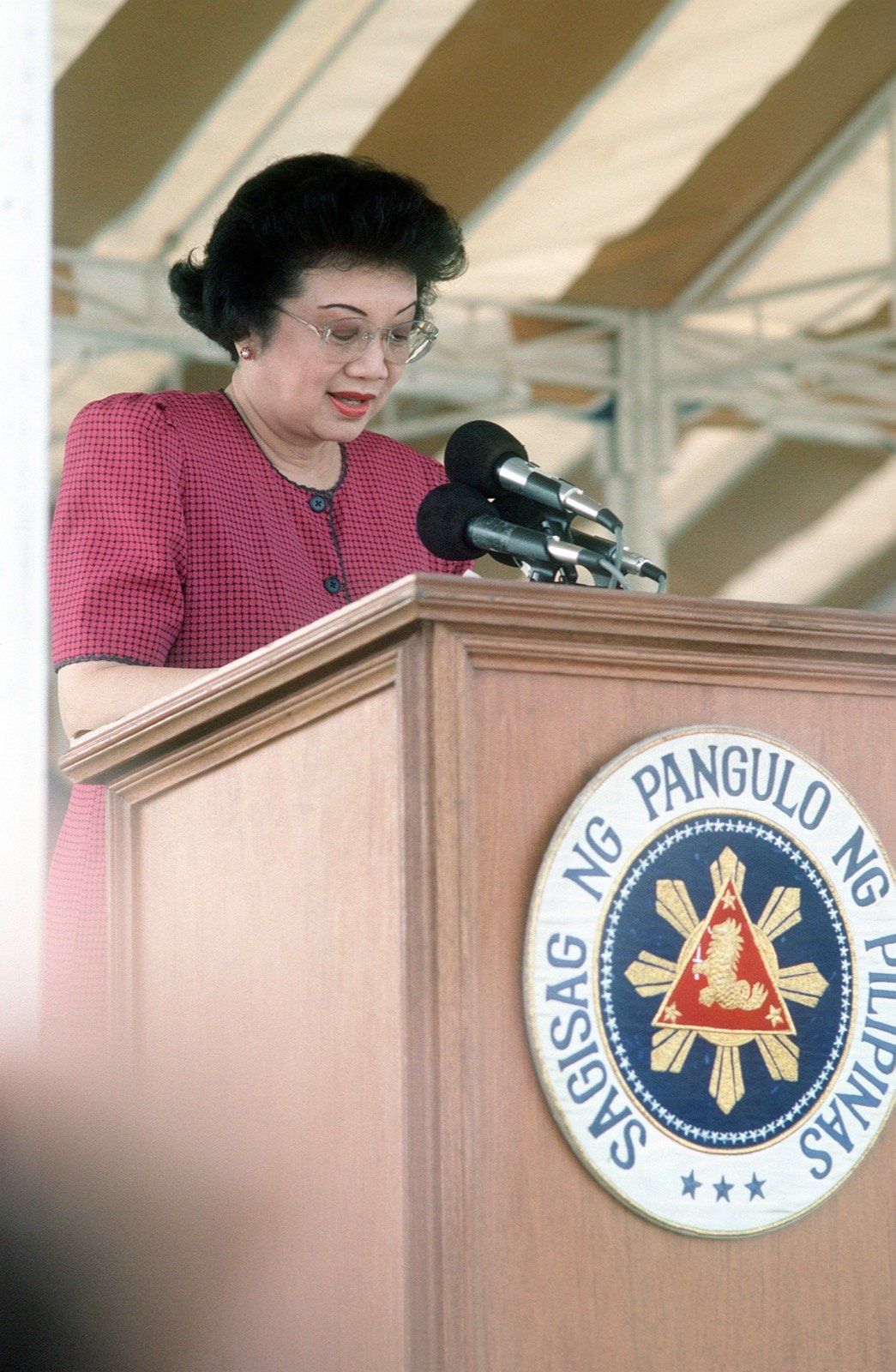
1933—2009
Corazon Aquino
President of the Philippines, 1986–1992The opposition leader who became president after People Power and restored constitutional government following the Marcos dictatorship.Read biographyQuick answers
Common questions
- When was the Philippine Commission on Human Rights created?
- The 1987 Constitution created it as an independent office. Executive Order 163, dated 5 May 1987, declared it in existence and provided operating guidelines. The presidential predecessor dates to 18 March 1986.
- Was Jose W. Diokno the first CHR chair?
- He chaired the Presidential Committee on Human Rights under Executive Order 8 in 1986. The CHR honours him as a pioneer of its predecessor; that role should not be relabelled as chair of the later constitutional commission.
- Did the PCHR have investigative powers?
- Yes. Although advisory and consultative, EO 8 authorised investigations and evidence gathering, including subpoenas, alongside reports and recommendations.
- Is the CHR attached to the president like the old committee?
- No. Article XIII establishes the CHR as an independent office. The PCHR’s attachment to the president was part of the earlier arrangement under EO 8.
- Can the CHR decide cases like a court?
- The Supreme Court’s 1991 Cariño decision distinguishes fact-finding from final adjudication: the CHR is not a court or a substitute for a quasi-judicial tribunal.
Primary and institutional sources
How this history was checked
Executive orders establish the committee’s name, leadership and transfer; the Constitution establishes independence and mandate. CHR histories explain institutional memory, while the cited Supreme Court decision distinguishes investigation from adjudication. This is an origins guide, not a claim that every later change or present complaint procedure has been reviewed. This article was reviewed on 14 October 2026.
- The LawPhil ProjectExecutive Order No. 8, 18 March 1986: PCHR creation and powers
- The LawPhil Project1987 Constitution: Article XIII, Sections 17–19; Article IX
- The LawPhil ProjectExecutive Order No. 163, 5 May 1987: CHR operation and institutional transfer
- Commission on Human RightsAbout Us: institutional history and mandate
- Commission on Human RightsDiokno Memorial, 2017: predecessor leadership and FLAG
- Supreme Court / The LawPhil ProjectCariño v. Commission on Human Rights, G.R. No. 96681, 2 December 1991