In this biography
Quick facts
- Born
- 23 October 1939
- Birthplace
- Kyauktan Township near Rangoon, British Burma
- Country
- Myanmar
- Nationality
- Burmese
- Known for
- Building a powerful military intelligence system and announcing the seven-step political roadmap in 2003
- Intelligence chief
- 1984—2004
- Prime minister
- 25 Aug 2003—18 Oct 2004
- Roadmap announced
- 30 August 2003
- Released
- Presidential amnesty · 13 January 2012
Why this life matters
Khin Nyunt’s rise and fall exposes both the institutional reach and internal factional struggles of Myanmar’s military government before the 2008 Constitution.
Timeline
Key moments
Born near Rangoon
Born in Kyauktan Township; published references differ between 11 and 23 October.
Commissioned as an army officer
Completed officer training at Bahtoo and began a career that moved into intelligence work.
Took command of military intelligence
Became director of the intelligence organisation that expanded across state and society.
Became SLORC secretary-1
Joined the ruling council formed after the army crushed the nationwide uprising.
Appointed prime minister
Announced a seven-step roadmap that began by reconvening the National Convention.
Dismissed and detained
Lost office during a purge of the military intelligence network in October.
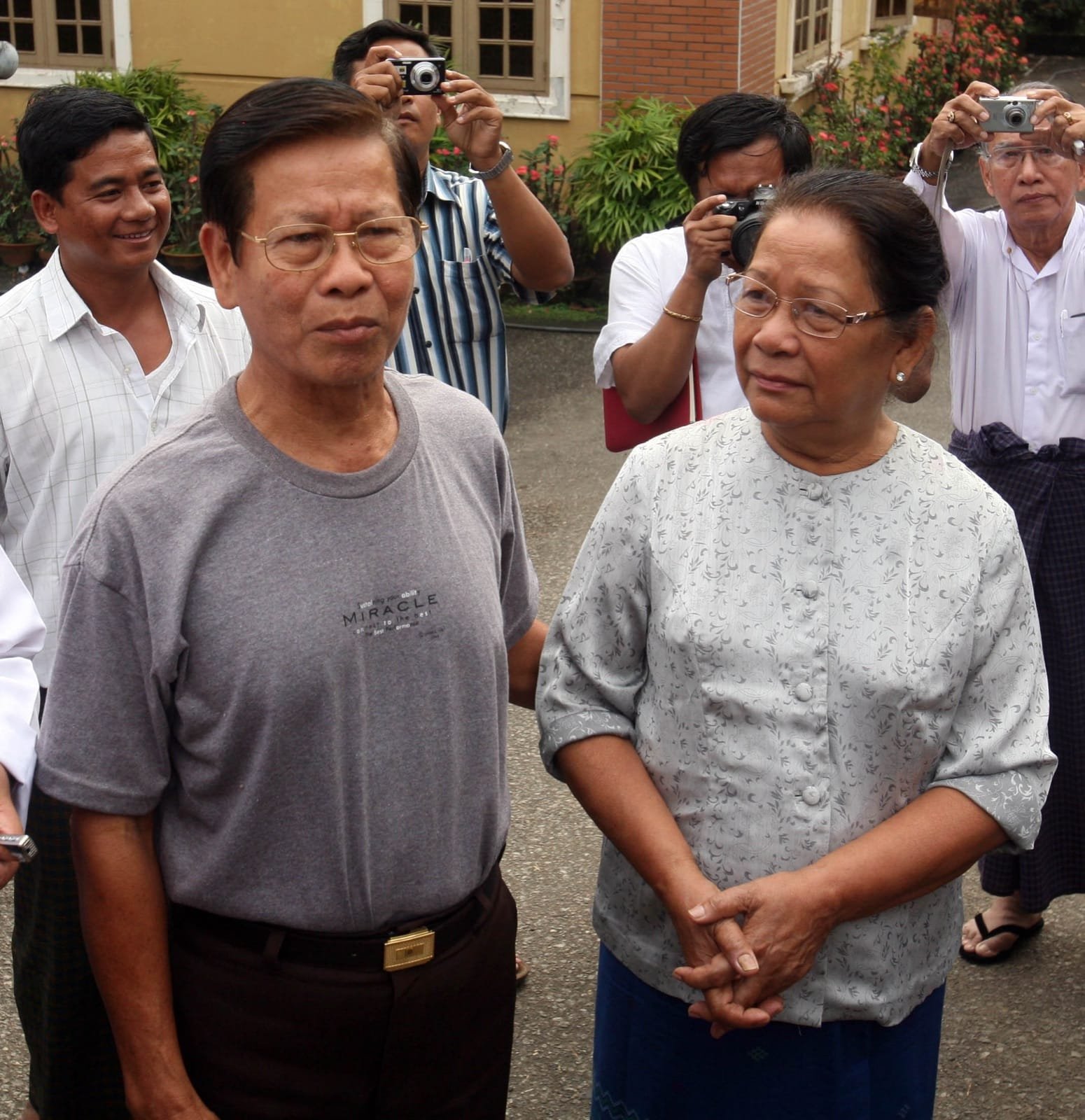
Released under amnesty
Left house arrest during Thein Sein’s wider political-prisoner releases.
From army officer to intelligence chief
Khin Nyunt was born in Kyauktan Township near Rangoon in 1939. Biographical records give different October birth dates, so the discrepancy should be treated as a source problem rather than hidden. He left civilian study for officer training and received a commission in 1960. After service in infantry and intelligence assignments, he became head of the Directorate of Defence Services Intelligence in the mid-1980s.
The intelligence organisation grew into one of the military state’s most powerful institutions. It collected political information, supervised surveillance and detention, monitored other officials and maintained influence inside civilian departments. When the army created the SLORC in September 1988, Khin Nyunt became its secretary-1. That position and his command of intelligence made him a central figure below Saw Maung and later Than Shwe.
Ceasefires, diplomacy and coercive control
Khin Nyunt became closely associated with the ceasefire strategy used after the Communist Party of Burma fragmented in 1989. Agreements with several ethnic armed organisations reduced fighting in some areas without producing a comprehensive political settlement. The intelligence apparatus helped manage these arrangements and the economic concessions surrounding them, giving him a reputation as a negotiator within an otherwise rigid military leadership.
That reputation did not make his institution liberal. Human-rights reporting documented arbitrary detention, political trials and intense surveillance during the SLORC and SPDC years. Universities were repeatedly closed or reorganised after student protest, while the NLD’s 1990 electoral victory remained unimplemented. Khin Nyunt’s career therefore combined tactical negotiation with an intelligence system built to contain opposition and protect military rule.
Prime minister and the seven-step roadmap
Than Shwe appointed Khin Nyunt prime minister on 25 August 2003. Five days later he announced a seven-step roadmap: reconvene the National Convention, draft a constitution, hold a referendum and elections, then establish institutions under the new charter. United Nations reports recorded the sequence while questioning whether political parties and ethnic representatives could participate freely.
The National Convention resumed in May 2004 without the detained Aung San Suu Kyi and with the NLD absent. The process eventually fed into the 2008 Constitution, but Khin Nyunt did not remain in office to oversee it. His short premiership illustrates how Myanmar’s later constitutional transition originated inside the military government rather than through implementation of the 1990 electoral mandate.
Purge, sentence and release
On 18 October 2004 Khin Nyunt was dismissed and detained. The government described a health retirement and later corruption allegations, while the United Nations and outside observers reported a wider purge of his military intelligence faction. Offices were dismantled, associates arrested and Soe Win became prime minister. The episode strengthened the position of Than Shwe and other commanders who controlled the conventional armed forces.
A special tribunal convicted Khin Nyunt on corruption charges in 2005 and imposed a forty-four-year sentence that Amnesty International reported as suspended while he remained under house arrest. President Thein Sein’s amnesty released him in January 2012. His subsequent public life was quiet, but debate about his legacy continued: the roadmap and ceasefires cannot be separated from the surveillance, detention and unaccountable power exercised by the intelligence system he led.
Quick answers
Frequently asked questions about Khin Nyunt
- Who is Khin Nyunt?
- Khin Nyunt is a military intelligence chief and prime minister of Myanmar. Khin Nyunt’s rise and fall exposes both the institutional reach and internal factional struggles of Myanmar’s military government before the 2008 Constitution.
- What is Khin Nyunt best known for?
- Khin Nyunt is best known for building a powerful military intelligence system and announcing the seven-step political roadmap in 2003.
- When and where was Khin Nyunt born?
- Khin Nyunt was born on 23 October 1939 in Kyauktan Township near Rangoon, British Burma.
Sources and further reading
Explore the evidence
These references support the biography and offer further reading. Official records, first-person accounts and independent reporting provide different perspectives; image records document attribution and licensing.
- 1. United Nations General AssemblyUN report on Khin Nyunt’s appointment and seven-step roadmap
- 2. United Nations Secretary-GeneralNoon briefing on Khin Nyunt’s dismissal and detention
- 3. Human Rights WatchMyanmar background and the 2004 intelligence purge
- 4. Amnesty InternationalAmnesty International Report 2006 · Myanmar
- 5. Sciences Po Research NetworkKhin Nyunt · Mass Violence and Resistance profile
- 6. Wikimedia Commons2012 release photograph and CC BY-SA 3.0 record