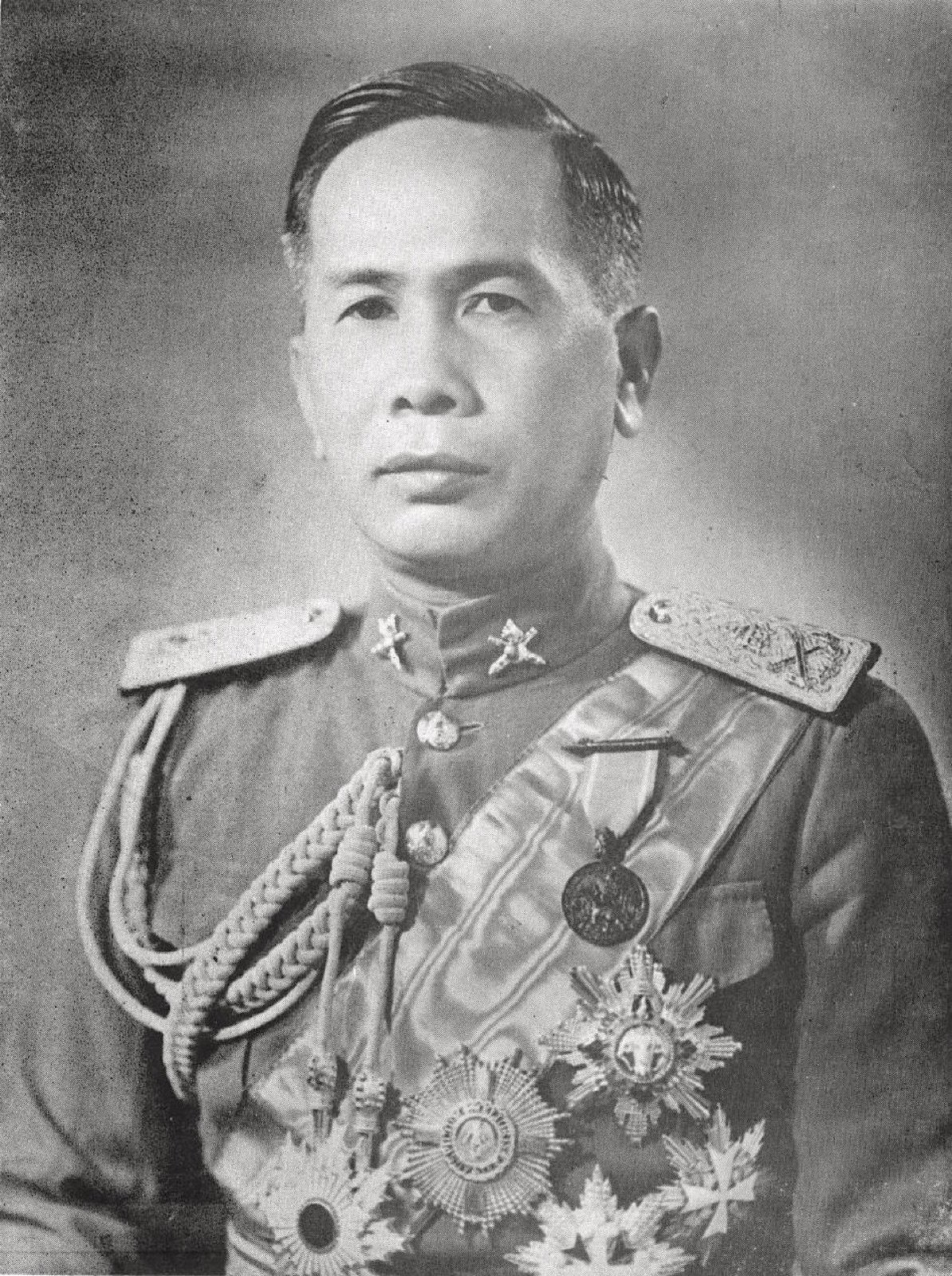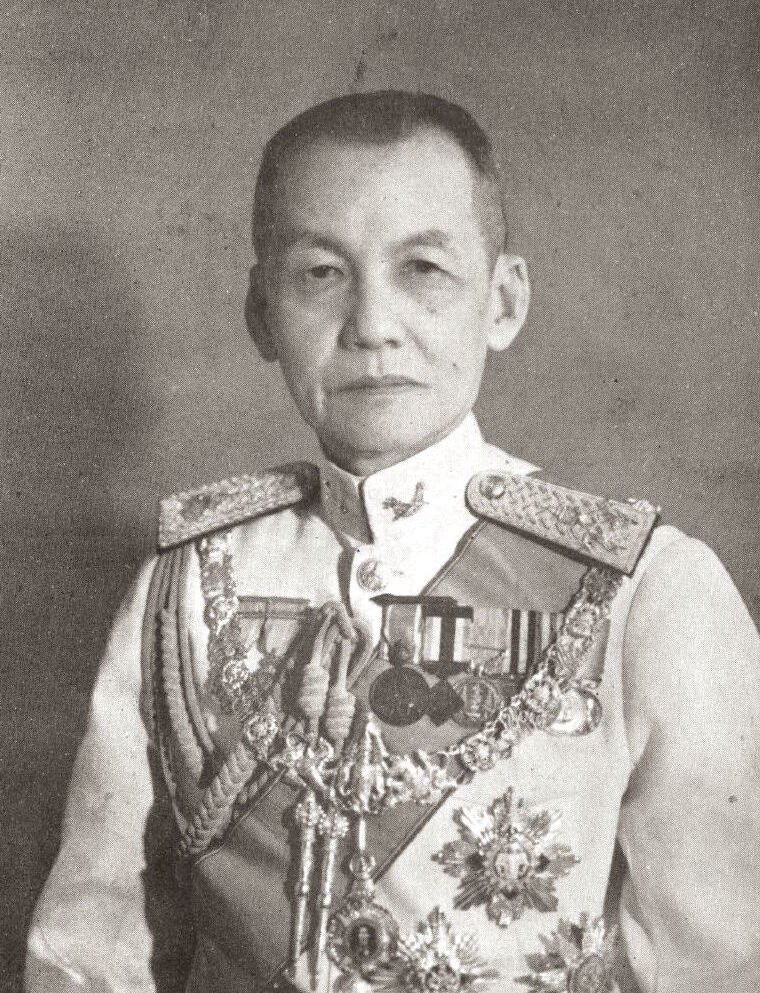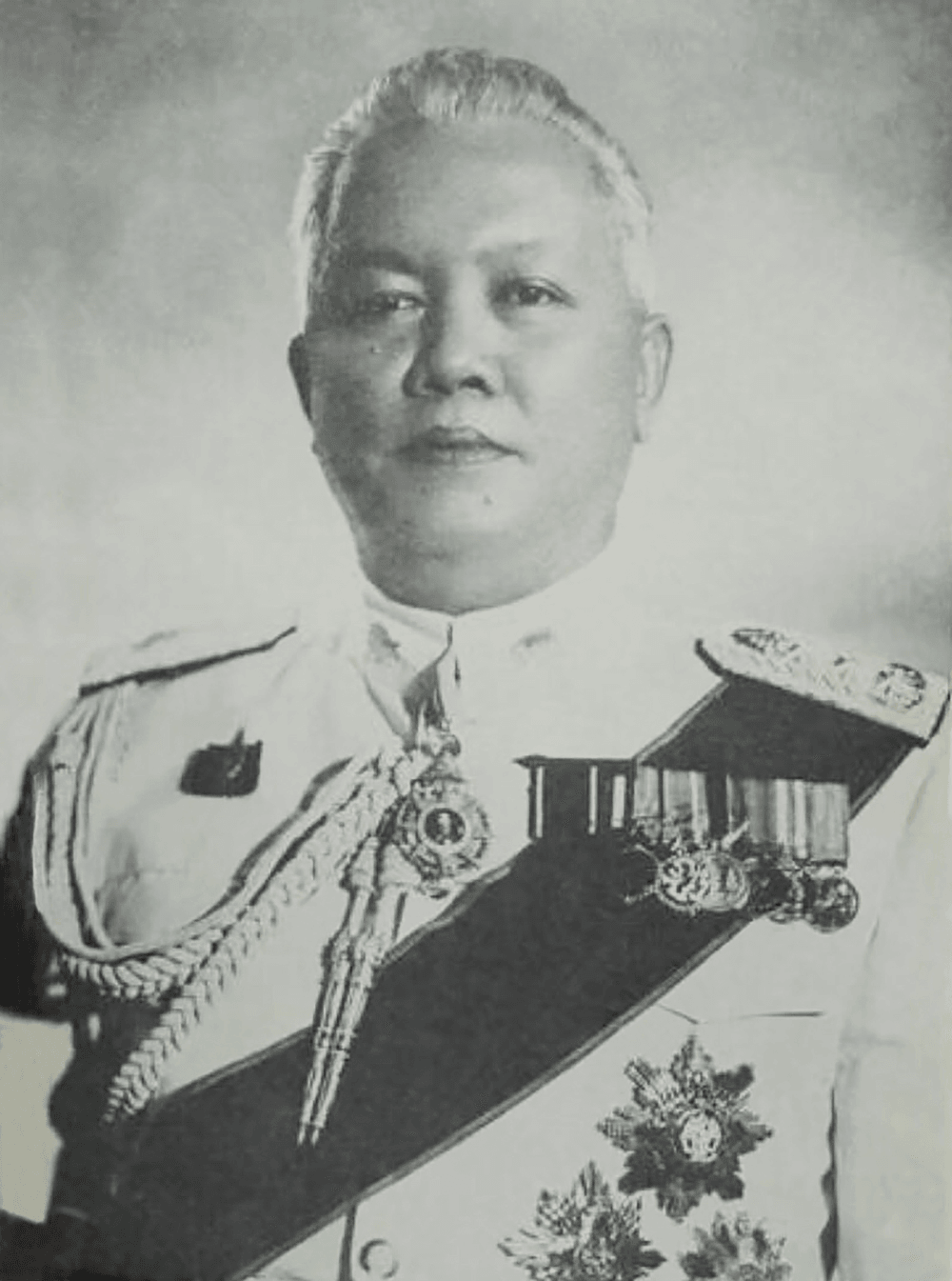
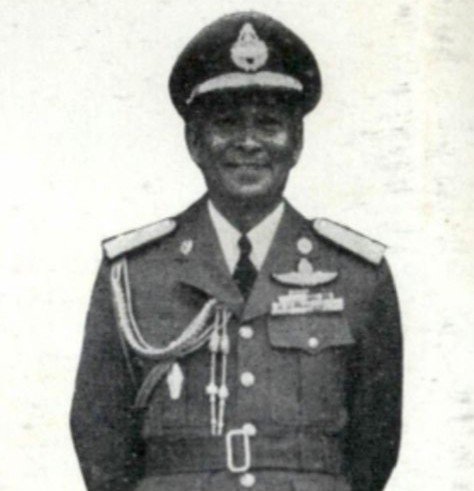
In this biography
Quick facts
- Born
- 21 February 1900
- Died
- 8 July 1987
- Birthplace
- Phra Nakhon, Siam
- Country
- Thailand
- Nationality
- Thai
- Known for
- Commanding the air force from 1949 to 1957 and joining the 1951 Radio Coup committee
- Military branch
- Royal Thai Air Force
- Air-force command
- Commander-in-chief, 1949–1957
- Cabinet office
- Deputy prime minister, 1955–1957
- Highest rank
- Marshal of the Royal Thai Air Force
Why this life matters
Fuen turned air power into political leverage during the Phibun era while also overseeing institutions that shaped the Royal Thai Air Force long after military rule changed hands.
Timeline
Key moments
Born in Phra Nakhon
Born on 21 February in the capital district of Siam and later entered military aviation training.
Served on the wartime air staff
Held a senior planning role as the air force developed bases and operations during the Second World War.
Joined the Coup Group
Supported the military coalition that removed Thawan’s postwar civilian government.
Became air-force commander
Took command of the Royal Thai Air Force and held the post through the end of Phibun’s government.
Ordered action against the naval rebellion
Air-force attacks helped defeat the Manhattan Rebellion despite Phibun being held aboard the naval flagship.
Joined the Radio Coup committee
Served as one of three air-force officers on the nine-man Provisional Executive Committee.
Served as transport minister
Entered cabinet office after the coup removed constitutional limits on serving officers holding ministries.
Established the air-force academy
Created the Royal Thai Air Force Academy on a provisional basis before its permanent establishment.
Became the first Marshal of the Royal Thai Air Force
Received the rank of Marshal of the Royal Thai Air Force, the service’s highest rank.
Served as deputy prime minister
Held senior civilian office while remaining commander of the air force.
Lost office after Sarit’s coup
The overthrow of Phibun ended Fuen’s cabinet role and command of the air force.
Died at the age of eighty-seven
Died on 8 July, three decades after leaving high office.
From military aviation to the postwar Coup Group
Fuen Ronnaphagrad Ritthakhanee was born in Phra Nakhon in 1900 and entered a military system in which aviation was still a young institution. Royal Thai Air Force records trace his education and service through the expansion of the air arm, while wartime histories place him on the senior staff responsible for airfields and operational planning. His career therefore began as institution-building before it became inseparable from national politics.
Fuen joined the officers behind the November 1947 coup, which removed Thawan Thamrongnawasawat and reopened the path to Plaek Phibunsongkhram’s premiership. He was not the public figurehead of the operation, but the participation of senior air-force officers mattered: the Coup Group was broader than a single army faction, and later takeovers repeatedly presented themselves as collective action by the armed services.
Air-force command and the Manhattan Rebellion
Fuen became commander-in-chief of the Royal Thai Air Force in December 1949. His decisive political emergence came during the Manhattan Rebellion on 29–30 June 1951. Naval officers seized Phibun and held him aboard HTMS Sri Ayudhya, expecting that the hostage would deter an attack. The army, police and air force instead treated suppression of the revolt as the priority. Aircraft bombed naval positions and the flagship caught fire before sinking.
A contemporary American embassy assessment described Fuen’s stand as ruthless and predicted that his role would increase his stature. That language should not be softened: the counterattack placed the prime minister, sailors and civilians at risk, and casualty totals remain disputed. Strategically, however, it succeeded. The navy was purged and reduced, while Fuen joined Phin Choonhavan, Phao Siyanon and Sarit Thanarat among the commanders Phibun now had to balance.
The Radio Coup and military government
On 29 November 1951, radio broadcasts announced that the government had ceased to function, parliament had been dissolved and the 1932 Constitution restored. Fuen was one of three air-force officers on the nine-man Provisional Executive Committee, alongside three army and three naval officers associated with the 1947 Coup Group. Phibun soon returned as prime minister, but the coup made clear that commanders could reorganise the state while the formal head of government objected.
Fuen entered the cabinet as transport minister and later became deputy prime minister. The constitutional change allowed serving officers to combine commands, ministries and legislative seats. The Ministry of Foreign Affairs history records that nineteen of twenty-five ministers in the December cabinet were active or retired military officers. Fuen was not as powerful as Phao or Sarit, yet air-force command gave the ruling coalition another armed centre and prevented politics from becoming a simple army–police contest.
Institution building, removal and historical balance
Fuen’s tenure also changed the air force as an institution. Official records credit him with founding the Royal Thai Air Force Academy provisionally in 1953, and an air-force history records his promotion in July 1954 as Thailand’s first Marshal of the Royal Thai Air Force. Training, new aircraft and United States assistance expanded the service during the early Cold War. Those developments cannot be separated from the authoritarian order that directed them.
Sarit’s September 1957 coup removed Phibun and broke the coalition in which Fuen had prospered. Fuen left the cabinet and air-force command, later retiring from the supreme command structure. He died in 1987. His legacy is double-sided: he helped professionalise Thai military aviation and create a durable academy, but he also used armed command to defeat one coup and participate in another. Both records are necessary to understand the political power of the air force in the Phibun era.
Quick answers
Frequently asked questions about Fuen Ronnaphagrad Ritthakhanee
- Who was Fuen Ronnaphagrad Ritthakhanee?
- Fuen Ronnaphagrad Ritthakhanee was a royal Thai Air Force commander and deputy prime minister. Fuen turned air power into political leverage during the Phibun era while also overseeing institutions that shaped the Royal Thai Air Force long after military rule changed hands.
- What is Fuen Ronnaphagrad Ritthakhanee best known for?
- Fuen Ronnaphagrad Ritthakhanee is best known for commanding the air force from 1949 to 1957 and joining the 1951 Radio Coup committee.
- When and where was Fuen Ronnaphagrad Ritthakhanee born?
- Fuen Ronnaphagrad Ritthakhanee was born on 21 February 1900 in Phra Nakhon, Siam.
- When did Fuen Ronnaphagrad Ritthakhanee die?
- Fuen Ronnaphagrad Ritthakhanee died on 8 July 1987.
Sources and further reading
How this biography was checked
Core dates and offices are checked against the sources below. This profile was last reviewed on 3 October 2026.
- Royal Thai Air ForceOfficial biography of Fuen Ronnaphagrad Ritthakhanee
- Royal Thai Air ForceCommanders of the Royal Thai Air Force
- Royal Thai Air ForceRoyal Thai Air Force historical magazine, October 2020
- Ministry of Foreign Affairs of ThailandThe Quest for Thai–US Alliance
- Office of the Historian, U.S. Department of StateAssessment of the Manhattan Rebellion and its consequences
- Office of the Historian, U.S. Department of StateInitial report on the 29 November 1951 coup
- Wikimedia CommonsFuen Ronnaphagrad Ritthakhanee portrait and licence record