In this biography
Quick facts
- Born
- 1 May 1961
- Birthplace
- Bangkok, Thailand
- Country
- Thailand
- Nationality
- Thai
- Known for
- Implementing universal health coverage and leading Thai political parties
- Public health minister
- 17 February 2001 – 10 March 2005
- Agriculture minister
- March 2005 – September 2006
- Major policy
- Nationwide rollout of the Universal Coverage Scheme
- Political parties
- Palang Dharma, Thai Rak Thai, Pheu Thai and Thai Sang Thai
Why this life matters
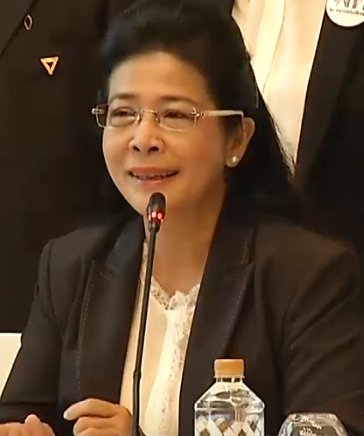
Sudarat connects the policy delivery that built Thai Rak Thai’s electoral appeal to later efforts by women to lead national parties and compete for the premiership.
Timeline
Key moments
Born in Bangkok
Born on 1 May and later studied commerce, marketing and business administration at Chulalongkorn University.
Won her first House seat
Entered parliament for the Palang Dharma Party during the year of the Black May crisis.
Became party secretary-general and deputy minister
Took senior responsibility in Palang Dharma and joined the government as deputy transport minister.
Helped found Thai Rak Thai
Joined Thaksin Shinawatra in building a national party around a policy-led election platform.
Became public health minister
Led the rapid provincial expansion of the 30-baht Universal Coverage Scheme.
Moved to the Agriculture Ministry
Took responsibility for agricultural production, food safety and market policy after Thai Rak Thai’s landslide.
Served a five-year political ban
The Thai Rak Thai dissolution ruling barred 111 party executives from electoral office.
Led Pheu Thai’s national campaign
Was one of the party’s prime-ministerial nominees as it won the largest House bloc.
Built and led Thai Sang Thai
Established a new party and stood among its candidates for prime minister in the 2023 election.
Left the party leadership
Resigned as Thai Sang Thai leader and said she would focus on civic anti-corruption and constitutional reform work.
Education and an early route through Palang Dharma
Sudarat Keyuraphan was born in Bangkok on 1 May 1961. She studied commerce and accounting with a marketing focus at Chulalongkorn University, then completed an MBA through the university’s Sasin graduate institute. She later earned a doctorate in Buddhist studies, adding an academic path to a career built first through electoral organisation.
She entered the House in 1992 as a Palang Dharma MP during the political opening around Black May. In 1994 she became party secretary-general and deputy transport minister. Those posts gave her experience in both Bangkok constituency politics and executive administration while Thaksin Shinawatra, then Palang Dharma leader, was also moving into national office.
Thai Rak Thai and the universal coverage rollout
Sudarat helped establish Thai Rak Thai in 1998 and became a deputy leader. After the party’s 2001 election victory, Thaksin appointed her minister of public health. The government had promised health access for people outside the civil-service and social-security schemes through a thirty-baht payment for visits and admissions.
The National Health Security Office records that Sudarat and deputy minister Surapong Suebwonglee led the implementation with senior health officials. The scheme began in six provinces in April 2001, expanded to fifteen more in June and reached every province within a year. Legislation later created the National Health Security Office and a durable tax-funded Universal Coverage Scheme. The achievement depended on earlier reform research, civil-society advocacy and health officials as well as elected political commitment.
Agriculture, the coup and a five-year ban
After Thai Rak Thai won 377 seats in 2005, Sudarat moved to the Ministry of Agriculture and Cooperatives. Her portfolio included agricultural restructuring, food safety and access to export markets. The position also placed her inside the government during escalating protest over Thaksin’s power, conflicts of interest and accountability.
The September 2006 coup removed the administration and repealed the 1997 Constitution. In May 2007, a tribunal dissolved Thai Rak Thai and barred 111 executives, including Sudarat, from politics for five years. The sanction interrupted her electoral career but did not remove the party networks or policy reputation that continued through the People Power Party and Pheu Thai.
Pheu Thai strategy and the 2019 election
After the ban expired, Sudarat returned to the Thaksin-aligned movement and became a leading Pheu Thai strategist. For the 2019 election she was one of the party’s nominees for prime minister and its most visible national campaign figure. Pheu Thai won 136 seats, the largest House bloc, but a military-appointed Senate joined MPs in choosing Prayut Chan-o-cha for another term.
The campaign highlighted the limits women faced even when positioned close to executive power. Sudarat had long ministerial experience and led the largest party’s public appeal, yet Thailand’s constitutional system did not make the first-place House party the government. Internal competition inside Pheu Thai and the continuing centrality of the Shinawatra family also constrained her route to the premiership.
Thai Sang Thai and a later civic role
Sudarat left Pheu Thai and helped build Thai Sang Thai as a separate political vehicle. The party presented economic recovery, small-business support and protection from authoritarian power as central themes. The Election Commission listed her among its prime-ministerial candidates in 2023, but the party won only a small House presence in an election dominated by Move Forward and Pheu Thai.
She resigned the party leadership in February 2026 and said she would shift toward civic work on corruption and constitutional reform. Her long career is therefore not reducible to one party. It links Bangkok electoral organisation, cabinet implementation of a transformative health programme, punishment after a coup-era dissolution and the continuing effort by experienced women politicians to claim national leadership.
Quick answers
Frequently asked questions about Sudarat Keyuraphan
- Who is Sudarat Keyuraphan?
- Sudarat Keyuraphan is a former public health minister and party leader. Sudarat connects the policy delivery that built Thai Rak Thai’s electoral appeal to later efforts by women to lead national parties and compete for the premiership.
- What is Sudarat Keyuraphan best known for?
- Sudarat Keyuraphan is best known for implementing universal health coverage and leading Thai political parties.
- When and where was Sudarat Keyuraphan born?
- Sudarat Keyuraphan was born on 1 May 1961 in Bangkok, Thailand.
Sources and further reading
How this biography was checked
Core dates and offices are checked against the sources below. This profile was last reviewed on 3 October 2026.
- Thai Sang Thai PartyBiography of Sudarat Keyuraphan
- National Health Security OfficeAssessment of Thailand’s Universal Coverage Scheme
- National Health Security OfficeThe Art of Establishing Universal Health Coverage in Thailand
- World Health OrganizationPolitical economy of primary-health-care reform in Thailand
- Election Commission of ThailandPrime-ministerial candidate lists for the 2023 election
- The Nation ThailandSudarat resigns as Thai Sang Thai leader
- Wikimedia CommonsPortrait and CC BY 3.0 licence record