
The short answer
ASEAN began with one short declaration signed by five ministers. It became a region-wide association through six accessions, foundational agreements in Bali, a binding Charter and a community framework—while preserving the sovereignty and political diversity of its members.
Membership at a glance
When did each country join ASEAN?
Five governments created ASEAN in 1967. Six later accessions expanded the association until every sovereign Southeast Asian state was represented in 2025.
| Country | Membership date | Membership stage | Historical context |
|---|---|---|---|
| Indonesia | 8 August 1967 | Founding member | Adam Malik signed after the end of Indonesia–Malaysia Confrontation opened space for regional reconciliation. |
| Malaysia | 8 August 1967 | Founding member | Deputy prime minister Tun Abdul Razak signed for a federation created four years earlier. |
| Philippines | 8 August 1967 | Founding member | Foreign affairs secretary Narciso Ramos joined the agreement despite difficult preceding negotiations. |
| Singapore | 8 August 1967 | Founding member | S. Rajaratnam signed two years after Singapore became an independent republic. |
| Thailand | 8 August 1967 | Founding member | Host foreign minister Thanat Khoman helped turn reconciliation talks into a permanent association. |
| Brunei | 7 January 1984 | Sixth member | Accession came six days after Brunei achieved full independence from Britain. |
| Vietnam | 28 July 1995 | Seventh member | Membership marked a major post-Cold War bridge between mainland Southeast Asia and the original association. |
| Laos | 23 July 1997 | Eighth member | Laos joined alongside Myanmar during the regional expansion of the 1990s. |
| Myanmar | 23 July 1997 | Ninth member | Myanmar entered with Laos, extending ASEAN across most of mainland Southeast Asia. |
| Cambodia | 30 April 1999 | Tenth member | Accession followed the long peace and political transition that began with the 1991 Paris agreements. |
| Timor-Leste | 26 October 2025 | Eleventh member | Full membership followed a 2011 application, observer status and an accession roadmap. |
Chronology
A timeline of the turning points
The Bangkok Declaration established ASEAN
Five ministers representing Indonesia, Malaysia, the Philippines, Singapore and Thailand signed the founding declaration in Bangkok.
First ASEAN Summit in Bali
Leaders signed the Treaty of Amity and Cooperation, the Declaration of ASEAN Concord and an agreement establishing the ASEAN Secretariat.
Brunei became the sixth member
The newly independent sultanate joined less than a week after the end of British responsibility for its external affairs.
Vietnam became the seventh member
The accession began the rapid enlargement that made ASEAN a near region-wide association by the end of the decade.
Southeast Asia Nuclear Weapon-Free Zone Treaty signed
ASEAN members committed to preserve the region as a zone free of nuclear weapons.
Laos and Myanmar joined
Two simultaneous accessions increased membership to nine during the Asian financial crisis.
Cambodia became the tenth member
Cambodia’s admission completed the long-envisaged grouping of ten Southeast Asian states.
ASEAN leaders signed the Charter
The Singapore summit approved a binding institutional framework and legal personality for the association.
The ASEAN Charter entered into force
Ratification by all ten members placed cooperation under the new legal and organisational framework.
The ASEAN Community began
Political-security, economic and socio-cultural pillars became the organising structure for deeper community-building.
Timor-Leste received in-principle approval
ASEAN leaders agreed in principle to admit Timor-Leste and granted observer status while a full-membership roadmap was prepared.
Timor-Leste became the eleventh member
Leaders signed its admission declaration at the 47th ASEAN Summit in Kuala Lumpur.
Why was ASEAN founded in 1967?
ASEAN emerged after decolonisation, armed conflict and interstate disputes had made Southeast Asian cooperation both difficult and urgent. Earlier projects such as the Association of Southeast Asia involved fewer countries and stalled when relations deteriorated.
The end of Indonesia–Malaysia Confrontation created a new opening. Thai diplomacy helped bring Indonesia, Malaysia and the Philippines back into dialogue; Singapore joined those talks, and the five ministers worked from a Thai draft before signing in Bangkok.
What did the Bangkok Declaration create?
The ASEAN Declaration was concise rather than constitutional. It established an association for regional cooperation and listed aims spanning economic growth, social and cultural development, education, technical collaboration, peace and stability.
Its openness clause mattered over time. Membership was not permanently limited to the founding five: other Southeast Asian states could join if they subscribed to the association’s aims, principles and purposes.
How did ASEAN become a region-wide organisation?
Brunei’s 1984 accession was the first expansion. The end of the Cold War then altered relations across mainland Southeast Asia: Vietnam joined in 1995, Laos and Myanmar in 1997, and Cambodia in 1999.
Timor-Leste’s path was longer. The country applied in 2011, received in-principle approval and observer status in 2022, followed an accession roadmap adopted in 2023 and became a full member in October 2025.
How did ASEAN become more institutional?
The first leaders’ summit in 1976 produced the Treaty of Amity and Cooperation, Bali Concord I and the agreement establishing a permanent secretariat. Together they strengthened principles for interstate relations and gave regional work an administrative centre.
The Charter signed in 2007 and effective in 2008 gave ASEAN legal personality and a clearer institutional framework. The ASEAN Community launched in 2015 organised cooperation around political-security, economic and socio-cultural pillars without turning the association into a supranational state.
What does ASEAN membership mean—and what does it not mean?
Membership provides regular diplomacy, shared agreements and a platform for regional and external cooperation. It connects countries with different sizes, political systems, income levels and historical experiences through consensus-based institutions.
ASEAN does not erase sovereignty or guarantee uniform policy. Its history is therefore best read through both institutions and people: ministers who negotiated its founding, leaders who signed later agreements and national societies that continue to debate the balance between non-interference, cooperation and accountability.
Continue the chronology
Related history guides
ASEAN Secretaries-General
Meet all 15 officeholders and trace how ASEAN’s senior permanent office changed.
Read the timelineFive signatories · 1967ASEAN Founding Fathers
Read the biographies of the five ministers who signed the Bangkok Declaration.
Read the timeline27 November 1971ZOPFAN
Understand ASEAN’s early goal of peace, freedom, neutrality and regional autonomy.
Read the timeline23–24 February 1976TAC and Bali Concord I
Read the first summit’s treaty principles, cooperation programme and Secretariat agreement.
Read the timeline2007–2008The ASEAN Charter
See how ASEAN gained legal personality and a clearer institutional framework.
Read the timeline31 December 2015The ASEAN Community
Explore the three pillars organising deeper regional cooperation.
Read the timeline1898—2002Southeast Asia Independence Dates
Compare declarations, transfers, federation, separation and restored sovereignty.
Read the timeline18—24 April 1955The Bandung Conference
Trace an earlier Asian-African forum for decolonisation and sovereign cooperation.
Read the timelineRegional archiveSoutheast Asia Biographies
Explore the political, business, sporting and cultural lives behind regional history.
Read the timelineConnected biographies
Meet the five signatories who founded ASEAN
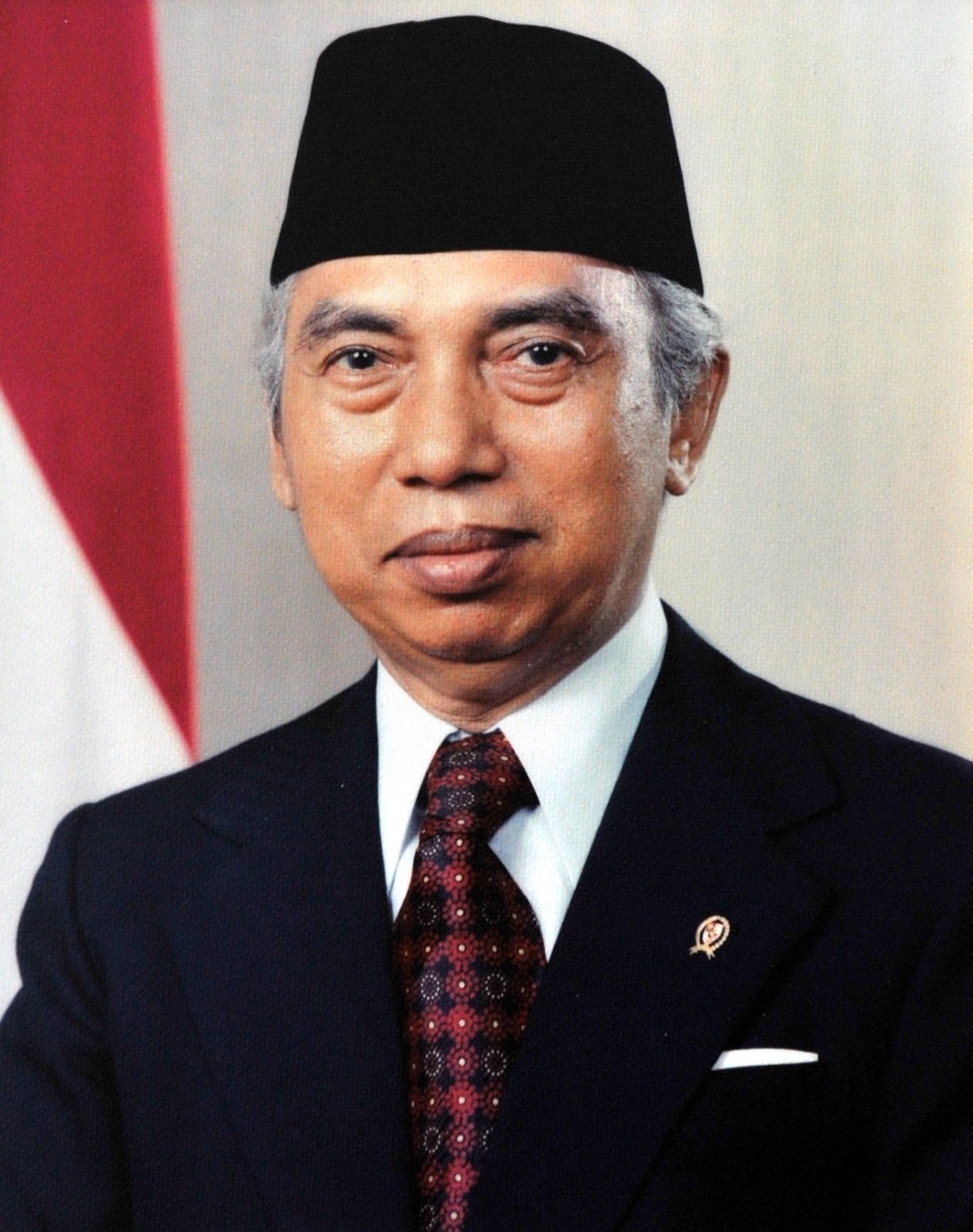
1917—1984
Adam Malik
Diplomat, journalist and third Vice President of IndonesiaA news-agency founder, independence activist and diplomat who moved from revolutionary politics to ASEAN, the United Nations and the vice presidency.Read biography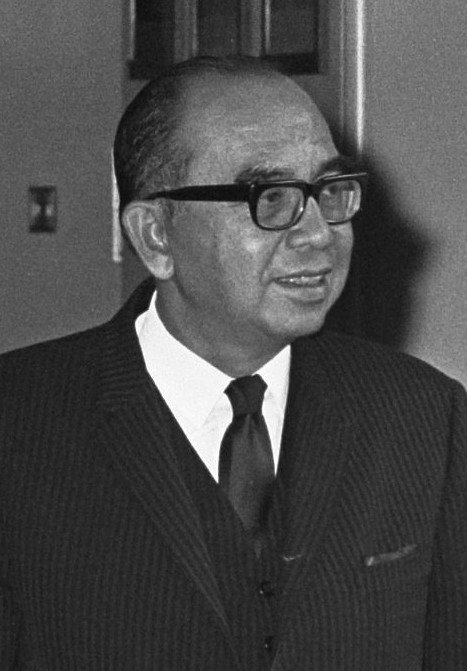
1922—1976
Abdul Razak Hussein
Second Prime Minister of MalaysiaMalaysia’s second prime minister, remembered for rural development, post-1969 reconstruction and a far-reaching programme of social and economic restructuring.Read biography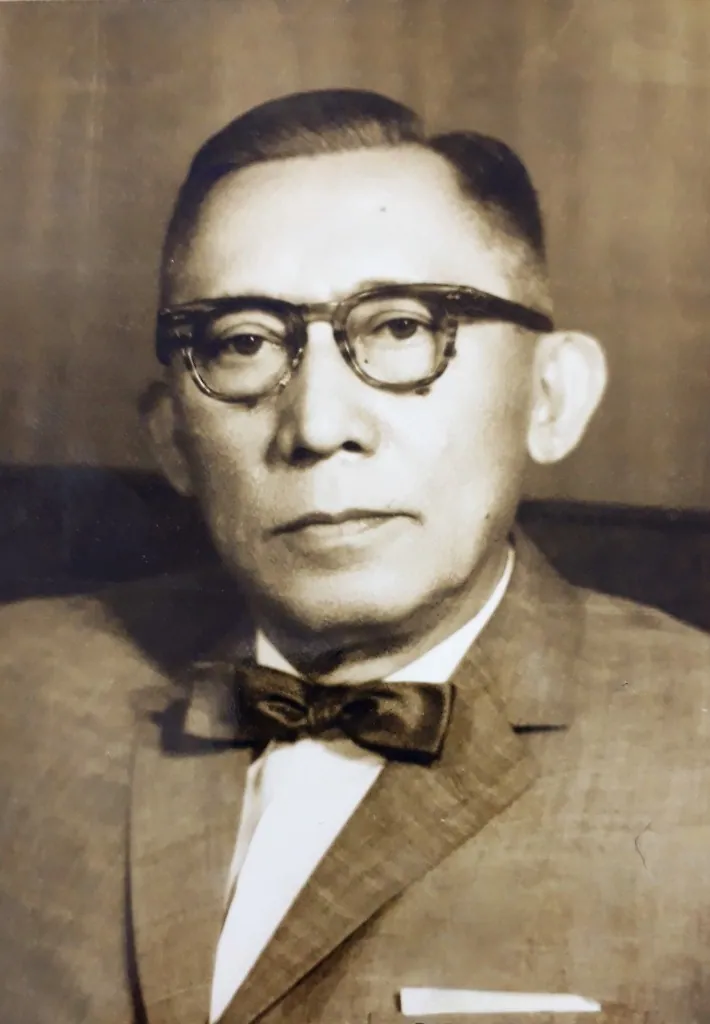
1900—1986
Narciso Ramos
Journalist, legislator, diplomat and ASEAN co-founderA journalist and legislator who helped build the independent Philippines’ foreign service and signed the declaration that founded ASEAN.Read biography1915—2006
S. Rajaratnam
Founding Foreign Minister of SingaporeA journalist, founding PAP leader and Singapore’s first foreign minister, remembered for the National Pledge and a global vision for a small, multiracial state.Read biography
1914—2016
Thanat Khoman
Diplomat, foreign minister and ASEAN co-founderA Thai diplomat whose regional initiatives, patient mediation and signature on the Bangkok Declaration helped turn post-colonial rivalry into ASEAN cooperation.Read biographyQuick answers
Common questions
- When was ASEAN founded?
- ASEAN was founded on 8 August 1967 when five ministers signed the ASEAN Declaration, also called the Bangkok Declaration, in Bangkok, Thailand.
- Which countries founded ASEAN?
- Indonesia, Malaysia, the Philippines, Singapore and Thailand were the five founding member states.
- Who were the five ASEAN founding fathers?
- They were Adam Malik, Tun Abdul Razak, Narciso Ramos, S. Rajaratnam and Thanat Khoman—the five signatories of the Bangkok Declaration.
- How many ASEAN member states are there?
- ASEAN has eleven member states following Timor-Leste’s admission on 26 October 2025.
- Which country joined ASEAN most recently?
- Timor-Leste became the eleventh and most recent member on 26 October 2025.
- When did the ASEAN Charter take effect?
- The Charter was signed on 20 November 2007 and entered into force on 15 December 2008 after ratification by all ten members at the time.
- When was the ASEAN Community established?
- The ASEAN Community was formally launched on 31 December 2015 around political-security, economic and socio-cultural pillars.
Primary and institutional sources
How this history was checked
Dates, legal milestones and historical claims are checked against the official and institutional records below. This article was reviewed on 9 September 2026.
- ASEAN SecretariatThe Founding of ASEAN
- ASEAN SecretariatThe ASEAN Declaration (Bangkok Declaration)
- ASEAN SecretariatJoint Communique of the First ASEAN Summit, 1976
- ASEAN SecretariatTreaty of Amity and Cooperation in Southeast Asia
- ASEAN SecretariatAbout ASEAN — membership dates and Charter
- ASEAN SecretariatASEAN Charter — significance and entry into force
- ASEAN SecretariatASEAN 2025 at a Glance
- ASEAN SecretariatTimor-Leste Admitted into ASEAN