
The short answer
ASEAN’s first summit transformed a young association. In two days, its five leaders signed a code for peaceful interstate conduct, issued a broad cooperation programme and created a permanent Secretariat—three distinct steps that are often compressed into one.
Article 2 explained
The six fundamental principles of the TAC
The treaty states each principle compactly. The final column explains its practical focus without replacing the legal text.
| Country | Treaty focus | Practical meaning |
|---|---|---|
| Mutual respect | Independence, sovereignty, equality, territorial integrity and national identity | Parties recognise one another as sovereign equals despite differences in power or political system. |
| Freedom from coercion | No external interference, subversion or coercion | Every state retains the right to conduct its national existence free from outside pressure of these kinds. |
| Non-interference | Internal affairs | Parties commit not to intervene in matters treated as belonging to another state’s domestic jurisdiction. |
| Peaceful settlement | Differences or disputes | Negotiation and other peaceful means should replace escalation. |
| No threat or use of force | Restraint in interstate relations | Parties reject coercive military threats and force as ways to resolve differences. |
| Effective cooperation | Practical regional collaboration | The relationship is meant to produce cooperation, not only avoid conflict. |
Chronology
A timeline of the turning points
ZOPFAN stated a regional peace-and-neutrality goal
ASEAN foreign ministers declared their ambition for a Southeast Asia free from outside-power interference.
ASEAN’s first leaders’ summit opened in Bali
The heads of government of the five founding states met together for the association’s first summit.
Leaders signed the Treaty of Amity and Cooperation
The TAC codified sovereign equality, non-interference, peaceful settlement, renunciation of force and cooperation.
Bali Concord I set a wider programme
The Declaration of ASEAN Concord addressed political stability, economic cooperation and stronger regional machinery.
A permanent ASEAN Secretariat was agreed
A separate agreement established the Secretariat in Jakarta and the office of Secretary-General.
The TAC opened to other Southeast Asian states
A protocol extended accession beyond the five original high contracting parties.
Accession opened beyond Southeast Asia
A second protocol enabled states outside the region to join with the consent of all Southeast Asian parties.
ASEAN marked the TAC’s fiftieth anniversary
Foreign ministers reaffirmed the treaty as a foundational code of conduct for interstate relations in the region.
What happened at the first ASEAN summit?
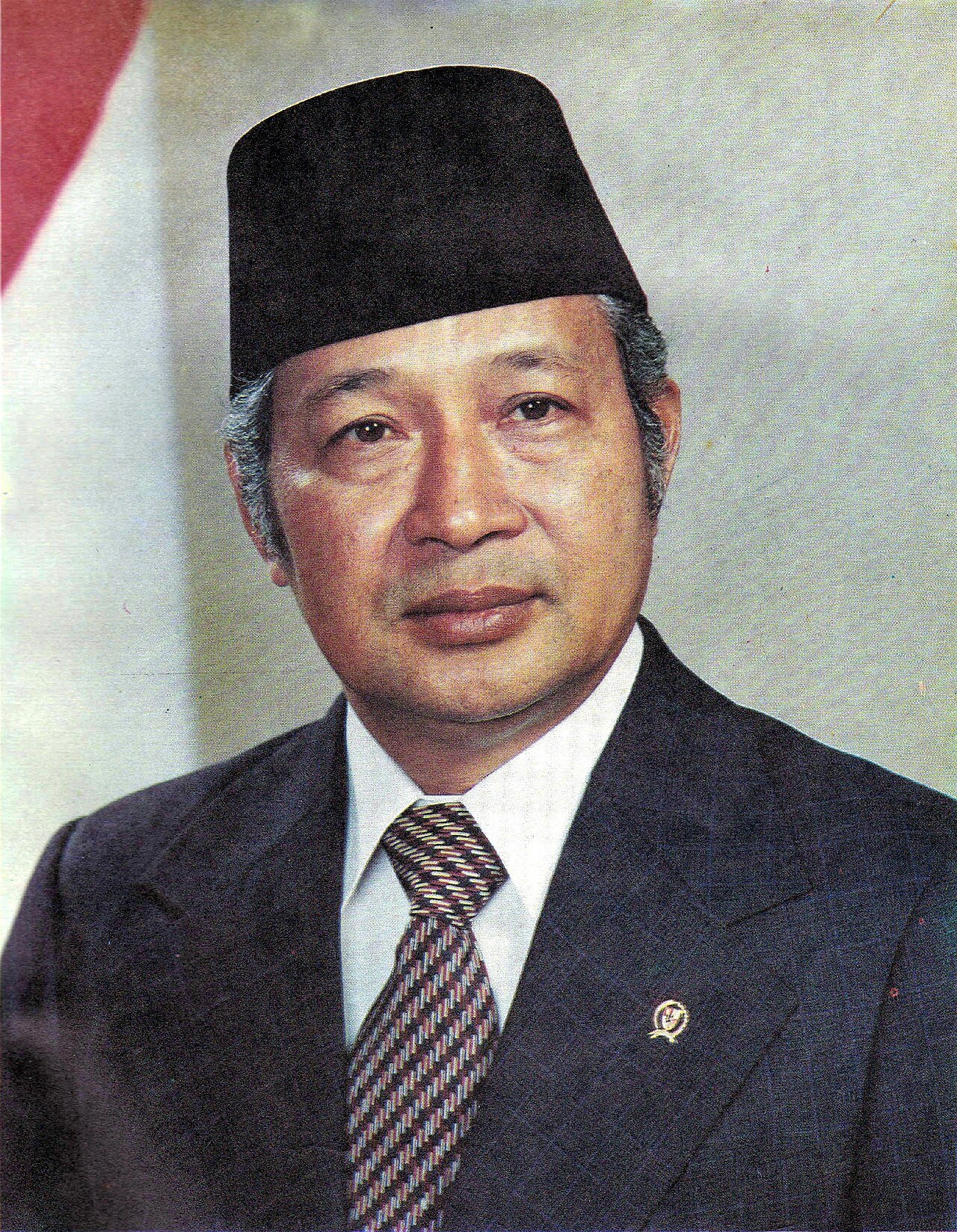
President Suharto of Indonesia hosted Hussein Onn of Malaysia, Ferdinand Marcos of the Philippines, Lee Kuan Yew of Singapore and Kukrit Pramoj of Thailand in Bali on 23–24 February 1976. It was the first meeting of ASEAN heads of government, nearly nine years after the association was founded.
The summit produced three connected instruments: the Treaty of Amity and Cooperation, the Declaration of ASEAN Concord—later called Bali Concord I—and an agreement establishing the ASEAN Secretariat. One meeting therefore strengthened rules, policy direction and administration at the same time.
What are the six principles of the TAC?
Article 2 sets out six fundamental principles: mutual respect for independence, sovereignty, equality, territorial integrity and national identity; the right of every state to live free from external interference, subversion or coercion; non-interference in internal affairs; peaceful settlement of differences or disputes; renunciation of the threat or use of force; and effective cooperation.
These principles did not merge the member states or place a regional government above them. They created a shared code for relations among sovereign states—the approach that continues to shape ASEAN diplomacy.
How does the TAC handle disputes?
The treaty requires parties to prevent disputes from threatening regional peace and to settle differences through friendly negotiation. It provides for a High Council that may recommend mediation, inquiry or conciliation when parties agree to use that mechanism.
The Council is not an automatic regional court and the treaty does not erase other peaceful procedures. The design reflects ASEAN’s preference for consent, diplomacy and restraint rather than compulsory supranational adjudication.
What did Bali Concord I add?
Bali Concord I was a political declaration rather than the TAC itself. It set a broader programme for stability, social justice, economic collaboration and a stronger capacity to respond to regional problems. It also connected national resilience with regional resilience.
The declaration supported practical cooperation in commodities, food and energy, industrial projects, trade, technology and relations with other regions. It showed that ASEAN’s leaders viewed security and development as connected rather than separate agendas.
Why did the ASEAN Secretariat matter?
The Bangkok Declaration had created regular meetings but only limited permanent machinery. The 1976 Secretariat agreement established an administrative centre in Jakarta and a Secretary-General to coordinate ASEAN activities and support its ministerial bodies.
The institution began modestly and was strengthened through later reforms, especially the ASEAN Charter. Its creation nevertheless marked a shift from periodic diplomacy toward an organisation with continuing administrative memory.
Why do countries outside ASEAN join the TAC?
Protocols eventually opened accession to states outside Southeast Asia. Joining signals acceptance of the treaty’s principles when engaging with ASEAN, and accession became connected to participation in several ASEAN-led diplomatic forums.
Accession does not make an external country an ASEAN member. The treaty has a wider group of parties than the association itself, while decisions about ASEAN membership remain governed by the ASEAN Charter.
Continue the chronology
Related history guides
ASEAN Secretaries-General
Follow the office created by the 1976 Secretariat agreement through all 15 holders.
Read the timeline27 November 1971ZOPFAN
Read the earlier declaration behind ASEAN’s peace, freedom and neutrality ambition.
Read the timeline2007–2008The ASEAN Charter
See how a later constituent treaty reorganised ASEAN’s institutional framework.
Read the timeline31 December 2015The ASEAN Community
Understand the three-pillar model for political-security, economic and socio-cultural cooperation.
Read the timeline1967—2025ASEAN History Timeline
Follow the organisation from the Bangkok Declaration to eleven members.
Read the timelineConnected biographies
Meet four leaders at the first ASEAN summit
1921—2008
Suharto
Second President of IndonesiaThe army general who displaced Sukarno and led Indonesia’s New Order from 1967 to 1998, combining economic growth with authoritarian rule.Read biography1922—1990
Hussein Onn
Third Prime Minister of MalaysiaA soldier, civil servant and lawyer who became Malaysia’s third prime minister and made national unity the defining language of his administration.Read biography
1917—1989
Ferdinand Marcos
President of the Philippines, 1965–1986A president who imposed martial law, dismantled democratic checks and ruled for two decades before the 1986 People Power Revolution forced him from office.Read biography
1923—2015
Lee Kuan Yew
Founding Prime Minister of Singapore, 1959–1990The lawyer and PAP founder who became prime minister in 1959, led Singapore through independence in 1965 and remained in cabinet after handing power to Goh Chok Tong.Read biographyQuick answers
Common questions
- What is the Treaty of Amity and Cooperation?
- The TAC is a 1976 Southeast Asian treaty establishing principles for peaceful relations, including sovereign equality, non-interference, peaceful dispute settlement, renunciation of force and cooperation.
- When was the TAC signed?
- The five founding ASEAN states signed it in Bali, Indonesia, on 24 February 1976 during the first ASEAN summit.
- What is Bali Concord I?
- Bali Concord I is the Declaration of ASEAN Concord signed on 24 February 1976. It set a political, economic and social cooperation programme and is separate from the TAC treaty.
- What is the ASEAN principle of non-interference?
- It is the commitment in TAC Article 2 not to interfere in another party’s internal affairs, alongside respect for sovereignty and freedom from external coercion.
- Did the 1976 summit create the ASEAN Secretariat?
- Yes. A separate agreement signed at the summit established a permanent ASEAN Secretariat in Jakarta and the office of Secretary-General.
- Can countries outside Southeast Asia join the TAC?
- Yes. Later protocols opened accession to states outside Southeast Asia with the consent of the Southeast Asian parties.
- Does joining the TAC make a country an ASEAN member?
- No. TAC accession expresses acceptance of the treaty’s principles; ASEAN membership is a separate status governed by the ASEAN Charter.
Primary and institutional sources
How this history was checked
Dates, legal milestones and historical claims are checked against the official and institutional records below. This article was reviewed on 9 September 2026.
- ASEAN SecretariatTreaty of Amity and Cooperation in Southeast Asia
- ASEAN SecretariatDeclaration of ASEAN Concord (Bali Concord I)
- ASEAN SecretariatJoint Communique of the First ASEAN Summit
- ASEAN SecretariatAgreement on the Establishment of the ASEAN Secretariat
- ASEAN SecretariatStatement commemorating the TAC’s fiftieth anniversary