In this biography
Quick facts
- Born
- 11 November 1900
- Died
- 3 February 1986
- Birthplace
- Asingan, Pangasinan, Philippines
- Country
- Philippines
- Nationality
- Filipino
- Known for
- Signing the Bangkok Declaration for the Philippines in 1967
- Full name
- Narciso Rueca Ramos
- Legislative constituency
- Pangasinan’s fifth district
- Foreign affairs secretary
- 1965–1968
- Founding document
- ASEAN Declaration, 8 August 1967
Why this life matters
Ramos carried experience from press, parliament and multiple diplomatic postings into the 1967 negotiations, linking Philippine foreign policy to a permanent Southeast Asian institution.
Timeline
Key moments
Born in Asingan
Born on 11 November in Pangasinan.
Entered the legislature
Moved from journalism and law into representative office.
Built a diplomatic career
Worked on the Washington mission and later served in Buenos Aires, New Delhi and Taipei.
Foreign affairs secretary
Led foreign affairs under Ferdinand Marcos.
Discussed a Cambodia–US channel
Met Dean Rusk in Manila on 22 October.
ASEAN founding signatory
Signed the Bangkok Declaration for the Philippines on 8 August.
Died on 3 February
His later citation was posthumous.
Founders’ citation announced
ASEAN named his daughter Leticia to receive it on his behalf.
Journalism, law and representation from Pangasinan
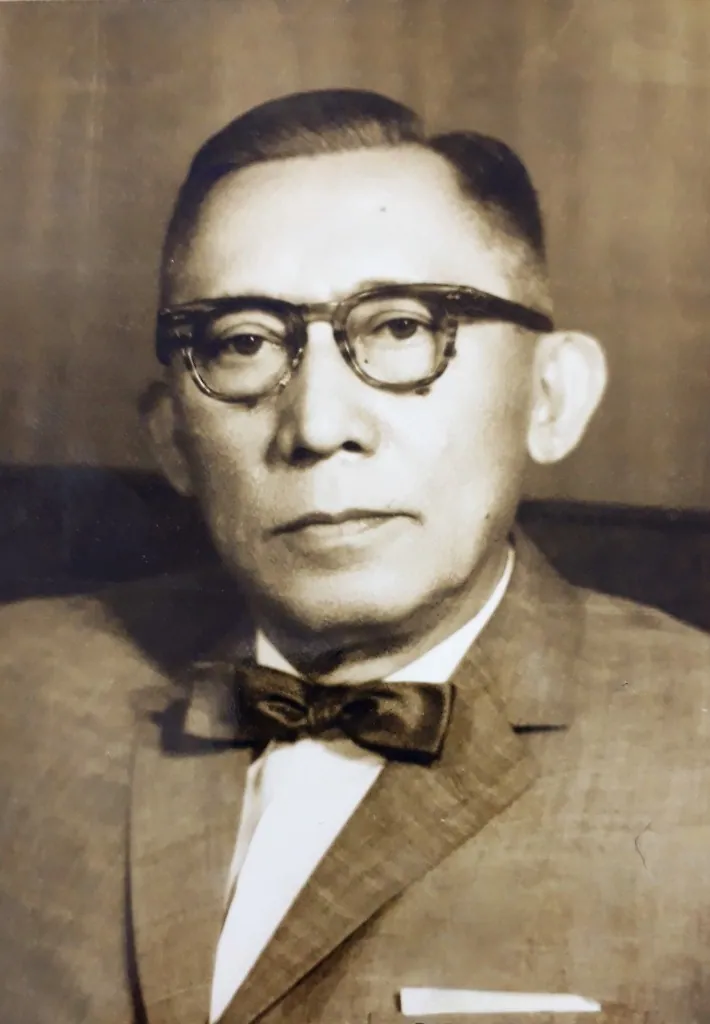
Narciso Rueca Ramos was born in Asingan, Pangasinan, on 11 November 1900. His early professional life combined journalism and law before he entered the Philippine legislature in 1934. The family’s historical account places his later diplomacy within that earlier experience of public argument, representation and wartime resistance.
He and Angela Valdez raised Fidel, Leticia and Gloria. Fidel became president, while Leticia Ramos Shahani built her own diplomatic and legislative career. Those family connections help identify him, but they should not eclipse his separate public record. Narciso was already a senior diplomat and foreign secretary before either child’s later national prominence became central to accounts of the family.
Sources for this section: [4]
Building the independent republic’s diplomatic service
After the Second World War, Ramos helped organise the Philippines’ diplomatic service and its Washington mission alongside Ambassador Joaquín Elizalde. His overseas career included Buenos Aires, New Delhi and Taipei. These assignments involved establishing and managing relationships for a newly independent republic, not simply attending the meetings for which he later became best known.
An archival account published by Indonesia’s national archives identifies his early work in Washington and subsequent Argentine and Indian assignments. The family history likewise records the progression from legislator to diplomatic representative. Together, those records place the Bangkok signing within a longer professional life shaped by the practical work of embassies and bilateral relations.
Foreign secretary amid Cold War tensions
Ramos became secretary of foreign affairs under Ferdinand Marcos in 1965 and served until 1968. A United States diplomatic memorandum records him meeting Secretary of State Dean Rusk in Manila on 22 October 1966. Their discussion concerned a possible Philippine channel for improving relations between Cambodia and the United States.
Ramos described a message conveyed through the Philippine ambassador in Phnom Penh about Prince Norodom Sihanouk’s interest in normalising relations. Rusk expressed interest in learning the terms. The record documents an exchange and a proposed diplomatic approach, not a completed settlement. It shows Ramos working on regional tensions before ASEAN existed, with Philippine diplomacy positioned between neighbouring governments and a major power.
Signing the Bangkok Declaration in 1967
On 8 August 1967, Ramos signed the ASEAN Declaration for the Philippines in Bangkok. The other signatories were Adam Malik of Indonesia, Abdul Razak Hussein of Malaysia, S. Rajaratnam of Singapore and Thanat Khoman of Thailand. Malaysia’s representative was deputy prime minister; the five should not all be assigned an identical cabinet title.
The declaration created an association for regional cooperation, including economic, social, cultural, technical and educational purposes. It did not instantly create a single market, common currency or unified government. The later ASEAN Charter and subsequent enlargement belong to later stages. Ramos’s role was that of a founding signatory and negotiator, not the organisation’s first secretary-general.
The argument for cooperation and a posthumous citation
At the signing, Ramos spoke first. ASEAN’s institutional history recalls his emphasis on the difficulty of the negotiations and the weakness of fragmented economies pursuing overlapping or competing aims. Cooperation was presented as a practical response to vulnerability and dependence, rather than proof that the five states had ceased to disagree.
Ramos died on 3 February 1986. An ASEAN announcement later identified him among the five founding signatories selected for its Heads of Government Citation at the 1997 anniversary summit, with Leticia Ramos Shahani to receive it on his behalf. The announcement’s 2012 webpage date is not the year of the ceremony it describes. His regional legacy rests on building a framework for continued negotiation, not claiming ownership of every development in ASEAN’s later history.
Quick answers
Frequently asked questions about Narciso Ramos
- What was Narciso Ramos’s role in founding ASEAN?
- He was the Philippine foreign secretary who signed the Bangkok Declaration on 8 August 1967, one of its five founding signatories. He was not ASEAN’s first secretary-general.
- Was he related to President Fidel Ramos?
- Yes. Narciso and Angela Valdez were the parents of Fidel V. Ramos and Leticia Ramos Shahani, among their three children.
- What does the 1966 Rusk meeting establish?
- The memorandum records discussion of a possible Philippine channel between Cambodia and the United States. It does not establish that Ramos secured a completed normalisation agreement.
- Was the founders’ ASEAN citation a 2012 event?
- The cited webpage bears a 2012 date, but its announcement concerns the December 1997 anniversary summit and names Shahani as the representative for her late father.
Keep exploring
Lives connected to this story
- Fidel V. Ramos
Read his son’s distinct military and presidential career.
- Leticia Ramos-Shahani
Follow the diplomat and senator named to represent her father for the ASEAN citation.
- Thanat Khoman
Explore another founding signatory’s role in the Bangkok negotiations.
Sources and further reading
Explore the evidence
These references support the biography and offer further reading. Official records, first-person accounts and independent reporting provide different perspectives; image records document attribution and licensing.
- 1. ASEAN SecretariatThe Founding of ASEAN
- 2. ASEAN SecretariatThe ASEAN Declaration (Bangkok Declaration)
- 3. Philippine eLibAn Enduring Legacy — library catalogue record
- 4. FVR LegacyNarciso Rueca Ramos — lineage and dates
The family history supports identity, dates and relationships. Its commemorative judgments are not independent proof of motives, and exact dates for every overseas posting are not reconstructed from its summary.
- 5. National Archives of IndonesiaASEAN documentary heritage: profiles of the five signatories
The indexed signatory profile supplies the early diplomatic assignments. Full PDF inspection is not claimed.
- 6. United States Department of State / Office of the HistorianFRUS, document 196: Ramos–Rusk conversation, 22 October 1966
The contemporaneous memorandum records participants’ statements about Cambodia in October 1966, not a completed agreement or a comprehensive account of Philippine foreign policy.
- 7. ASEAN SecretariatFounders’ citation announcement concerning the December 1997 summit
The page was republished with a June 2012 date, while its text announces a December 1997 ceremony. The announcement is used as an announcement, not as a later eyewitness report of presentation.
- 8. Wikimedia CommonsNarciso Ramos — portrait and reuse record