
The short answer
The ASEAN Charter turned four decades of declarations, agreements and practice into one binding institutional framework. It gave ASEAN legal personality and clearer organs, but kept the association intergovernmental, consensus-oriented and rooted in state sovereignty.
Institutional change
What became clearer under the ASEAN Charter?
The Charter gathered institutions and practices into a single binding framework. It strengthened continuity without replacing intergovernmental control.
| Country | Earlier position | Charter framework |
|---|---|---|
| Legal status | ASEAN operated through declarations, agreements and established practice. | Article 3 expressly gives ASEAN legal personality as an intergovernmental organisation. |
| Highest authority | Leaders’ summits set direction through summit practice and declarations. | The Summit is identified as ASEAN’s supreme policy-making body. |
| Community structure | Three pillars had been declared through Bali Concord II. | Three Community Councils sit within the formal institutional structure. |
| Permanent representation | National officials coordinated through existing diplomatic and ministerial channels. | Each member appoints a permanent representative to ASEAN in Jakarta. |
| Human-rights body | No Charter requirement for an ASEAN human-rights institution. | Article 14 mandates an ASEAN human-rights body operating under agreed terms of reference. |
| Decision-making | Consultation and consensus were established ASEAN practice. | The Charter codifies consultation and consensus as the basic principle. |
Chronology
A timeline of the turning points
Bali Concord II set a Community goal
ASEAN leaders organised future community-building around political-security, economic and socio-cultural pillars.
Leaders launched the Charter process
The Kuala Lumpur Declaration on the Establishment of the ASEAN Charter began work on a formal institutional framework.
Ten leaders signed the Charter in Singapore
The constituent treaty was signed during the 13th ASEAN Summit and then sent to each member for ratification.
Singapore deposited the first ratification
As host and depositary, Singapore became the first member to deposit its instrument of ratification.
Thailand completed the ten ratifications
The final deposit meant every ASEAN member at the time had ratified the Charter.
The Charter entered into force
The new legal and institutional framework became effective thirty days after the tenth ratification was deposited.
ASEAN created its human-rights commission
The ASEAN Intergovernmental Commission on Human Rights followed the Charter’s commitment to establish a regional human-rights body.
What is the ASEAN Charter?
The ASEAN Charter is the constituent treaty that gives the Association of Southeast Asian Nations its legal and institutional framework. Leaders of all ten member states signed it in Singapore on 20 November 2007, and it entered into force on 15 December 2008 after every member ratified it.
ASEAN had already existed for four decades through declarations, treaties, summit decisions and established practice. The Charter did not create the association from nothing; it consolidated core rules and institutions in one legally binding instrument.
What did legal personality change?
Article 3 states that ASEAN, as an intergovernmental organisation, is given legal personality. This clarified that the organisation itself could operate as a legal entity rather than existing only as a sequence of meetings among governments.
Legal personality did not convert ASEAN into a federal government or give it automatic authority over domestic law. Member states remained sovereign, and the Charter preserved intergovernmental decision-making.
How did the Charter organise ASEAN?
The ASEAN Summit became the supreme policy-making body. The Charter also set out the ASEAN Coordinating Council, three Community Councils, sectoral ministerial bodies, the Secretary-General and Secretariat, the Committee of Permanent Representatives and national secretariats.
This structure aligned ASEAN’s machinery with the three Community pillars and created more continuous representation in Jakarta. It made responsibilities easier to identify even when implementation still depended heavily on national governments.
How are decisions made under the Charter?
Consultation and consensus remain the basic principle for ASEAN decision-making. Where consensus cannot be achieved, the Summit may decide how a specific decision should be made, while particular legal instruments can provide their own procedures.
The Charter also calls for disputes to be resolved peacefully through dialogue, consultation and negotiation, with mechanisms under existing ASEAN instruments continuing to apply. It strengthened rules without establishing one compulsory regional court for every type of dispute.
How does the Charter treat rights and democracy?
The Charter includes democracy, the rule of law, good governance, constitutional government, fundamental freedoms, human rights and social justice among ASEAN’s stated principles and purposes. It also required the creation of an ASEAN human-rights body.
Those commitments sit beside sovereignty and non-interference. The resulting tension is central to debates about ASEAN: the Charter names regional values, but monitoring and enforcement remain shaped by intergovernmental consent and political differences among members.
What are the Charter’s practical limits?
A legally binding Charter can define institutions and obligations, but it cannot by itself guarantee uniform compliance. ASEAN lacks the supranational enforcement powers associated with some other regional organisations, and national implementation varies.
Its significance is therefore institutional rather than revolutionary. The Charter makes ASEAN more rules-based and legible, while retaining consensus, sovereign equality and member-state control as defining features.
Continue the chronology
Related history guides
ASEAN Secretaries-General
See how the Charter changed the appointment and duties of ASEAN’s senior official.
Read the timeline23–24 February 1976TAC and Bali Concord I
Read the earlier treaty principles and institutions that the Charter inherited.
Read the timeline31 December 2015The ASEAN Community
See how the Charter’s three-pillar structure supported the 2015 Community.
Read the timeline27 November 1971ZOPFAN
Trace the earlier peace, freedom and neutrality objective in ASEAN diplomacy.
Read the timeline1967—2025ASEAN History Timeline
Place the Charter within the association’s complete institutional chronology.
Read the timelineConnected biographies
Meet seven ASEAN Charter signatories in the archive
 Brunei · Politics
1946—
Hassanal Bolkiah
29th Sultan and prime minister of BruneiThe 29th Sultan who led Brunei into full independence in 1984 and has combined the offices of monarch and prime minister.Read biography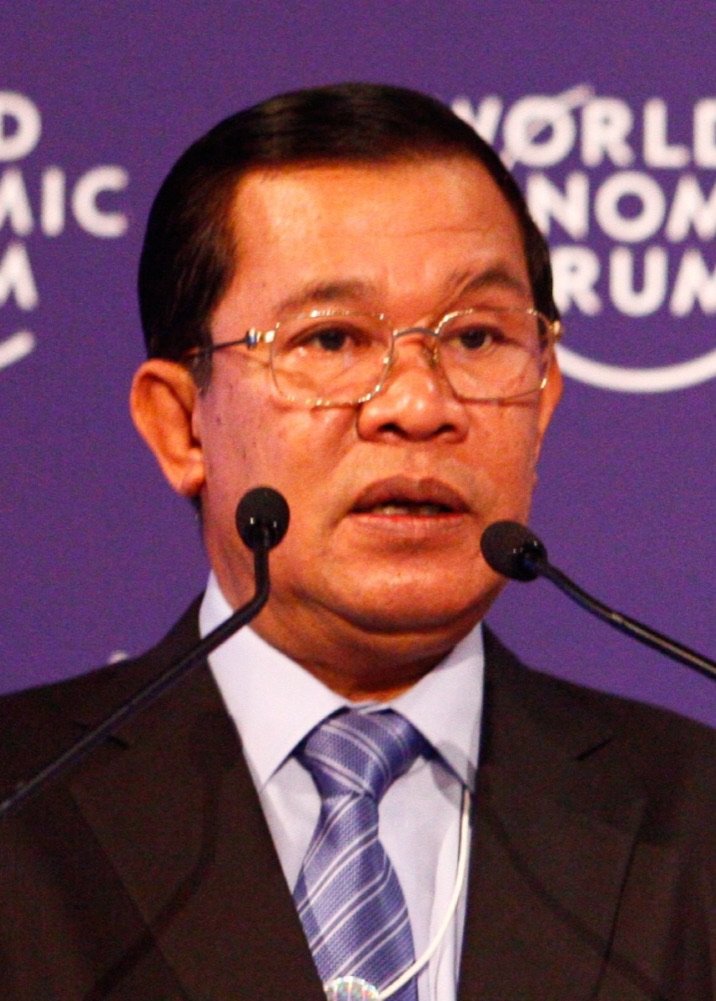 Cambodia · Politics
1952—
Hun Sen
Former prime minister and president of the SenateThe politician who became prime minister in 1985, dominated postwar Cambodian politics and transferred the premiership to his son in 2023.Read biography Indonesia · Politics
1949—
Susilo Bambang Yudhoyono
Sixth President of IndonesiaThe retired general known as SBY who won Indonesia’s first direct presidential election and led the country from 2004 to 2014.Read biography Malaysia · Politics
1939—2025
Abdullah Ahmad Badawi
Fifth Prime Minister of MalaysiaA career civil servant and politician whose premiership opened with a reform mandate and Malaysia’s largest parliamentary victory.Read biography Philippines · Politics
1947—
Gloria Macapagal Arroyo
President of the Philippines, 2001–2010The economist, senator and vice president who led the Philippines from 2001 to 2010 and later returned to Congress as a Pampanga representative.Read biography Singapore · Politics
1952—
Lee Hsien Loong
Third Prime Minister and Senior Minister of SingaporeSingapore’s third prime minister, who led two decades of economic restructuring, social-policy expansion, digitalisation and pandemic response.Read biography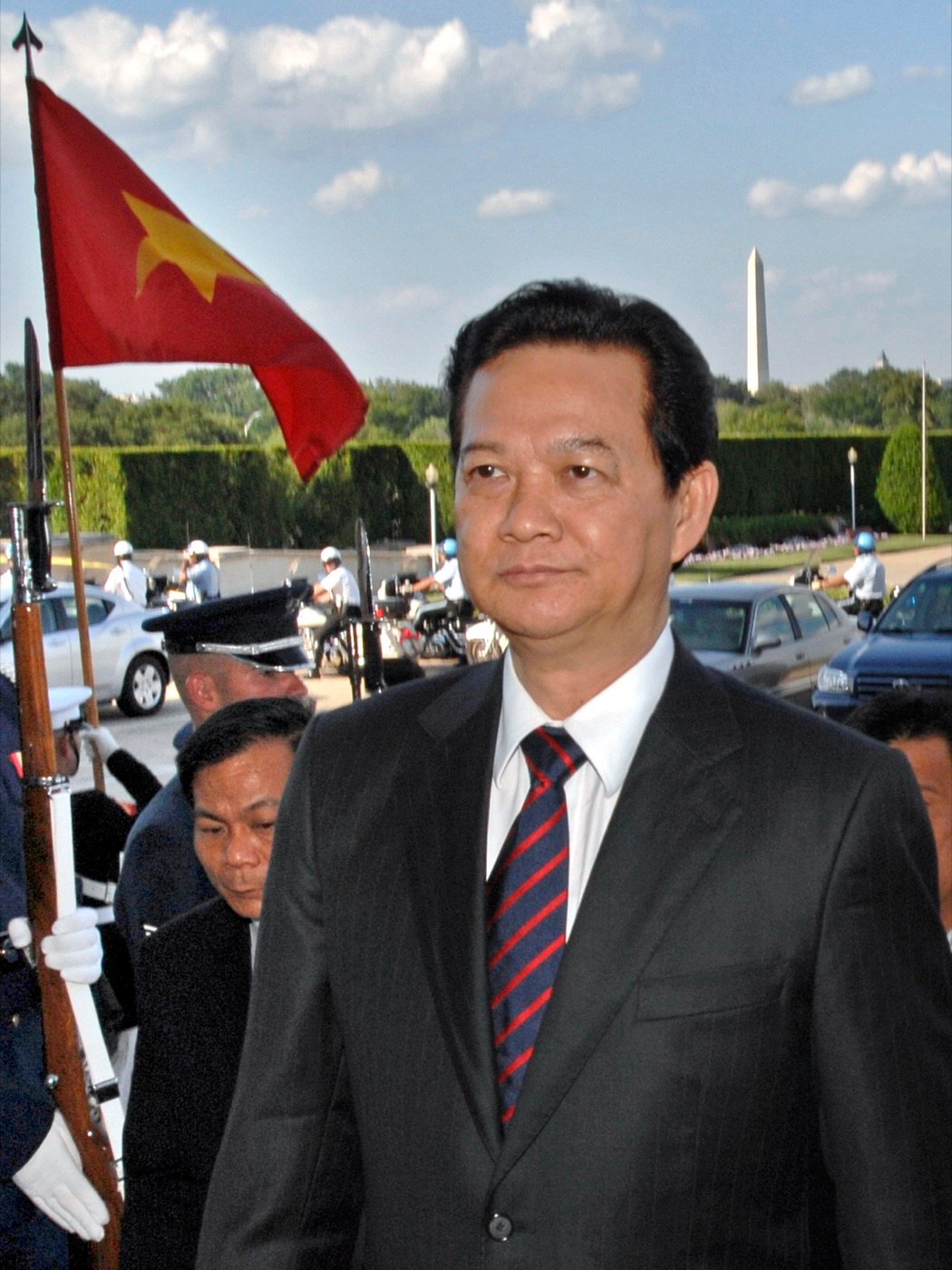 Vietnam · Politics
1949—
Nguyễn Tấn Dũng
Former prime minister of VietnamVietnam’s prime minister from 2006 to 2016, associated with WTO-era growth, a more assertive executive style and costly failures in state-owned conglomerates.Read biographyQuick answers
Common questions
- When was the ASEAN Charter signed?
- Leaders of all ten ASEAN member states signed it in Singapore on 20 November 2007.
- When did the ASEAN Charter enter into force?
- It entered into force on 15 December 2008 after all ten members had ratified it.
- Is the ASEAN Charter legally binding?
- Yes. The Charter is a legally binding constituent treaty for ASEAN and its member states.
- What did the ASEAN Charter do?
- It gave ASEAN legal personality, codified purposes and principles, defined institutions and decision-making, and organised work around three Community pillars.
- Does ASEAN have legal personality?
- Yes. Article 3 gives ASEAN legal personality as an intergovernmental organisation.
- How does ASEAN make decisions?
- Consultation and consensus are the basic principle. The Summit may decide how a specific decision is made when consensus cannot be achieved, subject to the Charter and other instruments.
- Did the Charter create a supranational ASEAN government?
- No. It strengthened a rules-based intergovernmental organisation while preserving national sovereignty and member-state control.
Primary and institutional sources
How this history was checked
Dates, legal milestones and historical claims are checked against the official and institutional records below. This article was reviewed on 9 September 2026.