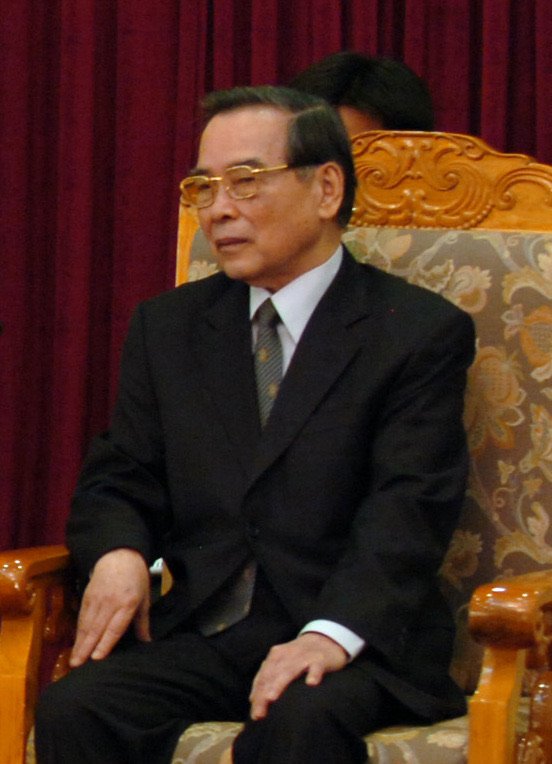
In this biography
Quick facts
- Born
- 11 September 1940
- Birthplace
- Cường Lợi, Na Rì, Bắc Kạn, Vietnam
- Country
- Vietnam
- Nationality
- Vietnamese
- Known for
- Leading the party from 2001 to 2011 as Vietnam completed WTO accession
- Party leadership
- General secretary, April 2001 – January 2011
- National Assembly
- Chairman, 1992–2001
- Professional training
- Forestry in Hanoi and Leningrad
- Trade milestone during tenure
- WTO membership, 11 January 2007
Why this life matters
Nông Đức Mạnh presided over fast growth and deeper international integration while promoting party modernisation and anti-corruption rhetoric within an opaque one-party leadership system.
Timeline
Key moments
Born in Bắc Kạn
Born on 11 September in Cường Lợi commune, Na Rì district.
Forestry education in Hanoi
Studied at Hanoi Agro-Forestry College before technical work.
Joined the party
Admitted on 5 July; full membership followed in 1964.
Studied in Leningrad
Attended the Forestry Institute in the Soviet Union.
Central Committee progression
Became an alternate in December 1986, then a full member in March 1989.
Two Assembly chairmanship elections
Chosen to chair the ninth National Assembly in September 1992 and the tenth in September 1997.
Became general secretary
Chosen at the Ninth Party Congress in April; this was not a popular presidential election.
Second party term
Re-elected at the Tenth Party Congress in April.
WTO membership
Vietnam became the WTO’s 150th member on 11 January.
Leadership transition
His general-secretary tenure ended in January; Nguyễn Phú Trọng succeeded him.
A Tày background and a career in forestry
Nông Đức Mạnh was born on 11 September 1940 in Cường Lợi commune, Na Rì district, Bắc Kạn. Vietnam’s embassy biography identifies him as Tày and from a farming family. His route into public administration began with technical education rather than an initial career as a national economic minister or military commander.
He studied at Hanoi Agro-Forestry College from 1958 to 1961 and worked in forestry before further training abroad. After Russian-language preparation, he attended the Leningrad Forestry Institute from 1966 to 1971. These stages connect his later administrative career with a specific profession and educational path, rather than using the vague description of a politician who simply “rose through the ranks”.
From provincial administration to national party institutions
After returning to Vietnam, Mạnh worked in Bắc Thái’s forestry administration and directed the Phú Lương State Farm. He also studied at the Nguyễn Ái Quốc Party School before holding senior provincial administrative posts. The official chronology records leadership of the provincial People’s Committee during the 1980s, preceding his better-known national positions.
His Central Committee status changed in stages: alternate member in December 1986, full member in March 1989, then a Politburo member in June 1991. In 1989 he also headed the Central Committee’s Nationalities Commission and entered National Assembly work. Those dates prevent the reform-era congress of 1986 from being mistaken for his immediate appointment to the party’s highest office.
Sources for this section: [1]
Chairman of the National Assembly, 1992–2001
Mạnh became chairman of the ninth National Assembly in September 1992 and was chosen again for the tenth Assembly in September 1997. These were legislative leadership posts, distinct from the presidency, premiership and general-secretaryship. His subsequent party leadership did not make him retrospectively head of every state institution during the 1990s.
The Library of Congress’s December 2005 country profile describes a legislature becoming more assertive in questioning ministers and amending bills, while the Communist Party retained control over the executive and electoral process. That contemporary assessment helps place the Assembly in its political system. It does not establish that Mạnh personally introduced every procedural change or that legislative visibility amounted to competitive multiparty government.
Two terms as Communist Party general secretary
At the Ninth Party Congress in April 2001, Mạnh succeeded Lê Khả Phiêu as general secretary. He was re-elected at the Tenth Congress in April 2006 and remained party leader until January 2011, when Nguyễn Phú Trọng succeeded him. Selection through party institutions should not be described as a nationwide presidential vote.
His tenure spanned decisions made across the party, government and legislature. The distinction matters when assigning responsibility: the general secretary held the leading party position, while state presidents and prime ministers held their own offices. A biography can identify the period of his leadership without attributing every trade negotiation, administrative decision or economic outcome to one man.
The U.S. trade agreement and WTO membership
Two dates help locate Vietnam’s international economic integration during his tenure. The U.S.–Vietnam bilateral trade agreement entered into force on 10 December 2001, according to the U.S. Trade Representative’s historical report. This was an implementation milestone, not the date Mạnh took office or proof that he personally signed the agreement.
Vietnam became the World Trade Organization’s 150th member on 11 January 2007. WTO membership brought the country into a multilateral trading framework; it was not a new political title for the general secretary. These developments belong in the national context of his decade in office, while the connected biographies of government leaders explain other participants in policy and administration.
Quick answers
Frequently asked questions about Nông Đức Mạnh
- When was Nông Đức Mạnh general secretary?
- From April 2001 to January 2011. He succeeded Lê Khả Phiêu, won a second party term in 2006 and was followed by Nguyễn Phú Trọng.
- Was Nông Đức Mạnh president or prime minister of Vietnam?
- Neither. He was National Assembly chairman from 1992 to 2001 and then Communist Party general secretary. Those offices are separate from the state presidency and premiership.
- What did Nông Đức Mạnh study?
- He trained in forestry in Hanoi and attended the Leningrad Forestry Institute from 1966 to 1971 after Russian-language preparation.
- Did Vietnam join the WTO during his leadership?
- Yes. Vietnam became the 150th WTO member on 11 January 2007. The U.S. bilateral trade agreement had entered into force on 10 December 2001.
Keep exploring
Lives connected to this story
- Lê Khả Phiêu
Follow the party general secretary who preceded Mạnh in 2001.
- Nguyễn Phú Trọng
Read about the successor who took over party leadership in January 2011.
- Phan Văn Khải
Distinguish the prime minister’s government role during much of Mạnh’s first term from the party leadership.
Sources and further reading
Explore the evidence
These references support the biography and offer further reading. Official records, first-person accounts and independent reporting provide different perspectives; image records document attribution and licensing.
- 1. National Party Congress of VietnamNông Đức Mạnh: Party General Secretary from 2001 to 2011
The official career chronology distinguishes alternate and full Central Committee membership, two Assembly chairmanships and two party-leadership terms. It is not an independent evaluation of policy outcomes.
- 2. Library of CongressVietnam: Country Profile
The country profile is dated December 2005. Its institutional account is used for the period, not as a description of every current constitutional arrangement.
- 3. World Trade OrganizationVietnam’s WTO accession timeline
- 4. Wikimedia CommonsPortrait and CC BY 4.0 record
- 5. Embassy of Vietnam in the United States2001 biographical profile of Nông Đức Mạnh
This contemporary 2001 biography supports family background and education. Its then-current titles are historical, not present-day office claims.
- 6. World Trade OrganizationWTO Focus 78: Viet Nam becomes the 150th member, 11 January 2007
11 January 2007 is the membership date. Accession negotiations and earlier approval stages are different events.
- 7. Office of the U.S. Trade Representative2006 National Trade Estimate: Vietnam and the bilateral trade agreement