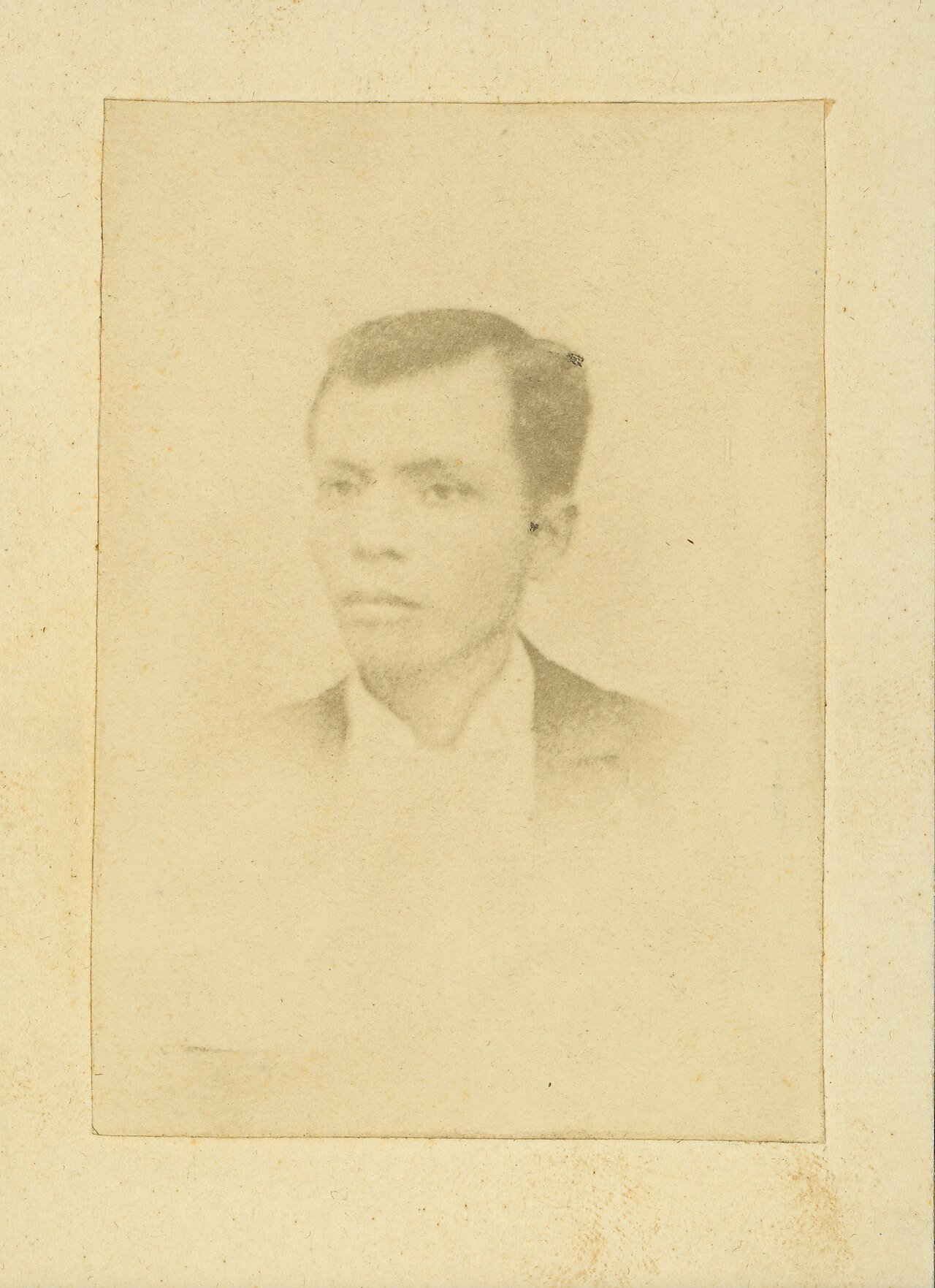
In this biography
Quick facts
- Born
- 9 May 1875
- Died
- 15 March 1943
- Birthplace
- Caloocan, Philippines
- Country
- Philippines
- Nationality
- Filipino
- Known for
- Protecting the Katipunan’s documents and serving in its women’s organisation during the revolution
- Full name
- Gregoria Álvarez de Jesús
- Known as
- Oriang; Lakambini of the Katipunan
- Katipunan role
- Document and seal custodian
- Memoir
- Mga Tala ng Aking Buhay
Why this life matters
De Jesús’s experience makes women’s organisational, logistical and memory work visible within a revolution often narrated mainly through male commanders.
Timeline
Key moments
Born in Caloocan
Born on 9 May to Nicolás de Jesús and Baltazara Álvarez.
Joined the Katipunan
Married Andrés Bonifacio and entered the movement under the name Lakambini.
Protected revolutionary records
Moved and concealed documents and the Katipunan seal as Spanish authorities pursued the organisation.
Widowed after Bonifacio’s execution
Searched for her husband after his arrest and endured the consequences of the movement’s internal conflict.
Married Julio Nakpil
Built a family with the Katipunan commander and composer after the revolution’s most violent phase.
Died in Manila
Died during the Japanese occupation on 15 March.
Lakambini of the Katipunan
Gregoria de Jesús joined the Katipunan around the time of her marriage to Andrés Bonifacio. She took the symbolic name Lakambini and became associated with the women’s section of the secret society.
Her responsibilities were practical and dangerous: she guarded the organisation’s seal, documents and weapons and repeatedly moved them to prevent discovery. Such work sustained a clandestine network whose survival depended on trust and mobility.
War, loss and survival
When open revolution began, de Jesús accompanied Bonifacio through displacement and conflict. After his arrest in Cavite, she searched for information and later learned that he and his brother Procopio had been executed in May 1897.
She later married Julio Nakpil, a revolutionary commander and composer. Their family lived in the Quiapo house now known as Bahay Nakpil-Bautista, a national historical landmark connected to several generations of public and cultural life.
A woman’s record of revolution
De Jesús left autobiographical notes describing her upbringing, marriage and revolutionary experience. The account is especially valuable because it records fear, movement, family loss and everyday organisational labour from inside the Katipunan.
Remembering her only as Bonifacio’s wife narrows that evidence. Her custody of records, participation in the movement and preservation of memory make her an important revolutionary actor in her own right.
Quick answers
Frequently asked questions about Gregoria de Jesús
- Who was Gregoria de Jesús?
- Gregoria de Jesús was a lakambini and custodian of the Katipunan. De Jesús’s experience makes women’s organisational, logistical and memory work visible within a revolution often narrated mainly through male commanders.
- What is Gregoria de Jesús best known for?
- Gregoria de Jesús is best known for protecting the Katipunan’s documents and serving in its women’s organisation during the revolution.
- When and where was Gregoria de Jesús born?
- Gregoria de Jesús was born on 9 May 1875 in Caloocan, Philippines.
- When did Gregoria de Jesús die?
- Gregoria de Jesús died on 15 March 1943.
Sources and further reading
How this biography was checked
Core dates and offices are checked against the sources below. This profile was last reviewed on 9 September 2026.
- National Historical Commission of the PhilippinesGregoria de Jesús, 1875–1943
- National Historical Commission of the PhilippinesBahay Nakpil-Bautista national historical landmark
- National Commission for Culture and the ArtsPhilippine History Source Book
- Bahay Nakpil-BautistaGregoria de Jesús autobiography and archival materials