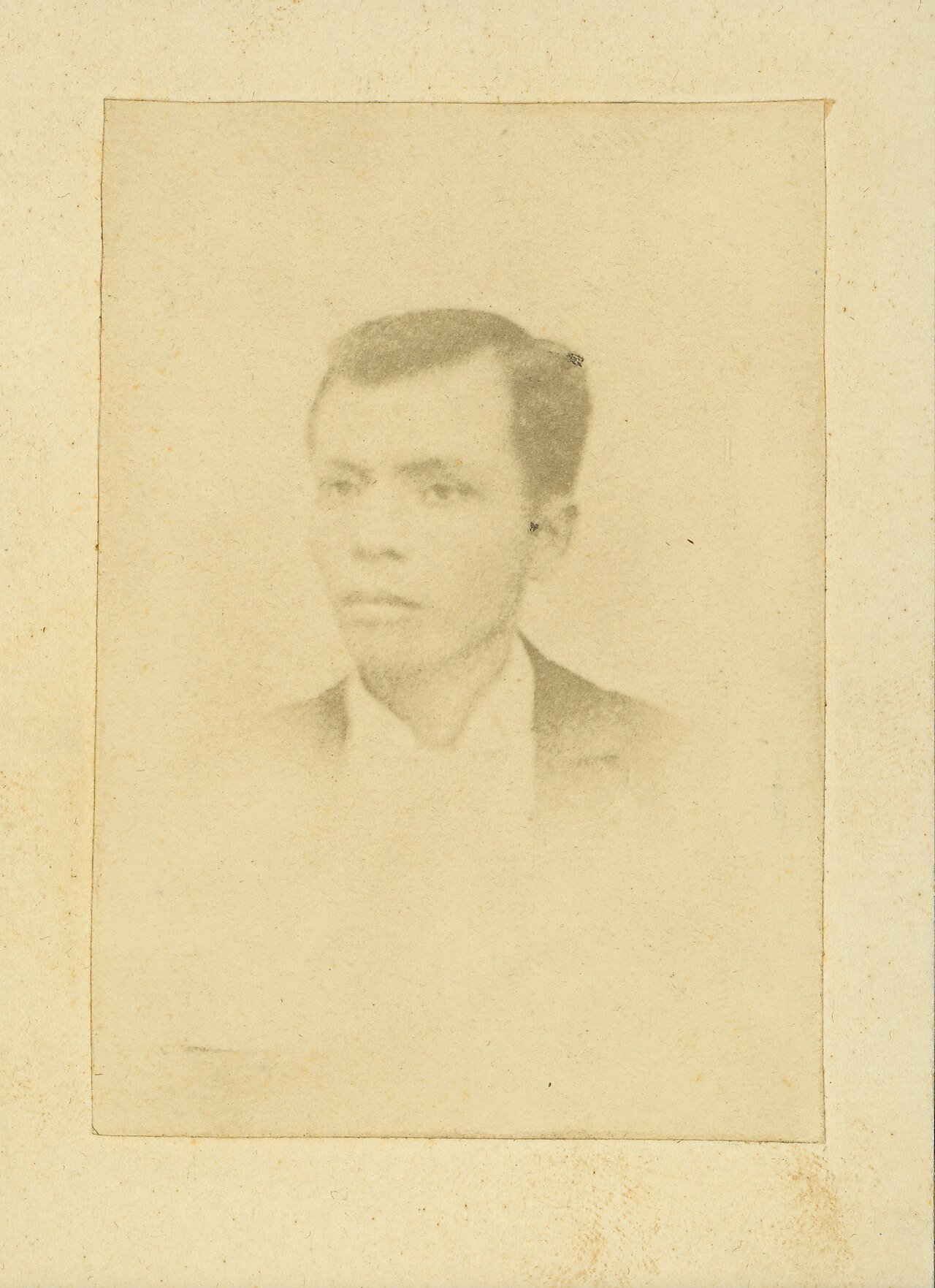

In this biography
Quick facts
- Born
- 15 December 1875
- Died
- 16 April 1899
- Birthplace
- Tondo, Manila, Philippines
- Country
- Philippines
- Nationality
- Filipino
- Known for
- Writing the Kartilya ng Katipunan and shaping the movement’s ethical and political language
- Katipunan name
- Pingkian
- Pen name
- Dimas-Ilaw
- Major work
- Kartilya ng Katipunan
- Known as
- Brains of the Katipunan
Why this life matters
Jacinto turned the Katipunan’s goals into a compact civic code that joined equality, honour and responsibility to the struggle against colonial rule.
Timeline
Key moments
Born in Tondo
Born in Manila on 15 December.
Joined the Katipunan
Entered the secret revolutionary society and became one of Bonifacio’s closest collaborators.
Edited Kalayaan
Helped produce the Katipunan newspaper whose circulation encouraged rapid recruitment.
Fought in the revolution
Organised and commanded forces in areas around Manila and Laguna as the uprising widened.
Died in Laguna
Died on 16 April at the age of 23.
The Katipunan’s young political writer
Emilio Jacinto studied at Colegio de San Juan de Letran and the University of Santo Tomas before joining the Katipunan in 1894. Still a teenager, he became its secretary and worked closely with Andrés Bonifacio.
Writing as Dimas-Ilaw, Jacinto helped edit Kalayaan, the newspaper that spread revolutionary ideas under dangerous conditions. His essays later collected as Liwanag at Dilim examined liberty, labour, reason and moral conduct.
The Kartilya as a civic code
Jacinto’s best-known work, the Kartilya ng Katipunan, set out principles for members rather than a military programme. It treated all people as equals regardless of race or social standing and tied personal honour to service of others.
The text made the revolution an ethical project as well as a struggle for political separation. Its influence explains why Jacinto is remembered not simply as an aide to Bonifacio but as a central political thinker of the movement.
Revolution and an early death
Jacinto also carried organisational and military responsibilities after the revolution began in 1896. He continued resistance after Bonifacio’s death and operated in Laguna and neighbouring areas.
He died in 1899 at only twenty-three. The brevity of his life contrasts with the durability of the Kartilya, which remains one of the clearest statements of the Katipunan’s values.
Quick answers
Frequently asked questions about Emilio Jacinto
- Who was Emilio Jacinto?
- Emilio Jacinto was a katipunan writer, secretary and revolutionary leader. Jacinto turned the Katipunan’s goals into a compact civic code that joined equality, honour and responsibility to the struggle against colonial rule.
- What is Emilio Jacinto best known for?
- Emilio Jacinto is best known for writing the Kartilya ng Katipunan and shaping the movement’s ethical and political language.
- When and where was Emilio Jacinto born?
- Emilio Jacinto was born on 15 December 1875 in Tondo, Manila, Philippines.
- When did Emilio Jacinto die?
- Emilio Jacinto died on 16 April 1899.
Sources and further reading
How this biography was checked
Core dates and offices are checked against the sources below. This profile was last reviewed on 9 September 2026.