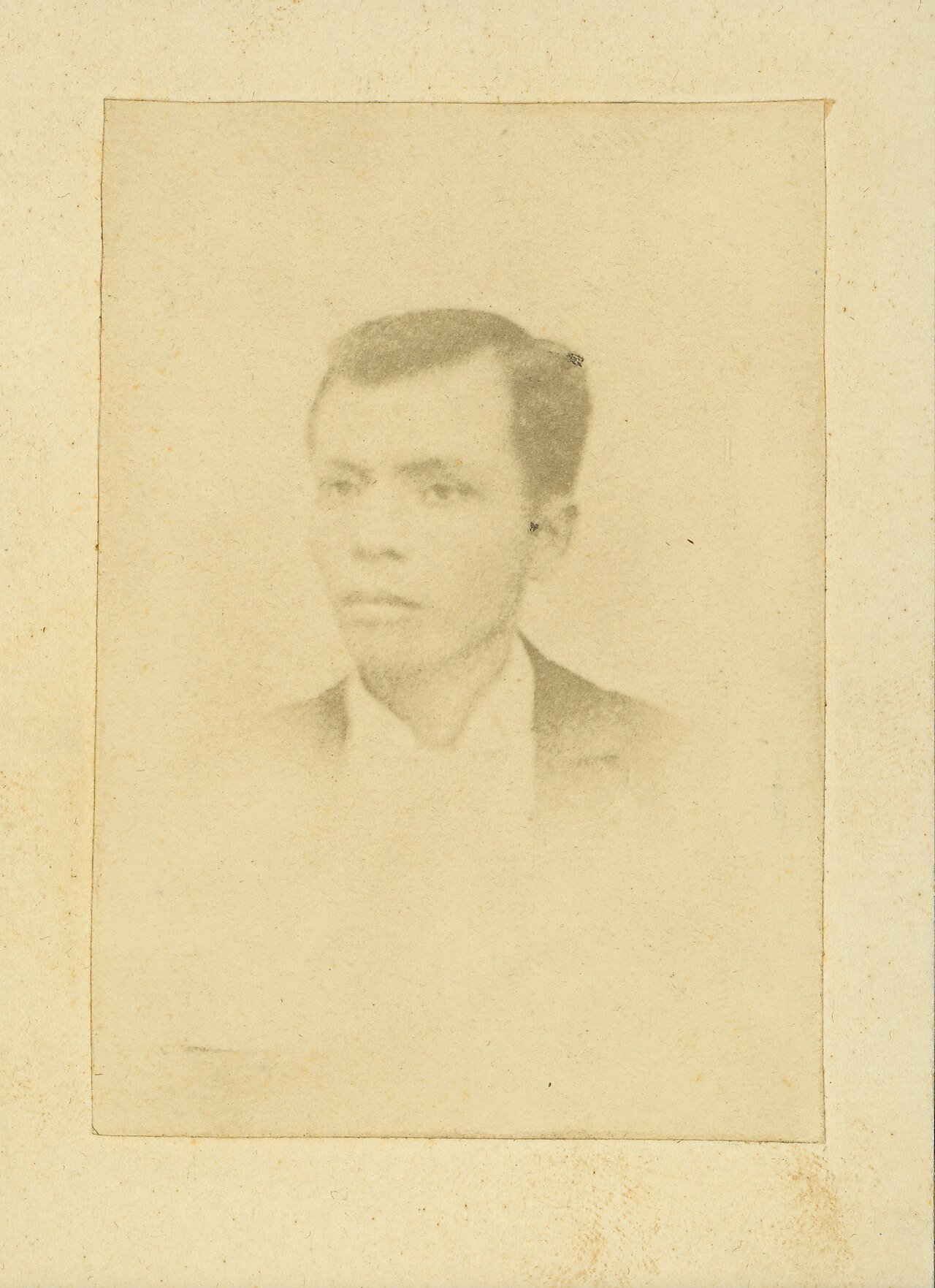
In this biography
Quick facts
- Born
- 30 November 1863
- Died
- 10 May 1897
- Birthplace
- Tondo, Manila, Philippines
- Country
- Philippines
- Nationality
- Filipino
- Known for
- Organising the Katipunan and leading the opening of the Philippine Revolution
- Organisation
- Katipunan, founded 7 July 1892
- Revolutionary title
- Supremo of the Katipunan
- Major event
- Cry of Pugad Lawin, August 1896
- Death
- Executed at Maragondon, Cavite
Why this life matters
Bonifacio turned anti-colonial nationalism into a revolutionary organisation rooted beyond the educated elite, making him central to debates over popular sovereignty and the unfinished meaning of the revolution.
Timeline
Key moments
Born in Tondo
Born in Manila on 30 November and later supported his younger siblings after his parents died.
Founded the Katipunan
Helped create a secret society committed to independence from Spain through revolution.
Led the opening revolt
Joined Katipuneros in declaring resistance and led the attack at San Juan del Monte.
Challenged at Tejeros
A convention in Cavite elected a new revolutionary government and deepened the conflict with Emilio Aguinaldo’s faction.
Executed in Cavite
Bonifacio and his brother Procopio were executed after a trial by the revolutionary government.
Building a revolution from below
Bonifacio grew up in Tondo and worked as a clerk and warehouseman while educating himself through reading. His experience outside the colonial elite shaped a politics that treated ordinary Filipinos as agents of national liberation rather than spectators to reform.
On 7 July 1892, he and other activists founded the Katipunan. Its initiation system, local councils, publications and mutual obligations turned a small secret society into a movement capable of coordinating resistance across Manila and nearby provinces.
Revolt, Tejeros and a contested death
After Spanish authorities discovered the Katipunan in August 1896, Bonifacio helped move the organisation into open rebellion. The attack at San Juan del Monte failed militarily, but uprisings elsewhere made the revolution impossible to contain as a single police action.
Successful forces in Cavite elevated Aguinaldo and produced a struggle over command. Bonifacio rejected the Tejeros proceedings after his authority was publicly challenged. He was later arrested, tried and executed by the revolutionary government, leaving a lasting question about class, region and legitimacy inside the independence movement.
Quick answers
Frequently asked questions about Andrés Bonifacio
- Who was Andrés Bonifacio?
- Andrés Bonifacio was a founder and Supremo of the Katipunan. Bonifacio turned anti-colonial nationalism into a revolutionary organisation rooted beyond the educated elite, making him central to debates over popular sovereignty and the unfinished meaning of the revolution.
- What is Andrés Bonifacio best known for?
- Andrés Bonifacio is best known for organising the Katipunan and leading the opening of the Philippine Revolution.
- When and where was Andrés Bonifacio born?
- Andrés Bonifacio was born on 30 November 1863 in Tondo, Manila, Philippines.
- When did Andrés Bonifacio die?
- Andrés Bonifacio died on 10 May 1897.
Sources and further reading
How this biography was checked
Core dates and offices are checked against the sources below. This profile was last reviewed on 8 September 2026.

