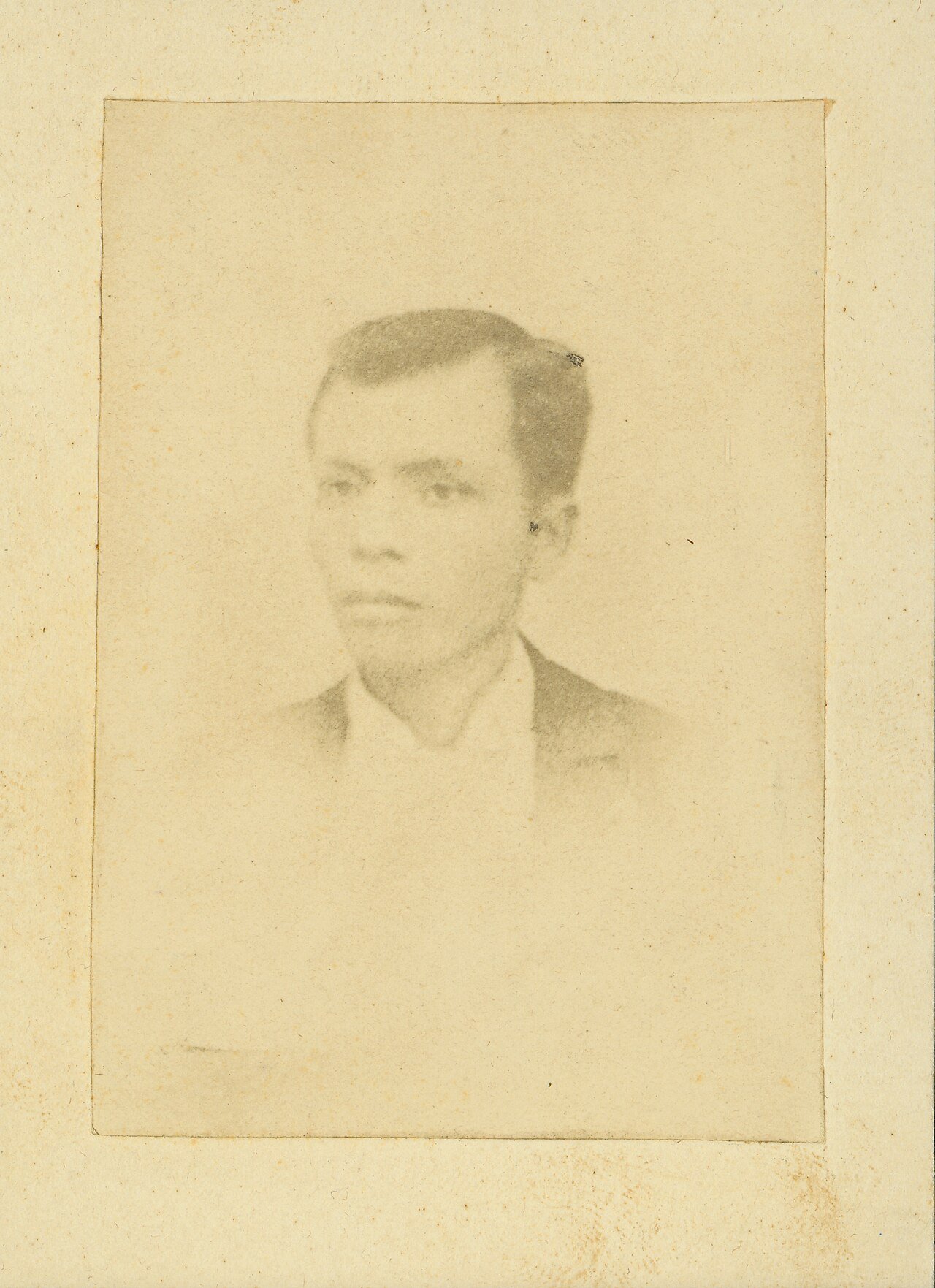
In this biography
Quick facts
- Born
- 30 August 1850
- Died
- 4 July 1896
- Birthplace
- Bulakan, Bulacan, Philippines
- Country
- Philippines
- Nationality
- Filipino
- Known for
- Editing La Solidaridad and using journalism and satire to campaign for colonial reform
- Full name
- Marcelo Hilario del Pilar y Gatmaitán
- Pen name
- Pláridel
- Major newspaper
- La Solidaridad
- Profession
- Lawyer, journalist and editor
Why this life matters
Del Pilar helped build the print networks and reform arguments that preceded revolution, making public opinion and political writing part of the independence story.
Timeline
Key moments
Born in Bulacan
Born in Barrio San Nicolas, Bulakan, on 30 August.
Founded Diariong Tagalog
Helped create a bilingual newspaper that carried reform arguments to readers in the Philippines.
Left for Spain
Continued the reform campaign in Europe after pressure from colonial and clerical authorities.
Became editor of La Solidaridad
Took charge of the Propaganda Movement’s principal newspaper in Spain.
La Solidaridad ceased publication
Financial pressure and political divisions ended the newspaper’s seven-year run.
Died in Barcelona
Died on 4 July, weeks before the Philippine Revolution began.
From Bulacan law to the reform press
Marcelo H. del Pilar was born in San Nicolas, Bulakan, on 30 August 1850 to Julián H. del Pilar and Blasa Gatmaitan. He studied at San Jose and the University of Santo Tomas and trained in law. His public importance came through the combination of legal argument, local organising and political journalism.
In 1882 he helped establish Diariong Tagalog, a newspaper published in Spanish and Tagalog. Its criticism of colonial administration brought reform arguments to readers in the Philippines. The two languages mattered: political discussion did not have to remain confined to Spanish-speaking officials or expatriate circles.
Plaridel’s satire and criticism of friar power
Under the pen name Pláridel, del Pilar used satire to attack abuses associated with the religious orders. His works included Dasalan at Tocsohan, also rendered Dasalan at Tuksuhan, and Caiigat Cayó, commonly modernised as Kaiingat Kayo. These titles belong to his political writing, rather than to newspapers he edited.
A publishing history held by the National Library describes his parodies of familiar prayers and commandments being issued as pamphlets resembling devotional novenas. The format made the criticism recognisable through forms readers already knew. His prose tracts, including La soberanía monacal en Filipinas and La frailocracia Filipina, addressed clerical domination more directly. The target was the friars’ institutional and political power, not simply a dispute about literary taste.
Editing La Solidaridad in Spain
Pressure surrounding his anti-friar campaign took del Pilar to Spain, where he succeeded Graciano López Jaena as editor of La Solidaridad. The newspaper’s first issue appeared on 15 February 1889, and its last on 15 November 1895. The Philippine eLib catalogue describes the original as a fortnightly published in Barcelona and Madrid.
Del Pilar worked within a wider network that included José Rizal and Mariano Ponce. La Solidaridad carried essays, letters and political commentary exposing colonial abuses and demanding rights, education and a voice in government. Del Pilar was a major editor and organiser, but he was not its sole writer or the founder of every organisation within the reform movement.
What the Propaganda Movement tried to change
“Propaganda” in this historical name refers to a campaign of political advocacy and public persuasion. Its writers sought civil liberties, equality and political representation under Spanish rule. A Philippine News Agency account of the press tradition associated with del Pilar identifies participation in government and freedom of speech and the press among the newspaper’s demands.
The reform press and the Katipunan were related parts of the nationalist story, but they were not the same organisation. La Solidaridad addressed political audiences through publication and lobbying. The Katipunan prepared an uprising. Del Pilar’s editorial work helps explain the arguments circulating before the revolution without making him a battlefield commander in a war that began after his death.
Death in Barcelona and a documentary legacy
Del Pilar died of tuberculosis in Barcelona on 4 July 1896, months after La Solidaridad ceased publication and before the open revolt of August. Official markers at his birthplace preserve his birth and death dates and identify his role in the newspaper. His family’s home site in Bulakan is now a national shrine.
The National Museum’s library catalogues a National Historical Institute collection of his letters written between 1882 and 1895. The catalogue is a route into further primary research, not proof that each letter has been examined here. Newspapers, pamphlets and correspondence provide a more useful way to study his contribution than remembering only the label “great propagandist.” They show the different audiences, genres and practical work involved in sustaining a reform campaign.
Quick answers
Frequently asked questions about Marcelo H. del Pilar
- Who was Plaridel?
- Pláridel, often written without the accent as Plaridel, was the best-known pen name of Marcelo H. del Pilar, the Filipino lawyer, journalist and reform advocate.
- What did Marcelo H. del Pilar write?
- His works included the satires Dasalan at Tocsohan and Caiigat Cayó, political tracts on friar power, and articles for the reform press. He also helped establish Diariong Tagalog and edited La Solidaridad.
- Did Marcelo H. del Pilar found La Solidaridad?
- He succeeded its first editor, Graciano López Jaena, rather than being its sole founder. The fortnightly ran in Spain from February 1889 to November 1895 and published many Filipino reform writers.
- Did Marcelo H. del Pilar fight in the 1896 Revolution?
- He died in Barcelona on 4 July 1896, before open revolt began in August. His central contribution was journalism, satire and reform organising, not battlefield command during that uprising.
Keep exploring
Lives connected to this story
- José Rizal
A fellow reform writer whose novels and essays circulated within the same nationalist print culture.
- Andrés Bonifacio
Distinguish the Katipunan’s revolutionary organisation from the earlier reform campaign.
- Emilio Jacinto
Compare La Solidaridad with the Katipunan writing associated with Kalayaan and the Kartilya.
Sources and further reading
Explore the evidence
These references support the biography and offer further reading. Official records, first-person accounts and independent reporting provide different perspectives; image records document attribution and licensing.
- 1. Provincial Government of BulacanMarcelo H. del Pilar
The provincial biography supports schooling, pen name and works. Historical and modern spellings of the pamphlet titles are identified as variants, not separate publications.
- 2. Provincial Government of BulacanDel Pilar’s 165th birth anniversary
- 3. National Library of the Philippines digital collectionPublications and Publishing
- 4. National Library of the Philippines digital collectionThe Spanish Colonial Tradition
- 5. National Commission for Culture and the ArtsPhilippine Literature in Spanish
- 6. Philippine eLib / University of the PhilippinesLa Solidaridad — catalogue record
A bibliographic record for a translation whose general note describes the original newspaper’s places, editors and publication span. It is not the complete digitised run.
- 7. National Museum of the Philippines LibraryA collection of letters of Marcelo H. del Pilar, volume 1 — catalogue record
Catalogue evidence for a published correspondence collection only. Individual letters have not been used to establish dates or quotations in this review.
- 8. Philippine News AgencyNPC-led tribute to Marcelo H. del Pilar
- 9. National Historical Commission of the PhilippinesMarcelo H. del Pilar biographical marker
- 10. National Historical Commission of the PhilippinesBirthplace of Marcelo H. del Pilar
- 11. Wikimedia CommonsMarcelo H. del Pilar portrait and public-domain record