
The short answer
A long-distance transmission link connected regional electricity systems during Vietnam’s economic opening. Follow the problem it addressed, the construction programme, the first energisation and the people and institutions behind the new national backbone.
Chronology
A timeline of the turning points
Project approved
The economic and technical project received approval with a two-year construction target.
Construction begins
The first 500 kV North–South circuit entered construction.
Installation and testing
Conductor and communications work was followed by testing and inspection.
National Load Dispatch Centre established
The Energy Ministry created the institution with responsibility for operating the new connection.
First energisation
EVN records the connection instruction at 19:06 through Đà Nẵng.
Further transformer installations
Equipment additions followed the first national connection.
Second North–South circuit
A later circuit reinforced the network; it was not the 1994 opening.
A separate circuit 3 inauguration
The Quảng Trạch–Phố Nối projects marked another stage of grid expansion.
What was Vietnam’s first 500 kV North–South line?
Vietnam’s first 500 kV North–South transmission line, also called circuit 1 or mạch 1, linked the Hòa Bình hydropower complex in the north with Phú Lâm in the Ho Chi Minh City area. The route was 1,487 kilometres long. Construction began on 5 April 1992, and the line was energised on 27 May 1994, creating a high-voltage connection between previously separate regional power systems.
The project was a transmission link, not a new generating station. Its purpose was to move electricity across a much wider system and make better use of existing sources. The term 500 kV describes the voltage level, not a generating capacity of 500 megawatts. Those distinctions explain why the line’s history belongs alongside the history of Hòa Bình rather than replacing it.
Why the government backed a north-to-south connection
In the early 1990s, northern generating resources were underused while the growing southern economy faced electricity shortages. EVN’s retrospective account identifies this regional imbalance as the central problem behind the project. A long-distance connection offered a way to supply the south and strengthen the central system without waiting for every region to build an entirely self-contained generation fleet.
The economic and technical project was approved on 25 February 1992, with an intended two-year construction period. Surveying, design, procurement and construction were allowed to overlap. Võ Văn Kiệt provided high-level political backing, but approval depended on a wider governmental process, and delivery involved the Energy Ministry and many technical organisations. A prime minister’s sponsorship was not a substitute for engineering design or system operation.
Building the route: towers, conductors and communications
The construction programme extended far beyond erecting a row of pylons. EVN’s technical retrospective describes extensive route surveys, foundations, conductors, insulation, fibre-optic communications and operating posts. Its 2014 speech lists the associated sites at Hòa Bình, Hà Tĩnh, Đà Nẵng, Pleiku and Phú Lâm; Hà Tĩnh is identified there as a compensation station, so the sites should not be assumed to have identical equipment.
Surveyors, designers, electrical-construction companies, Sông Đà workers, military units and communities along the route contributed. A later construction account records conductor and communications installation continuing into early 1994, followed by testing and inspection. Completing the physical route was therefore one stage in preparing a working electricity system, with protection, communications and control needed before the national connection could be operated.
27 May 1994: energisation and a new dispatch responsibility
The National Load Dispatch Centre was established by the Energy Ministry on 11 April 1994. Its initial responsibilities included operating the new North–South line. Creating a national operating institution mattered because interconnected regions needed coordinated decisions about generation and transmission, rather than three systems responding only to their own local conditions.
According to EVN’s twentieth-anniversary speech, at 19:06 on 27 May 1994 Kiệt gave the instruction to connect the southern system with four Hòa Bình generating units through Đà Nẵng. That is the recorded energisation milestone, not the date when every later equipment installation was complete. The same speech describes further transformer installations in September and November 1994, showing how commissioning continued in stages around the initial connection.
Why the first circuit mattered to the reform economy
The new backbone connected the northern, central and southern systems and enabled power sources to be used across a national network. EVN’s operational history associates it with relief of shortages in the south and centre, improved supply quality and more flexible use of generation. These were important foundations for the businesses, households and public services using electricity during Vietnam’s reform era.
The operator’s anniversary accounts also celebrate wider economic growth. That does not establish how much national output was caused by this one investment. Generation projects, business reforms and changing demand developed alongside it. The defensible historical conclusion is that the line removed a major transmission barrier and helped create the interconnected grid, not that it permanently solved every future electricity shortage.
Circuit 1 is different from the later North–South projects
Vietnam subsequently expanded its 500 kV network. The second North–South circuit belongs to 2005, more than a decade after the first energisation. News about a circuit 3 project in 2024 concerns another stage again: the Quảng Trạch–Phố Nối projects, whose inauguration EVN records on 29 August 2024. Their reported route length was 519 kilometres, not the first circuit’s 1,487 kilometres.
Similar voltage labels can hide different routes, equipment and construction periods. For the original project, retain the identifying sequence: Hòa Bình to Phú Lâm, construction from April 1992 and energisation in May 1994. The later projects show that an electricity backbone must be reinforced as supply and demand change; they do not change the date of Vietnam’s first national 500 kV connection.
Continue the chronology
Related history guides
Đổi Mới Reforms
Place national infrastructure alongside the wider changes in economic organisation and enterprise.
Read the timeline1999–2000Vietnam’s 1999 Enterprise Law
Follow the separate business-registration reforms advanced under Kiệt’s successor, Phan Văn Khải.
Read the timeline1995–2007Vietnam’s WTO Accession
Continue from domestic reform and infrastructure to the country’s international trade commitments.
Read the timelineConnected biographies
Government leadership in the infrastructure and reform period

1922—2008
Võ Văn Kiệt
Prime minister and economic reformerThe southern revolutionary and prime minister who accelerated market reform, backed the North–South power line and led Vietnam through a decisive period of international integration.Read biography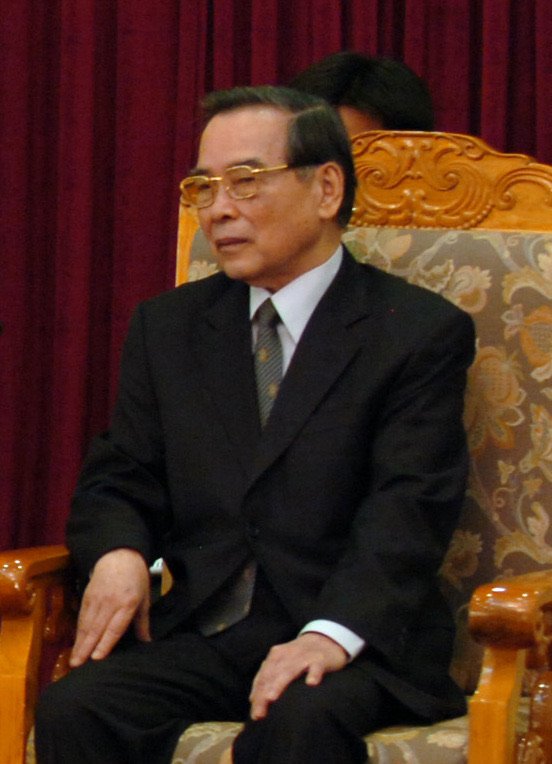
1933—2018
Phan Văn Khải
Prime minister and economic reformerThe technocratic prime minister who advanced business reform, negotiated deeper global integration and made a landmark visit to the United States in 2005.Read biographyQuick answers
Common questions
- When did Vietnam’s first 500 kV North–South power line open?
- Construction began on 5 April 1992. The first circuit was energised on 27 May 1994, linking the northern, central and southern systems.
- Where did the original line run?
- The 1,487-kilometre route connected the Hòa Bình hydropower complex in the north with Phú Lâm in the Ho Chi Minh City area.
- What was Võ Văn Kiệt’s role?
- He backed the project politically and gave the energisation instruction recorded on 27 May 1994. The Energy Ministry, engineers, construction teams and dispatch organisation had distinct delivery and operating responsibilities.
- Is this the same project as the 2024 circuit 3 line?
- No. The original circuit was energised in 1994. The 519-kilometre Quảng Trạch–Phố Nối circuit 3 projects were inaugurated on 29 August 2024, three decades later.
Primary and institutional sources
How this history was checked
EVN’s historical, operational and dispatch records supply the construction and energisation chronology. They are accounts from the electricity institution, including commemorative speeches, not independent audits of the project’s economic return. Exact tower totals, the approval instrument’s inconsistent suffix and the second circuit’s differing day/month dates are not standardised here by guesswork. The later circuit 3 inauguration is supported by its own 2024 record. This article was reviewed on 17 October 2026.
- Vietnam Electricity2014 press release: regional shortages, 25 February approval and construction method
- Vietnam Electricity25 years of operation: 1,487-kilometre route, endpoints and first-circuit dates
- Vietnam ElectricityConstruction retrospective: conductors, communications, inspection and testing
- Vietnam Electricity2014 anniversary speech: delivery organisations, station sites, 19:06 connection and staged installations
- Vietnam Electricity / National Load Dispatch CentreThirty-year institutional history: 11 April 1994 establishment and 27 May dispatch
- Vietnam ElectricitySeventy-year sector history, part 3: the 1986–1994 system and national interconnection
- Vietnam Electricity / EVNNPT29 August 2024 inauguration: separate Quảng Trạch–Phố Nối circuit 3 projects
- Wikimedia CommonsExisting Võ Văn Kiệt portrait: Japanese government provenance and CC BY 4.0 licence