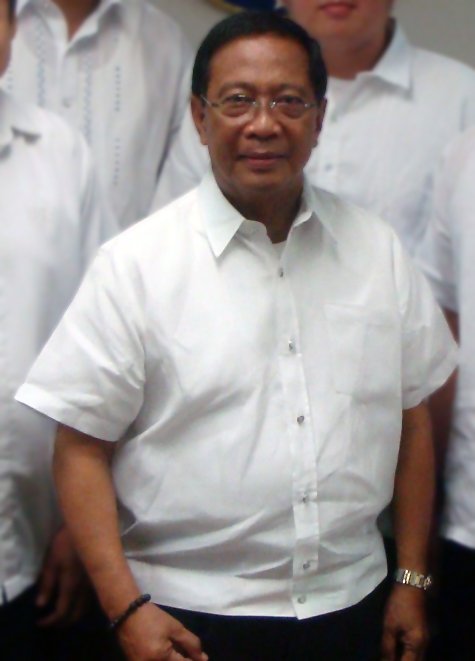

In this biography
Quick facts
- Born
- 6 July 1949
- Birthplace
- Pola, Oriental Mindoro, Philippines
- Country
- Philippines
- Nationality
- Filipino
- Known for
- Turning a national broadcasting career into a first-place Senate victory and the vice presidency
- Full name
- Manuel Leuterio de Castro Jr.
- Broadcast name
- Kabayan Noli de Castro
- Senate service
- 2001–2004
- Vice president
- 2004–2010
Why this life matters
De Castro demonstrates how broadcast trust and a non-party public persona can translate into national office while leaving the vice presidency institutionally dependent on cabinet assignments.
Timeline
Key moments
Born in Pola
Born in Oriental Mindoro on 6 July and later studied commerce at the University of the East.
Began reporting on radio
Started as a field reporter and developed a public-affairs broadcasting career.
Became a national news personality
Anchored radio and television programmes associated with public service, investigations and overseas Filipino audiences.
Topped the Senate election
Won his first elected office with the highest vote total among senatorial candidates.
Won the vice presidency
Congress proclaimed him over Loren Legarda by an official margin of 881,722 votes.
Led housing and overseas-worker portfolios
Served as vice president while holding cabinet-level responsibilities assigned by President Arroyo.
Returned to broadcasting
Left office at the constitutional end of his term and resumed work in television and radio.
A broadcaster identified with public service
Noli de Castro began as a radio field reporter in 1976 and became one of the country’s most recognisable news and public-affairs presenters. The name “Kabayan”—compatriot—captured a style that joined breaking news, investigations and direct appeals from viewers and listeners.
Broadcasting supplied a national constituency before de Castro had a party organisation. In 2001 he entered politics and led the Senate count, translating media familiarity into an unusually strong first electoral mandate.
The 2004 vice-presidential contest
De Castro ran for vice president in 2004 alongside President Gloria Macapagal Arroyo’s coalition. Congress recorded 15,100,431 votes for him and 14,218,709 for Loren Legarda.
Legarda filed a protest, but the Presidential Electoral Tribunal later dismissed the remaining action after required deposits were not completed and she returned to the Senate. The official proclamation therefore remained in effect without a judgment reversing the result.
Housing responsibilities and the limits of the office
As vice president, de Castro chaired the government’s housing coordinating council and received assignments involving overseas Filipino workers and regional development. Those responsibilities gave the office a policy role, but one derived largely from presidential delegation rather than independent constitutional powers.
He did not pursue the presidency in 2010 and returned to broadcasting after Jejomar Binay succeeded him. His career remains a leading example of the movement between journalism, celebrity and electoral authority in the post-EDSA period.
Quick answers
Frequently asked questions about Noli de Castro
- Who is Noli de Castro?
- Noli de Castro is a broadcaster, senator and vice president. De Castro demonstrates how broadcast trust and a non-party public persona can translate into national office while leaving the vice presidency institutionally dependent on cabinet assignments.
- What is Noli de Castro best known for?
- Noli de Castro is best known for turning a national broadcasting career into a first-place Senate victory and the vice presidency.
- When and where was Noli de Castro born?
- Noli de Castro was born on 6 July 1949 in Pola, Oriental Mindoro, Philippines.
Sources and further reading
How this biography was checked
Core dates and offices are checked against the sources below. This profile was last reviewed on 9 September 2026.