
The short answer
Benigno Aquino III won a clear presidential plurality in the Philippines’ first nationwide automated election, but voters rejected his running mate by a narrow margin. The Aquino–Binay split ticket joined a faster count to an unresolved vice-presidential protest, showing that technology could change election administration without eliminating political and legal contestation.
Chronology
A timeline of the turning points
Congress strengthens the automation law
Republic Act No. 9369 expands the legal framework for automated election administration, audit and electronic transmission.
Aquino declares his presidential campaign
A movement formed after Corazon Aquino’s death turns the senator into the Liberal Party’s standard-bearer.
The first nationwide automated election is held
Precinct-count optical scan machines count paper ballots and transmit results across the country.
Congress proclaims Aquino and Binay
Benigno Aquino III wins the presidency, while Jejomar Binay defeats Aquino’s running mate Mar Roxas for vice president.
Roxas files an electoral protest
The losing vice-presidential candidate asks the Presidential Electoral Tribunal to examine the automated system and contested precincts.
The contested term expires
Binay completes the vice presidency and Leni Robredo assumes the office after the next election.
The tribunal dismisses the protest as moot
Because the 2010–2016 term had ended, the court concludes that no enforceable decision on who should hold that office remained possible.
Why did the election become a referendum on trust?
Gloria Macapagal Arroyo’s nine-year presidency ended after repeated legitimacy controversies, including the disputed 2004 election and the Hello Garci recordings. Benigno Aquino III campaigned on clean government and institutional reform, drawing political force from the public mourning that followed his mother Corazon Aquino’s death.
Former president Joseph Estrada sought a return, Manuel Villar Jr. presented an entrepreneurial anti-poverty story, and administration candidate Gilbert Teodoro Jr. emphasised competence and national security. Five other candidates widened the field.
What did the official presidential result show?
COMELEC records 15,208,678 votes for Aquino, 9,487,837 for Estrada, 5,573,835 for Villar and 4,095,839 for Teodoro. Aquino therefore won a clear plurality and a 5,720,841-vote lead over the runner-up.
The result was decisive without constituting an absolute majority. As in earlier elections, the single-round plurality rule converted the largest share in a fragmented field into a six-year presidential mandate.
What changed with nationwide automation?
Voters still marked paper ballots, but machines counted them and election data moved through electronic canvassing systems. Compared with fully manual national counts, results became available much faster and Congress completed its canvass in nine working days.
Automation did not remove human or institutional judgment. Ballot design, machine testing, source code, audit logs, transmission, physical custody and random manual audits all remained necessary to make the system verifiable.
Why did the vice-presidential result split the ticket?
Aquino’s running mate Mar Roxas received 13,918,490 votes, but opposition candidate Jejomar Binay won 14,645,574. The official margin was 727,084 votes. Loren Legarda placed third with 4,294,664.
Because the two offices are elected separately, voters could support Aquino’s reform mandate while choosing an experienced local executive from another coalition as vice president. The result again produced an executive whose two nationally elected members had distinct political bases.
What happened to the Roxas protest?
Roxas asked the Presidential Electoral Tribunal for forensic examination, manual revision and other measures involving the automated system. Binay filed a counter-protest, and the tribunal ordered election materials preserved while procedural issues continued.
The case did not produce a merits judgment reversing the count. After the 2010–2016 term expired, the tribunal dismissed both protest and counter-protest as moot because no ruling could change who held an office whose term had already ended.
What was the election’s longer legacy?
The 2010 vote made automated national administration the new baseline and demonstrated that faster canvassing could coexist with a paper record and judicial challenge. Later elections refined the process rather than returning to the old manual system.
Politically, Aquino entered office with a strong anti-corruption mandate while Binay gained an independent platform for a future presidential campaign. The split result shaped both cooperation and opposition throughout the next six years.
Continue the chronology
Related history guides
The 2004 Presidential Election
See the manual count and legitimacy crisis that intensified pressure for automation.
Read the timeline2011–2012The Renato Corona Impeachment
Follow the most consequential accountability conflict of the Aquino presidency.
Read the timelineMay 2016The 2016 Presidential Election
Continue to the election that ended the Aquino administration and produced another split ticket.
Read the timelineConnected biographies
The presidential and vice-presidential candidates who defined the 2010 contest

1960—2021
Benigno Aquino III
President of the Philippines, 2010–2016The Philippine president whose Straight Path programme produced major legislation while budget disputes, national crises and maritime arbitration shaped his record.Read biography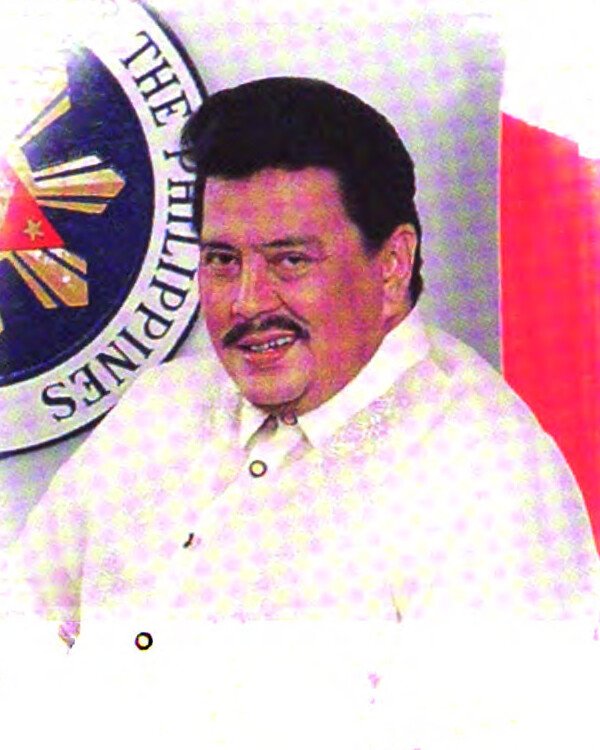
1937—
Joseph Estrada
President of the Philippines, 1998–2001The film star and populist politician who became president in 1998, left office amid impeachment and protest, and later returned as mayor of Manila.Read biography
1949—
Manuel Villar Jr.
Housing entrepreneur and former leader of both houses of CongressA Tondo-born accountant and property entrepreneur whose business career preceded leadership in both chambers of Congress and a third-place presidential result in 2010.Read biography
1964—
Gilbert Teodoro Jr.
Lawyer, legislator and national defence secretaryA lawyer and former Tarlac representative who led the defence department under two presidents and placed fourth in the 2010 presidential election.Read biography
1942—
Jejomar Binay
Human-rights lawyer, Makati mayor and vice presidentA human-rights lawyer under martial law who became Makati’s dominant local executive, vice president from 2010 to 2016 and a presidential candidate.Read biography
1957—
Mar Roxas
Legislator, cabinet secretary and presidential candidateAn economist and politician who served in the House, Senate and three cabinet departments before running for vice president in 2010 and president in 2016.Read biography
1960—
Loren Legarda
Journalist, legislator and climate-policy advocateAn award-winning broadcaster who became a four-term senator, two-time vice-presidential candidate and leading legislative advocate for climate resilience and culture.Read biographyQuick answers
Common questions
- Who won the 2010 Philippine presidential election?
- Benigno Aquino III won with 15,208,678 votes, 5,720,841 more than second-placed Joseph Estrada.
- Was 2010 the first automated Philippine election?
- It was the first nationwide automated national and local election. Earlier automation had been used on a limited basis, including in the ARMM.
- Who won the vice presidency in 2010?
- Jejomar Binay won with 14,645,574 votes, defeating Mar Roxas by 727,084.
- Did the Roxas protest change the result?
- No. The Presidential Electoral Tribunal dismissed the case as moot after the contested term expired, without a merits ruling that reversed Binay’s proclamation.
- Did Aquino win a majority of all votes?
- No. He won a clear plurality in a ten-candidate contest; Philippine presidential elections do not require a runoff.
Primary and institutional sources
How this history was checked
Dates, legal milestones and historical claims are checked against the official and institutional records below. This article was reviewed on 9 September 2026.
- Commission on Elections2010 presidential and vice-presidential results
- Presidential Electoral Tribunal via LawPhilRoxas v. Binay — protest, official margin and dismissal
- The LawPhil ProjectRepublic Act No. 9369 — automated election amendments
- Senate of the PhilippinesCongressional proclamation speech, 9 June 2010