
The short answer
The 2004 election gave Gloria Macapagal Arroyo a congressionally proclaimed mandate, but it did not settle public confidence in the result. Fernando Poe Jr.’s protest ended after his death without a merits judgment, and purported recordings in 2005 created a separate legitimacy crisis whose central fraud allegations were never resolved by a completed presidential recount.
Chronology
A timeline of the turning points
Arroyo announces that she will seek election
After previously saying she would not run, the incumbent entered the presidential race.
Voters choose a president and national legislature
Gloria Macapagal Arroyo, Fernando Poe Jr., Raul Roco, Panfilo Lacson and Eddie Villanueva contested the presidency.
Congress proclaims Arroyo
The national canvass recorded 12,905,808 votes for Arroyo and 11,782,232 for Poe.
Poe files an election protest
The second-placed candidate asked the Presidential Electoral Tribunal to review the result.
Fernando Poe Jr. dies
His death created a legal question over who, if anyone, could continue the personal claim to the presidency.
The tribunal dismisses the protest
The court denied Poe’s widow substitution because she was not a candidate or real party in interest.
Purported recordings trigger the Hello Garci crisis
Tapes alleged to involve Arroyo and an election commissioner prompted inquiries, protests and impeachment complaints.
The Supreme Court rules on congressional hearings
Garcillano v. House addressed procedural limits on investigations, not whether electoral fraud changed the 2004 result.
Why was the 2004 election unusually consequential?
Gloria Macapagal Arroyo had entered the presidency through the disputed EDSA II succession rather than winning the office in a presidential election. The 2004 campaign was therefore both a contest for a new term and a test of whether electoral victory could settle arguments over her legitimacy.
Fernando Poe Jr., a film star with little government experience, assembled a populist opposition coalition. Raul Roco offered a reform platform, while Panfilo Lacson and Eddie Villanueva divided other opposition and religious constituencies.
What did the official canvass show?
Congress, sitting as the National Board of Canvassers, proclaimed Arroyo after recording 12,905,808 votes for her and 11,782,232 for Poe. The official difference was 1,123,576 votes.
The proclamation established the legal result. It did not prevent a qualified losing candidate from filing an election protest before the Presidential Electoral Tribunal, the constitutionally designated body for presidential and vice-presidential contests.
Why did the election protest end without a recount judgment?
Poe filed his protest in July 2004 but died that December. His widow, Susan Roces, asked to substitute for him so the case could continue in the public interest.
The tribunal held that only a candidate with the required electoral standing could pursue the personal claim to the office and that the widow was not a real party in interest. It dismissed the protest in March 2005. The decision therefore did not determine through completed revision whether alleged irregularities changed the result.
What was the Hello Garci controversy?
In 2005, recordings surfaced that purported to capture conversations between Arroyo and election commissioner Virgilio Garcillano. Critics alleged that the calls concerned manipulation of the count. Arroyo acknowledged speaking to an election official and apologised for a lapse in judgment while denying that she had fixed the election.
Congress held inquiries and impeachment complaints followed, but the investigations did not produce a final judicial finding that the recordings proved a changed presidential outcome. The Supreme Court cases arising from the controversy focused mainly on speech, wiretapping, legislative procedure and the validity of particular hearings.
How did 2004 change later Philippine elections?
The slow canvass, disputed returns and unresolved allegations severely weakened trust in manual election administration. Reform debate increasingly focused on automated counting, transmission and auditability.
Congress expanded the legal basis for election automation in 2007, and nationwide automated counting followed in 2010. Technology shortened parts of the count, but later disputes showed that transparency, custody, audit and public confidence remained institutional rather than purely technical problems.
Continue the chronology
Related history guides
EDSA II and Presidential Succession
Understand how Arroyo first assumed the presidency before seeking an elected term.
Read the timelineMay 1992The 1992 Presidential Election
Compare another disputed result whose protest ended without a merits judgment.
Read the timelineMay 2016The 2016 Presidential Election
See how automated administration, social media and a regional candidacy changed the contest.
Read the timelineConnected biographies
The leading candidates and institutional actors around the 2004 dispute

1947—
Gloria Macapagal Arroyo
President of the Philippines, 2001–2010The economist, senator and vice president who led the Philippines from 2001 to 2010 and later returned to Congress as a Pampanga representative.Read biography
1939—2004
Fernando Poe Jr.
Actor, director, producer and presidential candidateA film actor, director and producer whose working-class screen heroes made him a national cultural figure before he entered presidential politics in 2004.Read biography
1948—
Panfilo Lacson
Senator and former national police chiefA former police chief and long-serving senator whose national career centres on security, public spending and executive oversight.Read biography
1949—
Noli de Castro
Broadcaster, senator and vice presidentA radio and television journalist who topped the 2001 Senate election and served as vice president of the Philippines from 2004 to 2010.Read biography
1960—
Loren Legarda
Journalist, legislator and climate-policy advocateAn award-winning broadcaster who became a four-term senator, two-time vice-presidential candidate and leading legislative advocate for climate resilience and culture.Read biography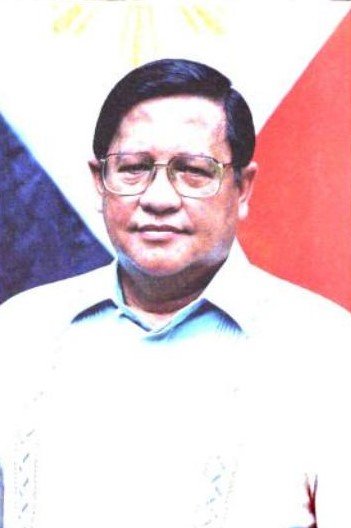
1941—2005
Raul Roco
Lawyer, legislator and education secretaryA lawyer and legislator whose Senate work expanded legal protections for women and whose presidential campaigns offered a reformist alternative to established political blocs.Read biography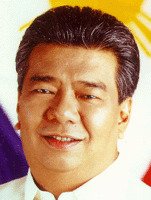
1945—
Franklin Drilon
Lawyer, former cabinet secretary and Senate presidentAn Iloilo-born lawyer who led three cabinet portfolios, served four Senate terms and became Senate president during three separate periods.Read biography
1933—2019
Aquilino Pimentel Jr.
Lawyer, local-government reformer and Senate presidentA Mindanao lawyer, mayor and opposition leader who survived detention under martial law and made local autonomy a foundation of restored democracy.Read biography
1945—2016
Miriam Defensor Santiago
Senator, judge and public administratorA lawyer, judge, cabinet official and senator whose sharp legal arguments and forceful public style made her one of the Philippines’ most recognisable political figures.Read biographyQuick answers
Common questions
- Who won the 2004 Philippine presidential election?
- Congress proclaimed incumbent president Gloria Macapagal Arroyo with 12,905,808 votes.
- How many votes did Fernando Poe Jr. receive?
- The official congressional canvass recorded 11,782,232 votes for Poe, 1,123,576 fewer than Arroyo.
- Was the Poe election protest completed?
- No. The Presidential Electoral Tribunal dismissed it after Poe died and held that his widow could not substitute because she was not a real party in interest.
- Did a court prove that Hello Garci changed the election result?
- No completed judicial recount or merits ruling established that the alleged conversations changed the presidential outcome. Related Supreme Court cases addressed procedure, hearings and publication issues.
- What reform followed the controversy?
- Pressure increased for automated election administration. Congress amended the automation law in 2007, and nationwide automated counting was used in 2010.
Primary and institutional sources
How this history was checked
Dates, legal milestones and historical claims are checked against the official and institutional records below. This article was reviewed on 9 September 2026.
- Presidential Electoral Tribunal via LawPhilPoe v. Macapagal-Arroyo — official totals, protest and dismissal
- Supreme Court of the Philippines via LawPhilGarcillano v. House Committees — recordings and congressional inquiries
- The LawPhil ProjectRepublic Act No. 9369 — amendments to the election automation law
- The LawPhil Project1987 Constitution — canvass and electoral tribunal rules