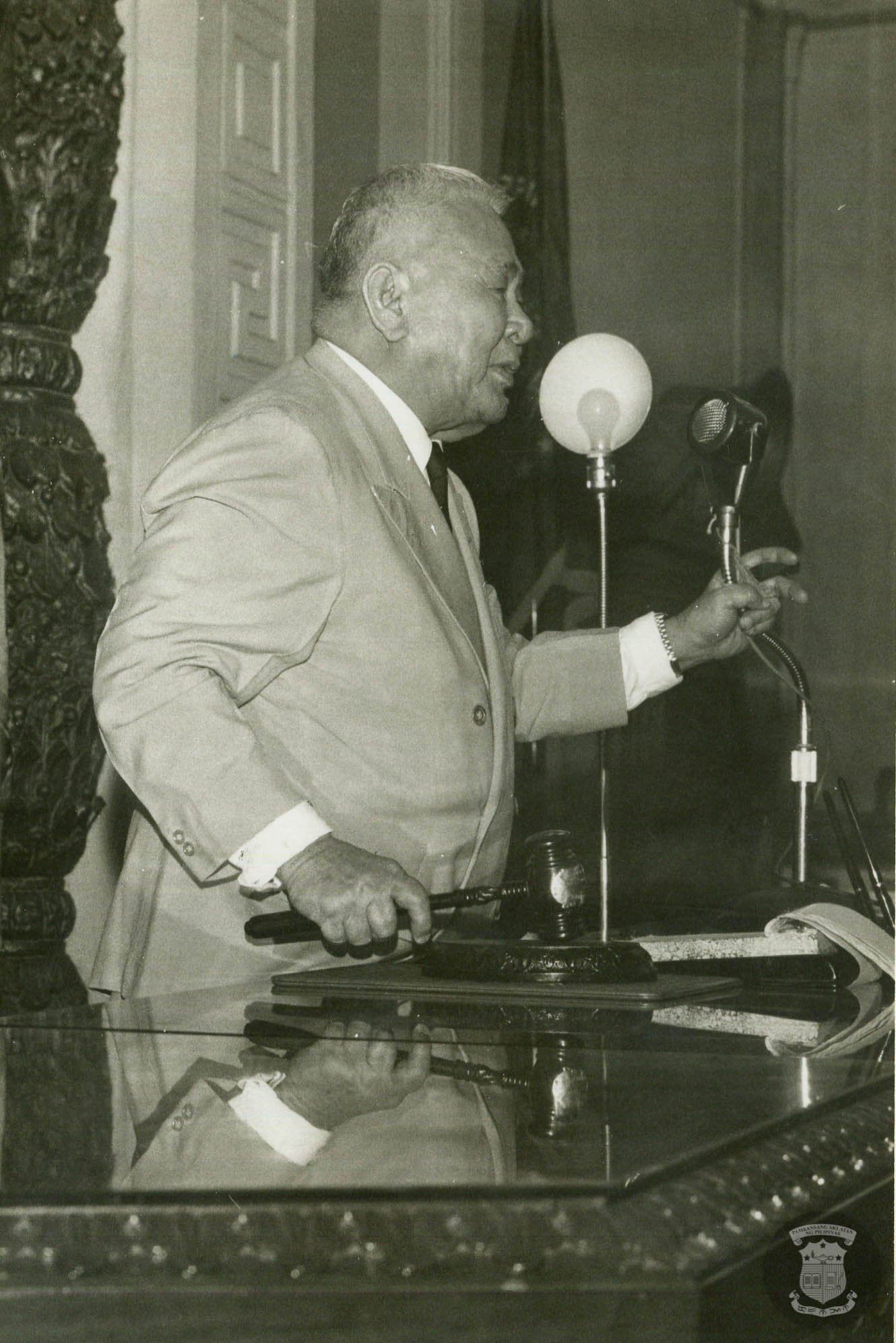

In this biography
Quick facts
- Born
- 16 January 1888
- Died
- 25 February 1964
- Birthplace
- Carmen, Cebu, Philippines
- Country
- Philippines
- Nationality
- Filipino
- Known for
- Leading the Philippine Senate from 1949 to 1952 after a disputed reorganisation
- Senate president
- 21 February 1949–5 March 1952
- Provincial office
- Governor of Cebu, elected 1931
- Constitutional role
- Floor leader, 1934 convention
- Other work
- Lawyer and Spanish- and Cebuano-language writer
Why this life matters
Cuenco connected provincial politics and constitutional work to postwar Senate leadership, taking the chair in a reorganisation that produced a landmark Supreme Court dispute.
Timeline
Key moments
Entered the Philippine Assembly
Won the first of several mandates representing Cebu in the national legislature.
Became governor of Cebu
Moved from national lawmaking to provincial executive leadership.
Led convention debate
Served as a floor leader during the drafting of the 1935 Constitution.
Joined the Commonwealth cabinet
Served as secretary of public works and communications under Manuel Quezon.
Became Senate president
A majority opposing Jose Avelino reorganised the chamber and elected Cuenco.
Returned to the Senate
Resumed legislative service and remained a senator until his death.
Cebu politics, law and letters
Cuenco trained as a lawyer and built a career that moved between writing, electoral politics and administration. He represented Cebu in the Philippine Assembly and House before winning the governorship of a province with major commercial and political influence.
At the 1934 Constitutional Convention he helped manage floor debate over the institutions of the future Commonwealth. He later directed public works and communications, a portfolio central to transport and state-building across the archipelago.
A contested route to the Senate presidency
In February 1949 senators opposed to Jose Avelino declared the presidency vacant and elected Cuenco. The resulting legal case did not settle every political question, but it confirmed how disputes inside a coequal legislature can involve both constitutional rules and judicial restraint.
Cuenco remained president until March 1952. His term covered postwar recovery, the Quirino presidency and the formation of new alliances that would soon make the chamber’s leadership unusually unstable.
Regional voice in a national institution
After returning to the Senate in 1953, Cuenco served through the Magsaysay, Garcia and Macapagal years. He brought the perspective of Cebu politics into an institution whose members were elected through national and, in earlier periods, district-based contests.
His publications in Spanish and Cebuano form another part of that legacy. Cuenco’s public life illustrates how journalism, literary culture and electoral leadership overlapped in the generation that built the Commonwealth and independent republic.
Quick answers
Frequently asked questions about Mariano Jesus Cuenco
- Who was Mariano Jesus Cuenco?
- Mariano Jesus Cuenco was a senate president, legislator and writer. Cuenco connected provincial politics and constitutional work to postwar Senate leadership, taking the chair in a reorganisation that produced a landmark Supreme Court dispute.
- What is Mariano Jesus Cuenco best known for?
- Mariano Jesus Cuenco is best known for leading the Philippine Senate from 1949 to 1952 after a disputed reorganisation.
- When and where was Mariano Jesus Cuenco born?
- Mariano Jesus Cuenco was born on 16 January 1888 in Carmen, Cebu, Philippines.
- When did Mariano Jesus Cuenco die?
- Mariano Jesus Cuenco died on 25 February 1964.
Sources and further reading
How this biography was checked
Core dates and offices are checked against the sources below. This profile was last reviewed on 9 September 2026.