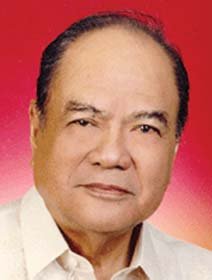

In this biography
Quick facts
- Born
- 5 September 1905
- Died
- 21 October 1997
- Birthplace
- Antipolo, Rizal, Philippines
- Country
- Philippines
- Nationality
- Filipino
- Known for
- Challenging Soviet claims about colonialism at the 1960 United Nations General Assembly
- House service
- Representative for Rizal, 1946–1949
- Senate service
- 1949–1967 and 1969–1972
- Senate leadership
- President pro tempore, 1966–1967
- Constitutional role
- Member, 1986 Constitutional Commission
Why this life matters
Sumulong connects provincial representation, parliamentary leadership, UN decolonisation debates and the constitutional reconstruction that followed dictatorship.
Timeline
Key moments
Born in Antipolo
Born in Rizal province on 5 September.
Entered the First Congress
Represented Rizal in the House as the newly independent republic began.
Moved to the Senate
Won a national seat and began more than two decades of intermittent Senate service.
Debated colonialism at the UN
Questioned Soviet control in Eastern Europe during debate on independence for colonial peoples, drawing angry interruptions from Nikita Khrushchev.
Became president pro tempore
Held the Senate’s second-ranking leadership post during the Sixth Congress.
Helped draft a new constitution
Joined the commission appointed after People Power to prepare the charter ratified in 1987.
Rizal representation in the early republic
Lorenzo Sumulong trained as a lawyer and entered the House in 1946 as a representative of Rizal. He won election to the Senate in 1949 and remained a national legislator, with one interruption, until martial law ended the Seventh Congress in 1972.
The official Senate rosters record him among the chamber’s leaders and as president pro tempore in 1966–1967. His career crossed the postwar administrations from Elpidio Quirino to Ferdinand Marcos, giving him unusual institutional memory of the Third Republic.
A Philippine voice in a Cold War decolonisation debate
At the United Nations on 12 October 1960, Sumulong challenged Soviet premier Nikita Khrushchev during debate on the proposed declaration granting independence to colonial countries and peoples. He asked how the Soviet proposal could be reconciled with the political condition of Eastern Europe.
The UN audiovisual record confirms Sumulong’s speech, Khrushchev’s angry interruptions and the president’s repeated use of the gavel. Later stories often centre on whether Khrushchev struck the desk with a shoe; the documented exchange matters more than the prop because it shows a recently decolonised Asian state contesting both Western colonialism and Soviet domination.
From a closed Congress to a new charter
Sumulong’s Senate term was cut short when martial law transformed the legislature. He did not return through Marcos-era parliamentary institutions, and his next major constitutional role came after the authoritarian government fell.
Corazon Aquino appointed him to the 1986 Constitutional Commission. The commission’s draft restored a bicameral Congress and built new restrictions around presidential emergency power. Sumulong’s final public service thus connected the legislature closed in 1972 to the institutional order designed after 1986.
Quick answers
Frequently asked questions about Lorenzo Sumulong
- Who was Lorenzo Sumulong?
- Lorenzo Sumulong was a senator, diplomat and constitutional commissioner. Sumulong connects provincial representation, parliamentary leadership, UN decolonisation debates and the constitutional reconstruction that followed dictatorship.
- What is Lorenzo Sumulong best known for?
- Lorenzo Sumulong is best known for challenging Soviet claims about colonialism at the 1960 United Nations General Assembly.
- When and where was Lorenzo Sumulong born?
- Lorenzo Sumulong was born on 5 September 1905 in Antipolo, Rizal, Philippines.
- When did Lorenzo Sumulong die?
- Lorenzo Sumulong died on 21 October 1997.
Sources and further reading
How this biography was checked
Core dates and offices are checked against the sources below. This profile was last reviewed on 9 September 2026.