In this biography
Quick facts
- Born
- 20 September 1898
- Died
- 1945
- Birthplace
- Dingras, Ilocos Norte, Philippines
- Country
- Philippines
- Nationality
- Filipino
- Known for
- Founding the Girl Scouts of the Philippines and aiding prisoners and resistance networks
- Born
- 20 September 1898
- Organisation
- Girl Scouts of the Philippines
- Wartime work
- Aid to prisoners and guerrillas
- Last seen
- 6 January 1945
Why this life matters
Escoda joined institution-building, women’s citizenship and underground humanitarian work in a life that widened the meaning of wartime resistance.
Timeline
Key moments
Born in Dingras
NCCA’s biographical entry records 20 September 1898, rather than the inconsistent year in a later commemorative notice.
Qualified as a teacher
Completed normal-school study and later obtained a high-school teaching certificate from UP.
Developed welfare and women’s-organising networks
Undertook American training and participated in the broader campaign for women’s citizenship; exact credential labels are not forced.
Girl Scouts charter approved
Commonwealth Act No. 542 incorporated the organisation; it was not the 1937 suffrage law.
Supported prisoners and civilian relief
The wartime network collected supplies, relayed messages and supported community kitchens.
Arrested by Japanese forces
She was imprisoned at Fort Santiago; accounts of arrest and detention are not treated as an execution record.
Last reported alive
The sighting does not establish the exact day she was killed.
A memorial fund committee was established
The GSP created a mechanism to support delegates’ international participation after her death.
Teaching and social welfare before the Girl Scouts
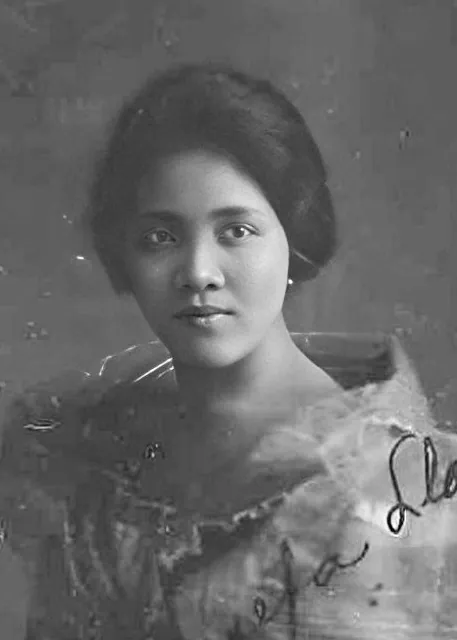
Josefa Llanes Escoda was born in Dingras, Ilocos Norte, on 20 September 1898. NCCA’s cultural encyclopedia describes her teacher training at the Philippine Normal School, completed in 1919, and a high-school teaching certificate from the University of the Philippines in 1922. She later worked with the American Red Cross and undertook social-welfare training in the United States.
Accounts attach different labels to that American credential, so an exact Columbia degree title is not imposed here. More important to her later work was the combination of teaching, organised welfare and international women’s networks. Her path to founding a national organisation for girls began before the charter and involved professional preparation, not only wartime heroism.
Women’s citizenship and a separate scouting charter
Escoda was active in the women’s suffrage movement and the National Federation of Women’s Clubs. Voting rights were a collective campaign, not an achievement attributable to one leader alone. The 1937 suffrage milestone must also be distinguished from the later law incorporating the Girl Scouts.
Commonwealth Act No. 542 was approved on 26 May 1940. It created the Girl Scouts of the Philippines as a corporation and named Escoda, Helena Z. Benitez, Pilar Hidalgo Lim and other women among its incorporators. Its subject was a youth organisation: it was not the statute that granted women the vote in 1937, as one later commemorative article mistakenly suggests.
A national movement built with other women leaders
The Girl Scouts’ institutional history identifies Pilar Hidalgo Lim as another central organiser alongside Escoda. The charter envisaged girls’ citizenship, character and service, while providing an executive board and national coordinating structure. This turned an educational movement into an organisation capable of training leaders and sustaining local activity.
Scouting preparation preceded incorporation. The organisational history dates a basic-training episode to 1939, while NCCA also describes an earlier American visit in 1933. Those references should not be flattened into one supposedly certain first training trip. The securely documented legal milestone remains the May 1940 charter, rather than a claim that all Filipino girl scouting began on that single day.
Relief work under Japanese occupation
When war interrupted formal scouting operations, women in the network continued relief work. The GSP account describes collecting food, medicine, clothing and utensils, conveying family messages and compiling prisoners’ names and addresses at Camp O’Donnell in Capas. Volunteers also housed stranded students and organised community kitchens in Manila.
Helena Benitez’s recollection, preserved by the organisation, places the Escodas alongside an emergency volunteers’ committee in this work. That testimony supports a picture of coordinated humanitarian networks, rather than one person carrying out every operation alone. The aid exposed organisers to danger under the Japanese military police; Escoda was arrested in August 1944 and imprisoned at Fort Santiago.
The last sighting and the institution that outlived her
Escoda was last reported alive on 6 January 1945. NCCA’s entry prints that day in its heading but describes it as a last sighting in the narrative; the NHCP account likewise separates the sighting from her subsequent killing. The precise execution date and burial location remain uncertain, so the profile uses 1945 rather than turning the sighting into an exact death date.
The organisation resumed after the war and gained full WAGGGS membership in 1948. That year, its executive committee also created the Escoda Memento Fund committee to support international participation. The continuing fund connects her name with opportunities for girls and adult leaders, extending the educational purpose of her work beyond a memorial to her death.
Quick answers
Frequently asked questions about Josefa Llanes Escoda
- What is Josefa Llanes Escoda known for?
- She was a teacher, social worker, suffrage advocate and founder of the Girl Scouts of the Philippines who helped organise wartime relief for prisoners and civilians.
- When was the Girl Scouts of the Philippines chartered?
- Commonwealth Act No. 542 incorporated the organisation on 26 May 1940. Escoda was one of its named incorporators; this was not a 1937 voting-rights statute.
- Did Josefa Llanes Escoda die on 6 January 1945?
- That day is recorded as her last reported sighting alive. Accounts place her killing later during the occupation, but the exact execution date and burial site have not been established here.
- How did Escoda help during the war?
- Her network gathered food, medicine and clothing, relayed messages, listed prisoners and supported civilian kitchens. The work involved other organisers, including Helena Benitez, rather than Escoda acting alone.
Keep exploring
Lives connected to this story
- Helena Z. Benitez
A fellow incorporator and wartime relief organiser whose recollection appears in the scouting history.
- Pura Villanueva Kalaw
Place Escoda within the wider campaign for women’s voting rights.
- José Abad Santos
Compare another civilian leader killed during the occupation without merging their different circumstances.
Sources and further reading
Explore the evidence
These references support the biography and offer further reading. Official records, first-person accounts and independent reporting provide different perspectives; image records document attribution and licensing.
- 1. National Historical Commission of the Philippines via PIAHistorical marker for activist and martyr Josefa Llanes Escoda
The NHCP/PIA commemorative notice contains an inconsistent birth year and conflates the 1940 charter with 1937 suffrage. Those details are not copied; its account of the final sighting is distinguished from a verified execution record.
- 2. National Historical Commission of the PhilippinesGirl Scouts of the Philippines historical marker
- 3. Girl Scouts of the PhilippinesThe Girl Scouts of the Philippines in the 1940s
The organisational history includes Benitez’s participant recollection and concrete relief activities. It is an institutional remembrance, not an independently complete account of each wartime operation.
- 4. National Commission for Culture and the Arts / CulturEdJosefa Llanes Escoda: Sagisag Kultura biography
NCCA’s encyclopedia supports the 1898 birth and teacher-training sequence. Its heading prints an exact death day while its narrative describes a last sighting; the latter does not establish an execution date. Degree and scouting-trip details differ across accounts.
- 5. The LawPhil ProjectCommonwealth Act No. 542, 26 May 1940
The law names several incorporators and establishes the 26 May 1940 charter. It is not the 1937 suffrage enactment and does not make Escoda the only founder.
- 6. Philippine Veterans Affairs OfficeGender and Development: Escoda remembrance, 2021 bulletin
The indexed veterans’ bulletin supports the 1898 birth and welfare-training context. Live PDF access was restricted; a complete credential record was not retrieved, so an exact Columbia degree is not asserted.
- 7. Girl Scouts of the PhilippinesJosefa Llanes Escoda Memento Fund: committee origins and purpose
The GSP supplies the 1948 committee origin and the fund’s stated purpose. Blank current-officer information on the page is not adopted.
- 8. Wikimedia CommonsJosefa Llanes Escoda — portrait and reuse record