
The short answer
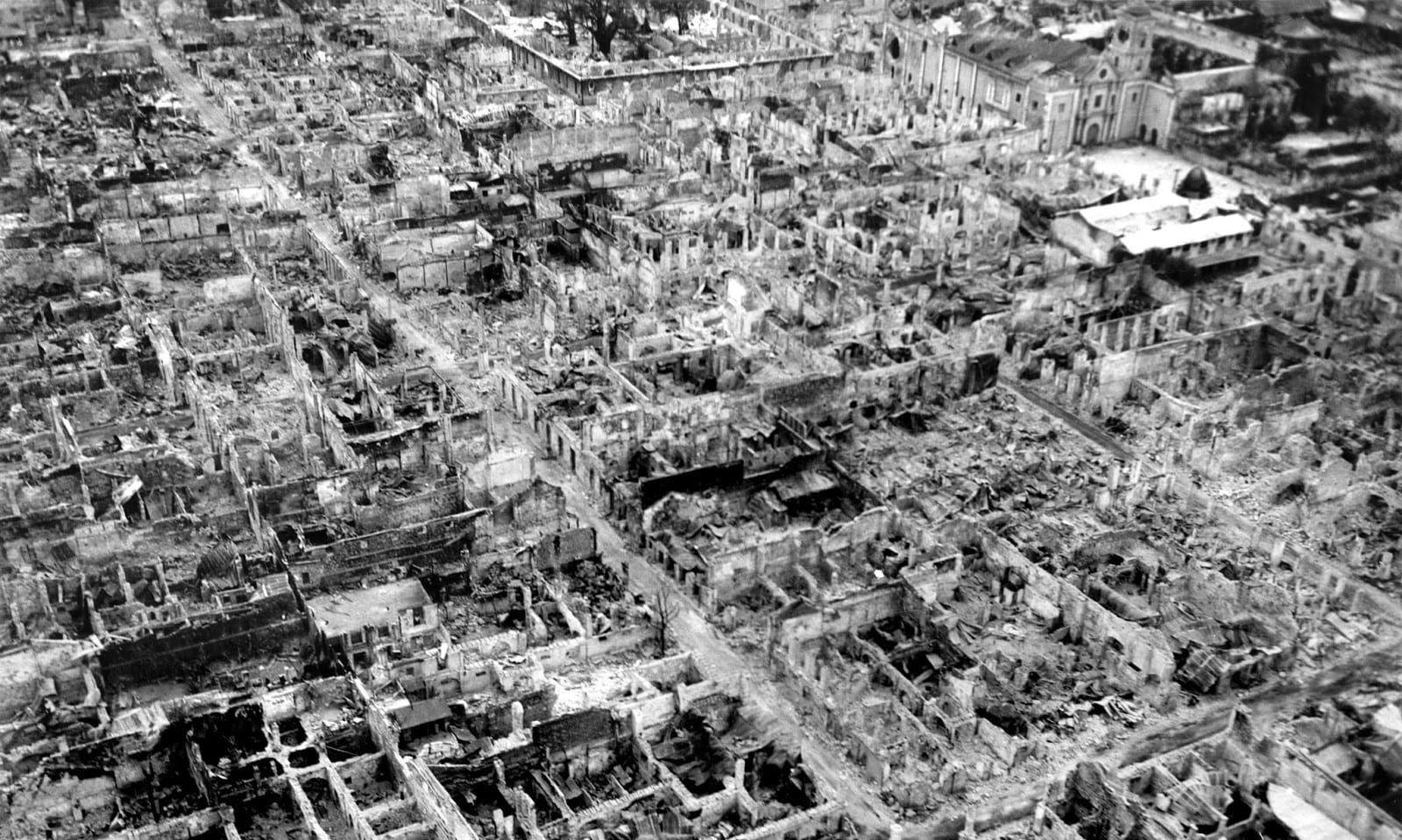
The Battle of Manila liberated the Philippine capital and destroyed much of it. Japanese forces murdered civilians across the city; American artillery and urban fighting caused further deaths. The official memorial records more than 100,000 civilian victims and asks that liberation be remembered through their experience as well as military victory.
Chronology
A timeline of the turning points
American forces enter northern Manila
Flying columns of the 1st Cavalry Division reached the capital, secured Malacañang and liberated thousands of civilian internees at the University of Santo Tomas.
Japanese defenders hold south of the Pasig
Japanese naval forces fortified government buildings, Intramuros and districts south of the river despite the wider Japanese army plan to avoid a decisive defence of the city.
Mass killings spread through civilian districts
Japanese troops murdered civilians in homes, hospitals, religious buildings and improvised detention sites as combat closed around the city.
Fighting closes on the government centre
American forces crossed and advanced south of the Pasig. Artillery, demolitions and fortified resistance caused escalating destruction and civilian casualties.
The assault on Intramuros begins
Heavy artillery preceded the ground assault on the Walled City. Thousands of civilians were trapped inside or killed before and during the final fighting.
Commonwealth authority returns to Manila
Douglas MacArthur formally restored the seat of government to President Sergio Osmeña at Malacañang while combat continued elsewhere in the capital.
The battle ends
The last organised Japanese positions in the city were eliminated. Manila had been liberated but much of its historic and civic centre lay in ruins.
Why was there a battle for Manila?
General Tomoyuki Yamashita intended to withdraw the main Japanese army from the Manila plain and prolong resistance in mountain positions. Japanese naval forces in the capital did not follow that strategy and prepared to defend the city.
American commanders sought to liberate internees, recover the political capital and secure Manila Bay. Their rapid entry on 3 February released prisoners in the north, but fortified positions south of the Pasig turned liberation into a month of close urban combat.
Who fought in the city?
The U.S. 1st Cavalry and 37th Infantry divisions approached from the north, while the 11th Airborne Division closed from the south. Filipino guerrillas supplied intelligence, guides and combat support and helped identify Japanese positions and detention sites.
The principal defenders were Japanese naval and attached forces under Rear Admiral Sanji Iwabuchi. Civilians were not a passive background: they carried children, searched for food, sheltered neighbours, transmitted information and attempted escape while armed forces fought through residential districts.
The Manila massacre was a series of atrocities
Japanese forces killed civilians across the city through shootings, bayoneting, burning, explosives and sexual violence. The violence occurred at numerous sites and was often directed at people already confined or seeking refuge.
Calling it the Manila massacre describes this pattern of deliberate killing, but no single incident contains the whole civilian experience. Site-level evidence and survivor testimony remain essential because neighbourhoods encountered different units, timing and methods of violence.
American artillery also killed civilians
Japanese defenders converted reinforced buildings and stone positions into strongpoints. American forces used artillery and direct fire to reduce them, especially south of the Pasig and around Intramuros. Those weapons accelerated the advance and caused severe civilian casualties and physical destruction.
The Memorare Manila 1945 marker explicitly remembers civilians killed mainly through heinous acts by Japanese forces and as casualties of heavy American artillery. Keeping both causes visible does not equalise intent; it explains how civilians died during both massacre and battle.
How many people died in the Battle of Manila?
The official Memorare Manila memorial records more than 100,000 defenceless civilians killed between 3 February and 3 March 1945. The figure is an estimate rather than a complete named census, and historians differ on exact totals and attribution.
The scale matters without false precision. Civilian deaths resulted from deliberate Japanese atrocities, artillery, crossfire, fire, collapsing buildings and the conditions of entrapment. Military casualties added thousands more to the human cost.
Liberation restored government but destroyed a capital
On 27 February MacArthur restored the seat of Commonwealth government to Sergio Osmeña at Malacañang. The ceremony marked political recovery before the final Japanese positions had been eliminated.
When the battle ended on 3 March, historic churches, government buildings, homes and commercial districts had been destroyed. Recovery required more than reconstruction: survivors faced bereavement, displacement, war-crimes evidence and disputes over how the dead should be remembered.
Why biography belongs in the battle’s history
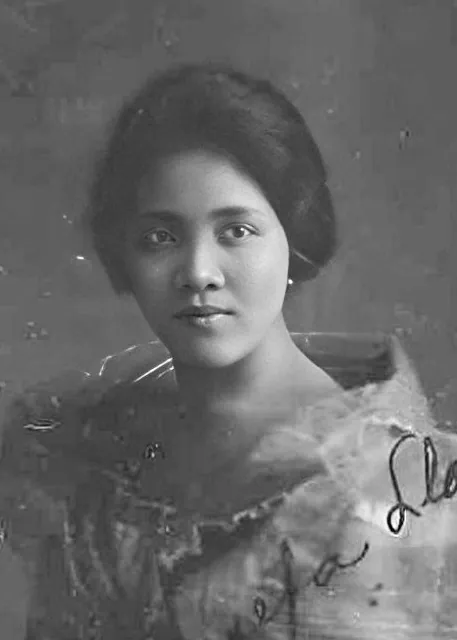
Josefa Llanes Escoda and Vicente Lim were resistance figures imprisoned and killed before liberation reached them. Their lives connect the final battle to years of underground aid, detention and execution under occupation.
Sergio Osmeña represents the returning Commonwealth, while José P. Laurel connects the battle to the Japanese-sponsored republic that had governed inside the occupied country. Together, those biographies keep political authority, resistance and civilian survival within the same history.
Continue the chronology
Related history guides
The Japanese Occupation of the Philippines
Place the battle inside invasion, wartime government, resistance and national liberation.
Read the timelineNine sourced livesPhilippines in World War II
Follow the people who governed, resisted, rescued and endured occupation.
Read the timeline4 July 1946Philippine Independence in 1946
Continue from liberation and reconstruction to recognised sovereignty.
Read the timeline1521—presentPhilippines History Timeline
Connect the occupation and battle to the longer national chronology.
Read the timelineConnected biographies
Four lives connecting resistance, occupation government and liberation
1898—1945
Josefa Llanes Escoda
Social worker, suffragist and wartime humanitarianA social worker and women’s-rights organiser who founded the Girl Scouts of the Philippines, aided wartime prisoners and was killed during the Japanese occupation.Read biography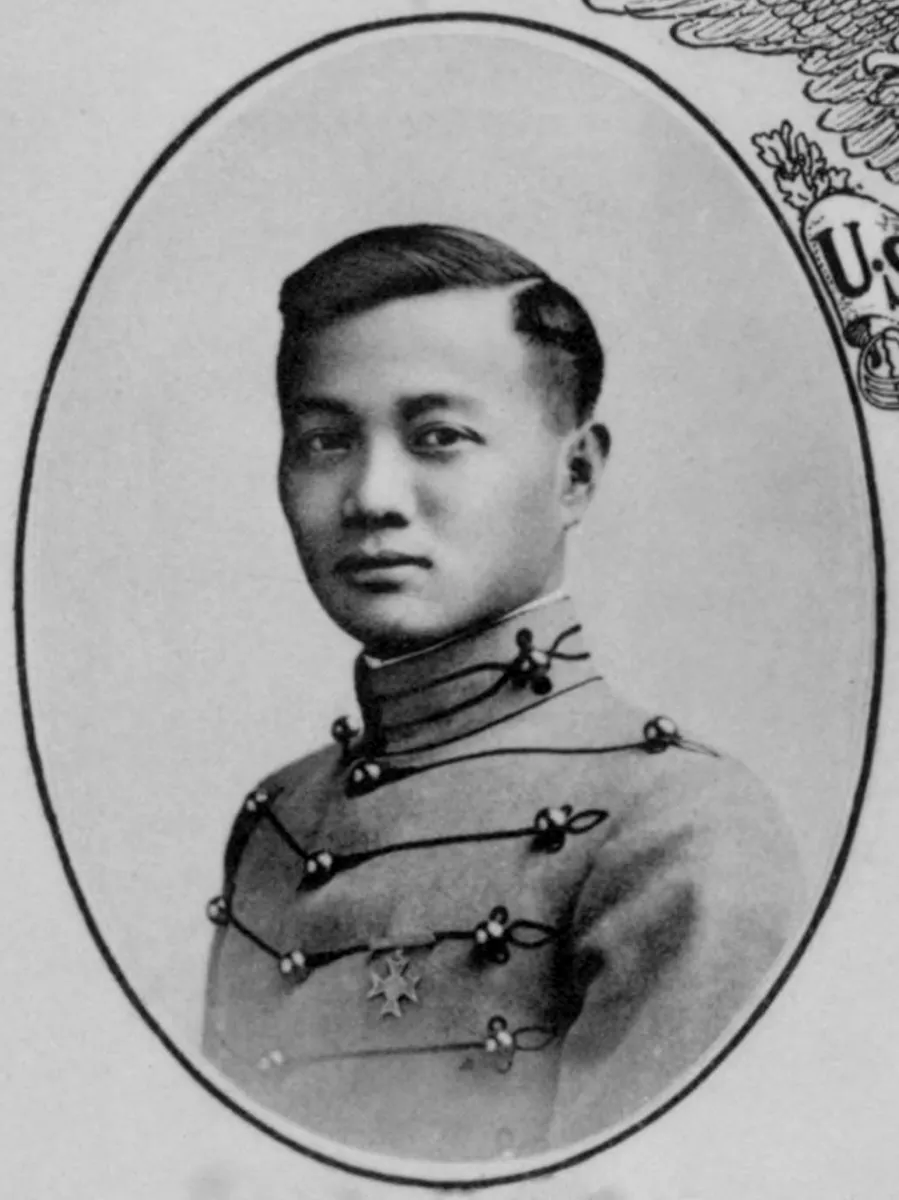
1888—1944
Vicente Lim
Brigadier general and guerrilla organiserThe first Filipino graduate of West Point, a 41st Division commander in Bataan and a guerrilla organiser executed by Japanese forces in Manila.Read biography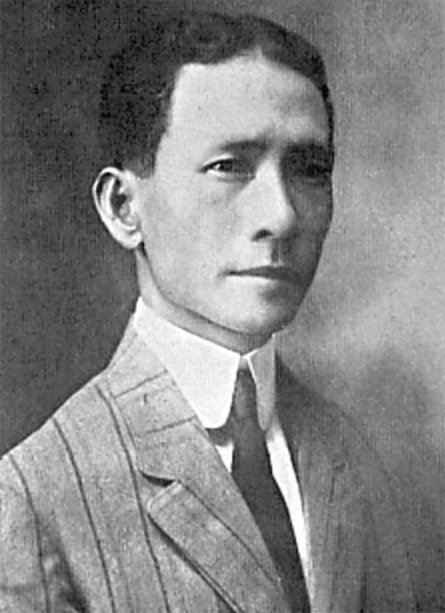
1878—1961
Sergio Osmeña
President of the Commonwealth of the PhilippinesA Cebu statesman who succeeded Manuel Quezon in exile and led the Commonwealth government during the liberation of the Philippines.Read biography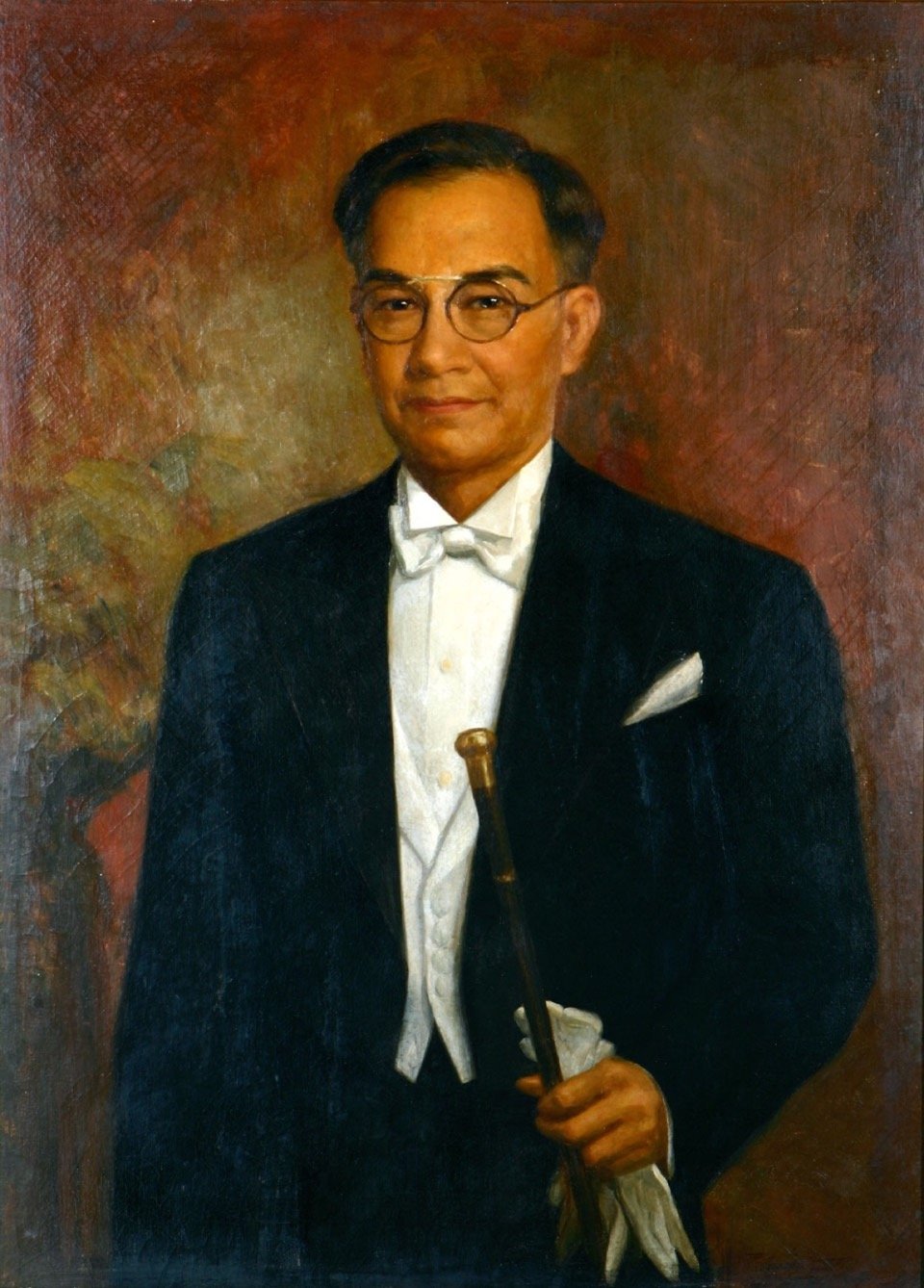
1891—1959
José P. Laurel
President of the Japanese-sponsored Second Philippine RepublicA jurist and politician who led the Japanese-sponsored Second Philippine Republic during occupation and later returned to elected office.Read biographyQuick answers
Common questions
- When was the Battle of Manila?
- The battle lasted from 3 February to 3 March 1945, during the Allied campaign to liberate Luzon from Japanese occupation.
- How many civilians died in the Battle of Manila?
- The Memorare Manila 1945 memorial records more than 100,000 civilian deaths. It is an official estimate rather than a complete individual count.
- Who committed the Manila massacre?
- Japanese forces committed widespread deliberate killings of civilians across Manila. Civilians also died from American artillery, crossfire, fire and collapsing buildings during the battle.
- Why did Japanese forces defend Manila?
- Japanese naval forces held the city even though General Yamashita’s wider plan was to withdraw major army formations from the Manila plain and resist from mountain positions.
- Who liberated Manila in 1945?
- U.S. Army divisions fought the main conventional battle with extensive assistance from Filipino guerrillas, intelligence networks and local guides.
- What happened to Intramuros?
- The Walled City became a heavily fortified final position. Artillery, fighting and Japanese atrocities killed civilians and destroyed much of its historic fabric.
Primary and institutional sources
How this history was checked
Dates, legal milestones and historical claims are checked against the official and institutional records below. This article was reviewed on 9 September 2026.
- National Historical Commission of the PhilippinesMemorare Manila 1945 memorial
- National Historical Commission of the PhilippinesLiberation of Manila historical marker at Plaza Aviles
- U.S. Army Center of Military HistoryTriumph in the Philippines
- National Historical Commission of the Philippines via PIAJosefa Llanes Escoda historical marker
- Wikimedia CommonsPublic-domain U.S. Army photograph of destroyed Intramuros