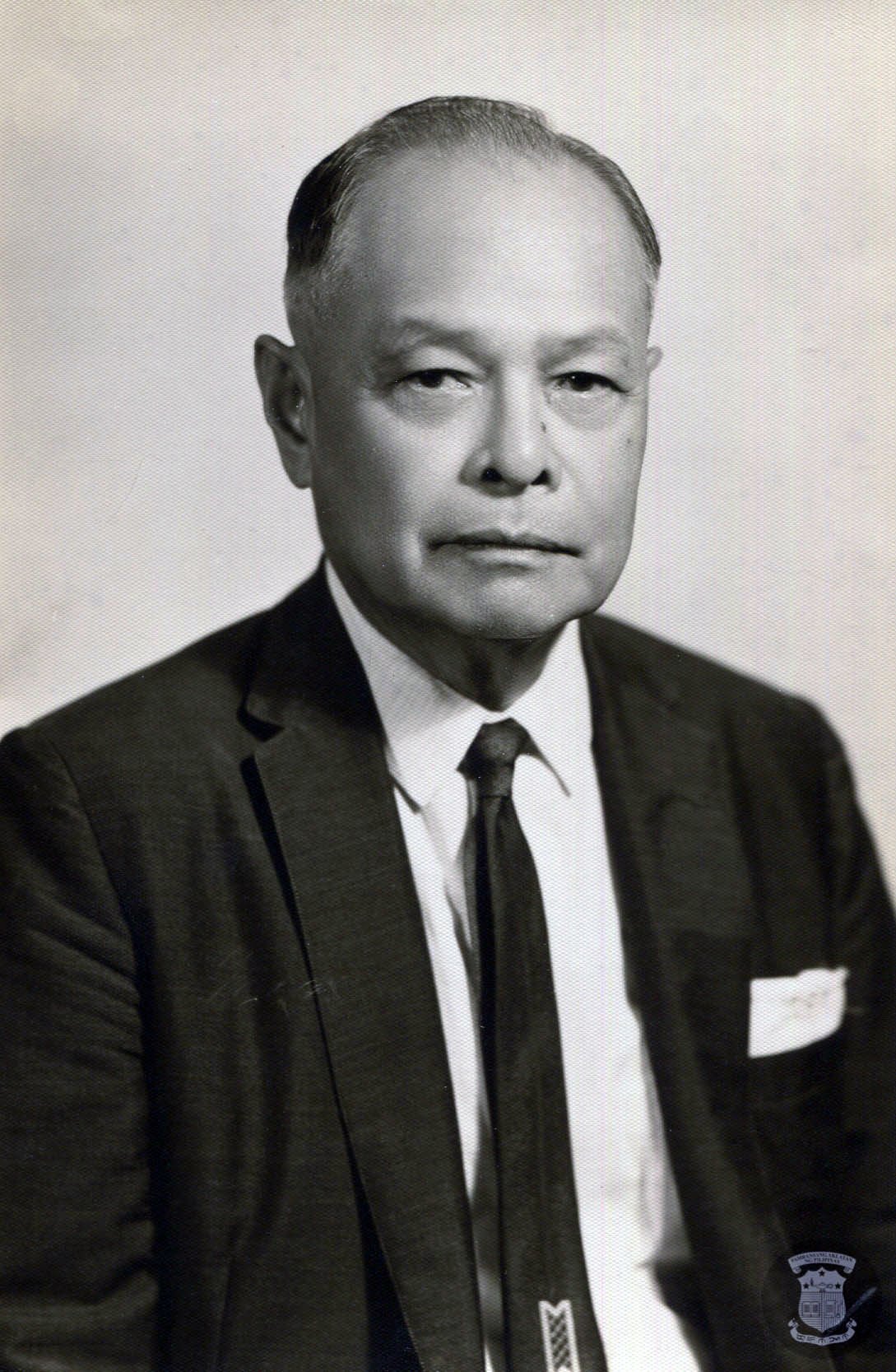
In this biography
Quick facts
- Born
- 27 June 1914
- Died
- 14 July 2016
- Birthplace
- Manila, Philippines
- Country
- Philippines
- Nationality
- Filipino
- Known for
- Writing early Philippine conservation laws and leading the Philippine Women’s University and Bayanihan dance company
- Education
- PWU; George Washington University MA, 1939
- Senate career
- Elected in 1967; active until the 1972 closure
- Bayanihan origins
- Dance group, 1956; formal organisation, 1957
- International office
- UNEP Governing Council president, 1975
Why this life matters
Benitez brought conservation into national legislation before it became a mainstream policy field and extended Filipina leadership across universities and United Nations bodies.
Timeline
Key moments
Born in Manila
Born on 27 June into the Benitez family of educators.
Completed graduate study
The Senate biography records an MA from George Washington University.
Founded a PWU folk-dance group
This was the initial Bayanihan group, before the formal organisation the following year.
Bayanihan was formally organised
The Folk Arts Center and its performing company developed research-based stage repertoires.
Won election to the Senate
Election is distinguished from the active-service dates given in different Senate summaries; the old chamber closed in 1972.
Conservation laws were enacted
Municipal forests, eagle protection and the Iglit–Baco national park addressed different environmental tasks.
Presided over UNEP’s Governing Council
The contemporaneous April statement confirms her presidency, not an appointment as executive director.
Served in the Batasang Pambansa
The Senate’s reference publication records later legislative service, distinct from her old Senate term.
Became PWU board chair
The university’s history identifies this as a later leadership role, not its founding in 1919.
Died at 102
The Senate tribute records her death on 14 July.
An educator in a university-building family
Helena Zoila Tirona Benitez was born in Manila on 27 June 1914 to Conrado Benitez and Francisca Tirona-Benitez. She studied at Philippine Women’s University and completed a Master of Arts at George Washington University in 1939, followed by further studies in the United States. The educational work of her family became the foundation for her own institutional career.
PWU’s history identifies her mother among the women who founded the college in 1919 and as its president from 1921 to 1966. Helena later became its first alumna president and, in 1980, chair of its board. She was therefore a major later leader, not the university’s original founder. The history page’s present-tense descriptions should not be mistaken for current offices after her death.
Bayanihan’s two founding stages
The Cultural Center of the Philippines traces Bayanihan to a folk-dance group Benitez founded at PWU in 1956. In 1957 it was formally organised as the Bayanihan Folk Arts Center, with the Philippine Dance Company as its performing arm. Both dates belong in the story: one marks the initial group, the other the formal organisation.
The work extended beyond staging familiar dances. Research into music, movement, costume and folklore informed repertoires adapted for contemporary theatre and international audiences. Benitez’s contribution was institutional and cultural: building a setting for that research and performance. It does not make her the sole choreographer or creator of every tradition the company presented.
Sources for this section: [5]
The Senate and a local environmental obligation
Benitez won a Senate seat in 1967 and was the seventh woman elected to the chamber. The Senate’s 2012 tribute describes her active service as 1968–1972, before the chamber’s closure under martial law. Her legislative interests linked education, manpower, housing and families with an emerging environmental agenda.
Republic Act No. 5752, approved on 21 June 1969, directed municipalities and cities to exert efforts toward permanent forests, tree parks or watersheds on public land, with an aggregate area of at least two per cent of their territory. The Senate credits her authorship; the statute supplies the actual obligation. Enactment establishes a policy commitment, not proof that every locality achieved the land-area target.
Eagles, tamaraw habitat and the limits of legislative credit
Two 1970 laws made conservation more concrete. Republic Act No. 6147 protected the Philippine eagle, including its nests and eggs. Republic Act No. 6148 declared Mounts Iglit and Baco and adjoining Mindoro areas a national park, while providing for wildlife conservation that included the tamaraw.
The Senate associates Benitez with these measures, but their purposes differ: one protects a bird and its breeding environment, while the other establishes a protected landscape and administrative framework. Neither statute alone demonstrates later population recovery or effective enforcement. Her importance lies in putting conservation into national law, alongside the officials, institutions and communities responsible for carrying it out.
United Nations work and later public service
Benitez chaired the UN Commission on the Status of Women and became the first woman president of UNEP’s Governing Council in 1975. A contemporaneous Habitat statement addressed her as president of the council’s third session in Nairobi on 23 April 1975. This was a governing-council presidency, not the executive directorship of UNEP.
Her public life did not end with the old Senate’s closure. A Senate reference publication records Batasang Pambansa service from 1978 to 1986, and she continued university and civic work. She died on 14 July 2016 at 102. A full account must therefore distinguish pre-martial-law legislation, later legislative participation and international institutional roles, rather than treating them as one uninterrupted Senate term.
Quick answers
Frequently asked questions about Helena Z. Benitez
- What is Helena Benitez known for?
- She was an educator and legislator associated with PWU leadership, Bayanihan, early Philippine conservation laws and international work on women and the environment.
- Did Helena Benitez establish Bayanihan in 1956 or 1957?
- Both dates describe different stages. CCP records the initial PWU dance group in 1956 and formal organisation of the Folk Arts Center and performing company in 1957.
- Which environmental laws are associated with Helena Benitez?
- Senate records credit her work on municipal forests and watersheds, Philippine eagle protection and the Iglit–Baco national park associated with tamaraw conservation. These are distinct laws, not one conservation programme.
- Was Helena Benitez UNEP’s executive director?
- No. She was president of its Governing Council in 1975. The council presidency, UN women’s-commission role and UNEP executive directorship are different offices.
Keep exploring
Lives connected to this story
- Josefa Llanes Escoda
A fellow scouting incorporator with whom she organised wartime relief.
- Geronima T. Pecson
Compare an earlier woman senator’s work on education and international cooperation.
- Loren Legarda
A later senator who commemorated Benitez’s conservation legislation.
Sources and further reading
Explore the evidence
These references support the biography and offer further reading. Official records, first-person accounts and independent reporting provide different perspectives; image records document attribution and licensing.
- 1. Senate of the PhilippinesSenator Helena Z. Benitez profile
The short Senate biography supplies education but gives a 1968–1973 term and uses stale present-tense university language. Other Senate records identify the 1967 election and active service ending with the 1972 closure; these are distinguished.
- 2. Senate of the PhilippinesSenators pay tribute to the late Senator Helena Benitez
The commemorative Senate account credits legislation and records her death, but should not be treated as an independent evaluation of environmental outcomes.
- 3. Wikimedia CommonsPortrait and licence record
- 4. Philippine Women’s UniversityPWU history: founders, university leadership and board roles
PWU’s institutional history separates the 1919 founders, her mother’s presidency, Helena’s alumna leadership and the 1980 board chairmanship. It is not evidence of a current role.
- 5. Cultural Center of the PhilippinesBayanihan Dance Company: 1956 origins and 1957 organisation
CCP explicitly separates the initial 1956 group from formal organisation in 1957. Its indexed institutional text was available; live retrieval timed out. Leadership is not treated as sole choreographic authorship.
- 6. Senate of the PhilippinesSenate tribute and distinct UN roles, 4 June 2012
- 7. The LawPhil ProjectRepublic Act No. 5752, 21 June 1969
The enacted text says local governments shall exert efforts and specifies the land-area objective. Legislative passage is not evidence of nationwide implementation.
- 8. The LawPhil ProjectRepublic Act No. 6147: Philippine eagle protection
- 9. The LawPhil ProjectRepublic Act No. 6148: Iglit–Baco national park
- 10. United NationsHabitat Secretary-General’s statement to UNEP, 23 April 1975
Indexed first-page text of the contemporaneous Habitat statement identifies her as president of UNEP’s third Governing Council session, not executive director. The live PDF download returned no readable content; full-document or visual inspection is not claimed.
- 11. Senate of the PhilippinesPioneering Women of the Senate: later legislative service
The indexed Senate reference records the later 1978–1986 Batasang Pambansa service. Live PDF access did not provide a readable document; a complete new visual review is not claimed.