
The short answer
The Girl Scouts of the Philippines connects women’s organising, youth education and wartime service. Its 1940 charter gives one kind of evidence; later recollections reveal a relief network. Keeping those records distinct helps explain both Escoda’s leadership and Benitez’s participation.
Chronology
A timeline of the turning points
A separate suffrage milestone
The plebiscite provided for under Commonwealth Act No. 34 concerns women’s voting rights.
The national charter
Commonwealth Act No. 542 incorporates the Girl Scouts of the Philippines.
Formal operations interrupted
Members participate in underground work, as recorded by the organisation’s historical marker.
Postwar re-establishment
The marker records the organisation’s return after the wartime interruption.
International affiliation
Tenderfoot membership in WAGGGS precedes full membership in 1948.
A memorial-fund committee
The Executive Committee creates a committee to raise funds for international delegates in Escoda’s memory.
Who founded the Girl Scouts of the Philippines?
Josefa Llanes Escoda is remembered as the founder of the Girl Scouts of the Philippines, but establishing the institution required collaborators. A teacher and welfare worker, she brought American scouting experience into her work with Filipino girls. The organisation’s history identifies Pilar Hidalgo Lim, then president of the National Federation of Women’s Clubs, as another central organiser.
The legal record makes that collective foundation visible: Escoda, Lim and Helena Z. Benitez appear among the women named in the charter. Recognising Escoda’s leadership does not require erasing the others who gave the organisation its institutional footing.
What the 26 May 1940 charter actually established
Commonwealth Act No. 542, approved on 26 May 1940 under President Manuel L. Quezon, incorporated the Girl Scouts of the Philippines. It established a Manila principal office and an executive board, with the named incorporators serving as the first board until their successors qualified.
The original Act assigned the corporation a national coordinating role and described a programme for girls aged seven to eighteen, emphasising character, citizenship and community service. It also made the corporation nonsectarian and nonpolitical. Those provisions explain the original institution; the historical age range is not presented here as current membership guidance.
Sources for this section: [1]
How scouting connects to the 1937 suffrage campaign
Escoda’s advocacy for women’s political rights belongs to the wider history of women’s organising. Scouting and suffrage nevertheless had different legal purposes. Commonwealth Act No. 34, approved on 30 September 1936, arranged the women’s suffrage plebiscite for 30 April 1937; it was not the Girl Scouts charter.
That law also gave women’s clubs a practical role in appointing polling-place watchers. Read alongside the later charter, it shows associations participating in both political mobilisation and youth organisation. This is a connection between forms of civic work, not evidence that the GSP itself conducted the earlier campaign or that one woman alone secured voting rights.
Benitez, Escoda and the wartime relief network
Formal GSP operations stopped during the war, but volunteers continued relief work. In the organisation’s retrospective history, Benitez recalls chairing both the first GSP Central Committee and the emergency Volunteers Social Aid Committee. She describes working with Josefa and Antonio Escoda, committee colleagues and other volunteers to assist prisoners at San Fernando and Capas.
The same account records family messages, prisoner names and addresses, and collections of food, medicine and clothing for Camp O’Donnell prisoners. Aid also reached stranded students and people using community kitchens in Manila. These were overlapping volunteer networks, not proof that every wartime service operated through an uninterrupted national scouting administration.
Arrest, the last reported sighting and an uncertain execution date
The NCCA’s biographical account places Antonio Escoda’s arrest in June 1944 and Josefa’s on 27 August. It describes her imprisonment at Fort Santiago and a last sighting on 6 January 1945, followed by detention in a Far Eastern University building. These separate arrests should not be compressed into a single dated event.
The account says she was believed to have been executed and buried at La Loma. A reported last sighting is not a verified execution date, and a believed burial site is not a recovered grave. Her death is therefore dated to 1945 here without claiming a known day or a confirmed burial location.
Sources for this section: [5]
Postwar rebuilding and the Escoda Memento Fund
The historical marker registered by the National Historical Commission records the organisation’s re-establishment in 1945. International recognition followed: tenderfoot membership in the World Association of Girl Guides and Girl Scouts in 1946, then full membership in 1948. Charter, wartime interruption, reopening and international affiliation are separate milestones, not competing founding dates.
In 1948, the GSP Executive Committee created the Escoda Memento Fund Committee, initially chaired by Zenaida Quezon Buencamino. Its purpose was to finance international participation; the fund supports girl and adult delegates in exchanges, training, camps and conferences. This memorial initiative extended Escoda’s legacy after her death. It was not a fund she personally established during the occupation.
Continue the chronology
Related history guides
Helena Benitez and Philippine Conservation
Follow Benitez’s later legislative work on local forests, eagle protection and the Iglit–Baco national park.
Read the timeline1937 · Voting rightsThe Philippine Women’s Suffrage Plebiscite
Follow the collective campaign, the legal threshold and the later path to representation; this was not the 1940 scouting charter.
Read the timelineConnected biographies
Escoda and Benitez: connected lives, distinct contributions
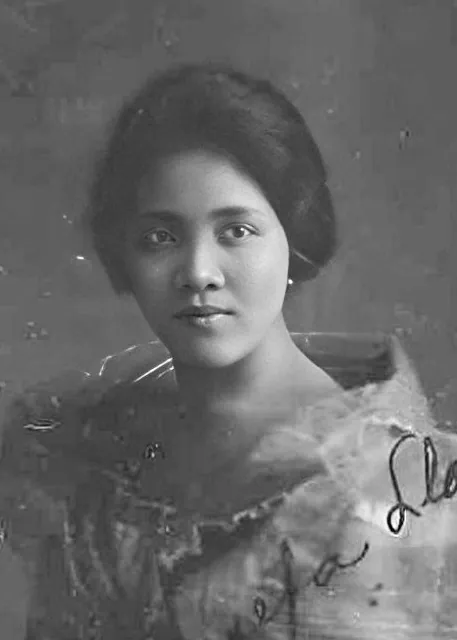
1898—1945
Josefa Llanes Escoda
Social worker, suffragist and wartime humanitarianA social worker and women’s-rights organiser who founded the Girl Scouts of the Philippines, aided wartime prisoners and was killed during the Japanese occupation.Read biography
1914—2016
Helena Z. Benitez
Educator, senator and environmental policy pioneerAn educator and senator whose work connected women’s leadership, technical training, cultural diplomacy and some of the republic’s earliest environmental laws.Read biographyQuick answers
Common questions
- When was the Girl Scouts of the Philippines chartered?
- The national corporation was chartered on 26 May 1940 through Commonwealth Act No. 542. Its 1945 postwar re-establishment and later international membership are different milestones.
- Was Josefa Llanes Escoda the only founder?
- Escoda is recognised as the founder, but institution-building was collective. The charter also names Pilar Hidalgo Lim, Helena Z. Benitez and other incorporators.
- What wartime aid did Escoda and Benitez’s network provide?
- The GSP’s retrospective account describes prisoner relief and family communications, alongside support for stranded students and Manila community kitchens. Formal scouting operations had been interrupted.
- Did the Girl Scouts charter grant women voting rights?
- No. Commonwealth Act No. 34 arranged the 1937 suffrage plebiscite. Commonwealth Act No. 542 incorporated the Girl Scouts in 1940; the two laws served different purposes.
Primary and institutional sources
How this history was checked
The two original Acts establish different legal milestones. The GSP’s retrospective history includes Benitez’s participant recollection; it is not a contemporaneous record of every relief operation. The NHCP registry supplies the postwar chronology. NCCA’s narrative identifies a last sighting, which this guide does not turn into an exact execution date. The existing portrait is not a wartime relief photograph. This article was reviewed on 15 October 2026.
- The LawPhil ProjectCommonwealth Act No. 542, 26 May 1940: original GSP charter
- The LawPhil ProjectCommonwealth Act No. 34, 30 September 1936: suffrage plebiscite arrangements
- Girl Scouts of the Philippines1940s: institutional history and Benitez’s wartime recollection
- National Historical Commission of the PhilippinesGirl Scouts of the Philippines: institutional marker registry
- NCCA / CulturEdJosefa Llanes Escoda: Sagisag Kultura biography (2015)
- Girl Scouts of the PhilippinesJosefa Llanes Escoda Memento Fund: committee and purpose
- Wikimedia CommonsEscoda’s 1922 passport photograph: existing source and reuse record