
The short answer
BN won 59 of Sabah’s newly expanded 60 elected seats after PBS returned to the coalition. Eight BN candidates were unopposed, no opposition party won a constituency and independent Johan Ghani took the sole non-BN seat in Kuala Penyu. UMNO’s 32 seats allowed Musa Aman to continue as chief minister and confirmed the end of the earlier rotation system.
Results at a glance
Seats won in the 2004 Sabah election
BN won 59 seats across seven component parties. UMNO held a majority of the entire assembly on its own, while an independent supplied the only representation outside the coalition.
| Party | Seats won | Share of 60 seats | Political position |
|---|---|---|---|
| UMNO / BN | 32 | 53.3% | Largest governing component |
| PBS / BN | 13 | 21.7% | Second-largest governing component |
| UPKO / BN | 5 | 8.3% | Governing component |
| SAPP / BN | 4 | 6.7% | Governing component |
| LDP / BN | 3 | 5.0% | Governing component |
| MCA / BN | 1 | 1.7% | Governing component |
| PBRS / BN | 1 | 1.7% | Governing component |
| Independent | 1 | 1.7% | Johan Ghani in Kuala Penyu |
Chronology
A timeline of the turning points
BN wins 31 seats and PBS wins 17
The result returned BN to government through the ballot box while PBS remained the only elected opposition party.
PBS returns to Barisan Nasional
BN readmitted Joseph Pairin Kitingan’s party without conditions, bringing the principal Sabah opposition party back into the governing coalition.
Sabah receives twelve additional state seats
A new electoral map expanded the elected assembly from 48 constituencies to 60 before the next statewide poll.
Musa Aman becomes chief minister
Musa succeeded Chong Kah Kiat after the final scheduled phase of BN’s chief-minister rotation system.
Eight BN candidates are returned unopposed
Nomination closed without challengers in eight constituencies, giving the coalition seats before polling day.
Sabah votes in the remaining constituencies
The state election was held alongside Malaysia’s general election, with a simple majority set at 31 of 60 elected seats.
BN wins 59 of 60 seats
Every BN component won representation; no opposition party secured a seat and only one independent candidate prevailed.
Johan Ghani wins Kuala Penyu
The independent defeated BN–UPKO candidate Wences Angang and prevented a complete coalition sweep.
Musa Aman remains chief minister
Musa retained Sungai Sibuga and continued in office, confirming that the earlier two-year rotation formula would not resume.
Who won the 2004 Sabah state election?
Barisan Nasional won 59 of the 60 elected seats, giving the coalition all but one place in the enlarged Sabah State Legislative Assembly. An independent won the remaining constituency, while no opposition party secured representation.
Thirty-one seats were needed for a majority. BN therefore passed the threshold before the full count was complete and finished with a margin far beyond the two-thirds level required for ordinary constitutional amendments in the state assembly.
The result was much more one-sided than the 1999 contest, when BN won 31 seats and PBS won 17. By 2004, PBS had returned to BN, so most of the organised forces that had divided the chamber five years earlier were competing under one coalition label.
Why did the assembly expand from 48 to 60 seats?
The 2004 poll was the first Sabah state election conducted on a 60-constituency map. The previous election had filled 48 elected seats, meaning the new boundaries added twelve constituencies and raised the majority line from 25 to 31.
The expansion followed the electoral boundary review that took effect before the simultaneous federal and state elections. It changed the numerical scale of the contest, created new local races and gave BN component parties more constituencies to divide among themselves.
Comparisons with earlier elections therefore require care. BN’s 59 seats were not directly comparable with its 31 seats in 1999 without noting that the chamber was one quarter larger and that PBS had moved from opposition into BN between the two elections.
Why was PBS in BN after opposing it in 1999?
Parti Bersatu Sabah had led the state government from 1985 to 1994 and won 17 opposition seats in 1999. It applied to rejoin BN in November 2001 and was formally readmitted on 23 January 2002, twelve years after leaving the coalition during the 1990 federal election campaign.
Prime Minister Mahathir Mohamad announced that the return carried no conditions. For PBS, membership restored access to the federal and state governing alliance; for BN, it absorbed the coalition’s strongest organised Sabah opponent before the next election.
PBS then contested as one of seven BN components in 2004 rather than challenging the coalition statewide. Its thirteen victories made it the second-largest group within the government bloc, behind UMNO, and helped transform the assembly from a government–opposition contest into a chamber dominated by negotiation inside BN.
How were BN’s 59 seats divided?
UMNO won 32 seats, more than half of the entire elected assembly and more than all other BN components combined. That result made Sabah UMNO the decisive internal bloc behind Chief Minister Musa Aman.
PBS won 13 seats, UPKO five, SAPP four, LDP three, and MCA and PBRS one each. Together those six partners held 27 seats: substantial representation, but not enough to outvote UMNO as a group without support from outside the coalition.
The distribution preserved the multi-party appearance of Sabah BN while concentrating governing leverage in UMNO. PBS had returned as a significant regional component, yet the party no longer held the independent opposition position from which it had won 17 seats in 1999.
Why did no opposition party win a seat?
The opposition entered the election fragmented and without PBS, the established regional organisation that had carried every non-BN seat in 1999. Candidates from several parties and many independents challenged BN, but they did not present a single statewide alternative with comparable machinery.
Eight BN candidates were elected without a contest, reducing the number of constituencies in which voters made a choice on polling day. In the contested seats, the coalition benefited from incumbency, shared campaign resources and the presence of both federal parties and Sabah-based components under one banner.
A 59–1 seat count should not be treated as a direct measure of support among every registered voter. Unopposed returns, first-past-the-post rules and uneven local competition all affect how votes become seats. The clearest comparable fact is the constituency outcome: opposition parties won none, while one independent won.
Who was Johan Ghani and why did Kuala Penyu differ?
Johan @ Christopher O. T. Ghani was the independent candidate who won Kuala Penyu. Historical constituency records give him 5,157 votes, or about 55.8 percent of valid ballots, against BN–UPKO candidate Wences Angang.
Contemporary reporting described Johan as a former UMNO member who left the party to contest after BN selected another candidate. His victory therefore reflected a local contest within the broader governing camp as much as a conventional government-versus-opposition race.
Kuala Penyu mattered symbolically because it prevented a 60-seat sweep. It also demonstrated the importance of candidate selection in Sabah politics: even during BN’s strongest statewide result, a locally credible independent could defeat the official coalition nominee.
How did the result confirm the end of chief-minister rotation?
BN introduced its rotation arrangement after taking government in 1994. The chief-ministership moved among leaders associated with Muslim-bumiputera, Chinese and non-Muslim-bumiputera categories, usually in planned two-year phases.
Chong Kah Kiat completed the last scheduled phase in March 2003, when Musa Aman was appointed chief minister. Musa’s appointment marked the move away from automatic rotation, but the 2004 election supplied the political test: he retained Sungai Sibuga and UMNO won 32 of the 60 seats.
Musa remained chief minister after the election instead of transferring the office to another community category. The overwhelming BN majority and UMNO’s internal seat dominance made continuity practical, turning the earlier decision to stop rotating the post into a durable governing arrangement.
What was the election’s longer-term impact?
The result began the longest chief-ministerial tenure in Sabah’s history. Musa stayed in office until the disputed 2018 transition, giving the state fifteen years of leadership continuity after a decade in which the rotation system had produced frequent changes.
It also established a 60-seat elected assembly that remained in place through the 2008, 2013 and 2018 elections. The larger map became the baseline for comparing Sabah results until the chamber expanded again before the 2020 election.
Politically, 2004 represented the high point of the broad Sabah BN model. UMNO supplied the chief minister and a majority on its own, while PBS, UPKO, SAPP, LDP, MCA and PBRS provided regional and community-based representation. Later defections, coalition changes and the 2018 loss of government would unwind much of that alignment.
Continue the chronology
Related history guides
The 2008 Sabah State Election
Continue to BN’s second 59-seat result, DAP’s breakthrough and SAPP’s later exit.
Read the timeline12–13 March 1999The 1999 Sabah State Election
Compare the earlier 31–17 BN–PBS contest with the unified coalition result in 2004.
Read the timeline1985–presentParti Bersatu Sabah: History and Leaders
Follow PBS from state government and opposition to its 2002 return to BN.
Read the timeline1994–2003Sabah’s Chief Minister Rotation System
Understand the power-sharing formula that ended before Musa’s first election as chief minister.
Read the timeline1963–presentChief Ministers of Sabah: Complete List
Compare Musa’s fifteen-year administration with every Sabah government since 1963.
Read the timeline1973–presentBarisan Nasional: History and Parties
Place the seven-component Sabah result inside the coalition’s national history.
Read the timelineBiography context
Explore Sabah, Malaysia through connected lives
Connected biographies
Eight biographies connected to the 2004 election
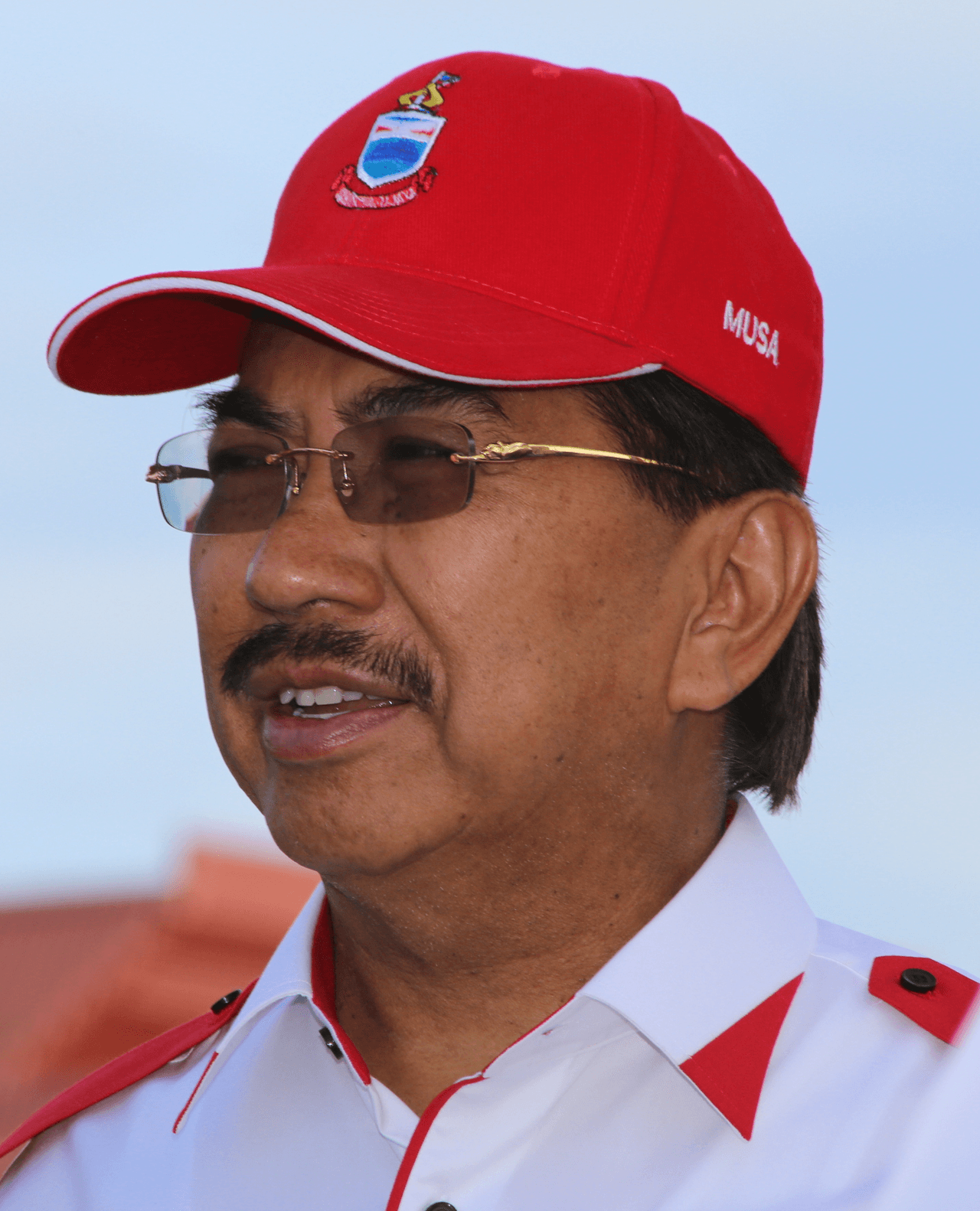
1951—
Musa Aman
Yang di-Pertua Negeri of SabahThe former Sungai Sibuga assemblyman who led Sabah for fifteen years, contested the 2018 transition and returned as Yang di-Pertua Negeri.Read biography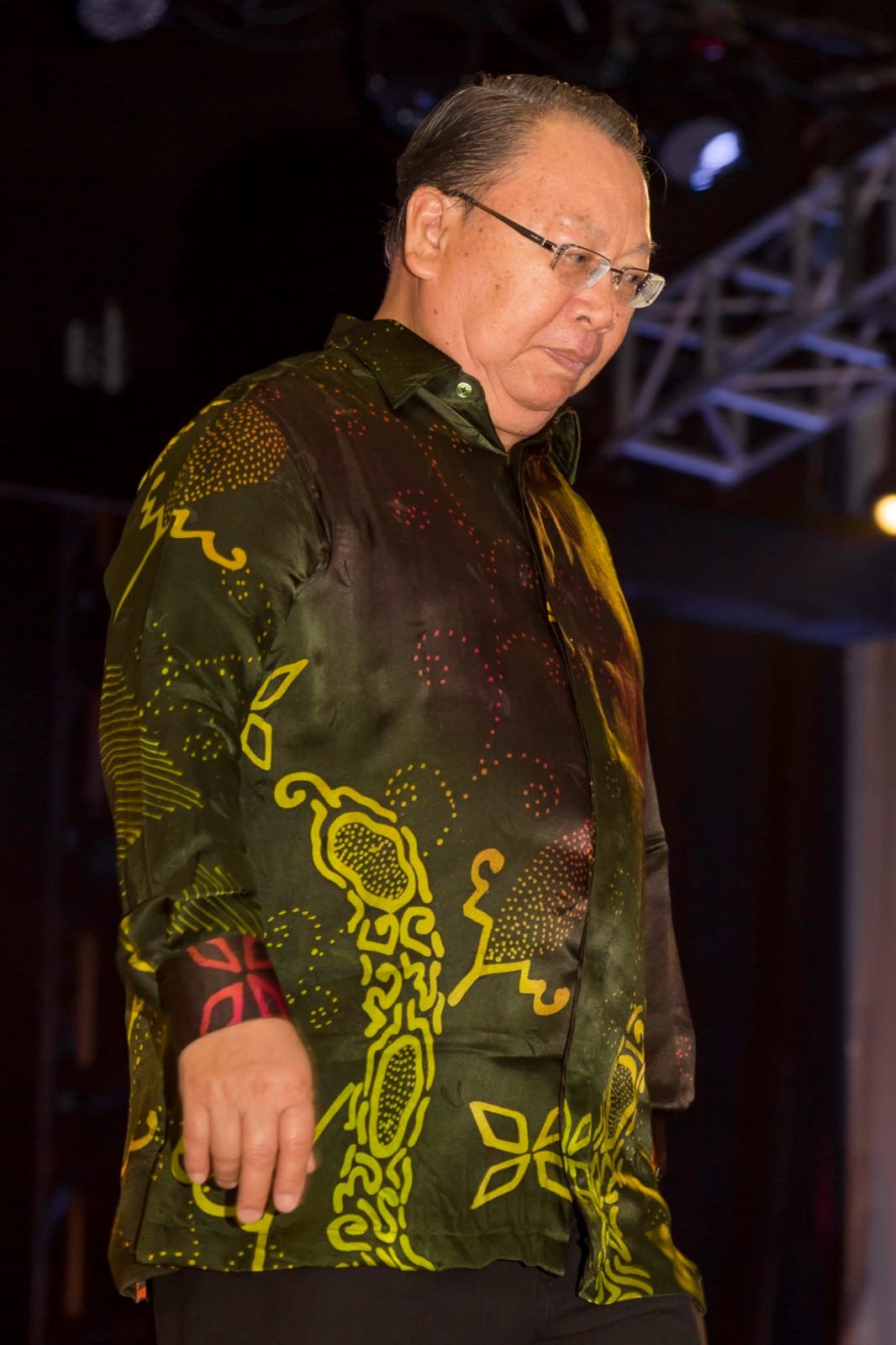
1940—
Joseph Pairin Kitingan
Founder of PBS and former Chief Minister of SabahThe lawyer and Kadazandusun leader who founded PBS, led four consecutive state-election victories and served as Sabah’s chief minister for nearly nine years.Read biography
1953—
Maximus Ongkili
Chairman of the Energy Commission of Sabah and former PBS PresidentThe researcher-turned-politician who represented Sabah in Parliament for twenty-seven years, led several federal ministries and became PBS’s second president.Read biography1947—
Chong Kah Kiat
Former Chief Minister of Sabah and lawyerThe Kudat lawyer who built LDP, served in the federal cabinet and led Sabah from 2001 until the rotation arrangement ended in 2003.Read biography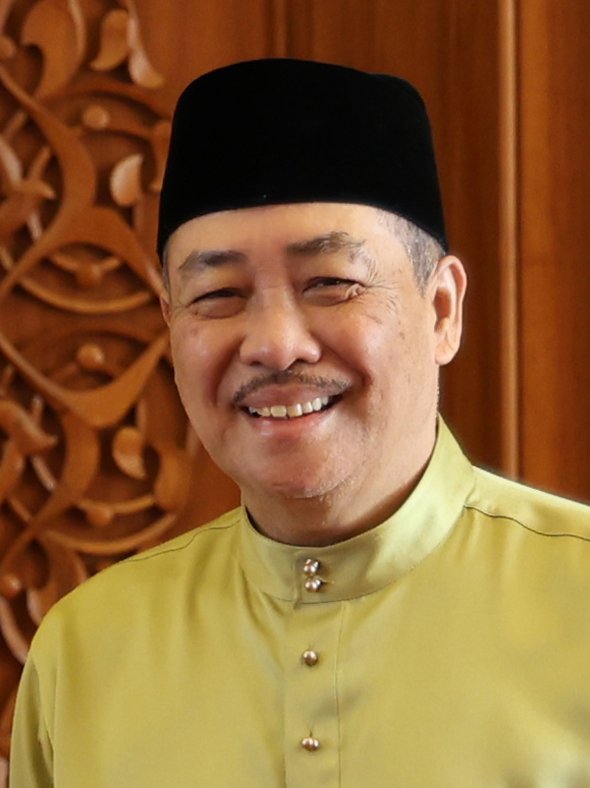
1955—
Hajiji Noor
Chief Minister of Sabah and Chairman of Gabungan Rakyat SabahThe long-serving Sulaman assemblyman who became Sabah chief minister in 2020 and won a second term at the 2025 state election.Read biography
1950—
Masidi Manjun
Deputy Chief Minister and Finance Minister of SabahThe lawyer and former public administrator who has represented Karanaan since 2004 and now serves as Sabah’s Deputy Chief Minister II and finance minister.Read biography1958—
Joachim Gunsalam
Deputy Chief Minister of Sabah and President of PBSThe physician and six-term Kundasang assemblyman who rose through PBS, entered Sabah’s senior cabinet and became the party’s third president.Read biography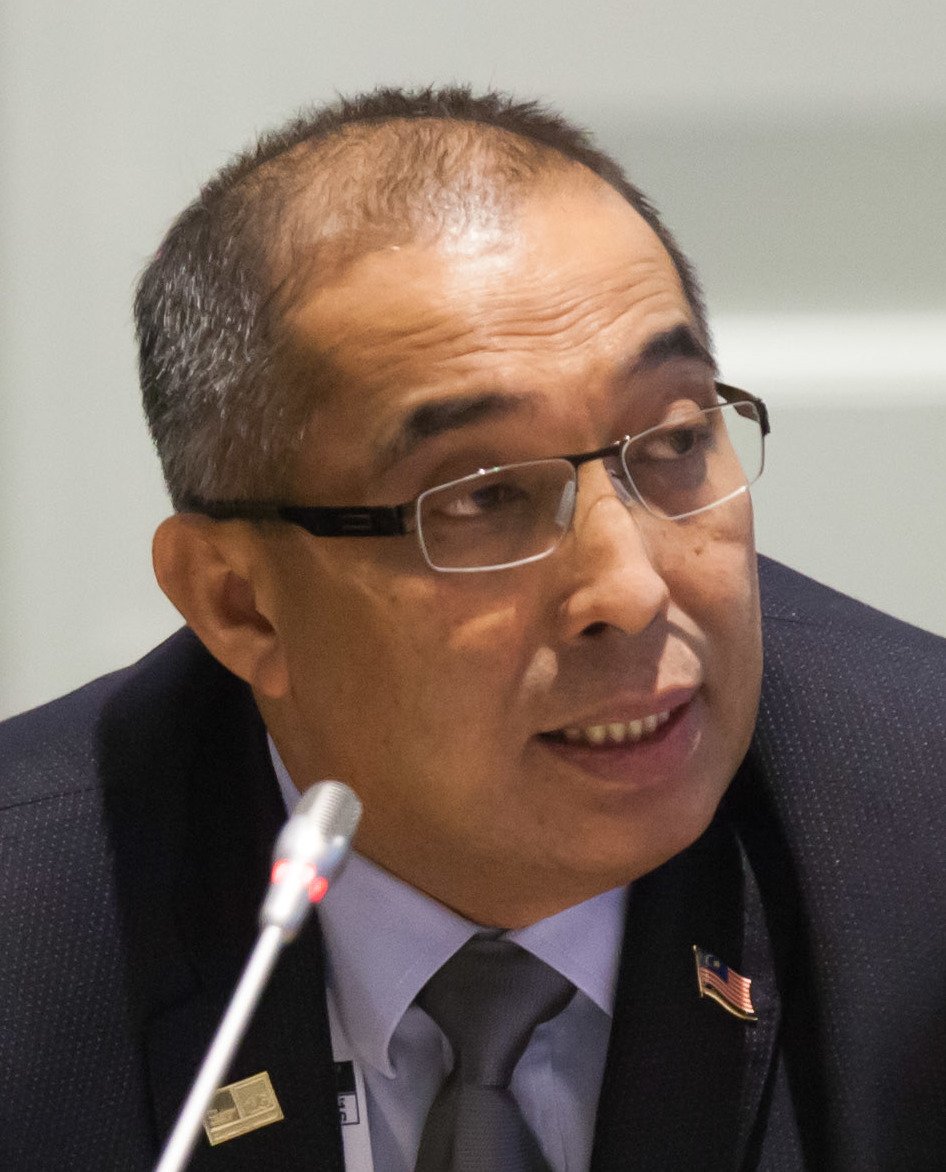
1957—
Salleh Said Keruak
Former Chief Minister of Sabah and federal ministerThe Kota Belud politician who led Sabah from 1994 to 1996, later chaired the state assembly and joined the federal cabinet.Read biographyQuick answers
Common questions
- When was the 2004 Sabah state election held?
- Polling took place on 21 March 2004 alongside Malaysia’s general election.
- How many seats did BN win in Sabah in 2004?
- BN won 59 of the 60 elected state constituencies.
- Who won the only non-BN seat?
- Independent candidate Johan @ Christopher O. T. Ghani won Kuala Penyu.
- How many seats did UMNO win?
- UMNO won 32 seats, a majority of the 60-seat elected assembly.
- How many seats did PBS win?
- PBS won 13 seats while contesting as a BN component party.
- Why was PBS part of BN in 2004?
- BN readmitted PBS on 23 January 2002 after the party had spent more than a decade outside the coalition.
- How many BN candidates were elected unopposed?
- Eight BN candidates were returned without a contest on nomination day.
- Who became chief minister after the election?
- Musa Aman, who had held the office since March 2003, remained chief minister after retaining Sungai Sibuga.
Primary and institutional sources
How this history was checked
Official election and officeholder records establish the date, map and chief-ministerial continuity; historical constituency data supplies the seat distribution; academic research explains BN’s internal balance; contemporary reporting documents PBS’s return. This article was reviewed on 4 October 2026.
- Election Commission of Malaysia, Sabah OfficeHistory of Elections in Sabah
- Australian National UniversityFederalism and Political Development in Sabah after 1963
- MalaysiakiniPBS Rejoins Barisan Nasional
- Tindak MalaysiaHistorical Sabah Election Results
- ElectionData.mySabah State Election 10 Results
- Government of SabahOfficial List of Sabah Chief Ministers
- Government of Sabah GazetteAppointment of Musa Aman as Chief Minister
- Wikimedia CommonsMusa Aman Photograph and CC BY-SA 3.0 Record