
The short answer
PBS won 36 of Sabah’s 48 seats in July 1990 while still a Barisan Nasional component. On 15 October, Joseph Pairin Kitingan took the party out of BN and into the opposition Gagasan Rakyat, turning a landslide coalition-state government into a federal opposition government without another state vote.
Two turning points
The election result and coalition realignment were separate events
PBS did not contest the July state election as an opposition party. Its October decision changed federal alignment while leaving the state seat result intact.
| Date | PBS position | Assembly arithmetic | Political consequence |
|---|---|---|---|
| 16–17 July 1990 | Sabah governing party and BN component | Won 36 of 48 seats | Pairin returned with a three-quarters majority |
| 15 October 1990 | Left BN and aligned with Gagasan Rakyat | Same 36-seat state bloc | Sabah government moved into federal opposition |
| 20–21 October 1990 | Contested federal election with opposition alliance | State assembly not being re-elected | BN retained federal government; PBS retained Sabah |
Chronology
A timeline of the turning points
PBS wins 34 state seats
The second Pairin mandate gave the party a two-thirds majority after the instability of 1985–1986.
PBS joins Barisan Nasional
The regional party entered the federal governing coalition while USNO remained its principal Sabah rival.
Federal–state disagreements continue
Cooperation did not settle disputes over administrative authority, development and Sabah’s position within the federation.
Sabah votes in 48 constituencies
PBS and USNO both operated within the wider BN framework but contested against each other at state level.
PBS wins 36 seats
USNO won the remaining 12, while BERJAYA and other competitors failed to secure representation.
PBS presses its state-rights programme
The result strengthened Pairin’s claim to negotiate for greater administrative and economic autonomy.
PBS leaves Barisan Nasional
Pairin announced the move during the federal general-election campaign and aligned with Gagasan Rakyat.
PBS contests the federal election in opposition
The late realignment turned Sabah into a major battleground in Tengku Razaleigh Hamzah’s challenge to BN.
UMNO enters Sabah directly
The peninsula-based party expanded into the state as the federal coalition reorganised against PBS.
PBS retains only a two-seat edge
After four years outside BN, PBS won 25 seats to the coalition’s 23 before defections ended its government.
What happened in the 1990 Sabah election?
Sabah elected all 48 state assembly members on 16 and 17 July 1990. Parti Bersatu Sabah won 36 seats, while the United Sabah National Organisation won the remaining 12.
Joseph Pairin Kitingan therefore began another term with a three-quarters assembly majority. PBS improved on the 34 seats it had won in 1986, while former governing party BERJAYA lost its final representation.
The result initially returned a government that was formally part of Barisan Nasional. Three months later, PBS left that coalition, changing the political meaning of the state result without changing who governed Sabah.
Why were PBS and USNO both connected to BN?
PBS joined BN after the 1986 state election, but coalition membership did not eliminate its rivalry with USNO. Sabah’s state arena continued to operate differently from a simple government-versus-opposition model on the peninsula.
Both parties sought to represent Sabah interests and different electoral constituencies. At state level they competed directly even while each maintained a relationship with the federal governing structure.
This is why the 1990 result should be presented by party rather than collapsed into a single BN total. PBS won the state government; USNO remained the assembly opposition despite their overlapping federal alignment.
What issues shaped the campaign?
Academic studies describe PBS as campaigning for a stronger state position within Malaysia. Its programme included greater administrative and economic autonomy and renewed attention to commitments associated with Sabah’s entry into the federation.
Federal development and access to national institutions also mattered. BN membership had improved cooperation after 1986, but Pairin’s government argued that important decisions and resources remained too concentrated in Kuala Lumpur.
PBS’s large majority showed that those claims had electoral force inside Sabah. It did not, however, demonstrate agreement with every later decision by the party leadership, including the timing of the October realignment.
What were the election results?
PBS won 36 of 48 seats and approximately 54 per cent of the valid vote in published historical summaries. USNO won the other 12 seats.
The distribution gave PBS 75 per cent of the chamber and placed it well above the two-thirds threshold. BERJAYA, once the governing party, failed to win a constituency.
The result was Pairin’s strongest assembly mandate. Yet the party’s later exit from BN meant that the same 36 PBS members moved from the federal coalition’s state component to an opposition-aligned state government.
Why did PBS leave Barisan Nasional?
Relations between PBS and federal leaders had remained tense despite four years of formal coalition membership. Disputes concerned the balance of federal and state authority, development policy and how Sabah’s distinct interests should be represented.
On 15 October 1990, Pairin announced that PBS would leave BN and support Gagasan Rakyat, the opposition coalition associated with Tengku Razaleigh Hamzah’s Semangat 46. The announcement came only days before federal polling.
The timing made the departure especially contentious. It converted Sabah from a BN-governed state into an opposition-governed one during a close national campaign and became a defining rupture in PBS–federal relations.
What was Gagasan Rakyat?
Gagasan Rakyat was one of the opposition alliances assembled around the 1990 federal election. It brought together Semangat 46, DAP, PBS and other organisations seeking to challenge BN.
PBS’s participation added a governing East Malaysian party with a large state majority. The alliance offered Pairin a national platform for Sabah autonomy claims beyond negotiation inside BN.
The opposition did not replace the federal government, but PBS retained control of Sabah. This produced a prolonged period in which the state administration and federal administration stood on opposing sides.
How did the split reshape Sabah politics?
The federal coalition reorganised its Sabah strategy after the departure. UMNO entered the state directly in 1991, absorbing or working with networks previously associated with USNO and other local parties.
Federal–state conflict became a central feature of the Pairin period. Scholarly accounts connect the 1990 rupture to the much more competitive 1994 election, when BN reduced PBS from 36 seats to 25.
The split therefore links two distinct events: an electoral landslide in July 1990 and a strategic coalition decision in October. Combining them in one sentence can obscure that PBS first won inside BN and only later moved into opposition.
Why does the 1990 election still matter?
It remains one of the clearest examples of a Sabah regional party using a strong state mandate to demand a different federal relationship. The result itself was not close: PBS controlled three quarters of the elected chamber.
The later realignment also shows that party and coalition labels are dated facts. A candidate elected under one coalition relationship may belong to a party that subsequently changes alignment without a new state election.
The episode helps explain the 1994 crisis, the later return of PBS to BN and today’s preference among many Sabah parties for locally branded coalitions that negotiate with whichever alliance governs federally.
Continue the chronology
Related history guides
The 1986 Sabah Election and Political Unrest
Read the mandate that first brought PBS into Barisan Nasional.
Read the timelineFebruary–March 1994The 1994 Sabah Political Crisis
Follow the next election and the defections that ended PBS government.
Read the timeline1985–presentParti Bersatu Sabah: History and Leaders
See the split within the party’s complete coalition history.
Read the timeline16 September 1963The Formation of Malaysia
Understand the federal settlement behind Sabah autonomy claims.
Read the timelineBiography context
Explore Sabah, Malaysia through connected lives
Connected biographies
Five figures connected to PBS, USNO, BERJAYA and the federal–state split
1940—
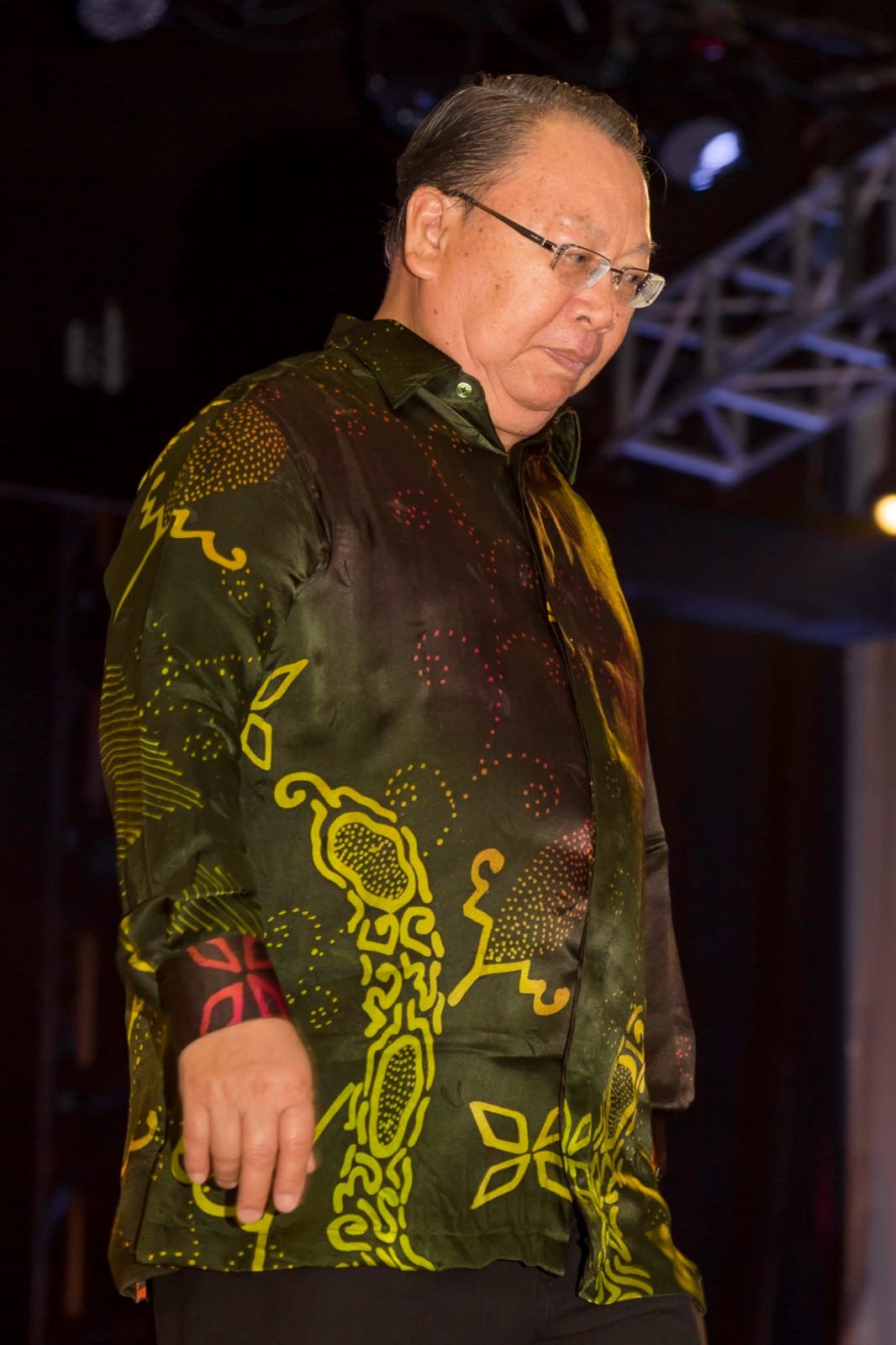
Joseph Pairin Kitingan
Founder of PBS and former Chief Minister of SabahThe lawyer and Kadazandusun leader who founded PBS, led four consecutive state-election victories and served as Sabah’s chief minister for nearly nine years.Read biography
1918—1995
Datu Mustapha Datu Harun
First Yang di-Pertua Negeri of SabahA Sabah formation-era leader who became the state’s first head of state, later served as chief minister and expanded education through the Sabah Foundation.Read biography
1953—
Maximus Ongkili
Chairman of the Energy Commission of Sabah and former PBS PresidentThe researcher-turned-politician who represented Sabah in Parliament for twenty-seven years, led several federal ministries and became PBS’s second president.Read biography
1948—
Jeffrey Kitingan
President of STAR and Member of Parliament for KeningauThe Keningau MP, Tambunan assemblyman and STAR founder whose long career centres on Sabah autonomy, MA63 and Indigenous political representation.Read biography1930—
Harris Salleh
Former Chief Minister of SabahThe civil servant turned BERJAYA co-founder who governed Sabah for almost nine years before the 1985 PBS electoral upset.Read biographyQuick answers
Common questions
- When was the 1990 Sabah state election held?
- Polling took place on 16 and 17 July 1990.
- Who won the 1990 Sabah election?
- Parti Bersatu Sabah won 36 of the 48 elected seats under Joseph Pairin Kitingan.
- How many seats did USNO win?
- USNO won the remaining 12 seats and served as the state opposition.
- Was PBS part of Barisan Nasional during the state election?
- Yes. PBS was a BN component during the July state election but left the coalition three months later.
- When did PBS leave Barisan Nasional?
- Joseph Pairin Kitingan announced the departure on 15 October 1990, during the federal election campaign.
- Which coalition did PBS join?
- PBS aligned with Gagasan Rakyat, an opposition coalition associated with Tengku Razaleigh Hamzah’s Semangat 46.
- Did PBS lose the Sabah government when it left BN?
- No. It retained its 36-seat state majority and continued governing Sabah until the post-election defections of March 1994.
- Why was the PBS departure important?
- It placed a state government with a large majority in opposition to the federal government and reshaped Sabah’s party system before UMNO’s direct entry.
Primary and institutional sources
How this history was checked
The constituency dataset and academic election studies establish the 36–12 result; parliamentary proceedings and Sabah political research document the October realignment and its federal context. This article was reviewed on 4 October 2026.
- JATI, University of MalayaSabah Politics Under Pairin
- Pacific AffairsCrisis on the Periphery: The Rift Between Kuala Lumpur and Sabah
- Tindak Malaysia1990 Sabah State Election Constituency Results Dataset
- IRASEC / Universiti Malaysia SarawakPolitical Development in Sabah, 1985–2010
- Universiti Malaysia SabahThe 1999 Sabah State Election: Historical Background
- Parliament of MalaysiaDewan Rakyat Proceedings on the PBS Departure from BN, 1991
- Government of SabahFormer Chief Ministers of Sabah
- Wikimedia CommonsJoseph Pairin Kitingan Portrait and Licence Record