
The short answer
Renato Corona became the first Philippine chief justice removed through a completed impeachment trial. The Senate’s 20–3 decision centred on whether incomplete asset declarations violated constitutional duties. The verdict proved the impeachment mechanism could work, while intensifying debate over executive influence and judicial independence.
Chronology
A timeline of the turning points
Corona becomes chief justice
President Gloria Macapagal Arroyo appointed him near the end of her term, prompting a political dispute over the timing.
The House approves articles of impeachment
One hundred eighty-eight representatives signed the complaint, enough to transmit it directly to the Senate.
The Senate trial opens
Senators sat as impeachment judges under Senate President Juan Ponce Enrile.
Evidence centres on asset disclosure
Testimony and records examined whether Corona’s statements of assets, liabilities and net worth were complete and accurate.
Corona testifies before the impeachment court
The chief justice defended his treatment of peso and foreign-currency accounts and later submitted to questioning.
The Senate votes 20–3 to convict
Conviction on Article II removed Corona from office; the court did not need to decide the remaining articles.
Why did the House impeach Renato Corona?
Relations between President Benigno Aquino III and the Supreme Court were already strained by decisions affecting the previous administration and the Aquino family’s Hacienda Luisita estate. The House complaint accused Corona of betrayal of public trust, culpable constitutional violations and other misconduct.
Because more than one-third of all House members endorsed the complaint, the Constitution treated it as the articles of impeachment and sent it directly to the Senate. Critics argued that the speed of endorsement weakened deliberation; supporters said the constitutional threshold had been met.
What did the Senate actually decide?
Although eight articles were filed, the decisive issue was Article II: whether Corona failed to disclose assets accurately in the statements required of public officers. Evidence included property records, peso accounts and foreign-currency holdings.
Twenty senators concluded that the omissions constituted culpable violation of the Constitution and betrayal of public trust. Three voted to acquit. The conviction removed Corona immediately, and the impeachment court did not render verdicts on the other articles.
Why were foreign-currency accounts controversial?
Corona acknowledged substantial dollar holdings but argued that the Foreign Currency Deposit Act protected their confidentiality and affected disclosure. Senator-judges differed over how banking secrecy should interact with the constitutional duty of public officials to declare assets.
The majority treated complete public disclosure as the controlling accountability principle. The defence and acquitting senators warned that uncertain legal rules should not be converted into an impeachable offence. The dispute made asset disclosure—not simply wealth—the trial’s central constitutional question.
Was the impeachment a legal trial or a political proceeding?
Impeachment combines both. The Constitution assigns accusation to the elected House and trial to the elected Senate, but it also specifies grounds, oaths and voting thresholds. Senators are political representatives exercising a constitutional adjudicative function.
The proceedings used lawyers, witnesses and evidentiary rulings, yet each senator gave an individual explanation of vote rather than applying an ordinary criminal standard. Conviction removed Corona from office; it did not itself impose criminal punishment.
What institutional legacy did the trial leave?
The trial demonstrated that the post-1987 impeachment mechanism could reach the head of a co-equal branch and produce a completed verdict. It also strengthened public expectations that asset declarations should reveal, rather than obscure, officials’ financial interests.
Its critics saw dangerous executive influence over the House and Senate, while supporters saw a functioning accountability process. The unresolved tension—judicial independence versus democratic accountability—is why the case remains central to debates about constitutional checks.
Continue the chronology
Related history guides
The 1987 Philippine Constitution
Read the allocation of impeachment powers between the House and Senate.
Read the timelineJan–Mar 2001EDSA II and Presidential Succession
Compare an impeachment trial that ended before a Senate verdict.
Read the timeline1992–2016Democratic Consolidation and Crisis
Place the trial inside two decades of elections and institutional accountability.
Read the timelineConnected biographies
The chief justice, president and senator-judges around the completed impeachment trial
 Philippines · Politics
1948—2016
Renato Corona
Twenty-third Chief Justice of the PhilippinesA presidential legal official and Supreme Court justice whose 2012 impeachment became a defining test of asset disclosure, judicial independence and legislative accountability.Read biography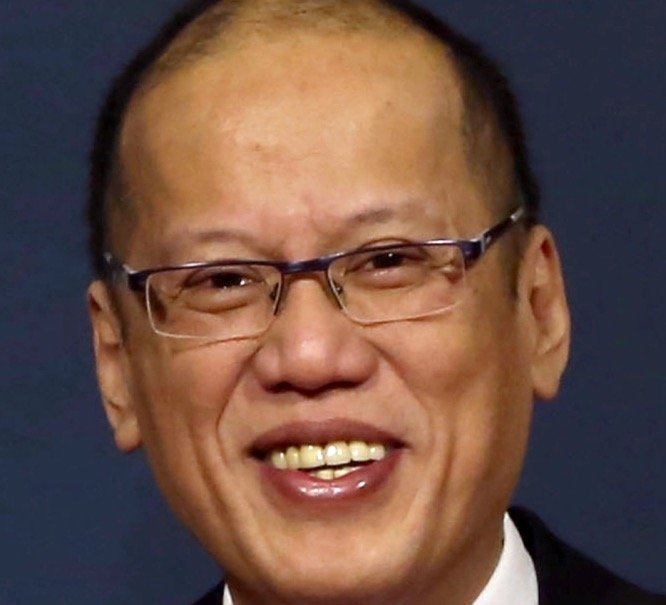 Philippines · Politics
1960—2021
Benigno Aquino III
President of the Philippines, 2010–2016A president whose good-governance agenda coincided with rapid growth and whose government initiated the South China Sea arbitration.Read biography Philippines · Politics
1924—2025
Juan Ponce Enrile
Defence minister and Senate presidentThe lawyer and defence minister whose career stretched from the declaration of martial law to the EDSA breakaway, four Senate terms and the Senate presidency.Read biography Philippines · Politics
1934—2018
Edgardo Angara
Educator, legislator and Senate presidentA university president and four-term senator whose legislative agenda created or strengthened national systems for education, skills, health insurance and culture.Read biography Philippines · Politics
1945—2016
Miriam Defensor Santiago
Senator, judge and public administratorA lawyer, judge, cabinet official and senator whose sharp legal arguments and forceful public style made her one of the Philippines’ most recognisable political figures.Read biography Philippines · Politics
1945—
Franklin Drilon
Lawyer, cabinet secretary and Senate presidentA labour lawyer who served in four cabinet posts before becoming one of the longest-serving leaders of the post-1987 Senate.Read biographyQuick answers
Common questions
- Why was Chief Justice Renato Corona impeached?
- The House filed eight articles alleging constitutional violations and betrayal of public trust. The Senate convicted him on Article II concerning incomplete asset disclosure.
- What was the final impeachment vote?
- On 29 May 2012, twenty senator-judges voted to convict and three voted to acquit.
- Who presided over the Corona impeachment trial?
- Senate President Juan Ponce Enrile presided over the Senate sitting as an impeachment court.
- Was Corona convicted of all eight articles?
- No. Conviction on Article II removed him from office, so the court did not vote on the remaining articles.
- Did the impeachment send Corona to prison?
- No. The constitutional judgment removed and disqualified him from the office at issue; impeachment itself is separate from any criminal proceeding.
Primary and institutional sources
How this history was checked
Dates, legal milestones and historical claims are checked against the official and institutional records below. This article was reviewed on 9 September 2026.
- Senate of the PhilippinesThe final verdict — twenty senator-judges vote to convict
- Senate of the PhilippinesOpening statement of the impeachment court presiding officer
- Senate of the PhilippinesEdgardo Angara’s explanation of his verdict on Article II
- The LawPhil Project1987 Constitution — Article XI, accountability of public officers