The short answer
The Leyte Landing began the Allied return to the Philippines, but the familiar image of Douglas MacArthur in the surf captures only one layer of the event. President Sergio Osmeña restored Commonwealth authority, Filipino guerrillas supplied intelligence and four divisions opened a campaign that continued long after the ceremony.
Chronology
A timeline of the turning points
Carrier strikes change Allied planning
Operations against Japanese airfields and shipping persuaded commanders that intermediate landings could be cancelled and the return accelerated.
Approaches to Leyte Gulf are opened
U.S. Rangers landed on islands at the mouth of the gulf while naval forces began minesweeping and reconnaissance.
Warships bombard the landing areas
Naval gunfire struck the Dulag and Tacloban beach sectors as underwater demolition teams checked the approaches.
Four divisions begin landing
The U.S. Sixth Army put the 1st Cavalry, 24th Infantry, 7th Infantry and 96th Infantry divisions ashore along Leyte’s east coast.
MacArthur and Osmeña come ashore
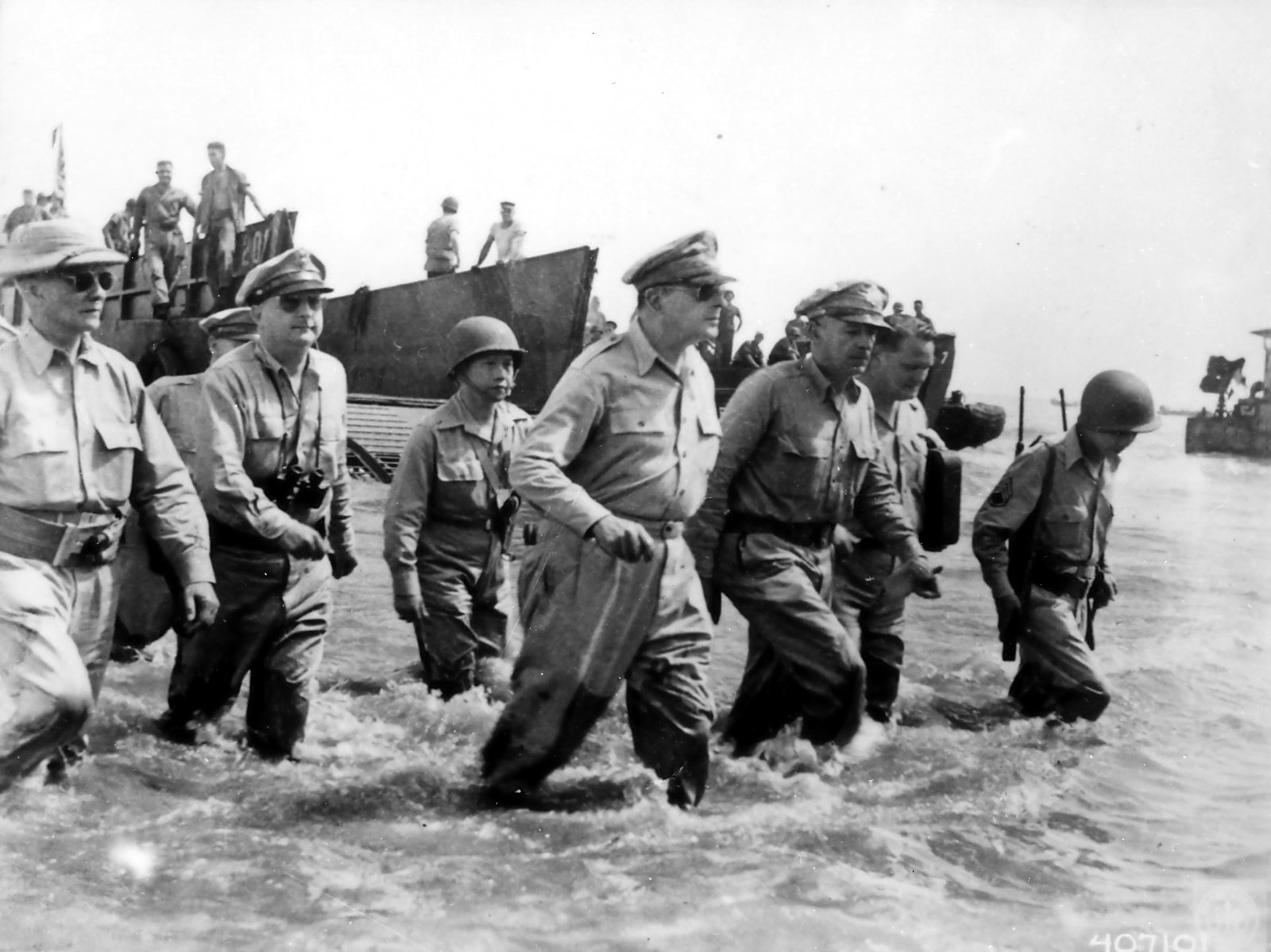
Douglas MacArthur landed near Palo with President Sergio Osmeña and members of the Commonwealth government-in-exile.
Commonwealth government is reconstituted
Osmeña used a provisional capitol in Tacloban as the returning government began restoring civil administration.
The Battle of Leyte Gulf follows
Japan committed much of its remaining fleet in a multi-part attempt to destroy the invasion force and its shipping.
The ground campaign intensifies
Japanese reinforcements, mountain terrain, rain and supply failures turned the island campaign into a prolonged struggle after the landing ceremony.
Why did the Allies choose Leyte?
Leyte offered airfield sites, a large gulf for an invasion fleet and a position near the centre of the Philippine archipelago. Capturing it could divide Japanese forces, interrupt routes toward the resource-rich territories to the south and support later operations against Luzon.
The operation was accelerated after September carrier strikes found Japanese air power weaker than Allied planners had feared. The decision bypassed proposed intermediate operations, but it also forced different U.S. commands to assemble shipping, naval cover and ground forces on a compressed schedule.
Filipino resistance shaped the return
The landing did not enter an information vacuum. Ruperto Kangleon’s Leyte Area Command and other local networks had monitored Japanese positions, maintained coastal contacts and contested occupation rule. Civilians provided food, shelter, guides and warnings at great risk.
Guerrilla reports varied in reliability, and resistance on Leyte was not a single unified organisation. Intelligence links built before October nevertheless gave the returning forces local knowledge and helped the Commonwealth government reconnect with communities beyond the beachhead.
What happened on 20 October 1944?
After naval bombardment, four U.S. Army divisions landed along separate beaches between the Tacloban and Dulag sectors. Japanese resistance at the waterline was uneven and generally lighter than it would become inland. Troops moved toward airfields, roads and the approaches to Tacloban.
The first day established a beachhead but did not liberate the island. Landing craft, engineers, medical units and supply organisations had to keep thousands of soldiers moving ashore while Japanese aircraft threatened crowded shipping in the gulf.
MacArthur’s return was also Osmeña’s return
The famous images centre Douglas MacArthur wading through surf. President Sergio Osmeña and members of the Philippine government-in-exile also returned. The National Historical Commission’s marker at Palo records both the military landing and the work of reorganising, restoring and administering the Commonwealth government.
That political return mattered because the operation was not only the reconquest of territory by an American army. It reopened the disputed process of restoring Filipino civil authority after occupation and after the death of President Manuel L. Quezon in exile.
The ceremony did not end the Battle of Leyte
Japan sent naval and ground reinforcements because losing Leyte threatened the defence of the entire Philippines. The naval counterstroke became the Battle of Leyte Gulf, while troops ashore fought through mountain routes, flooded valleys and severe monsoon weather.
Ormoc became a critical reinforcement port. Airfield construction lagged, supply routes deteriorated and combat continued into December and beyond. Separating the landing from the longer campaign prevents one iconic afternoon from standing in for months of fighting and civilian danger.
Who was present, and who is often left outside the frame?
MacArthur, Osmeña and Carlos P. Romulo became the recognisable public figures of the return. Kangleon’s command, local guerrillas and civilians formed another layer of the story. Nieves Fernandez’s small unit south of Tacloban shows how resistance could be organised at a more local scale.
The photograph of leaders approaching shore remains powerful, but it cannot show the people displaced by combat, the labour of medical and transport units, the Japanese soldiers ordered to defend the island or the civilians forced to navigate between armed organisations.
How should “liberation” be understood?
For many Filipinos the landing marked the beginning of the end of a brutal occupation. It also restored an American-led military presence and a Commonwealth still moving toward promised independence. Both meanings belong in the historical record.
A source-driven account can recognise relief, resistance and military victory without erasing colonial hierarchy or treating the return as the act of one man. Leyte was a joint campaign built from Filipino survival and intelligence, Commonwealth legitimacy and overwhelming Allied resources.
Continue the chronology
Related history guides
The Battle of Leyte Gulf
Separate the four naval engagements and follow Japan’s attempt to reach the invasion fleet.
Read the timeline1942–1945The Japanese Occupation of the Philippines
Place the landing inside occupation, resistance, collaboration and civilian survival.
Read the timeline3 February–3 March 1945The Battle of Manila
Continue from the return to the catastrophic urban battle for the capital.
Read the timelineFifteen sourced livesPhilippine Liberation and Resistance
Compare national leaders, guerrilla commanders, intelligence agents and civil resistance.
Read the timelineConnected biographies
Five lives connecting intelligence, resistance and restored government
 Philippines · Politics
1890—1958
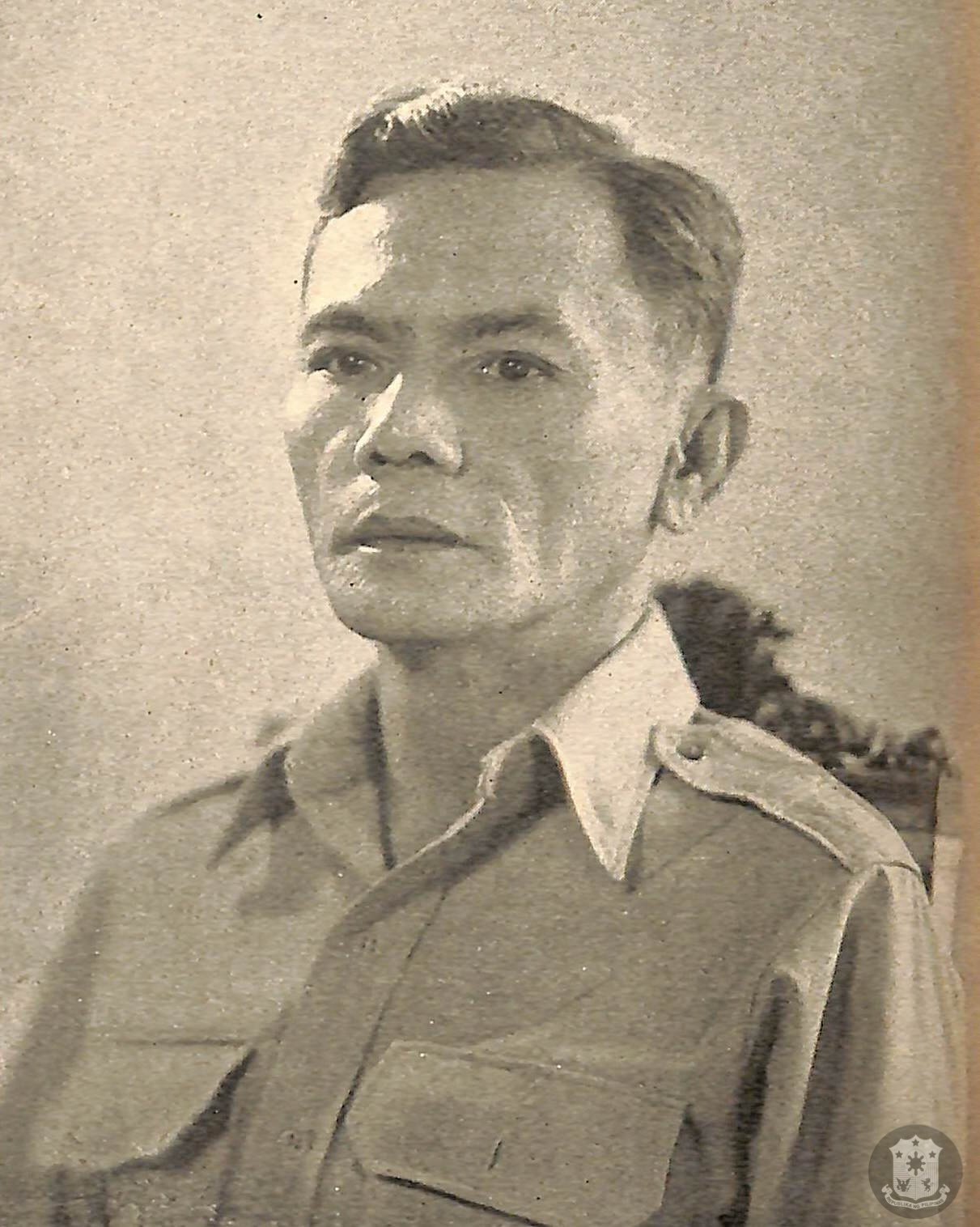
Ruperto Kangleon
Leyte guerrilla commander, defence secretary and senatorA Philippine Army officer who unified much of the Leyte resistance, supported the returning Commonwealth government and later served as defence secretary and senator.Read biography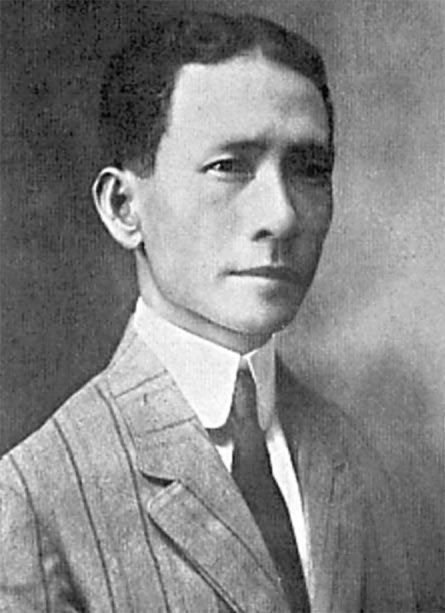 Philippines · Politics
1878—1961
Sergio Osmeña
President of the Commonwealth of the PhilippinesA Cebu statesman who succeeded Manuel Quezon in exile and led the Commonwealth government during the liberation of the Philippines.Read biography1913—1965
Macario Peralta Jr.
Guerrilla commander, senator and defence secretaryA reserve officer who refused to surrender Panay, unified guerrilla forces in the central Philippines and later served as senator and defence secretary.Read biographyc. 1906—unknown
Nieves Fernandez
Schoolteacher and Leyte guerrilla commanderA teacher turned guerrilla commander who led an approximately 110-member resistance unit operating south of Tacloban in Leyte.Read biography Philippines · Politics
1914—1971
Jesús Villamor
Fighter pilot and Allied intelligence officerA pioneering Philippine Army Air Corps pilot who fought in the opening campaign and then led a clandestine intelligence mission linking guerrillas to Allied headquarters.Read biographyQuick answers
Common questions
- When was the Leyte Landing?
- The main Allied landings began on 20 October 1944 along the eastern coast of Leyte. Operations to clear the approaches had started on 17 October.
- Where did Douglas MacArthur land in the Philippines?
- MacArthur came ashore near Palo, Leyte, on 20 October 1944 during the first day of the Allied invasion.
- Was Sergio Osmeña at the Leyte Landing?
- Yes. President Sergio Osmeña and members of the Commonwealth government-in-exile returned with MacArthur and began restoring civil government in Tacloban.
- What role did Filipino guerrillas play at Leyte?
- Guerrilla groups supplied intelligence, guides and local support, challenged Japanese control before the landing and assisted operations after Allied forces came ashore.
- Did the Leyte Landing immediately liberate the island?
- No. The beachhead was established on 20 October, but major ground fighting continued for months as Japan reinforced the island.
- Is the Leyte Landing the same as the Battle of Leyte Gulf?
- No. The landing began on 20 October 1944. The Battle of Leyte Gulf was the naval counterstroke fought mainly from 23 to 26 October in several separated engagements.
Primary and institutional sources
How this history was checked
Dates, legal milestones and historical claims are checked against the official and institutional records below. This article was reviewed on 9 September 2026.
- U.S. Army Center of Military HistoryLeyte: The Return to the Philippines
- U.S. Army Center of Military HistoryLeyte campaign booklet
- National Historical Commission of the PhilippinesLeyte Landing national historical landmark
- National Historical Commission of the PhilippinesProvisional Capitol in Tacloban
- Wikimedia CommonsDouglas MacArthur lands Leyte photograph and licence