
The short answer
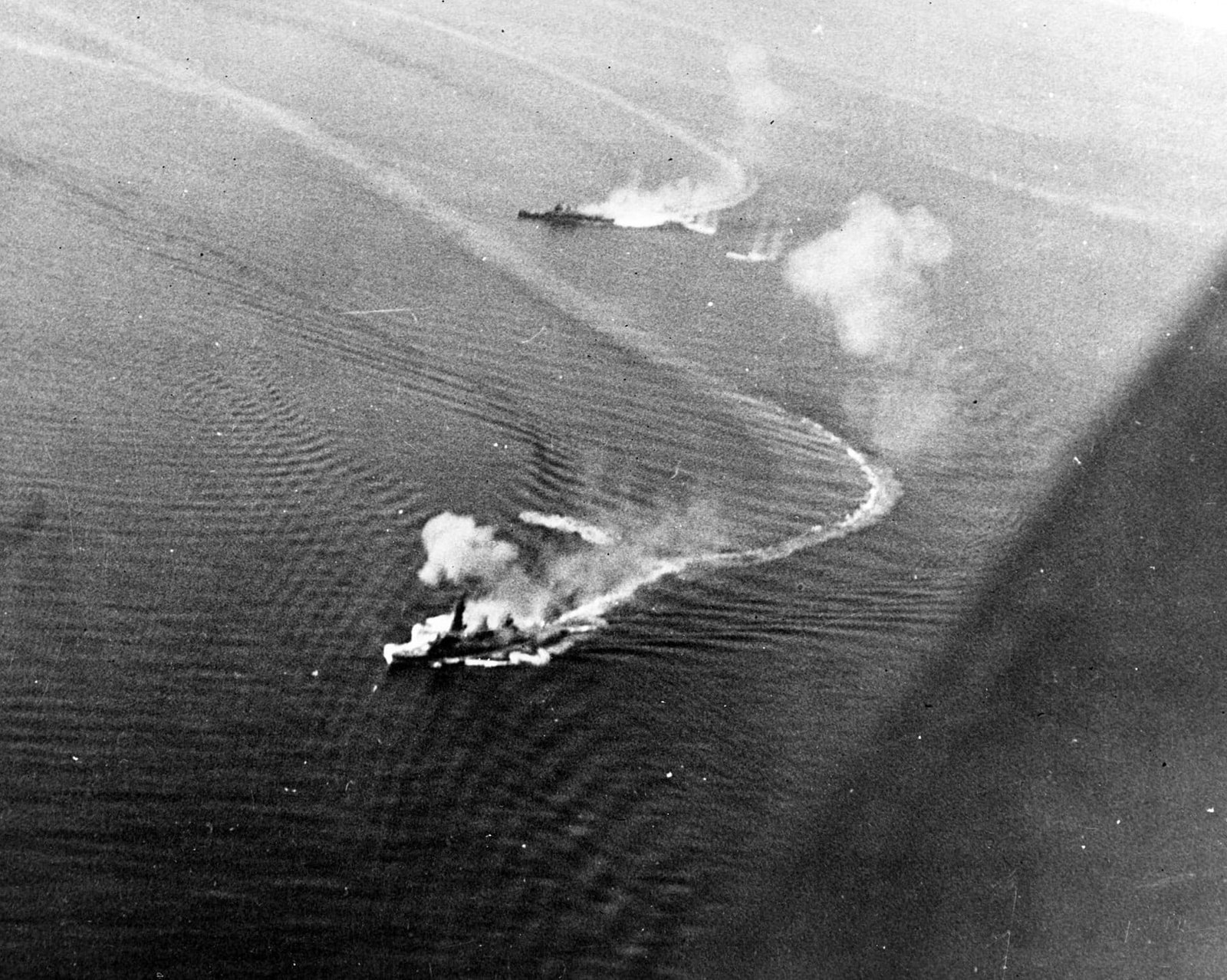
Leyte Gulf was not one fleet line meeting another. It was a sequence of submarine, air and surface actions across the Philippine archipelago, fought because Japan tried to destroy the ships supporting the return to Leyte. Understanding the outcome requires following four separated engagements and the decisions connecting them.
Chronology
A timeline of the turning points
Allied troops land on Leyte
The invasion fleet placed four U.S. Army divisions ashore, creating the target that Japan’s Operation Shō sought to destroy.
Submarines strike in Palawan Passage
USS Darter and USS Dace attacked Vice Admiral Takeo Kurita’s Center Force, sinking the heavy cruisers Atago and Maya and damaging Takao.
Battle of the Sibuyan Sea
Carrier aircraft repeatedly attacked the Center Force and sank the battleship Musashi, but Kurita later resumed his passage east.
Halsey moves north
The Japanese carrier decoy drew Admiral William Halsey’s Third Fleet away from the San Bernardino Strait and the invasion area.
Battle of Surigao Strait
U.S. Seventh Fleet battleships, cruisers, destroyers and PT boats destroyed Japan’s southern approach in a night action.
Battle off Samar
Kurita’s battleships and cruisers surprised small escort-carrier groups. Destroyers, destroyer escorts and aircraft resisted until the Japanese force withdrew.
Battle off Cape Engaño
Third Fleet aircraft destroyed much of Vice Admiral Jisaburō Ozawa’s decoy carrier force north of Luzon.
Japanese forces retreat
Aircraft continued striking withdrawing ships. Japan’s fleet survived, but no longer posed the same strategic surface threat.
Why did Japan commit its fleet?
The 20 October landing threatened to cut Japan from oil and other resources in Southeast Asia. Operation Shō assembled most of the remaining battleships, cruisers and carriers in a complex attempt to break into Leyte Gulf and destroy transports supporting the invasion.
Japanese carrier air groups had been badly depleted, so the carriers of the Northern Force served largely as a decoy. The plan depended on separate formations approaching through different straits while land-based aircraft attacked the Allied fleet.
It was one battle made from separated engagements
“Battle of Leyte Gulf” is a collective name. The fighting stretched from the Palawan Passage and Sibuyan Sea to Surigao Strait, Samar and Cape Engaño. Ships in one action could be hundreds of kilometres from those in another, and commanders worked through incomplete reports and divided command structures.
Calling it four major engagements is useful, but the submarine attacks of 23 October, air operations and the retreat on 26 October also shaped the outcome. A single map or duel cannot explain the battle’s full geography.
The Sibuyan Sea did not stop Center Force
U.S. carrier aircraft sank Musashi and damaged other ships on 24 October. Kurita temporarily reversed course, which encouraged the impression that his force had been defeated or driven away. He then turned east again and passed through the San Bernardino Strait.
This movement mattered because Halsey had taken Third Fleet north toward Ozawa’s carriers. The route toward the lightly protected escort carriers off Samar was open.
Surigao Strait ended Japan’s southern approach
Vice Admiral Shōji Nishimura’s force entered Surigao Strait during the night of 24–25 October. PT boats and destroyers attacked before a line of U.S. Seventh Fleet battleships and cruisers brought radar-directed gunfire across its route.
The action is often described as the last battleship-against-battleship engagement. That label should not obscure the destroyer torpedoes, radar advantage and fragmented arrival of Japanese formations that made the result so unequal.
Why is the Battle off Samar remembered?
On 25 October Center Force encountered “Taffy 3,” one of three escort-carrier groups supporting troops on Leyte. Its small carriers, destroyers and destroyer escorts were not designed to fight Japanese battleships and heavy cruisers at close range.
Aggressive torpedo attacks, aircraft sorties, smoke and confusion disrupted Kurita’s advance. Several U.S. ships were sunk and Japanese cruisers were lost or damaged. Kurita ultimately withdrew instead of continuing toward the transports in Leyte Gulf.
Cape Engaño destroyed the decoy but exposed the gulf
Ozawa succeeded in drawing Halsey north. Third Fleet aircraft sank Japanese carriers off Cape Engaño, but the decision left the San Bernardino Strait unguarded by Halsey’s fast battleships and produced a command controversy that has shaped histories of the battle ever since.
The apparent contradiction is central: the decoy force was destroyed, yet its mission nearly opened the way to the invasion shipping. Tactical success and operational risk occurred at the same time.
What did the victory change?
The Japanese counterstroke failed to destroy the landing force. Its losses sharply reduced the ability of the Imperial Japanese Navy to conduct another strategic surface operation, while the Allied campaign in the Philippines continued.
Naval victory did not secure Leyte on land or end danger at sea. Japanese aircraft, including organised suicide attacks, continued striking ships, and the difficult ground campaign lasted for months. The battle protected the return; it did not complete liberation.
Continue the chronology
Related history guides
The Leyte Landing
Start with the invasion, Filipino intelligence and restoration of the Commonwealth government.
Read the timeline3 February–3 March 1945The Battle of Manila
Follow the liberation campaign to the destruction of the Philippine capital.
Read the timeline1942–1945The Japanese Occupation of the Philippines
Connect the naval campaign to occupation, resistance and civilian life ashore.
Read the timelineFifteen sourced livesPhilippine Liberation and Resistance
Meet the Filipino leaders, organisers and intelligence agents behind the wider return.
Read the timelineConnected biographies
Four Filipino lives behind the campaign the fleet protected
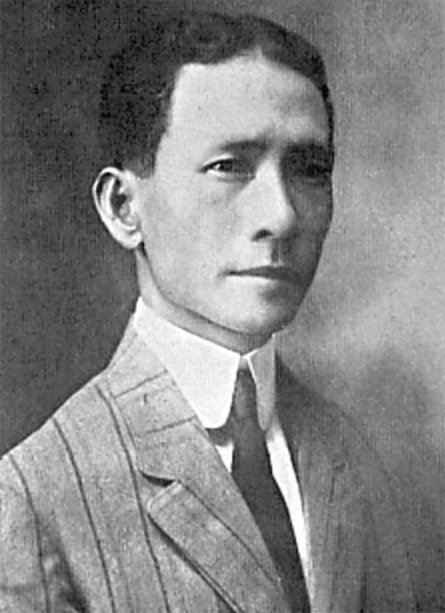
1878—1961
Sergio Osmeña
President of the Commonwealth of the PhilippinesA Cebu statesman who succeeded Manuel Quezon in exile and led the Commonwealth government during the liberation of the Philippines.Read biography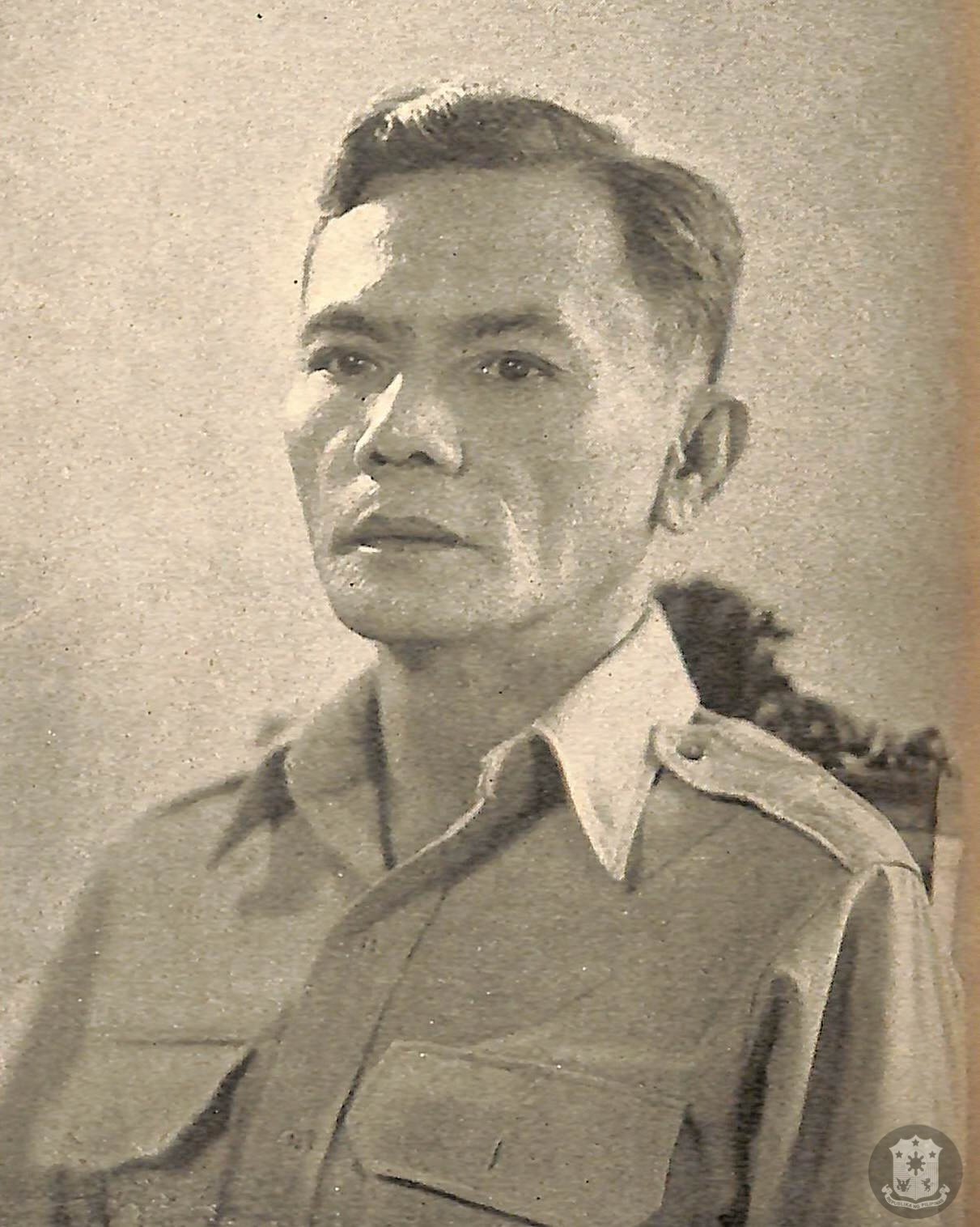
1890—1958
Ruperto Kangleon
Leyte guerrilla commander, defence secretary and senatorA Philippine Army officer who unified much of the Leyte resistance, supported the returning Commonwealth government and later served as defence secretary and senator.Read biography
1914—1971
Jesús Villamor
Fighter pilot and Allied intelligence officerA pioneering Philippine Army Air Corps pilot who fought in the opening campaign and then led a clandestine intelligence mission linking guerrillas to Allied headquarters.Read biographyc. 1906—unknown
Nieves Fernandez
Schoolteacher and Leyte guerrilla commanderA teacher turned guerrilla commander who led an approximately 110-member resistance unit operating south of Tacloban in Leyte.Read biographyQuick answers
Common questions
- When was the Battle of Leyte Gulf?
- The connected naval operations are usually dated 23–26 October 1944, three days after the main Allied landings on Leyte.
- Where was the Battle of Leyte Gulf fought?
- It stretched across waters around the central and northern Philippines, including the Palawan Passage, Sibuyan Sea, Surigao Strait, waters off Samar and Cape Engaño.
- What were the four main battles of Leyte Gulf?
- They were the battles of the Sibuyan Sea, Surigao Strait, off Samar and off Cape Engaño. Submarine attacks and later pursuit were also part of the wider operation.
- Who won the Battle of Leyte Gulf?
- Allied naval forces defeated Japan’s attempt to destroy the Leyte invasion fleet. Japan lost major ships and could no longer threaten Allied operations with the same surface-fleet strength.
- Why did Admiral Halsey go north?
- Halsey took Third Fleet toward the Japanese carrier force off Cape Engaño, which he treated as the principal remaining fleet threat. The move left the San Bernardino approach exposed.
- Why did the Japanese force withdraw from Samar?
- Kurita faced aggressive resistance, aircraft attacks, ship losses and confusing reports. He withdrew rather than continue toward the vulnerable transports, a decision historians still analyse.
Primary and institutional sources
How this history was checked
Dates, legal milestones and historical claims are checked against the official and institutional records below. This article was reviewed on 9 September 2026.
- Naval History and Heritage CommandThe Battle of Leyte Gulf, 23–26 October 1944
- Naval History and Heritage CommandLeyte Gulf in detail
- Naval History and Heritage CommandBattle off Samar: the sacrifice of Taffy 3
- U.S. Army Center of Military HistoryLeyte: The Return to the Philippines
- Wikimedia CommonsFusō under air attack photograph and licence