In this biography
Quick facts
- Born
- 30 July 1913
- Died
- 30 December 1965
- Birthplace
- Manila, Philippines
- Country
- Philippines
- Nationality
- Filipino
- Known for
- Organising the Free Panay Guerrilla Forces and helping liberate Iloilo in 1945
- Wartime command
- Free Panay Guerrilla Forces
- Iloilo liberated
- 20 March 1945
- National office
- Senator, 1949–1955
- Cabinet office
- Secretary of national defence, 1962–1965
Why this life matters
Peralta linked decentralised resistance to Allied liberation and carried wartime authority into elected and cabinet office after independence.
Timeline
Key moments
Born in Manila
Born on 30 July.
Lawyer and reserve soldier
Qualified in law while developing a parallel military career.
Refused to surrender Panay
At Daanbanwa in Lambunao, committed to continuing resistance after the surrender of higher command.
Organised the Free Panay Guerrilla Forces
Established the organisation at Inadlawan, Dueñas; its formation was distinct from the June refusal to surrender.
Recognised within Allied guerrilla coordination
February correspondence and radio traffic identified him with the Sixth Military District command.
Iloilo is liberated
Guerrilla operations supported the Allied landing and the recovery of the city.
Served in the Senate
Won a Senate seat in 1949 and served a six-year term, with veterans’ employment and public accountability among his recorded concerns.
Led national defence
Served as defence secretary under President Diosdado Macapagal; died on 30 December 1965.
Law, reserve service and the defence of Panay
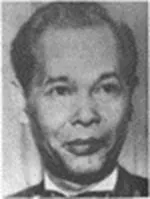
Macario Peralta Jr. was born in Manila on 30 July 1913 and graduated in law from the University of the Philippines in 1936. Reserve military training gave him a second professional path. During the 1941 mobilisation he commanded the 61st Provisional Regiment, connecting his prewar training to the defence of Panay against the Japanese invasion.
The NHCP historical marker distinguishes two milestones: his refusal to surrender at Daanbanwa, Lambunao, on 1 June 1942, and the organisation of the Free Panay Guerrilla Forces at Inadlawan, Dueñas, on 1 July. Keeping them separate explains how a decision to continue fighting became an organised resistance command.
Radio links and the Sixth Military District
Resistance depended on communication as well as combat. The U.S. Army’s history of the Leyte campaign records February 1943 correspondence and radio recognition of Peralta as commander of the Sixth Military District. Contact with the Allied command provided a framework for identifying units, sharing intelligence and arranging liaison rather than leaving every island organisation isolated.
The same account describes attempts by Peralta and Mindanao commander Wendell Fertig to coordinate neighbouring groups, including contacts in Leyte. Competing local claims complicated that process. Recognition of a regional coordinating role should not be inflated into command of every Philippine guerrilla force; wartime resistance remained a network of distinct organisations and jurisdictions.
Sources for this section: [4]
Military resistance and civilian authority
Panay’s resistance also raised the question of who could govern while the prewar state was disrupted. In an Army History review of scholarship on wartime Panay, Ivan A. Zasimczuk describes disagreements between Peralta and governor Tomás Confesor over printing currency and paying civilian officials. These were disputes about resources and jurisdiction within resistance, not simply divisions between collaborators and patriots.
That account complicates a biography told only through battlefield success. A guerrilla commander needed supplies and local cooperation, while civilian officials sought to preserve their own authority. The review supports this limited description of their disagreement; it does not establish a judicial verdict against either man or settle every episode in their relationship.
Sources for this section: [5]
The combined liberation of Iloilo in 1945
When American forces returned to Panay in March 1945, Peralta’s guerrillas already controlled much of the island outside the remaining Japanese positions. The U.S. Army campaign account describes the 40th Infantry Division’s operations alongside this established local force. Allied troops did not arrive in an island without resistance, nor did the guerrillas liberate every position entirely on their own.
Iloilo City was liberated on 20 March 1945. Local intelligence, secured territory and guerrilla cooperation formed part of a combined campaign with returning regular forces. Explaining that partnership gives Peralta a substantial role without erasing the other Filipino participants or the Allied units involved in the city’s recovery.
Senate investigations and national defence
Peralta’s Senate term ran from 1949 to 1955. The institutional profile credits him with a resolution investigating the Tambobong–Buenavista estate transaction and efforts concerning veterans’ priority in government employment and senators’ disclosure of assets and liabilities. These specific concerns extend his biography beyond the prestige attached to guerrilla leadership.
He later served as national defence secretary under Diosdado Macapagal from 1962 to 1965 and died on 30 December 1965. His career thus moved through three different kinds of authority: resistance command under occupation, elected legislative scrutiny and civilian cabinet responsibility for defence. None was simply a continuation of the wartime military district.
Quick answers
Frequently asked questions about Macario Peralta Jr.
- Who was Macario Peralta Jr.?
- He was a Philippine lawyer and reserve officer who organised the Free Panay Guerrilla Forces, later served in the Senate in 1949–1955 and became national defence secretary in 1962–1965.
- When did Peralta organise the Free Panay Guerrilla Forces?
- The NHCP marker dates the organisation to 1 July 1942 at Inadlawan, Dueñas. This was a month after his refusal to surrender at Daanbanwa, Lambunao, on 1 June.
- Did Peralta liberate Iloilo by himself?
- No. His guerrillas played an important part in the campaign, but Iloilo’s liberation on 20 March 1945 involved local resistance and returning Allied forces, including the U.S. 40th Infantry Division.
- What did Macario Peralta do after the war?
- He served a six-year Senate term beginning in 1949, with recorded work on investigations, veterans’ employment and disclosure of assets. He later led the defence department under President Diosdado Macapagal.
Keep exploring
Lives connected to this story
- Tomas Confesor
The civilian governor whose wartime authority and resource disputes intersected with Peralta’s command.
- Vicente Lim
Compare another Filipino officer’s response to invasion, occupation and resistance.
- Diosdado Macapagal
The president under whom Peralta served as defence secretary in the 1960s.
Sources and further reading
Explore the evidence
These references support the biography and offer further reading. Official records, first-person accounts and independent reporting provide different perspectives; image records document attribution and licensing.
- 1. National Historical Commission of the PhilippinesMacario L. Peralta Jr. historical marker
The readable NHCP marker supplies the separate June and July 1942 events, the liberation date and office years. The marker was unveiled in 2023, not during Peralta’s lifetime.
- 2. National Historical Commission of the PhilippinesBalantang Memorial Cemetery National Shrine
- 3. Senate of the PhilippinesMacario Peralta Jr. former senator profile
Indexed institutional passages support education, the Senate term and recorded legislative concerns. Its compressed military-school chronology is not used to assign an unverified wartime journey.
- 4. U.S. Army Center of Military HistoryLeyte: The Return to the Philippines — guerrilla command and liaison
Selected indexed passages of Leyte: The Return to the Philippines, including the February 1943 recognition and liaison account, were consulted; this is not a claimed full-book reading.
- 5. U.S. Army Center of Military HistoryArmy History, Winter 2025 — book review on wartime Panay
The indexed Winter 2025 book-review passage attributes the currency and civilian-pay dispute to Zasimczuk’s review. Neither the underlying book nor the entire journal issue was read.
- 6. U.S. Army Center of Military HistorySouthern Philippines campaign — Panay operations
The indexed Panay passage supplies the 40th Division’s cooperation with Peralta’s guerrillas. Full pamphlet access was unavailable, and campaign estimates are not presented as precise personnel censuses.
- 7. Philippine Veterans Affairs OfficePVAO Bulletin, Volume 12, Issue 1 — Peralta service summary
An indexed commemorative service summary corroborates the 1962–1965 defence portfolio; the full bulletin was not read.
- 8. Wikimedia CommonsMacario Peralta Jr. — portrait and reuse record