In this biography
Quick facts
- Born
- 1987 · exact date not consistently published
- Birthplace
- Buthidaung, Rakhine State, Myanmar
- Country
- Myanmar
- Nationality
- Burmese
- Known for
- Advocating Rohingya rights, women’s leadership and intercommunal peace after seven years as a political prisoner
- Political prisoner
- 2005–January 2012
- Original sentence
- 17 years
- Organisations
- Women’s Peace Network · Justice for Women
- Legal education
- Yangon East · UC Berkeley LL.M.
- UN address
- Rohingya high-level conference · 2025
Why this life matters
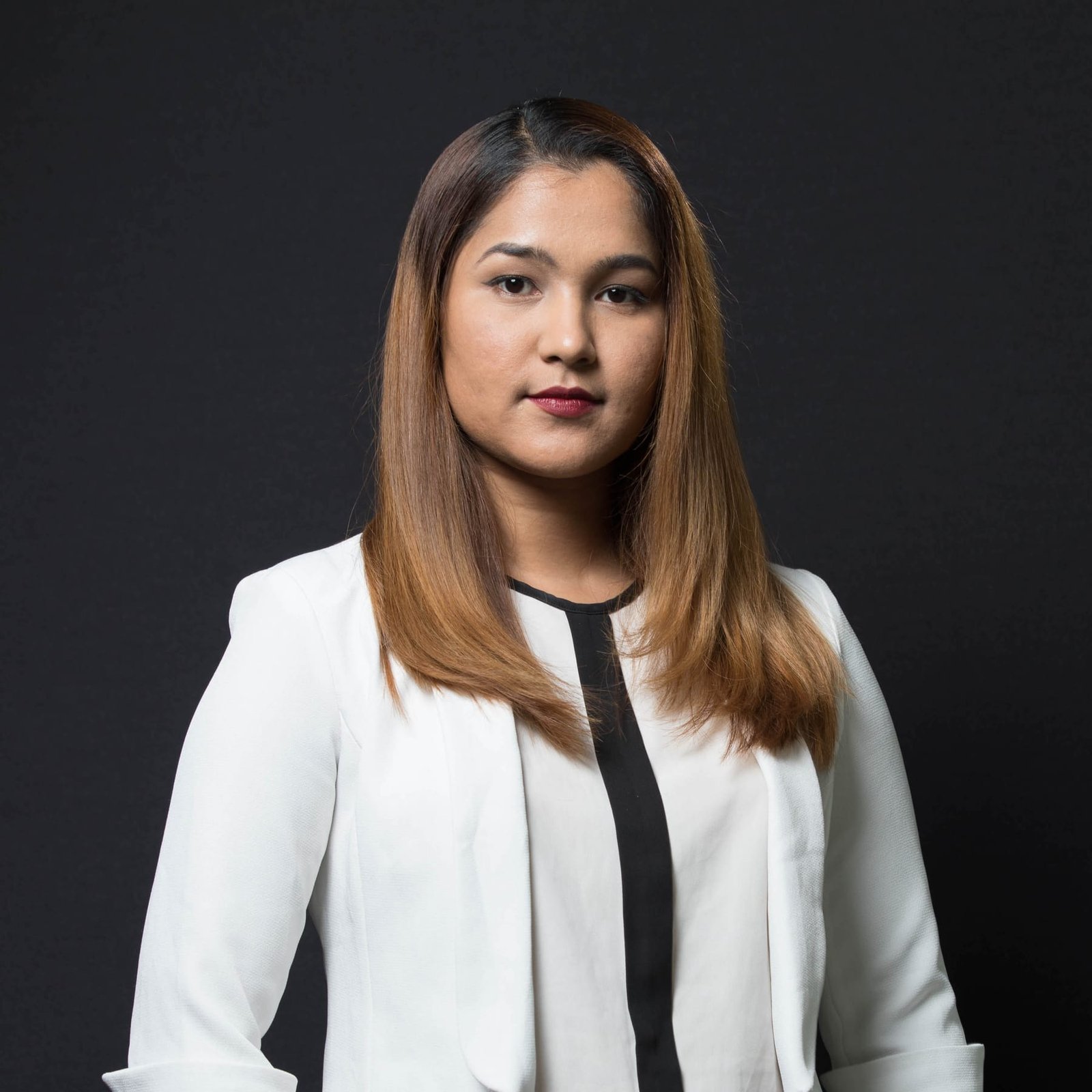
Wai Wai Nu brings a Rohingya and women-led perspective to Myanmar’s democracy movement, international accountability efforts and the search for equal citizenship.
Timeline
Key moments
Born in Buthidaung
Grew up in a Rohingya family from northern Rakhine State before the family relocated to Yangon.
Her father won a parliamentary seat
Kyaw Min was elected in Myanmar’s unimplemented general election and later faced sustained military pressure.
Imprisoned with her family
The eighteen-year-old law student received a seventeen-year sentence after closed proceedings without legal representation.
Released and returned to law school
A presidential amnesty freed the family in January after seven years in prison.
Built rights and peace organisations
Established Women’s Peace Network-Arakan and Justice for Women, then launched the interfaith #MyFriend campaign.
Completed a Berkeley law degree
Earned an LL.M. while expanding international advocacy for legal and constitutional reform.
Connected advocacy to the genocide case
Studied as an Obama Foundation Scholar and attended the first ICJ hearings in The Gambia v. Myanmar.
Addressed the UN General Assembly conference
Opened the high-level meeting on Rohingya Muslims and other minorities with a call for rights, justice and political inclusion.
A Rohingya childhood shaped by electoral hope and exclusion
Wai Wai Nu was born in 1987 in Buthidaung, a township in northern Rakhine State with a large Rohingya population. Her father, Kyaw Min, won a parliamentary seat in Myanmar’s 1990 election, but the military refused to implement the result. Harassment connected to his political work contributed to the family’s move to Yangon, where Nu pursued education while citizenship policy and administrative restrictions increasingly excluded Rohingya communities.
Her biography complicates any separation between Myanmar’s democracy struggle and minority rights. The same military state that blocked elected representatives also classified most Rohingya outside full citizenship, restricted movement and rejected the community’s name. Nu later argued that democracy could not be measured only by elections: it also had to protect equal membership for ethnic and religious minorities.
A seventeen-year sentence at eighteen
In 2005 the authorities sentenced Kyaw Min to forty-seven years in prison on state-security and immigration charges. Two months later, Nu—then an eighteen-year-old second-year law student—her mother and two siblings faced the same alleged offences. A closed hearing offered no legal representation and no effective appeal. Each received a seventeen-year sentence, and the women were confined in Insein Prison.
Nu spent seven formative years in custody. She encountered women imprisoned through poverty, discrimination and a legal system without meaningful safeguards, an experience she has described as an education in injustice. The imprisonment was political punishment imposed on an entire family, but it also shaped the legal-aid and women’s-rights work she would pursue after release.
Release, legal education and organisational work
President Thein Sein’s government released Nu and her family in a January 2012 amnesty that included numerous political prisoners. She returned to Yangon East University and completed the law degree interrupted by imprisonment. The timing placed her freedom beside a widening political opening—and beside communal violence in Rakhine State that displaced more than 140,000 people, mostly Rohingya and other Muslims.
Nu founded Women’s Peace Network-Arakan, later known as Women’s Peace Network, to promote minority rights, women’s leadership and trust across ethnic and religious divisions. She also helped establish Justice for Women, a network of women lawyers providing legal education and assistance. Both initiatives treated peace as a rights question rather than simply the absence of fighting.
The #MyFriend campaign and an inclusive public identity
In 2015 Nu launched #MyFriend, inviting people to share photographs with friends from different communities. The social-media campaign answered rising anti-Muslim hate with ordinary evidence of coexistence. It also showed her preferred form of advocacy: placing Rohingya equality inside a wider coalition for women, youth, religious minorities and democratic participation rather than treating one community’s rights as separate from the country’s future.
Recognition followed, including inclusion in the BBC’s 100 Women, a TIME Next Generation Leaders profile and Georgetown’s Hillary Rodham Clinton Award for Advancing Women in Peace and Security. Awards expanded her platform, but her core work remained documentation, civic education and policy advocacy led by people directly affected by discrimination.
International law after the 2017 mass displacement
Military operations beginning in August 2017 drove roughly three-quarters of a million Rohingya into Bangladesh. Nu advocated for an independent international investigation and later attended the December 2019 hearings in The Gambia v. Myanmar at the International Court of Justice. She used the proceedings to centre survivor evidence and to distinguish accountability for the state from the separate criminal responsibility of individual perpetrators.
Her legal training deepened alongside that work. Nu completed a Master of Laws at the University of California, Berkeley in 2018 and joined the Obama Foundation Scholars programme at Columbia University in 2019–2020. She connected constitutional reform, citizenship and international accountability: without equal legal status and institutions able to restrain armed power, return and reconciliation could not be durable.
Exile, the coup and advocacy across movements
An OHCHR study records that security risks forced Nu into exile before the February 2021 coup. From abroad she continued leading Women’s Peace Network as the military crushed nationwide opposition and conflict spread. Her position challenged two failures at once: military atrocities against multiple communities and the anti-Rohingya prejudice that had also existed among some democracy activists.
The post-coup National Unity Government recognised the Rohingya’s entitlement to citizenship and promised to replace the 1982 Citizenship Law, an important change in opposition policy. Nu’s advocacy has continued to press beyond declarations toward enforceable equality, representation, freedom of movement, survivor participation and accountability for crimes committed by every armed actor.
A Rohingya voice at the United Nations in 2025
On 30 September 2025, Nu spoke in the opening segment of the UN General Assembly’s first high-level conference dedicated to Rohingya Muslims and other minorities in Myanmar. She presented the crisis as part of decades of violence against ethnic communities and called for a solution defined with the people of Myanmar rather than another temporary humanitarian response.
Her career demonstrates why representation is substantive, not ceremonial. A policy about return, citizenship or justice can fail even when it is technically detailed if Rohingya people are absent from the decisions. Nu’s significance lies in joining lived experience, legal argument and institution-building—and in insisting that a democratic Myanmar must recognise the community whose exclusion has so often been treated as politically convenient.
Quick answers
Frequently asked questions about Wai Wai Nu
- Who is Wai Wai Nu?
- Wai Wai Nu is a rohingya human-rights lawyer and founder of Women’s Peace Network. Wai Wai Nu brings a Rohingya and women-led perspective to Myanmar’s democracy movement, international accountability efforts and the search for equal citizenship.
- What is Wai Wai Nu best known for?
- Wai Wai Nu is best known for advocating Rohingya rights, women’s leadership and intercommunal peace after seven years as a political prisoner.
- When and where was Wai Wai Nu born?
- Wai Wai Nu was born on 1987 · exact date not consistently published in Buthidaung, Rakhine State, Myanmar.
Sources and further reading
Explore the evidence
These references support the biography and offer further reading. Official records, first-person accounts and independent reporting provide different perspectives; image records document attribution and licensing.
- 1. University of California, Berkeley School of LawFrom Political Prisoner to International Inspiration
- 2. Obama FoundationWai Wai Nu · Columbia University Scholar 2019–2020
- 3. Georgetown Institute for Women, Peace and SecurityWai Wai Nu · advancing women, peace and security
- 4. UN Human Rights CouncilGendered impact of the human-rights crisis in Myanmar
- 5. United Nations General AssemblyStatement to the High-level Conference on Rohingya Muslims and Other Minorities · 30 September 2025
- 6. Wikimedia Commons2017 portrait and CC BY-SA 4.0 record