In this biography
Quick facts
- Born
- 2 March 1891
- Died
- 6 June 1951
- Birthplace
- Cabatuan, Iloilo, Philippines
- Country
- Philippines
- Nationality
- Filipino
- Known for
- Leading the wartime civil government of Free Panay and refusing an occupation cabinet post
- Provincial office
- Governor of Iloilo, 1937–1941
- Wartime role
- Governor of Free Panay and Romblon
- Cabinet office
- Secretary of the interior, 1945
- National office
- Senator from 1946
Why this life matters
Confesor shows how elected authority and civil administration could survive underground alongside military guerrilla command.
Timeline
Key moments
Born in Cabatuan
Born in Iloilo on 2 March.
Entered the legislature
Began national lawmaking and promoted cooperative marketing.
Joined the Constitutional Convention
Helped draft the constitutional framework of the Commonwealth.
Led civil resistance in Panay
Rejected an occupation post and sustained a Free Panay administration alongside guerrilla forces.
Elected to the Senate
Returned to national office after liberation and independence.
Education and a political career rooted in Iloilo
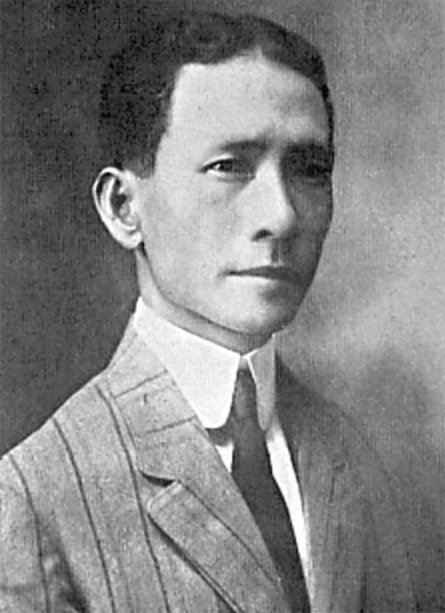
Tomas Confesor was born in Cabatuan, Iloilo, on 2 March 1891. He studied commerce at the University of California and economics at the University of Chicago, then returned to work in Philippine education. His Senate biography describes employment as a school supervisor in Jaro before his election to the national legislature in 1922.
Economic training and provincial experience remained connected throughout his career. His public work concerned the organisation of production, access to finance and the ability of communities to deal with institutions larger than themselves. These were practical questions for a legislator representing an agricultural province, and later for a governor trying to sustain civilian life during war.
Cooperative marketing and prewar public institutions
The Senate credits Confesor with sponsoring Act No. 3425, the Cooperative Marketing Law. Its account also records his 1933 appointment as the first Filipino director of commerce and subsequent work with the National Cooperatives Administration. The aim of cooperative organisation was to improve farmers’ position in markets and finance, not simply to increase a government department’s size.
The NHCP marker additionally credits him with legislation establishing the Boy Scouts of the Philippines and records his participation in the 1934 Constitutional Convention. These activities preceded his Iloilo governorship of 1937–1941. They show a wider institution-building career than the wartime nickname alone suggests, encompassing economic policy, civic organisation and the Commonwealth’s constitutional foundations.
Why Free Panay needed a civil government
During the Japanese occupation, Confesor refused an invitation to serve in the occupation cabinet. Returning to Iloilo, he organised resistance, and Manuel Quezon recognised him as wartime governor of Free Panay and Romblon. Retaining a claim to lawful civilian authority mattered when the ordinary institutions of the Commonwealth could no longer operate openly.
PVAO’s liberation account describes administration involving Confesor and the resistance fighters led by Macario Peralta Jr. The two roles should not be collapsed into one commander’s biography. Armed resistance required military organisation, while civilian leadership supplied another basis for legitimacy and public cooperation. Their relationship helped connect local communities to the continuing Commonwealth cause.
Cooperation did not mean an absence of conflict
The Filipinas Heritage Library’s catalogue description of José Doromal’s documentary history identifies both the Sixth Military District and the Free Panay Civil Government. It also explicitly notes a chapter on the Peralta–Confesor conflict. This is a useful warning against portraying the resistance as a single institution whose leaders always agreed.
The catalogue is not a substitute for reading those documents, so it cannot support a detailed judgment about every dispute. It does establish that military and civilian authority must be studied together without assuming harmony. The distinction improves the larger story: maintaining resistance involved negotiation over power as well as cooperation against an occupying force.
Liberation, the interior portfolio and the Senate
Allied troops landed on Panay on 18 March 1945. PVAO places the landing within a liberation campaign already advanced by local guerrillas, rather than treating it as the first appearance of resistance on the island. Confesor’s civil role and Peralta’s military organisation formed part of the conditions the returning forces encountered.
Confesor received the Philippine Legion of Honor in 1945 and was inducted as secretary of the interior on 8 April. He won election to the Senate in 1946, but died on 6 June 1951 before completing the six-year term. His career joined prewar economic reform with wartime civil resistance and postwar national office, preserving a provincial dimension within the history of the Commonwealth and republic.
Quick answers
Frequently asked questions about Tomas Confesor
- What was Tomas Confesor’s role in Free Panay?
- He led the wartime civil government recognised by Manuel Quezon, while Macario Peralta Jr. led the principal guerrilla military organisation.
- Did Confesor and Peralta always agree?
- No such claim is made. A documentary-history catalogue explicitly identifies their conflict; it is not used here to reconstruct disputes without reading the underlying documents.
- What economic reform is associated with Confesor?
- The Senate identifies him as sponsor of Act No. 3425, the Cooperative Marketing Law, alongside later work in commerce and cooperative administration.
- When did Tomas Confesor become secretary of the interior?
- The Senate biography records his induction on 8 April 1945. He was elected senator in 1946 and died on 6 June 1951.
Keep exploring
Lives connected to this story
- Macario Peralta Jr.
Follow the military side of Panay’s resistance and distinguish it from civil administration.
- Manuel L. Quezon
Understand the Commonwealth authority that recognised Free Panay’s government.
- José P. Laurel
Compare a contrasting choice of public office under Japanese occupation.
Sources and further reading
Explore the evidence
These references support the biography and offer further reading. Official records, first-person accounts and independent reporting provide different perspectives; image records document attribution and licensing.
- 1. National Historical Commission of the PhilippinesTomas Confesor, 1891–1951
- 2. Senate of the PhilippinesTomas Confesor
The indexed institutional biography supplies education, legislative work and the exact 8 April 1945 induction date. Its commemorative character is not treated as proof that every cooperative initiative achieved its stated aims.
- 3. Philippine Veterans Affairs OfficeLiberation of Panay
The relevant indexed PVAO passage supports the 18 March landing and the distinct civil/military administration. Full PDF inspection is not claimed.
- 4. Filipinas Heritage Library / Roderick Hall collectionThe War in Panay: documentary history catalogue and scope
Only the library’s catalogue description is used, not a claimed reading of Doromal’s book or its underlying documents. It establishes that a Peralta–Confesor conflict is part of the documented subject, not the merits of either side.
- 5. Wikimedia CommonsTomas Confesor — portrait and reuse record