
The short answer
Thailand’s 2001 election was the first national House contest under the 1997 People’s Constitution. Thai Rak Thai won 248 of 500 seats—three short of a majority—and Thaksin Shinawatra formed a commanding coalition around policies that promised to carry post-crisis recovery directly into villages, farms and public health.
Election results
The parties in the 2001 House
Thai Rak Thai’s lead transformed government formation even though it finished just short of a majority.
| Political party | Total seats | Constituency | Party list |
|---|---|---|---|
| Thai Rak Thai | 248 | 200 | 48 |
| Democrat Party | 128 | 97 | 31 |
| Chart Thai Party | 41 | 35 | 6 |
| New Aspiration Party | 36 | 28 | 8 |
| Chart Pattana Party | 29 | 22 | 7 |
| Liberal Democratic Party | 14 | 14 | 0 |
Chronology
A timeline of the turning points
A new constitution redesigns elections
The People’s Constitution created a 500-seat House with constituency and national party-list tiers.
The baht crisis begins
Recession, financial restructuring and uneven recovery weakened confidence in established parties.
Thai Rak Thai is founded
Thaksin built a new party around national programmes, business-style organisation and provincial networks.
The campaign offers visible national policies
Village funds, farm-debt relief and universal health coverage distinguished Thai Rak Thai’s platform.
Thailand votes for a 500-seat House
More than 2,700 candidates from thirty-seven parties contested the first House election under the new charter.
The Election Commission orders reruns
Complaints and disqualifications produced repeat voting in sixty-two of the 400 constituencies.
The principal rerun round is held
The constitutional deadline for convening parliament limited the time available for further investigation.
Thai Rak Thai reaches 248 seats
The new party finished three seats short of an outright majority and far ahead of the Democrats’ 128.
The House meets
Members elected Thai Rak Thai politician Uthai Pimchaichon as speaker.
Thaksin is elected prime minister
A coalition with New Aspiration and Chart Thai gave the incoming government a commanding majority.
Why was the 2001 election different?
It was the first House election held under Thailand’s 1997 Constitution. The charter enlarged the chamber from 393 to 500 seats and combined 400 single-member constituencies with 100 national party-list seats. Voters therefore received separate ballots for a local representative and a party.
The design aimed to reduce fragmented coalition politics, strengthen nationwide parties and make governments more stable. New independent institutions, especially the Election Commission, also received authority to investigate fraud, disqualify candidates and order repeat voting.
How did the financial crisis reshape the campaign?
Thailand was recovering from the 1997 currency and banking collapse, but corporate debt, weak domestic demand and regional inequality remained visible. Chuan Leekpai’s Democrat-led government emphasised stabilisation, financial restructuring and the recovery already under way. Thai Rak Thai argued that macroeconomic repair had not delivered enough direct improvement to households and small businesses.
Thaksin Shinawatra offered policies with simple national labels: a one-million-baht revolving fund for each village and urban community, temporary debt relief for farmers and low-cost universal health care. The platform linked post-crisis economic recovery to services and credit that voters could experience locally.
What were the 2001 election results?
Thai Rak Thai won 248 seats: 200 constituency seats and forty-eight party-list seats. The Democrats took 128, Chart Thai forty-one, New Aspiration thirty-six and Chart Pattana twenty-nine. No earlier party under the post-1970s parliamentary system had approached such a large share of the House.
The Inter-Parliamentary Union recorded 42,759,001 registered electors and 29,909,271 voters, a turnout of 70 per cent. Blank or invalid ballots totalled almost three million, reflecting both the new two-ballot system and substantial invalid voting in constituency contests.
Why were there so many reruns?
Allegations of vote buying and other violations led the Election Commission to invalidate results and schedule repeat voting in sixty-two constituencies. Thirty-three of the affected initial winners were Thai Rak Thai candidates, and eight disqualified winners could not contest the reruns.
The enforcement demonstrated the commission’s new constitutional authority, but it also exposed a deadline problem. A complete House had to be ready to convene within one month of the original vote, leaving little time to investigate new complaints arising from the reruns.
How did Thaksin form the government?
With 248 seats, Thai Rak Thai was only three short of the 251 required for a majority. It nevertheless brought New Aspiration and Chart Thai into government, producing a much larger coalition. The arrangement connected Thaksin’s new party to the organisations of former prime ministers Chavalit Yongchaiyudh and Banharn Silpa-archa.
The House elected Thaksin prime minister on 9 February. The scale of the coalition reduced the bargaining power of small partners and gave the cabinet room to implement a recognisable programme. New Aspiration later merged into Thai Rak Thai, further consolidating the governing bloc.
Did the 1997 Constitution work as intended?
The election did produce a stronger party system and a more durable cabinet. Thaksin became the first elected Thai prime minister to complete a full four-year term. The party-list tier encouraged national campaigning, while the new constitutional institutions made the conduct of elections more actively supervised.
Yet the same concentration of parliamentary power generated a different concern: whether a dominant governing party could weaken checks that the charter had also created. Thailand’s post-2001 conflict therefore grew partly from the simultaneous success of the constitution’s party-strengthening rules and contested performance of its accountability mechanisms.
Why does the election remain a turning point?
The result changed what many voters expected from party competition. Elections could now decide between nationally branded programmes rather than only local candidates and post-election coalition bargains. Universal coverage, village funds and other measures made that electoral promise materially visible during the government’s first year.
The same mandate began a long conflict over redistribution, business and political power, human rights, independent institutions and military intervention. Parties aligned with Thaksin continued to win the largest share of elected seats after the 2006 coup, making the 2001 election the start of an era rather than a single transfer of office.
Continue the chronology
Related history guides
The 1997 Constitution of Thailand
Read the charter that created the electoral system used in 2001.
Read the timeline1997–1999The Asian Financial Crisis in Thailand
Understand the recession and uneven recovery behind the campaign.
Read the timeline2001–2005Thaksin’s First Government
Follow universal coverage, village funds, economic recovery and the government’s human-rights record.
Read the timeline6 February 2005The 2005 Thai General Election
See how the first term produced Thailand’s first single-party majority government.
Read the timeline19 September 2006The 2006 Thai Coup
Continue to the crisis that ended the constitutional order created in 1997.
Read the timelineConnected biographies
Seven biographies connecting the new electoral system, party realignment and transfer of power
 Thailand · Politics
1949—
Thaksin Shinawatra
Businessman and former prime ministerA telecommunications entrepreneur who became prime minister in 2001, transformed Thai electoral politics and remained influential through two decades of conflict.Read biography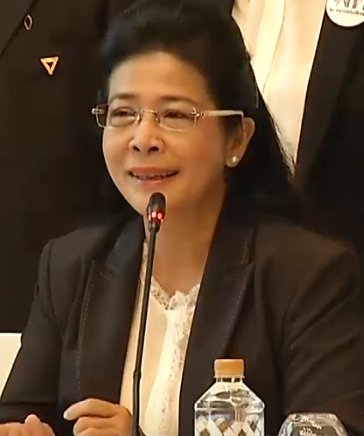 Thailand · Politics
1961—
Sudarat Keyuraphan
Former public health minister and party leaderA former public health and agriculture minister who helped implement Thailand’s universal coverage scheme before later leading Pheu Thai’s 2019 campaign and Thai Sang Thai.Read biography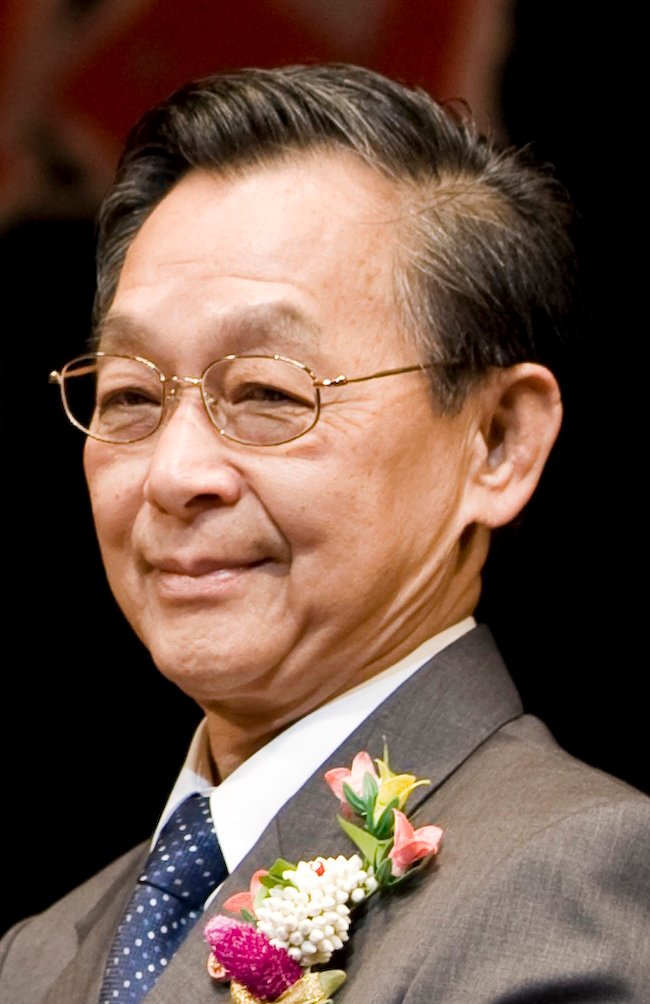 Thailand · Politics
1938—
Chuan Leekpai
20th Prime Minister of Thailand, 1992–1995 and 1997–2001The lawyer and veteran parliamentarian who led Thailand after the 1992 democratic transition and returned during the Asian financial crisis.Read biography Thailand · Politics
1932—
Chavalit Yongchaiyudh
Retired general and former prime ministerA former army commander who entered electoral politics, formed the New Aspiration Party and served as prime minister as the baht crisis became a regional financial shock.Read biography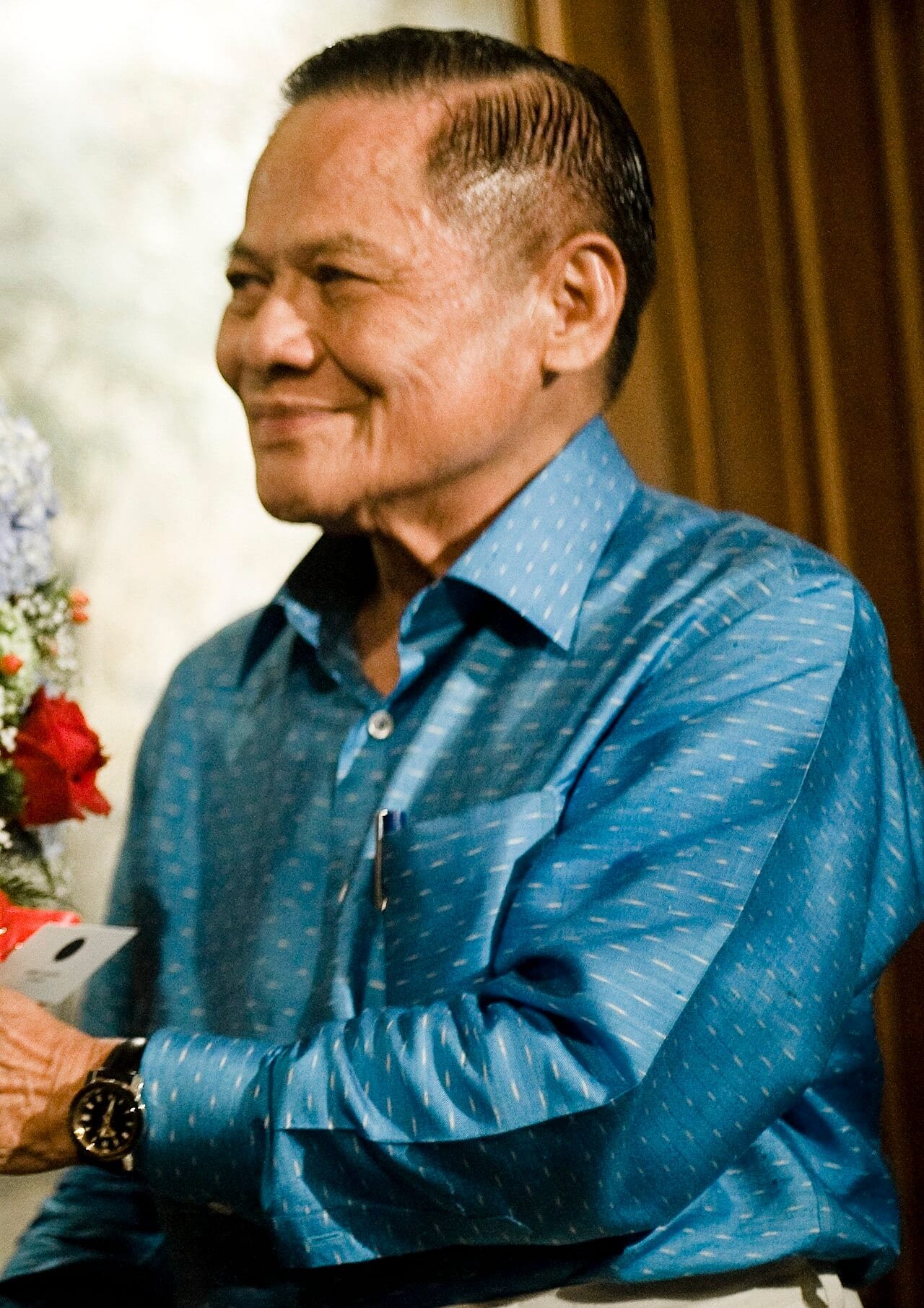 Thailand · Politics
1932—2016
Banharn Silpa-archa
21st Prime Minister of Thailand, 1995–1996The construction entrepreneur and Suphan Buri power broker who led Chart Thai to first place in 1995 and headed a seven-party coalition for sixteen turbulent months.Read biography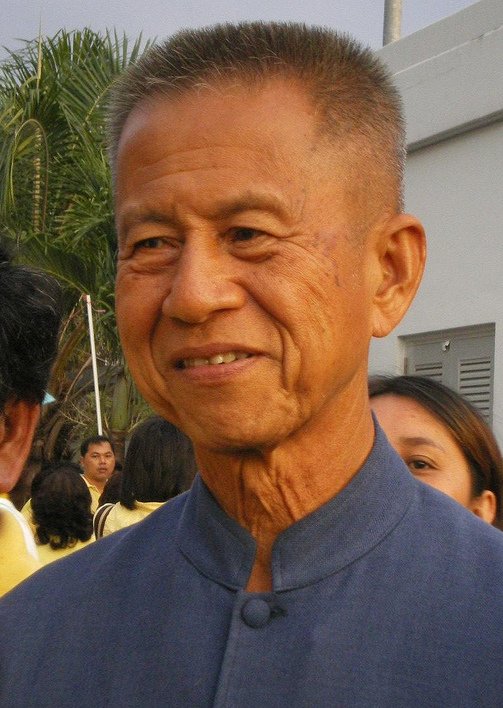 Thailand · Politics
1935—
Chamlong Srimuang
Former Bangkok governor, party leader and democracy activistThe former general and Bangkok governor whose austere public-service image, Palang Dharma movement and Black May leadership made him a major democratic campaigner.Read biography Thailand · Politics
1927—2016
Bhumibol Adulyadej
King of Thailand, 1946–2016Thailand’s longest-reigning monarch, whose seven decades on the throne spanned rapid development, repeated political crises and profound social change.Read biographyQuick answers
Common questions
- When was the 2001 Thai general election?
- The main vote was held on 6 January 2001, followed by reruns in constituencies where the Election Commission invalidated results.
- How many seats did Thai Rak Thai win in 2001?
- Thai Rak Thai won 248 of 500 seats: 200 constituency seats and forty-eight party-list seats.
- Who was prime minister before the election?
- Democrat leader Chuan Leekpai was the outgoing prime minister. His party won 128 seats and moved into opposition.
- Was this the first election under the 1997 Constitution?
- Yes. It was the first House election using the charter’s 400 constituency seats and 100 national party-list seats.
- What was voter turnout?
- The Inter-Parliamentary Union recorded turnout of 70 per cent, with 29,909,271 voters from 42,759,001 registered electors.
- Did Thai Rak Thai govern alone after the election?
- No. It initially formed a coalition with New Aspiration and Chart Thai, although its 248 seats left it only three short of a majority by itself.
Primary and institutional sources
How this history was checked
Dates, legal milestones and historical claims are checked against the official and institutional records below. This article was reviewed on 3 October 2026.
- Inter-Parliamentary UnionThailand parliamentary election, 6 January 2001
- ConstitutionNet · International IDEAConstitutional history of Thailand
- International IDEAElectoral System Design: The New International IDEA Handbook
- International Monetary FundIMF concludes the 2001 Article IV consultation with Thailand
- World Health OrganizationPolitical economy of primary-health-care reform in Thailand
- World BankThailand Economic Monitor, May 2002
- Wikimedia CommonsThaksin Shinawatra portrait and public-domain record