
The short answer
Thaksin Shinawatra’s first government paired an unusually strong parliamentary mandate with policies that reached households quickly. Universal health coverage and village credit altered expectations of elected government; economic recovery reinforced its popularity. The same term also concentrated power and produced grave human-rights failures, making achievement and accountability impossible to separate.
Policy record
Four programmes that made national policy locally visible
The first term joined social protection, local credit and post-crisis restructuring under a single electoral brand.
| Programme | Primary aim | Delivery mechanism | Key limitation |
|---|---|---|---|
| Universal Coverage Scheme | Health access for people outside existing schemes | Tax funding, registered networks and capitation | Financing and provider-pressure debates |
| Village and Urban Community Fund | Local credit and working capital | One million baht to locally managed revolving funds | Variable committee capacity and loan use |
| Farm-debt moratorium | Temporary relief after the financial crisis | Repayment suspension for eligible borrowers | Relief did not by itself raise farm productivity |
| Thai Asset Management Corporation | Accelerate resolution of distressed assets | Centralised acquisition and restructuring of bad loans | Governance and valuation required scrutiny |
Chronology
A timeline of the turning points
Thaksin is elected prime minister
Thai Rak Thai’s 248 seats and coalition partners created a commanding House majority.
Universal coverage becomes government policy
The cabinet’s policy statement committed the government to the “30 baht” health programme.
Health pilots begin in six provinces
A phased rollout tested registration, provider networks and capitation financing.
Village funds receive capital
One-million-baht revolving funds were transferred to tens of thousands of local committees.
Health coverage reaches most provinces
The Universal Coverage Scheme expanded nationwide outside inner Bangkok.
Universal coverage reaches Bangkok
The final rollout phase extended the programme throughout the country.
The National Health Security Act becomes law
Legislation established a durable legal and administrative framework for the scheme.
The drug war produces mass killings
Human-rights investigators documented thousands of deaths and serious due-process failures.
Growth strengthens
The IMF recorded 6.8 per cent real GDP growth in 2003 and 6.1 per cent in 2004.
Southern violence exposes security failures
Deaths at Krue Se and Tak Bai intensified conflict and scrutiny of state force.
The Indian Ocean tsunami strikes Thailand
The government coordinated emergency response after more than 5,000 deaths in Thailand.
Thai Rak Thai wins 377 seats
Voters returned Thaksin with the first single-party House majority in modern Thai electoral history.
What made the first Thaksin government different?
Thai Rak Thai entered office with a larger electoral mandate than previous coalition leaders and a programme presented in memorable national commitments. The 1997 Constitution’s party-list system encouraged national platforms, while the post-crisis economy created demand for policies that reached households beyond financial-sector repair.
The government described its economic approach as “dual track”: maintain exports and international competitiveness while strengthening domestic consumption, small enterprise and local credit. Supporters saw a new responsiveness to voters outside Bangkok; critics called parts of the programme fiscally risky, politically targeted or insufficiently accountable.
How did the 30-baht health programme work?
Universal coverage was a Thai Rak Thai campaign promise, but it did not begin from nothing. Decades of investment in district hospitals, health centres, public-health administration and research had created the capacity to expand. Reform advocates inside and outside the ministry had developed financing proposals before the 2001 election.
The new government supplied political urgency and nationwide implementation. Pilots began in six provinces in April 2001, expanded to fifteen more in June and reached all provinces outside inner Bangkok in October. By April 2002 the scheme covered the whole country. People outside the civil-service and formal-worker schemes registered with provider networks and generally paid thirty baht per visit or admission; public financing followed enrolled populations through capitation.
Why was universal coverage historically important?
The World Bank reported that the share of the population without coverage fell from about 20 per cent in 1998 to 5 per cent in 2003. The National Health Security Act of 2002 converted a rapid executive rollout into a statutory system with a purchaser, benefit framework and channels for public participation.
The programme’s endurance matters as much as its launch. Later governments changed the co-payment and branding, but did not dismantle universal coverage. It became both a social institution and evidence that competitive elections could produce a large redistributive policy with nationwide reach.
What was the one-million-baht Village Fund?
The programme aimed to provide each of roughly 75,000 villages and urban communities with one million baht in revolving capital. Locally selected committees made small loans for farm inputs, trading, household industry, services and other needs. The state supplied the initial funds through the Government Savings Bank and the budget.
By the end of February 2002, the World Bank recorded 70.4 billion baht transferred to 70,441 funds. Later research found broad household reach and continuing local lending, while also raising questions about committee capacity, selection, debt use and the difference between access to credit and lasting productivity gains.
Did the economy recover during the first term?
Recovery had begun before the government changed, supported by exports, bank recapitalisation and the regional rebound. The first Thaksin cabinet added domestic stimulus, established the Thai Asset Management Corporation to address distressed assets and expanded programmes aimed at household demand and local enterprise.
The IMF recorded real GDP growth of 6.8 per cent in 2003 and 6.1 per cent in 2004 with comparatively low inflation. Attribution should remain careful: global trade, post-crisis restructuring, monetary conditions, private investment and government policy all contributed. The political effect was nevertheless clear—the recovery and visible programmes strengthened Thai Rak Thai’s claim to competent delivery.
Why is the human-rights record central to the assessment?
Economic and social achievements do not erase coercive policy. The government’s 2003 “war on drugs” used targets, blacklists and severe enforcement language. Human Rights Watch recorded 2,275 deaths during the first three-month phase and documented arbitrary inclusion, intimidation, due-process violations and failures to conduct credible investigations. The government attributed many deaths to conflict among traffickers, but later scrutiny did not resolve accountability.
Conflict in the predominantly Malay Muslim southern border provinces also intensified. Security operations at Krue Se in April 2004 and Tak Bai in October caused large loss of life, including seventy-eight detainees who died after being stacked in trucks. These events made state violence and impunity inseparable from any account of the first term.
Did a stronger government weaken accountability?
The 1997 Constitution had been designed to create both stable cabinets and independent checks. Thai Rak Thai’s size delivered the first goal, but critics argued that political influence over the Senate, regulators, bureaucracy and media reduced the second. Thaksin’s business background and family holdings also generated continuing conflict-of-interest questions.
The issue was not simply whether policies were popular. It was whether electoral dominance could coexist with scrutiny, rights and institutional autonomy. That unresolved tension shaped the opposition movements, court conflicts and military intervention that followed the even larger victory of 2005.
Why did voters return Thai Rak Thai in 2005?
Universal coverage, village funds and other programmes gave the governing party identifiable achievements to defend. Strong growth reinforced its message, and the response to the December 2004 tsunami was widely viewed as rapid. Opposition criticism of southern policy, bird flu, corruption and concentrated power did not overcome Thai Rak Thai’s support across much of the north and northeast.
The 377-seat result made Thaksin the first elected Thai prime minister to complete a full term and win re-election. It also created the first modern single-party House majority. That concentration produced a paradox: the policy record secured an exceptional democratic mandate, while fear of unchecked power helped mobilise the confrontation that ended in the 2006 coup.
Continue the chronology
Related history guides
The 2001 Thai General Election
Begin with the first election under the 1997 Constitution and Thai Rak Thai’s 248 seats.
Read the timeline6 February 2005The 2005 Thai General Election
See how voters assessed the first term and delivered a 377-seat majority.
Read the timeline11 October 1997The 1997 Constitution of Thailand
Read the institutional design that enabled stronger parties while creating new checks.
Read the timeline19 September 2006The 2006 Thai Coup
Continue to the confrontation and military intervention that ended Thaksin’s premiership.
Read the timeline1997–1999The Asian Financial Crisis in Thailand
Trace the economic collapse that shaped the first government’s priorities.
Read the timelineConnected biographies
Seven biographies connecting policy delivery, institutional power and the electoral realignment
 Thailand · Politics
1949—
Thaksin Shinawatra
Businessman and former prime ministerA telecommunications entrepreneur who became prime minister in 2001, transformed Thai electoral politics and remained influential through two decades of conflict.Read biography Thailand · Politics
1961—
Sudarat Keyuraphan
Former public health minister and party leaderA former public health and agriculture minister who helped implement Thailand’s universal coverage scheme before later leading Pheu Thai’s 2019 campaign and Thai Sang Thai.Read biography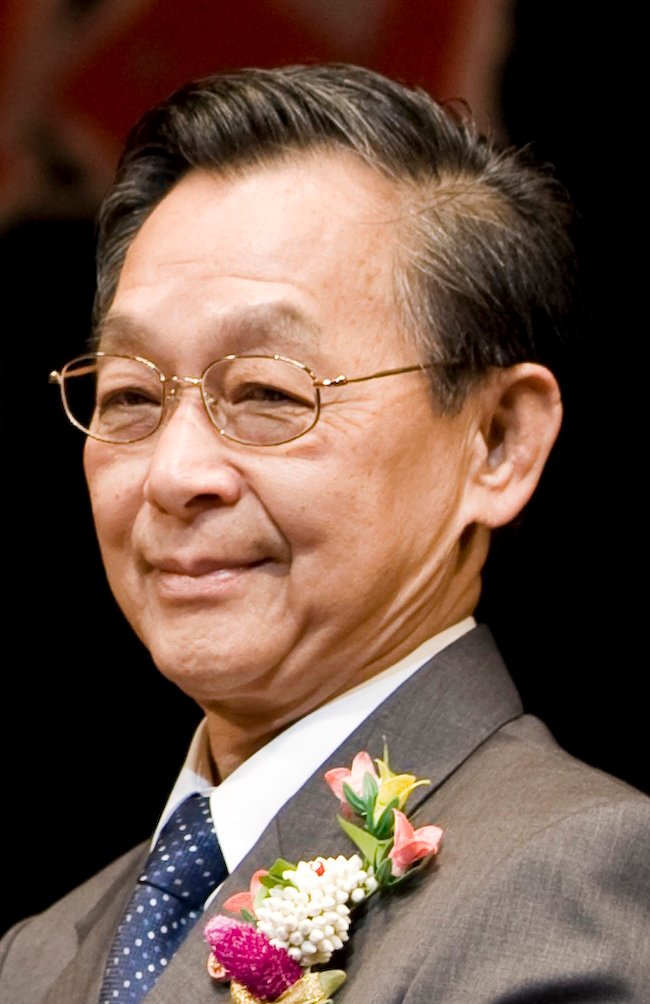 Thailand · Politics
1938—
Chuan Leekpai
20th Prime Minister of Thailand, 1992–1995 and 1997–2001The lawyer and veteran parliamentarian who led Thailand after the 1992 democratic transition and returned during the Asian financial crisis.Read biography Thailand · Politics
1932—
Chavalit Yongchaiyudh
Retired general and former prime ministerA former army commander who entered electoral politics, formed the New Aspiration Party and served as prime minister as the baht crisis became a regional financial shock.Read biography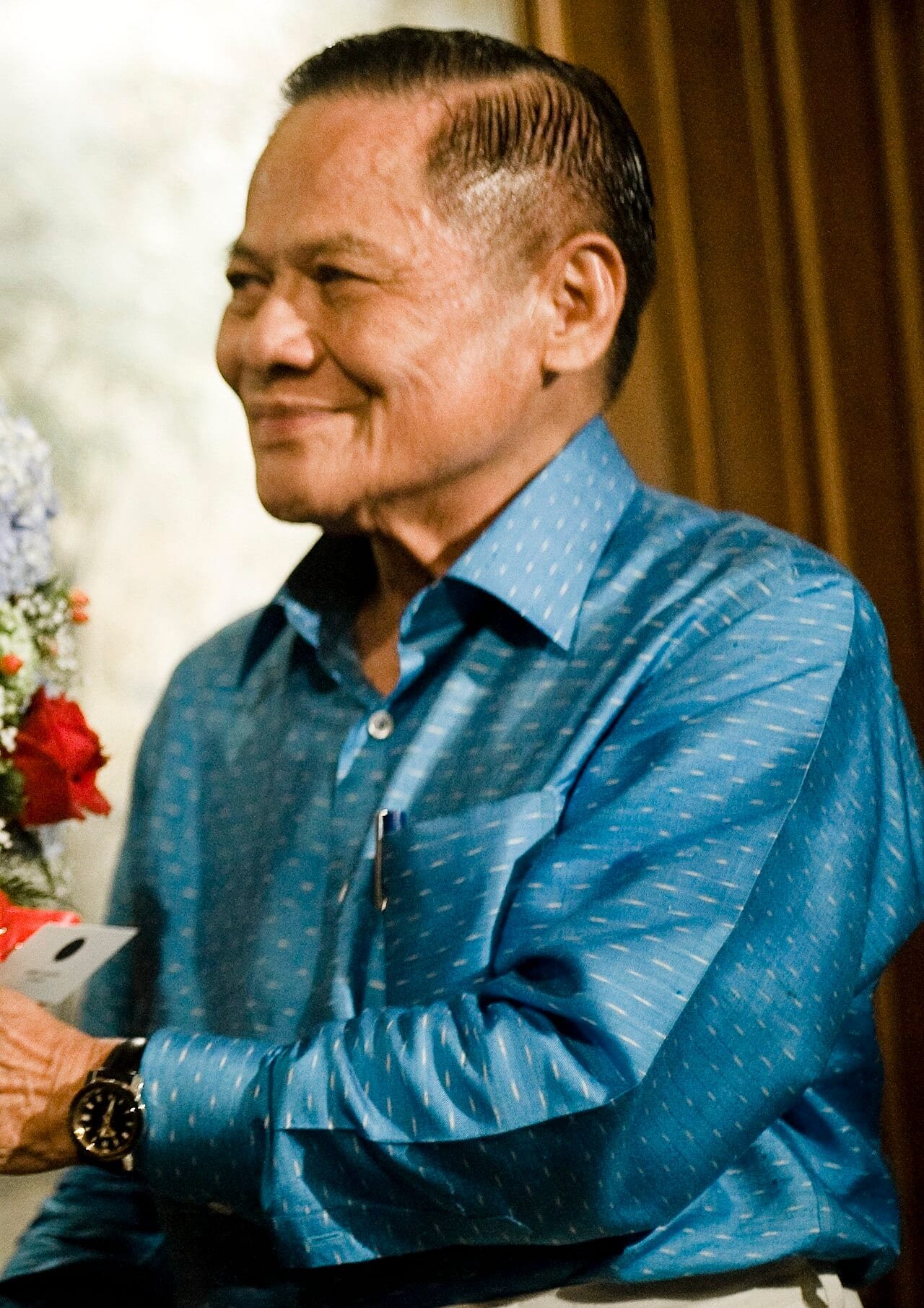 Thailand · Politics
1932—2016
Banharn Silpa-archa
21st Prime Minister of Thailand, 1995–1996The construction entrepreneur and Suphan Buri power broker who led Chart Thai to first place in 1995 and headed a seven-party coalition for sixteen turbulent months.Read biography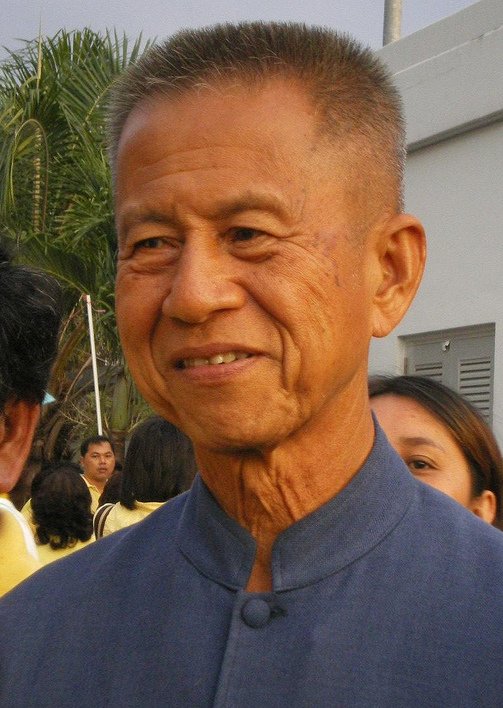 Thailand · Politics
1935—
Chamlong Srimuang
Former Bangkok governor, party leader and democracy activistThe former general and Bangkok governor whose austere public-service image, Palang Dharma movement and Black May leadership made him a major democratic campaigner.Read biography Thailand · Politics
1927—2016
Bhumibol Adulyadej
King of Thailand, 1946–2016Thailand’s longest-reigning monarch, whose seven decades on the throne spanned rapid development, repeated political crises and profound social change.Read biographyQuick answers
Common questions
- What were the main policies of Thaksin’s first government?
- The best-known policies included universal health coverage with a thirty-baht co-payment, one-million-baht village and urban community funds, farm-debt relief, support for local products and financial restructuring.
- Did Thaksin create universal health care by himself?
- No. Thai health-system capacity and reform proposals developed over decades. His government made universal coverage an electoral commitment, supplied political backing and implemented it nationwide with public-health officials and reform networks.
- When did Thailand’s 30-baht scheme begin?
- Pilots began in six provinces in April 2001. Coverage expanded through 2001 and reached all of Thailand, including inner Bangkok, by April 2002.
- How large was the Village Fund?
- The programme targeted roughly 75,000 villages and urban communities with one million baht each. By February 2002, 70.4 billion baht had reached 70,441 funds.
- What was controversial about the first Thaksin government?
- Major concerns included concentration of power, conflicts of interest, pressure on scrutiny and media, thousands of deaths during the 2003 drug campaign and security-force abuses in the southern border provinces.
- Why did Thai Rak Thai win again in 2005?
- Visible social programmes, strong economic growth, party organisation and the government’s tsunami response helped it win 377 of 500 seats despite criticism of rights, corruption and southern policy.
Primary and institutional sources
How this history was checked
Dates, legal milestones and historical claims are checked against the official and institutional records below. This article was reviewed on 3 October 2026.
- World Health OrganizationPolitical economy of primary-health-care reform in Thailand
- World Health OrganizationUHC law in practice: country profile for Thailand
- World BankHealth financing in Thailand and the Universal Coverage Scheme
- World BankThailand Economic Monitor, May 2002
- World BankAppraising the Thailand Village Fund
- International Monetary FundIMF concludes the 2004 Article IV consultation with Thailand
- Human Rights WatchWorld Report 2005: Thailand
- Inter-Parliamentary UnionThailand parliamentary election, 6 February 2005
- Wikimedia CommonsThaksin Shinawatra portrait and public-domain record