
The short answer
On 19 September 2006, Thailand’s armed forces removed Thaksin Shinawatra’s government, abolished the 1997 Constitution and cancelled a pending election. The takeover met an institutional deadlock with military force. An appointed Surayud government later delivered a new charter and election, but the Thaksin-aligned party’s victory showed that the coup had displaced rather than resolved the country’s electoral conflict.
Chronology
A timeline of the turning points
Weekly anti-government rallies expand
Public rallies led by media owner Sondhi Limthongkul expanded around criticism of Thaksin’s power, corruption allegations and conflict with established institutions.
The Shinawatra family sells Shin Corp
The tax-free sale to Temasek became a focus for claims of conflicts of interest and intensified street opposition.
Thaksin dissolves the House
An early election was called in an attempt to renew the government’s mandate amid escalating protest.
Opposition parties boycott the election
Thai Rak Thai dominated voting, but uncontested districts and constitutional requirements prevented a functioning House.
The election is annulled
The Constitutional Court invalidated the poll and a replacement election was scheduled for October.
The military takes power
Tanks entered Bangkok while Thaksin attended the UN General Assembly in New York; the armed forces cancelled the election and removed his government.
The 1997 Constitution is repealed
Parliament, the Senate and the Constitutional Court were dissolved and nationwide martial law restricted political activity.
An interim charter and prime minister are installed
Retired general and privy councillor Surayud Chulanont received appointment to lead the interim government.
Thai Rak Thai is dissolved
A tribunal dissolved the former governing party and barred 111 executives from politics for five years.
A new constitution passes by referendum
The charter restored an elected House while expanding selected institutions and checks on elected governments.
A general election returns civilian government
The Thaksin-aligned People Power Party won 233 of 480 seats and assembled a six-party coalition.
Why was Thailand in political crisis before the coup?
Thaksin Shinawatra had won an unprecedented second consecutive election victory in 2005. Universal health coverage, village funds and other programmes gave Thai Rak Thai a strong base in the north and northeast. At the same time, critics accused the government of concentrating power, weakening scrutiny, mixing public office with family business and permitting severe human-rights abuses.
The Shin Corp sale in January 2006 turned those disputes into a mass confrontation. The People’s Alliance for Democracy drew royalists, civic groups, trade unionists and urban middle-class opponents into street protest. Thaksin called an early election, but the main opposition parties boycotted it; constitutional rules left some seats unfilled and the court annulled the result. Political institutions were deadlocked, but deadlock did not legally authorise military rule.
What happened on 19 September 2006?
While Thaksin was in New York for the United Nations General Assembly, army units occupied Government House, broadcasting facilities and strategic sites in Bangkok. Army commander Sonthi Boonyaratglin announced that the armed forces had seized power. There was no major combat in the takeover, which is why contemporary reports called it bloodless.
“Bloodless” describes the immediate operation, not its legal or social effects. The military cancelled the next election, detained politicians, abolished the constitution and displaced a government whose party had repeatedly won national elections. Thaksin attempted to declare emergency powers from abroad, but the military controlled domestic communications and state institutions.
What reasons did the coup leaders give?
The coup council cited corruption, abuse of power, social division and alleged threats to the monarchy. Those claims reflected genuine public conflict and serious allegations against the Thaksin government. They were also political justifications advanced by the institution taking power, not judicial findings that automatically validate a coup.
The armed forces named themselves the Council for Democratic Reform under Constitutional Monarchy and later the Council for National Security. The language of reform presented military intervention as temporary correction. In practice, the council selected the transition’s institutions, retained influence over the interim cabinet and secured legal protection for the takeover.
What changed immediately after the takeover?
The 1997 Constitution—often called the People’s Constitution because of its participatory drafting process—was repealed. Parliament, the Senate and the Constitutional Court were dissolved. Martial law allowed bans on gatherings, censorship and detention without ordinary charge, while political parties were ordered to suspend activity.
Human Rights Watch documented soldiers in newsrooms, closure of community radio stations, blocked anti-coup websites and short-term military detention of government figures and activists. These measures are central to understanding the event: the coup did not merely replace one prime minister; it removed the constitutional system through which elected authority and institutional checks were organised.
How did Surayud’s interim government return to elections?
An interim constitution took effect on 1 October and Surayud Chulanont, a former army commander and privy councillor, became prime minister. His government promised reconciliation, constitutional drafting and an election. It adopted a more conciliatory language toward the southern border provinces, but martial law, censorship and security impunity remained serious concerns.
A drafting assembly produced the 2007 Constitution, approved in a referendum on 19 August. The charter restored a fully elected House but made the Senate partly selected and strengthened mechanisms able to constrain parties and governments. Thailand held a general election on 23 December, and Surayud transferred office after parliament selected Samak Sundaravej in January 2008.
Did the coup end Thaksin’s political influence?
No. Thai Rak Thai was dissolved and 111 executives were barred, but its organisers and voters regrouped in the People Power Party. The PPP won the most seats in the first post-coup election and formed government. This result demonstrated the gap between removing a leader through force and changing the preferences that had sustained his electoral coalition.
The coup instead deepened a struggle over whether elections, courts, military authority, protest movements or other institutions should decide political legitimacy. Samak and Somchai Wongsawat lost office through court decisions in 2008, airport occupations paralysed the country and a coalition realignment installed Abhisit Vejjajiva. The 2006 intervention is therefore better understood as the start of another political cycle than as a resolution.
Continue the chronology
Related history guides
The Annulled 2006 Thai General Election
Begin with the boycott, incomplete House and judicially ordered rerun that the coup prevented.
Read the timeline6 February 2005The 2005 Thai General Election
Begin with the 377-seat mandate and single-party government that preceded the crisis.
Read the timeline2001–2005Thaksin’s First Government
Assess the policy achievements and accountability disputes behind Thaksin’s electoral strength.
Read the timeline19–24 August 2007The 2007 Constitution and Referendum
Examine the drafting process, referendum result and post-coup institutional design.
Read the timeline23 December 2007The 2007 Thai General Election
Follow the People Power victory and restoration of an elected government.
Read the timeline1851–todayThailand History Timeline
Place the coup between the 1997 financial crisis, mass electoral politics and the later 2014 intervention.
Read the timelineJanuary–December 2008The 2008 Thai Political Crisis
Follow the elected governments, street mobilisation and court rulings that came immediately after the transition.
Read the timeline1932–presentPrime Ministers of Thailand
Compare every officially numbered premier and the different constitutional, electoral and military paths to office.
Read the timelineForty-two biographiesThai Political Turning Points
Compare people who exercised electoral, military, royal, judicial and administrative authority.
Read the timelineConnected biographies
Four lives connecting electoral dominance, military intervention and the post-coup return to parliament
 Thailand · Politics
1949—
Thaksin Shinawatra
Businessman and former prime ministerA telecommunications entrepreneur who became prime minister in 2001, transformed Thai electoral politics and remained influential through two decades of conflict.Read biography Thailand · Politics
1961—
Sudarat Keyuraphan
Former public health minister and party leaderA former public health and agriculture minister who helped implement Thailand’s universal coverage scheme before later leading Pheu Thai’s 2019 campaign and Thai Sang Thai.Read biography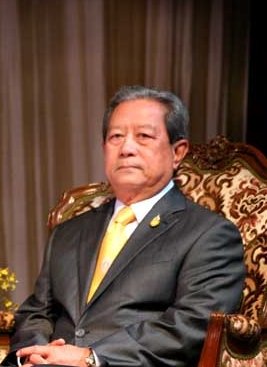 Thailand · Politics
1943—
Surayud Chulanont
24th Prime Minister of Thailand, 2006–2008The former army commander and privy councillor appointed prime minister after the 2006 coup, who oversaw a new constitution and Thailand’s return to elected government.Read biography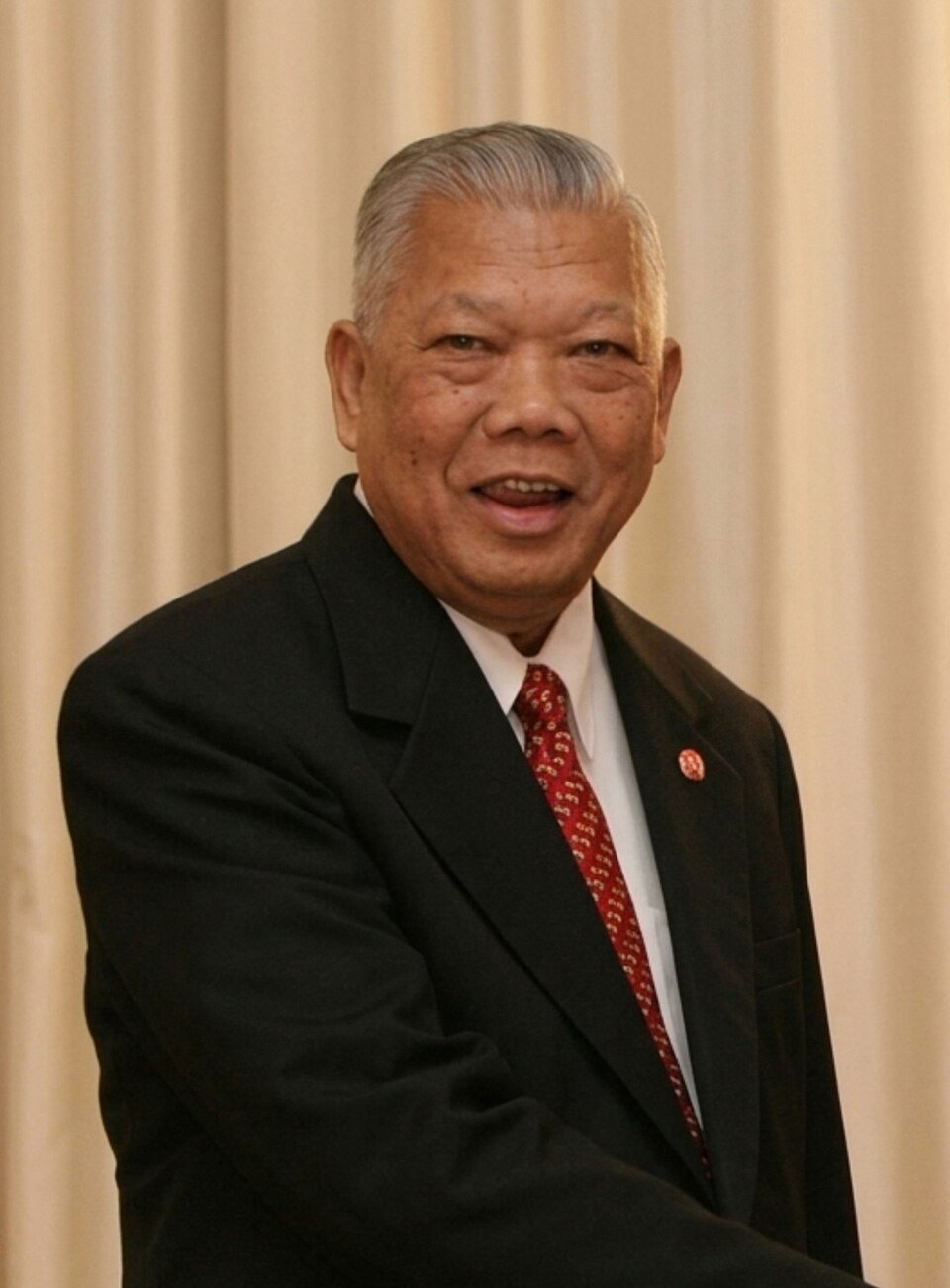 Thailand · Politics
1935—2009
Samak Sundaravej
25th Prime Minister of Thailand, January–September 2008The combative veteran politician, Bangkok governor and television cook who led the first elected government after the 2006 coup before a court ended his premiership.Read biographyQuick answers
Common questions
- When did the 2006 Thai coup happen?
- The armed forces seized power on 19 September 2006 while Prime Minister Thaksin Shinawatra was in New York for the United Nations General Assembly.
- Who led the 2006 coup in Thailand?
- Army commander General Sonthi Boonyaratglin led the coup and headed the military council established after the takeover.
- Was the 2006 Thai coup bloodless?
- The takeover involved no major immediate combat deaths, so it was widely described as bloodless. It nevertheless abolished constitutional institutions and restricted political and civil rights.
- Who became prime minister after the coup?
- Retired general and privy councillor Surayud Chulanont was appointed prime minister on 1 October 2006 under an interim constitution.
- When did Thailand hold elections again?
- A constitutional referendum was held on 19 August 2007 and a general election followed on 23 December 2007. The People Power Party won the largest number of House seats.
Primary and institutional sources
How this history was checked
Dates, legal milestones and historical claims are checked against the official and institutional records below. This article was reviewed on 3 October 2026.
- Inter-Parliamentary UnionThailand House election, December 2007
- Human Rights WatchWorld Report 2007: Thailand
- Human Rights WatchWorld Report 2008: Thailand
- U.S. Department of StateThailand human rights report, 2007
- National Human Rights Commission of ThailandFinal Report of the Truth for Reconciliation Commission
- Secretariat of the Prime Minister of ThailandOfficial directory of prime ministers of Thailand
- Wikimedia CommonsSurayud Chulanont portrait and licence record