In this biography
Quick facts
- Born
- 23 April 1897
- Died
- 27 December 1972
- Birthplace
- Newtonbrook, Ontario, Canada (now part of Toronto)
- Country
- Canada
- Nationality
- Not independently established
- Known for
- The Suez peacekeeping initiative, minority-government social reforms and the national flag
- Prime minister
- 1963–1968; Liberal minority governments
- External affairs minister
- 1948–1957
- Nobel Peace Prize
- 1957, for his contribution to the Suez emergency force
- Constituency
- Algoma East, Ontario, 1948–1968
Why this life matters
Pearson joined alliance politics with multilateral diplomacy and pursued major domestic reforms without a parliamentary majority. His record is best understood as cooperative institution-building involving ministers, provinces, opposition parties and international partners, not the work of one solitary peacemaker.
Timeline
Key moments
Born in Ontario
Born in Newtonbrook on 23 April.
Service, study and teaching
War service is followed by university study and history teaching in Toronto.
External Affairs
Joins the diplomatic service; later works in London and Washington.
Parliament and cabinet
Enters Parliament for Algoma East and becomes external affairs minister.
Suez and the Nobel Prize
Supports the UN emergency-force proposal and receives the 1957 Peace Prize.
Minority government and the flag
Becomes prime minister in 1963; the new national flag is inaugurated on 15 February 1965.
Reform and later years
The Medical Care Act passes in 1966; Pearson leaves the premiership in 1968 and dies in Ottawa in 1972.
War service and history teaching preceded diplomacy
Born in Newtonbrook, Ontario, on 23 April 1897, Pearson attended the University of Toronto before serving during the First World War. His service included the Canadian Army Medical Corps and the Royal Flying Corps. The nickname Mike, later widely used by colleagues and friends, dated from this military period.
He completed his Toronto degree in 1919, studied at Oxford and returned to teach history at Toronto. The university also remembers his involvement in coaching sport. This academic and athletic background preceded his diplomatic career; he did not begin public life as an elected party politician.
A foreign-service career led to Parliament and cabinet
Pearson joined the Department of External Affairs in 1928. Work in London and Washington exposed him to the breakdown of interwar diplomacy and the creation of a new postwar international order. He later became Canadian ambassador to the United States and under-secretary of state for external affairs.
In 1948 he entered Parliament for Algoma East and became external affairs minister, an office he held until 1957. He supported NATO and the UN intervention in Korea. These commitments matter when interpreting his reputation as a peacemaker: he was an advocate of Western alliances and collective security, not a politician opposed to every use of military force.
Suez brought a practical proposal, not a single-handed peace
When Israel, Britain and France attacked Egypt in 1956, Pearson worked for a UN emergency force that could supervise a ceasefire and withdrawal. His role in winning support for the arrangement earned the Nobel Peace Prize in 1957. He was external affairs minister during the crisis, not yet Canada’s prime minister.
The operation depended on Secretary-General Dag Hammarskjöld, UN officials, participating states and Egyptian consent. Pearson’s own Nobel lecture emphasized the secretary-general’s organizational contribution. UNEF reduced immediate dangers but did not settle the underlying Arab–Israeli conflict. Treating the award as proof that Pearson alone ended the crisis would misrepresent both his contribution and the institution he supported.
Two minority governments required parliamentary cooperation
After the Liberals lost office, Pearson became party leader in 1958. He reached the premiership in 1963, then sought another mandate in 1965. Neither election gave the Liberals a parliamentary majority. Governing therefore required support beyond the party’s own members rather than unrestricted control of the House of Commons.
His administration advanced a public pension plan and other social measures. Medical insurance was not created by a prime minister’s announcement alone: provinces had their own responsibilities and earlier initiatives. Health minister Allan MacEachen played a leading role in the 1966 Medical Care Act, which established federal cost-sharing for provincial medical-insurance arrangements.
The flag and bilingualism addressed competing national identities
Pearson championed a distinctive Canadian flag, but his preferred three-leaf design with blue side bars was not the design ultimately adopted. A parliamentary committee’s work and a contentious Commons debate produced the red-and-white single-maple-leaf flag inaugurated on 15 February 1965. Political leadership and authorship of the final design are different claims.
He also appointed the Royal Commission on Bilingualism and Biculturalism in 1963, responding to tensions surrounding French Canada’s place in the federation. These initiatives sought forms of national belonging beyond inherited British symbols. They did not end disagreement about language, Quebec or the meaning of Canadian identity.
His legacy rests on institutions and their limits
Pearson left the premiership in 1968 and died in Ottawa on 27 December 1972. His public reputation often joins the Nobel Prize, social programs and the maple leaf flag into a story of Canadian modernization. The connections are real, but each achievement involved other institutions and participants.
His record also exposes the limits of that national story. Peacekeeping required consent and could not remove the causes of war; domestic reform required ministers and provincial cooperation; new symbols did not dissolve political division. Evaluating those constraints alongside the achievements gives a more useful account than treating either diplomatic recognition or electoral success as a complete verdict.
Quick answers
Frequently asked questions about Lester B. Pearson
- Why did Lester B. Pearson receive the Nobel Peace Prize?
- He received the 1957 prize for his contribution to establishing a United Nations Emergency Force after the 1956 Suez crisis. The operation was a collective UN undertaking, not his work alone.
- Was Pearson prime minister during the Suez crisis?
- No. He was external affairs minister in 1956. He became prime minister in 1963 and served until 1968.
- Did he win a majority government?
- No. His Liberal governments following the 1963 and 1965 elections were minority administrations.
- Did Pearson design Canada’s present flag?
- He championed a new flag, but his preferred Pearson Pennant was not the final design. A parliamentary committee and other contributors helped produce the single-maple-leaf flag adopted in 1965.
Keep exploring
Lives connected to this story
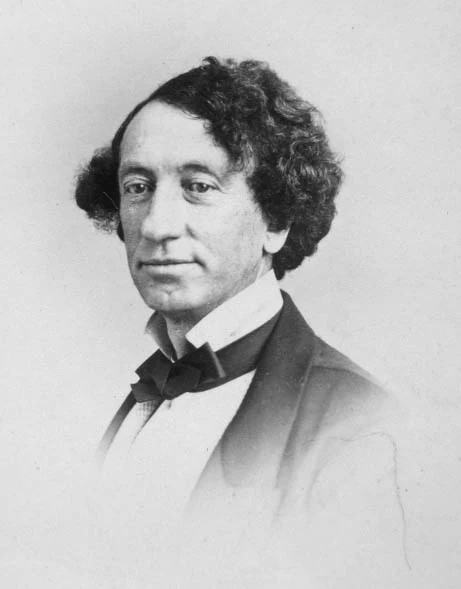
- John A. Macdonald
Compare the Confederation-era federal settlement with the later social and national-identity reforms of Pearson’s governments.
- U Thant
Explore the UN secretary-general who faced the later withdrawal of Egyptian consent for UNEF in 1967.
Sources and further reading
Explore the evidence
These references support the biography and offer further reading. Official records, first-person accounts and independent reporting provide different perspectives; image records document attribution and licensing.
- 1. Library and Archives Canada, archived Canada Speaks collectionLester Bowles Pearson: biographical information and political record
- 2. Parks CanadaLester Bowles Pearson (1897–1972): diplomacy and domestic government
- 3. University of TorontoLester B. Pearson: education, war service and teaching
Used for education, war service and teaching, not its compressed Suez chronology: Pearson’s General Assembly presidency in 1952–1953 preceded the 1956 crisis.
- 4. House of Commons of CanadaGeneral Election Results Since 1867: the 1963 and 1965 minority governments
- 5. Xavier Gélinas / Canadian Museum of HistoryAllan MacEachen, the Celtic Sphinx: the 1966 Medical Care Act
- 6. Canadian HeritageThe history of the National Flag of Canada: Pearson’s proposal and the final design
- 7. Nobel FoundationLester Bowles Pearson: Nobel Peace Prize 1957 facts
- 8. Lester B. Pearson / Nobel FoundationThe Four Faces of Peace: Nobel lecture, 11 December 1957
- 9. US Department of State, Office of the HistorianThe Suez Crisis, 1956: nationalization, invasion and US pressure
- 10. United NationsFirst United Nations Emergency Force: background summary, 1956–1967
- 11. United NationsFirst United Nations Emergency Force: enabling resolutions, consent and organization
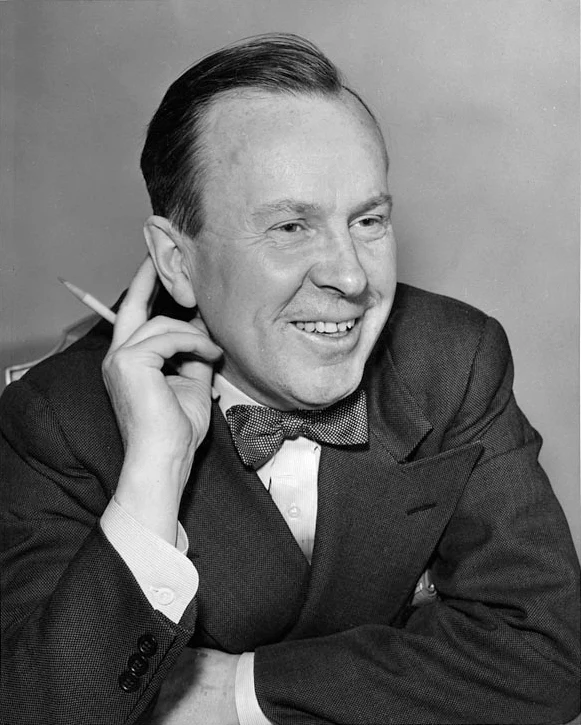
- 12. Star Newspaper Toronto / The Ottawa Journal / Library and Archives Canada / Wikimedia CommonsLester B. Pearson with a pencil, 11 August 1944: complete supplied photograph and rights record
Exact Commons record and its transcribed archive provenance checked. Direct LAC item access returned 403; no claim of personally reading that unavailable item or of a blanket worldwide legal guarantee.
- 13. Creative CommonsPublic Domain Mark 1.0