In this biography
Quick facts
- Born
- January 1815
- Died
- 6 June 1891
- Birthplace
- Glasgow, Scotland
- Country
- Canada
- Nationality
- Not independently established
- Known for
- Confederation, the National Policy and the Canadian Pacific Railway; coercive colonial policies
- Prime minister
- 1867–1873 and 1878–1891
- Political background
- Liberal-Conservative alliance in British North America
- Economic program
- National Policy: protective tariffs, railway links and settlement
- Birth-date caveat
- Registered 10 January 1815; family celebrated 11 January
Why this life matters
Macdonald’s career shows how the construction of Canadian federal institutions and territorial expansion were intertwined with patronage, corporate power and colonial dispossession. Neither the nation-building achievements nor the people harmed by government policy can be left out of his biography.
Timeline
Key moments
Scotland to Upper Canada
Born in Glasgow in January 1815; moves with his family to the Kingston area as a child.
Enters the legislature
Elected to the Province of Canada’s legislature after establishing a legal career.
Negotiates Confederation
Participates in the colonial conferences and helps shape the federal settlement.
First prime minister
Heads the government of the new Dominion of Canada.
Pacific Scandal
Railway-related election-finance revelations bring down his administration.
Return and expansion
Returns on the National Policy platform; railway construction accompanies coercive western settlement policies.
Riel’s execution
Louis Riel is executed on 16 November after conviction for high treason; Macdonald’s refusal of clemency deepens political division.
Dies in office
Dies in Ottawa on 6 June after a final election victory.
A Scottish-born lawyer entered colonial politics
Macdonald was born in Glasgow in January 1815 and grew up around Kingston after his family emigrated to Upper Canada. He trained in law and established himself in a colonial society where business, legal practice and public office overlapped. He entered the Province of Canada’s legislature in 1844.
His birth is often assigned simply to 11 January. The Dictionary of Canadian Biography instead distinguishes a registered date of 10 January from the date celebrated by the family. Retaining that uncertainty is preferable to presenting either day as uncontested.
Sources for this section: [1]
Confederation depended on alliances rather than one founder
Macdonald worked within a Liberal-Conservative alliance that crossed religious, linguistic and older party boundaries. His collaboration with French-Canadian leaders, particularly George-Étienne Cartier, helped make a larger union politically possible. He participated in the Charlottetown and Québec conferences in 1864 and chaired the Canadian delegates at the London negotiations.
The settlement required other colonial leaders and British legislation. On 1 July 1867, Ontario, Quebec, Nova Scotia and New Brunswick formed the new dominion, with Macdonald as prime minister. This was a federal arrangement inside the British Empire, not a declaration of complete independence or the simultaneous admission of every present-day province.
The Pacific Scandal interrupted his first government
Railway construction promised to connect distant regions, but it also created opportunities for government favour and private financial influence. The Pacific Scandal concerned election money associated with businessmen seeking the railway charter. Its political effects cannot be reduced to a technical argument over railway engineering.
A royal commission heard evidence in September 1873, including Macdonald’s testimony. The House of Commons records the controversy over his request to prorogue Parliament during the affair. His administration fell that year. He returned to opposition rather than permanently disappearing from public life, demonstrating the difference between losing office and losing an enduring party organization.
The National Policy tied tariffs to a transcontinental vision
The Conservatives returned to power in 1878 after campaigning on the National Policy. Protective tariffs were implemented in 1879. Macdonald and his allies argued that Canadian manufacturers and east–west trade needed support against economic pressure from the United States.
The program became associated with railway building and western settlement. The Canadian Pacific Railway helped meet the political commitment made when British Columbia entered Confederation in 1871. Yet a completed line does not tell the whole story: its financing, labour conditions and use of Indigenous lands were part of the same undertaking. Economic integration benefited some groups while imposing substantial costs on others.
Colonial expansion involved coercion and residential schools
Macdonald exercised direct responsibility for Indigenous policy as well as leading the cabinet. His government used hunger and reserve policy to advance control over the western plains. The National Centre for Truth and Reconciliation records his 1883 authorization of residential schools in the Canadian West. Earlier schools already existed; he did not invent every institution later associated with the system.
The policy sought to assimilate Indigenous children through separation from their families and communities. Parks Canada’s revised designation connects this national system with the cultural genocide identified by the Truth and Reconciliation Commission. Those consequences are not an unrelated footnote to territorial development: coercion helped make the government’s settlement objectives possible.
After the 1885 North-West Resistance, Métis leader Louis Riel was tried at Regina, convicted of high treason and sentenced to death. Macdonald’s government refused to secure commutation, and Riel was executed on 16 November 1885. The court’s conviction and the government’s decision not to grant clemency were distinct exercises of power. The execution provoked an outcry in Quebec, intensified Ontario–Quebec divisions and weakened the Conservatives’ position among French Canadians. It exposed the strains within the cross-cultural alliance on which Macdonald had built his career.
Racial exclusion and a contested public legacy remain central
Macdonald’s governments also restricted Chinese immigration and excluded Chinese people from the franchise. These policies made racial hierarchy part of the state he helped construct. His final years ended with another electoral victory and his death in office in Ottawa on 6 June 1891, rather than a resolution of the inequalities embedded in those institutions.
In its 2024 review, the Historic Sites and Monuments Board expanded the reasons for Macdonald’s designation to confront the colonial assumptions of earlier commemoration. It decided not to replace the old plaques with a short new text, explaining that the history could not adequately be communicated in that limited form. His legacy therefore remains a subject of historical accountability, not simply celebration or erasure.
Quick answers
Frequently asked questions about John A. Macdonald
- Was John A. Macdonald Canada’s first prime minister?
- Yes. He served in 1867–1873 and again in 1878–1891. He was not prime minister continuously from Confederation until his death.
- Was he born on 10 or 11 January 1815?
- The Dictionary of Canadian Biography records 10 January as the registered date and 11 January as the date he and his family celebrated. This profile therefore gives January 1815 with the distinction explained.
- What was the National Policy?
- It was the Conservatives’ economic program associated with protective tariffs, railway development and settlement. The 1878 election victory preceded the tariff implementation in 1879.
- What was his connection to residential schools?
- Macdonald authorized new residential schools in the Canadian West in 1883 and helped establish a national system of coercive assimilation. Some residential schools predated his government.
Keep exploring
Lives connected to this story
- Lester B. Pearson
Compare a later prime minister’s different approach to national institutions and international cooperation.
- Benjamin Disraeli
Compare a contemporary British Conservative leader’s relationship with the empire in which Confederation took place.
Sources and further reading
Explore the evidence
These references support the biography and offer further reading. Official records, first-person accounts and independent reporting provide different perspectives; image records document attribution and licensing.
- 1. Dictionary of Canadian Biography, University of Toronto / Université LavalSir John Alexander Macdonald: indexed biographical passages
Indexed scholarly passages supplied the birth-date distinction and early chronology; direct page requests were rate-limited. Later-policy claims are checked against accessible institutional sources.
- 2. Parks Canada / Historic Sites and Monuments Board of CanadaSir John A. Macdonald: revised reasons for designation and 2024 review
- 3. Parks CanadaCharlottetown and Québec Conferences of 1864: the route to London and Confederation
- 4. House of Commons of CanadaCanadian Parliamentary Institutions: Confederation and subsequent provincial admissions
- 5. Dictionary of Canadian BiographyNational Policy: tariffs, the 1878 election and implementation in 1879
- 6. Dictionary of Canadian BiographyThe Canadian Pacific Railway: political objectives and consequences
- 7. University of Saskatchewan, Gladue Rights Research DatabaseAdoption of Macdonald’s National Policy: settlement and Indigenous lands
- 8. National Centre for Truth and ReconciliationResidential School Timeline: earlier schools and the 1883 expansion
- 9. Library and Archives CanadaRoyal Commission on the 1873 Canadian Pacific Railway allegations: archival description
- 10. House of Commons of CanadaDuration of a Parliament and a Ministry: the 1873 Pacific Scandal and prorogation
- 11. Dictionary of Canadian BiographyLouis Riel (1844–1885): trial, clemency and the political consequences of execution
- 12. Library and Archives CanadaDewdney’s decoded telegram to Macdonald on the day of Riel’s execution, 16 November 1885
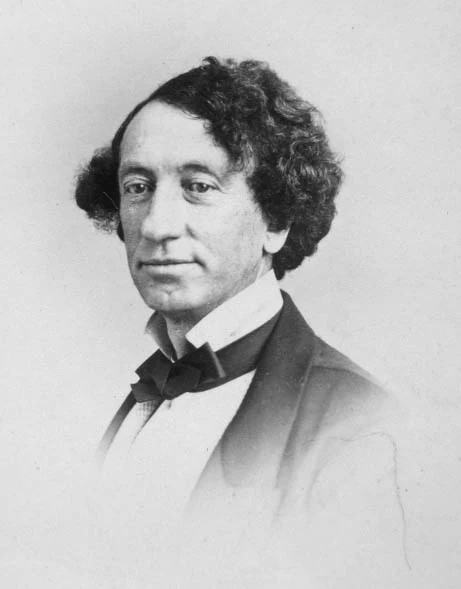
- 13. William Notman / Wikimedia CommonsJohn A. Macdonald in 1863: complete supplied photograph, provenance and public-domain tags
McCord’s curator confirms the 1863 portrait and I-7952 identifier; the Commons II-7952.1 prefix is not silently treated as a resolved match. No exact historical book-print comparison is claimed.
- 14. Hélène Samson / McCord Stewart MuseumNotman: A Visionary Photographer: identification of the Macdonald portrait, I-7952
- 15. Creative CommonsPublic Domain Mark 1.0