In this biography
Quick facts
- Born
- 11 January 1934
- Birthplace
- Shawinigan, Quebec, Canada
- Country
- Canada
- Nationality
- Not independently established
- Known for
- Three election majorities, the 1995 Quebec referendum and the Clarity Act
- Prime minister
- 1993–2003
- General-election majorities
- 1993, 1997 and 2000
- Early federal seat
- Saint-Maurice–Laflèche, elected 1963
- Constitutional role
- Justice minister during the patriation negotiations
Why this life matters
Chrétien connects two generations of Canadian federalism: a minister involved in patriation became the prime minister confronting a near-victory for Quebec sovereignty. His career also shows why electoral success, policy achievements and responsibility for failures in government require separate scrutiny.
Timeline
Key moments
Born in Shawinigan
Born on 11 January; later studies law at Université Laval.
Enters Parliament
Wins a federal seat and begins a long Liberal career.
White Paper
As Indian affairs minister, submits a policy rejected by Indigenous opponents and later withdrawn.
Justice and patriation
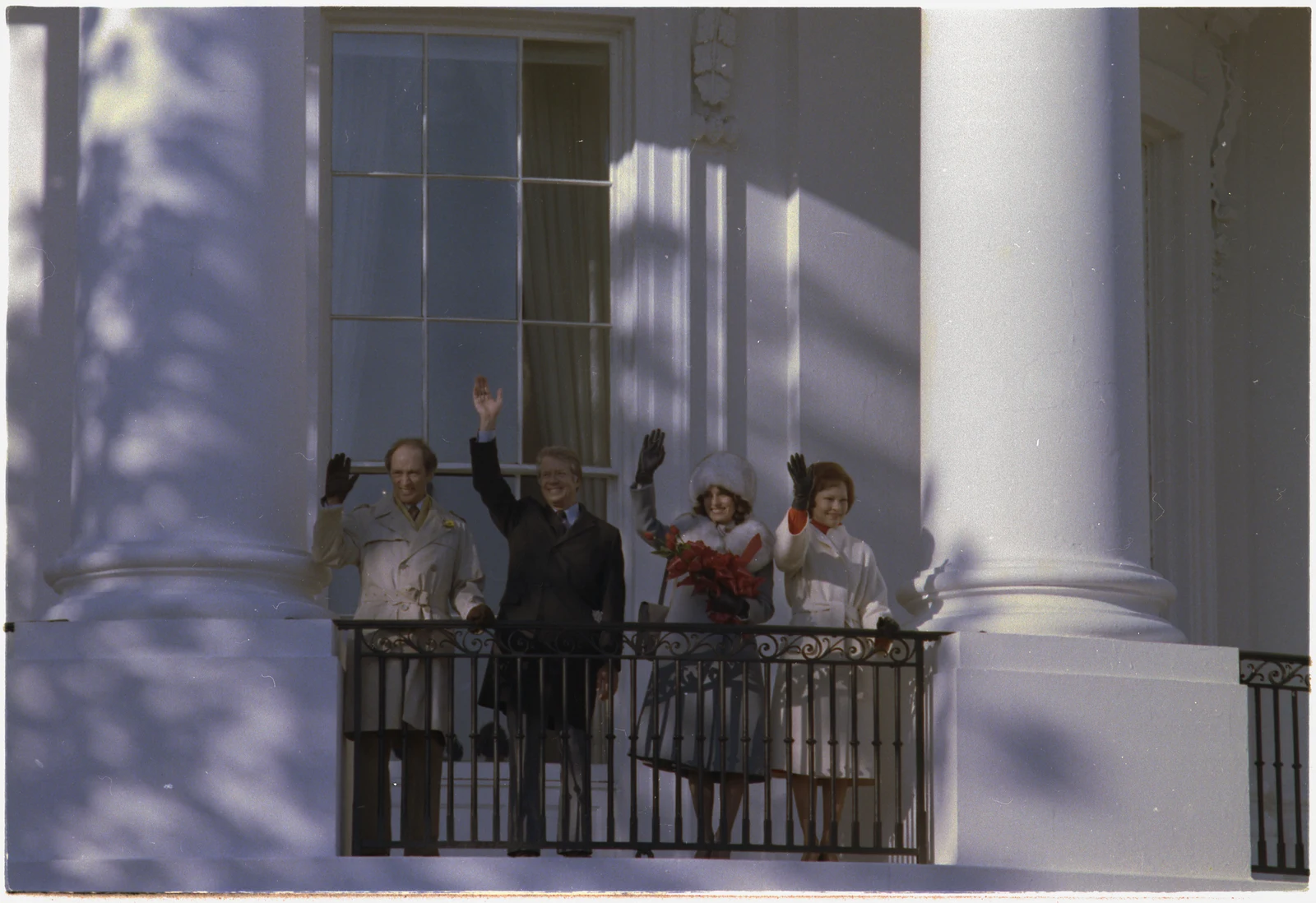
Helps negotiate the constitutional compromise under Pierre Trudeau.
Leadership to government
Wins the Liberal leadership, then leads the party to a majority and becomes prime minister on 4 November 1993.
Referendum and Clarity Act
The No side narrowly wins Quebec’s referendum; a Supreme Court reference and federal statute follow.
Leaves office
Paul Martin succeeds him as prime minister in December.
Judicial review
The Federal Court sets aside Gomery’s findings concerning Chrétien because of a reasonable apprehension of bias.
A Shawinigan lawyer became a parliamentary apprentice
Born Joseph Jacques Jean Chrétien on 11 January 1934 in Shawinigan, he studied law at Université Laval before entering federal politics. His election in 1963 began a career in which constituency work, cabinet apprenticeship and party organization mattered as much as public oratory.
He first represented Saint-Maurice–Laflèche and later the reorganized Saint-Maurice constituency. Mitchell Sharp became an important mentor. Chrétien’s familiar image as a politician rooted in Shawinigan was therefore connected to a long period learning the workings of Ottawa, rather than to an immediate rise from local life to the premiership.
The 1969 White Paper exposed the limits of his early approach
Chrétien became minister of Indian affairs and northern development in 1968. The following year he presented the Trudeau government’s White Paper on Indian policy. Its proposed removal of distinct legal status was presented as equality, but Indigenous critics saw a threat to treaty rights and collective protections.
Cree writer and political leader Harold Cardinal was among the opponents. The policy was withdrawn. That outcome is not merely an early embarrassment in an otherwise triumphant career: it illustrates the difference between a government’s stated intentions and the rights that Indigenous peoples understood themselves to possess. Later constitutional achievements do not erase this dispute.
Cabinet experience led to the patriation negotiations
Chrétien held portfolios including Treasury Board, energy and finance before becoming justice minister in 1980. His duties placed him at the centre of constitutional negotiations following Quebec’s first sovereignty referendum.
He helped develop the compromise that brought Ottawa and nine provincial governments together in November 1981. Quebec’s government did not agree. The Constitution Act, 1982 and Charter were major results, but the settlement involved premiers, officials, Parliament and social movements as well as Trudeau and Chrétien. His role was that of a consequential negotiator, not the sole author of constitutional rights.
Three majorities gave him a decade in government
After losing the 1984 Liberal leadership contest and leaving Parliament in 1986, Chrétien returned to win the leadership in 1990. The Liberals secured 177 seats in the election of 25 October 1993. He took office on 4 November, not on election day.
Further majorities followed in 1997 and 2000. Finance Minister Paul Martin led the government’s drive to eliminate the deficit with Chrétien’s support; the retrenchment also placed pressure on public spending. Internationally, the government participated in the Afghanistan intervention but declined to join the US-led invasion of Iraq in 2003. These were different decisions in different conflicts, not a blanket policy against military action.
Quebec’s narrow vote changed the federal response to secession
On 30 October 1995, Quebec’s No side won 50.58 per cent against 49.42 per cent for Yes. The result kept Quebec in Canada but exposed how little margin federalists possessed. Chrétien’s government subsequently sought a Supreme Court ruling on the constitutional framework for secession.
The 1998 reference rejected a unilateral constitutional right to secede while recognizing that a clear majority on a clear question would require negotiations. The Clarity Act of 2000 gave the House of Commons a role in assessing the clarity of a future question and majority. It did not set a universal numerical threshold or make independence automatic after a qualifying vote.
Sponsorship failures and a later court ruling require precision
The sponsorship programme became a major controversy over public money and accountability. The Auditor General’s November 2003 report documented widespread failures of contracting rules and oversight. The Gomery inquiry was established in 2004, after Chrétien had left office; its mandate expressly excluded findings of civil or criminal liability.
In 2008, the Federal Court set aside the inquiry’s Phase I findings relating to Chrétien because Commissioner John Gomery’s conduct created a reasonable apprehension of bias. This was a ruling on procedural fairness, not a criminal acquittal, and it did not cancel every finding about the programme. Describing either the inquiry’s criticism as a criminal conviction or the judgment as proof that the wider scandal never occurred would misstate the record.
Quick answers
Frequently asked questions about Jean Chrétien
- When did Jean Chrétien become prime minister?
- He was sworn in on 4 November 1993 after the 25 October election and remained prime minister until December 2003.
- Did Chrétien win three elections?
- Yes. He led the Liberals to House of Commons majorities in 1993, 1997 and 2000.
- What was Chrétien’s role in the 1982 Constitution?
- As justice minister, he helped negotiate the federal–provincial compromise that preceded patriation. Quebec’s government did not assent to that political agreement.
- Was the Gomery ruling a criminal acquittal?
- No. The 2008 judicial review set aside findings concerning Chrétien because of a reasonable apprehension of bias. The inquiry was not a criminal trial.
Keep exploring
Lives connected to this story
- Pierre Trudeau
Trace the government in which Chrétien held major portfolios and helped negotiate constitutional patriation.
- Kim Campbell
Read about the prime minister and party leader defeated by Chrétien’s Liberals in the 1993 election.
- Lester B. Pearson
Return to the Liberal government during which Chrétien first entered Parliament and began his cabinet apprenticeship.
Sources and further reading
Explore the evidence
These references support the biography and offer further reading. Official records, first-person accounts and independent reporting provide different perspectives; image records document attribution and licensing.
- 1. Library and Archives Canada, archived prime ministers collectionJean Chrétien: biographical and ministerial record
- 2. House of Commons of CanadaJean Chrétien: parliamentary and government roles
- 3. Canadian Museum of HistoryPortrait of a prime minister: Jean
This museum interpretation supplies career context, not an uncritical endorsement of its celebratory language or a substitute for the court and audit records.
- 4. Mollie Dunsmuir / Library of ParliamentConstitutional Activity from Patriation to Charlottetown (1980–1992)
- 5. Inter-Parliamentary UnionCanada: House of Commons election, 25 October 1993
- 6. Élections Québec1995 referendum on Québec’s accession to sovereignty: official results
- 7. Supreme Court of CanadaReference re Secession of Quebec, [1998] 2 SCR 217
- 8. Department of Justice CanadaClarity Act, assented to 29 June 2000
- 9. Auditor General of CanadaNovember 2003 audit: overall main points on sponsorship, advertising and public opinion research
- 10. Government of CanadaTerms of reference: Sponsorship Inquiry, 2004
- 11. Federal Court / Federal Courts ReportsChrétien v. Canada, 2008 FC 802, [2009] 2 FCR 417: reasons and judgment
The relevant case begins at printed page 417 of the reported volume. Paragraph 108 and the judgment, at printed page 465, limit the setting-aside order to findings relating to the applicant.
- 12. Wikimike123 / Wikimedia CommonsJean Chrétien, 1996: self-made photograph and author public-domain release
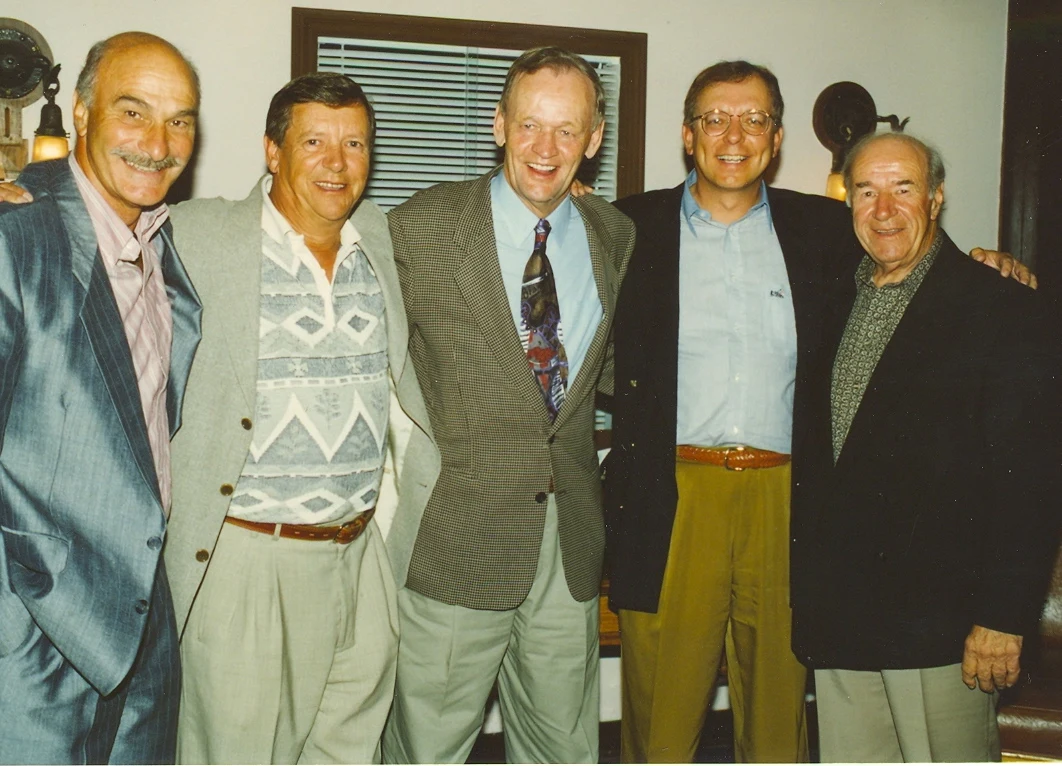
Commons API page 31712244 and revision 1173169537 confirm the exact filename, self-made credit and author release. The full picture contains five men; only Chrétien’s central position is used in the alt text.