
The short answer
On 1 July 1867, a British statute brought a new Canadian federation into operation. The agreement united three colonies as four provinces, divided legislative authority between federal and provincial governments, and left major questions of membership and power unresolved. This guide explains what changed, who negotiated it and why Confederation was neither the beginning of all Canadian history nor the completion of independence.
Avoid common confusions
What 1867 did — and did not — do
Separating the founding settlement from later expansion makes the chronology clearer.
| Country | What happened | What did not happen |
|---|---|---|
| Territory | Four provinces formed the initial federation. | Every present-day province did not join simultaneously. |
| Constitution | Federal and provincial powers were allocated. | Provincial governments were not abolished. |
| British connection | A dominion was created by British legislation. | All constitutional ties to Britain did not end. |
| Participation | Colonial politicians negotiated the settlement. | Indigenous nations were not equal negotiating participants. |
Chronology
A timeline of the turning points
Charlottetown
A meeting initially concerned with Maritime union becomes a discussion of a wider federation.
Québec
Delegates develop the 72 Resolutions as a constitutional blueprint.
London
Delegates and imperial officials turn the proposals into a bill for the British Parliament.
Royal assent
The British North America Act receives assent.
New federation
The act takes effect and the four founding provinces form the Dominion of Canada.
Later admissions
Other provinces enter through distinct processes, not through simultaneous membership in 1867.
Why colonial leaders considered a larger union
The Province of Canada faced recurring political difficulties, while leaders elsewhere weighed trade, public finance and defence. A wider union offered potential economic connections and a stronger collective position in British North America. These were negotiated political interests, not proof that all inhabitants shared one national objective.
Macdonald was important, but the process also required Cartier, George Brown, Maritime representatives and imperial decision-makers. Describing Confederation as one man’s invention obscures the bargains among communities and governments that made the settlement possible.
Three conferences turned a proposal into legislation
Charlottetown in September 1864 opened discussion of a larger union. The Québec Conference in October worked out institutional details, producing the 72 Resolutions. Disagreement persisted over representation, finance and the terms on which colonies might join.
Delegates from the Province of Canada, Nova Scotia and New Brunswick travelled to London in 1866. There they worked with imperial officials to translate the proposals into the British North America Act. It received royal assent on 29 March 1867 and took effect on 1 July. Negotiation and enactment were separate stages, not events all completed at Charlottetown.
Three colonies became four founding provinces
The original federation consisted of Ontario, Quebec, Nova Scotia and New Brunswick. The apparent arithmetic matters: the Province of Canada divided into Ontario and Quebec, while the other two colonies entered as provinces. Four provinces therefore did not mean four previously separate colonies joining on identical terms.
Prince Edward Island hosted the first conference but did not join until 1873. Newfoundland entered in 1949. Manitoba was created in 1870 and British Columbia joined in 1871. A modern map projected backward onto 1867 would erase the distinct legal and political processes through which the federation later expanded.
Federalism divided authority rather than merging all government
Section 91 assigned Parliament powers including trade and commerce, defence, banking and criminal law. Section 92 assigned provincial legislatures subjects including property and civil rights, municipalities and local institutions. Provincial governments were not simply administrative branches of the new federal government.
Education received its own provisions in section 93, including protections connected with denominational schools. The arrangement allowed a central state to coexist with provincial institutions, especially important to Quebec. These are the basic constitutional categories, not a substitute for later amendments, court decisions or advice about a present-day legal dispute.
The settlement excluded Indigenous peoples from negotiation
Indigenous peoples were not consulted as negotiating partners in the Confederation settlement. The Senate’s historical briefing emphasizes that exclusion. The constitutional text assigned federal authority over the people and reserve lands it described using the colonial category Indians; it did not recognize Indigenous nations as equal participants in the founding bargain.
Later expansion strengthened the Canadian state’s ability to administer settlement and assimilation. Macdonald’s policies and the residential-school system belong to that history, but they should not be collapsed into a claim that every later institution began on 1 July 1867. Exclusion from the settlement and the specific measures enacted afterward are related but distinct facts.
Confederation was not complete independence
The new dominion retained the Crown and a British constitutional connection. It did not acquire all the powers or borders of present-day Canada in a single ceremony. The very fact that the founding statute was enacted at Westminster distinguishes Confederation from a unilateral break with Britain.
Subsequent constitutional developments altered that relationship, including the Statute of Westminster in 1931 and patriation in 1982. Later debates over language, provincial autonomy and Indigenous rights demonstrate why Confederation is better understood as a consequential settlement with limits than as a final answer to who belonged or who could govern.
Continue the chronology
Related history guides
Biography context
Explore Canada through connected lives
Connected biographies
A negotiator within a wider constitutional settlement
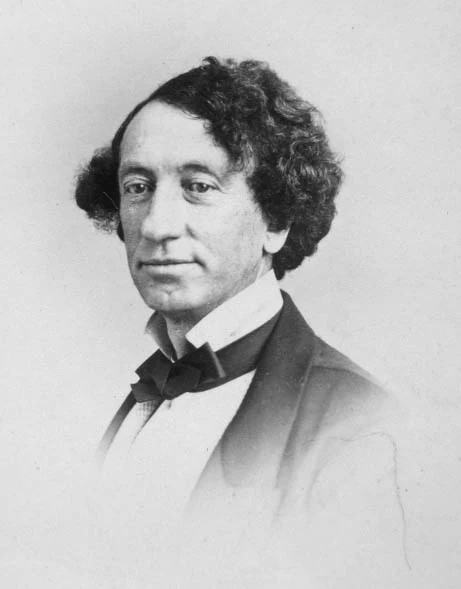
1815–1891
John A. Macdonald
Lawyer, Confederation negotiator and Canada’s first prime ministerJohn A. Macdonald helped negotiate the federation created in 1867 and served as Canada’s first prime minister in two periods. He built political alliances, promoted protective tariffs and backed a transcontinental railway. His government also imposed racial exclusion and coercive policies against Indigenous peoples, including the expansion of residential schools.Read biographyQuick answers
Common questions
- Which provinces joined Canada in 1867?
- Ontario, Quebec, Nova Scotia and New Brunswick were the four founding provinces. Ontario and Quebec were formed from the former Province of Canada.
- Did Prince Edward Island join at the Charlottetown Conference?
- No. The conference was held there in 1864, but Prince Edward Island did not enter Confederation until 1873.
- Was Confederation the same as full independence?
- No. Canada remained connected to Britain and the Crown, with further constitutional independence developing through later legislation and agreements.
- Were Indigenous peoples partners in the negotiations?
- They were not consulted as equal negotiating participants. Their exclusion is essential to understanding the limits of the colonial settlement.
Primary and institutional sources
How this history was checked
Institutional parliamentary history and the constitutional text establish the framework; Indigenous exclusion and later colonial policy are addressed separately. Consolidated law includes later amendments and is not reproduced as an unaltered 1867 facsimile. This article was reviewed on 31 August 2026.
- Parks CanadaCharlottetown and Québec Conferences of 1864: the route to London and Confederation
- House of Commons of CanadaCanadian Parliamentary Institutions: Confederation and subsequent provincial admissions
- Department of Justice CanadaConstitution Act, 1867, section 91: federal legislative powers
- Department of Justice CanadaConstitution Act, 1867, section 92: provincial legislative powers
- Department of Justice CanadaThe Constitution Acts, 1867 to 1982: consolidated text and historical notes
- Senate of CanadaIndigenous Issues in Canada: historical briefing on Confederation and exclusion
- Parks Canada / Historic Sites and Monuments Board of CanadaSir John A. Macdonald: revised reasons for designation and 2024 review
- National Centre for Truth and ReconciliationResidential School Timeline: earlier schools and the 1883 expansion
- William Notman / Wikimedia CommonsJohn A. Macdonald in 1863: complete supplied photograph, provenance and public-domain tags
- Hélène Samson / McCord Stewart MuseumNotman: A Visionary Photographer: identification of the Macdonald portrait, I-7952
- Creative CommonsPublic Domain Mark 1.0