
The short answer
Thailand’s 1996 election produced a near tie: New Aspiration won 125 seats and the Democrats 123. Chavalit Yongchaiyudh assembled the larger coalition and became prime minister, inheriting an economy whose hidden financial vulnerabilities would become the Asian crisis within eight months.
Election results
The leading parties in the 1996 House
The two leading parties were almost tied, while Chart Thai suffered a decisive defeat.
| Political party | Seats | Change | Government position |
|---|---|---|---|
| New Aspiration Party | 125 | +68 | Governing coalition |
| Democrat Party | 123 | +37 | Opposition |
| Chart Pattana Party | 52 | −1 | Governing coalition |
| Chart Thai Party | 39 | −53 | Opposition |
| Social Action Party | 20 | −2 | Governing coalition |
Chronology
A timeline of the turning points
Banharn forms a seven-party government
Chart Thai led a 233-seat coalition after finishing first in the 1995 election.
Economic and coalition pressures intensify
Growth slowed while finance-company weakness and accusations against the government gained attention.
The government faces censure
Opposition allegations concerned corruption, appointments and financial-sector management.
Banharn dissolves the House
Coalition allies supported him in the vote but demanded his departure afterward.
Thirteen parties contest 393 seats
Economic management and anti-corruption claims dominated a costly seven-week campaign.
New Aspiration narrowly finishes first
Chavalit’s party won 125 seats, only two more than Chuan’s Democrats.
Chavalit becomes prime minister
A six-party alliance backed by more than 220 MPs formed the new government.
The coalition cabinet is appointed
Former military commander Chavalit took office as an elected party leader.
Thailand floats the baht
Reserve pressure forced abandonment of the exchange-rate peg and deepened financial distress.
Chavalit leaves office
The prime minister resigned as recession, closures and currency depreciation intensified.
Why did Banharn call the 1996 election?
Banharn Silpa-archa’s seven-party coalition faced persistent opposition allegations of corruption and mismanagement. In September 1996, a contentious censure debate tested the government. Coalition allies, particularly New Aspiration and Nam Thai, supported Banharn in the vote only after securing an agreement that he would step aside.
Rather than transfer leadership within the existing House, Banharn dissolved parliament on 27 September. The election came less than fifteen months after the previous vote, making it the fourth national contest since March 1992 and another demonstration of fragile coalition tenure.
What issues shaped the campaign?
Thirteen parties and 2,310 candidates—including 360 women—competed for 393 seats. The IPU described the seven-week campaign as lively and costly, with recurring accusations of vote buying. The country’s economic slowdown moved financial management to the centre of the contest after years of rapid growth.
Chavalit Yongchaiyudh’s New Aspiration Party and Chuan Leekpai’s Democrats ran nearly level in pre-election polling. Chavalit offered a broad provincial network and experience in government; the Democrats emphasised reform and anti-corruption, performing especially strongly in Bangkok.
What were the 1996 election results?
New Aspiration won 125 seats, an increase of 68, while the Democrats rose to 123. Chart Pattana took 52. Chart Thai suffered the largest collapse, falling from 92 seats to 39 after its year in government. No party won a majority, and only two seats separated the leading contenders.
Approximately 38 million people were registered and turnout was 62.4 per cent. The IPU counted twenty-two women among 393 MPs. The near tie did not automatically determine the government; the result gave both Chavalit and Chuan a plausible claim dependent on coalition partners.
How did Chavalit assemble a coalition?
New Aspiration joined Chart Pattana, Social Action, Prachakorn Thai, Seritham and Muan Chon. These parties controlled more than 220 seats, above the 197 required for a majority. Chart Thai stayed outside the new alliance despite having governed with most of the same partners.
King Bhumibol appointed Chavalit prime minister on 25 November, and the cabinet was named four days later. His path differed from Suchinda’s in 1992: Chavalit was a retired commander, but he had built a party, contested the election and entered office as leader of the largest elected bloc.
What did the result say about Thai parties?
The election demonstrated rapid shifts in party fortunes. New Aspiration gained sixty-eight seats and Chart Thai lost fifty-three in a single cycle. MPs and factions could change alignment, and regional organisations mattered more than stable nationwide party loyalty. Coalition composition remained only partly visible to voters before polling day.
These patterns were among the problems the constitutional reform process sought to address. Single-member constituencies, a national party-list tier, stronger party membership rules and a more difficult no-confidence procedure were designed to create more coherent parties and longer-lived governments.
Was the financial crisis already visible?
The full Asian financial crisis had not begun, but warning signs were present: slowing exports, a property downturn, fragile finance companies, large short-term foreign borrowing and pressure on the fixed exchange rate. Campaign discussion therefore focused heavily on restoring economic momentum.
Responsibility cannot be assigned to a single election or cabinet. Vulnerabilities accumulated during the boom across successive governments, while regulators, lenders and firms all shaped risk. The 1996 result nevertheless placed Chavalit’s coalition in office at the moment those weaknesses became an open currency and banking crisis.
How did the election connect to the 1997 Constitution?
The Constitution Drafting Assembly was established after the election, bringing together one representative from each province and twenty-three qualified members. Anand Panyarachun chaired the drafting committee. Public hearings helped frame a charter aimed at rights, accountability, electoral reform and executive stability.
Parliament approved the constitution during the economic crisis and it was promulgated on 11 October 1997. Less than a month later, Chavalit resigned and Chuan assembled a new coalition. The 1996 House therefore both created the last government under the old electoral system and enacted the rules meant to replace it.
Continue the chronology
Related history guides
The 1995 Thai General Election
Begin with Banharn’s victory and the coalition whose breakdown caused this poll.
Read the timeline11 October 1997The 1997 Constitution of Thailand
Read the reform enacted by the parliament chosen in this election.
Read the timeline1997–1998Thailand and the Asian Financial Crisis
Continue to the baht float, IMF programme and government change.
Read the timeline24 March 2019The 2019 Thai General Election
Compare another election in which constitutional design shaped coalition formation.
Read the timeline1932–presentPrime Ministers of Thailand
Compare Chavalit’s elected coalition with other routes to office.
Read the timelineConnected biographies
Six biographies connecting the near-tie election, constitutional drafting and financial crisis
 Thailand · Politics
1932—
Chavalit Yongchaiyudh
Retired general and former prime ministerA former army commander who entered electoral politics, formed the New Aspiration Party and served as prime minister as the baht crisis became a regional financial shock.Read biography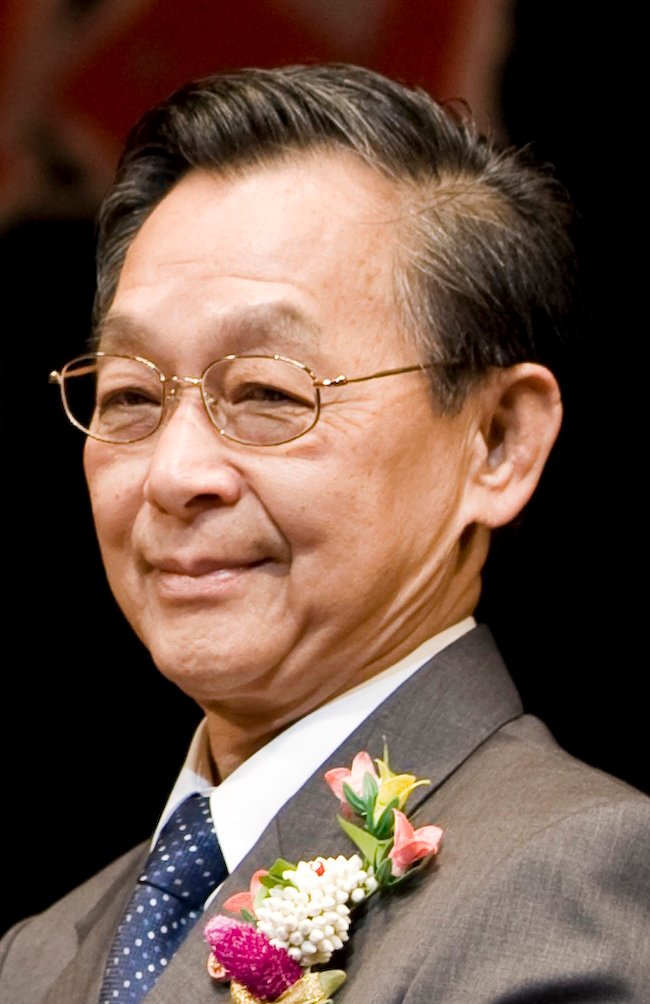 Thailand · Politics
1938—
Chuan Leekpai
20th Prime Minister of Thailand, 1992–1995 and 1997–2001The lawyer and veteran parliamentarian who led Thailand after the 1992 democratic transition and returned during the Asian financial crisis.Read biography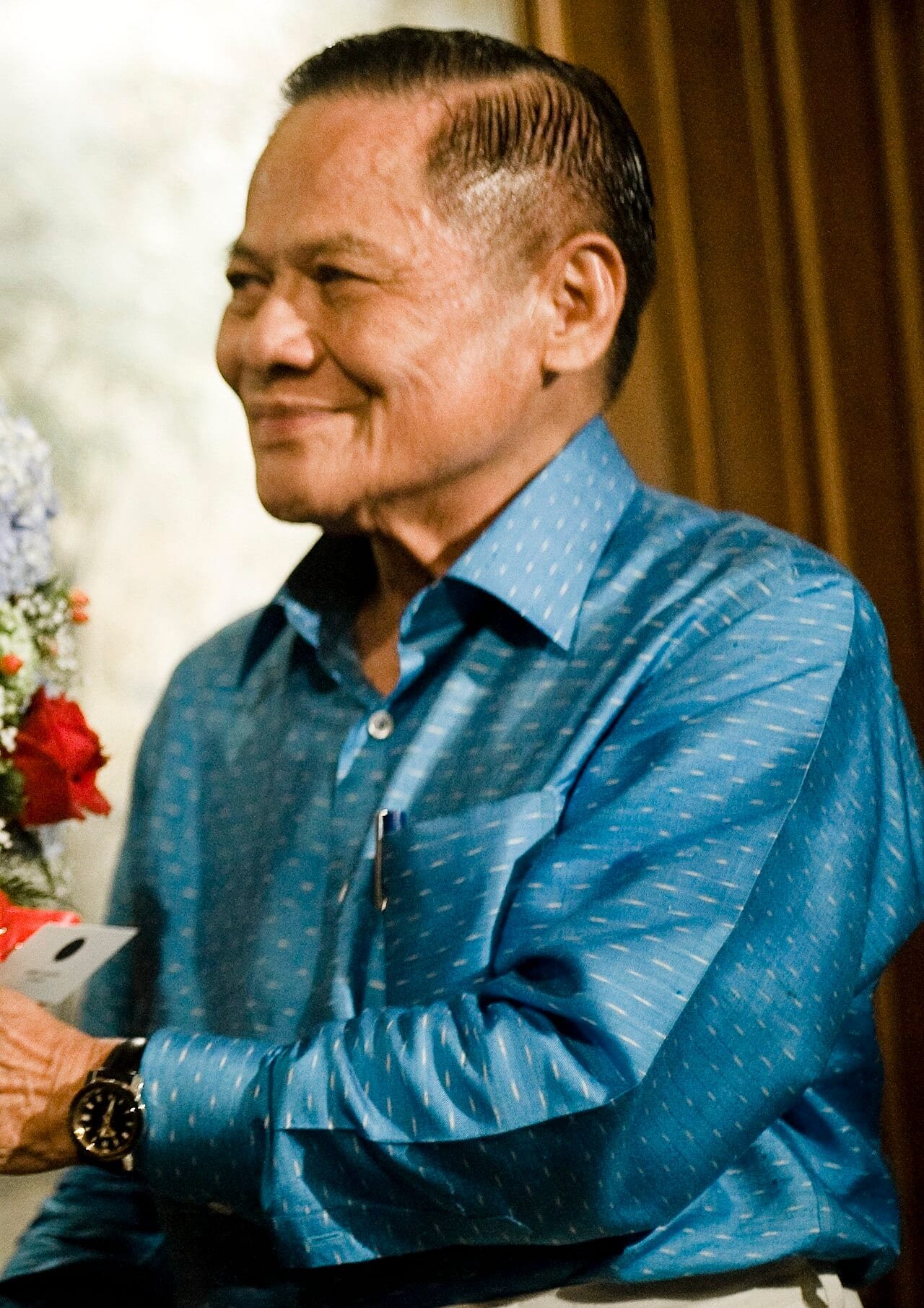 Thailand · Politics
1932—2016
Banharn Silpa-archa
21st Prime Minister of Thailand, 1995–1996The construction entrepreneur and Suphan Buri power broker who led Chart Thai to first place in 1995 and headed a seven-party coalition for sixteen turbulent months.Read biography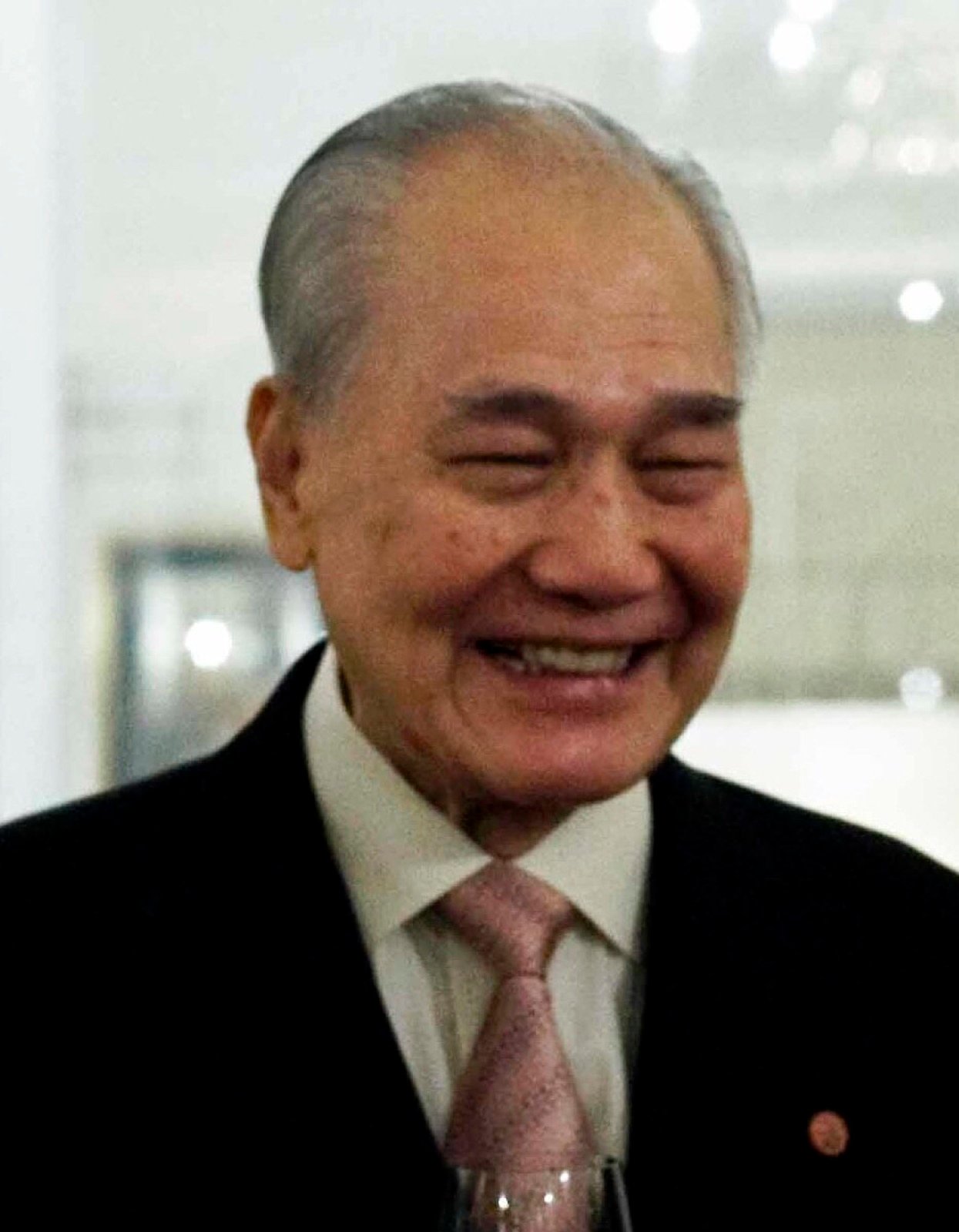 Thailand · Politics
1932—
Anand Panyarachun
Diplomat, business executive and former prime ministerA career diplomat and business leader who headed two appointed governments in 1991 and 1992 and later chaired major national and United Nations reform work.Read biography Thailand · Politics
1927—2016
Bhumibol Adulyadej
King of Thailand, 1946–2016Thailand’s longest-reigning monarch, whose seven decades on the throne spanned rapid development, repeated political crises and profound social change.Read biography Thailand · Politics
1949—
Thaksin Shinawatra
Businessman and former prime ministerA telecommunications entrepreneur who became prime minister in 2001, transformed Thai electoral politics and remained influential through two decades of conflict.Read biographyQuick answers
Common questions
- When was the 1996 Thai general election?
- It was held on 17 November 1996 after Banharn Silpa-archa dissolved the House on 27 September.
- Which party won the most seats?
- Chavalit Yongchaiyudh’s New Aspiration Party won 125 of 393 seats, two more than the Democrat Party.
- What was voter turnout?
- The Inter-Parliamentary Union recorded turnout of 62.4 per cent from approximately 38 million registered electors.
- How many seats did Chart Thai lose?
- It fell from 92 seats in 1995 to 39 in 1996, a loss of 53.
- Who became prime minister?
- New Aspiration leader Chavalit Yongchaiyudh became prime minister on 25 November 1996.
- Did the election cause the Asian financial crisis?
- No. The crisis reflected vulnerabilities accumulated across the boom years, but the elected Chavalit government was responsible for policy when the baht peg failed in July 1997.
Primary and institutional sources
How this history was checked
Dates, legal milestones and historical claims are checked against the official and institutional records below. This article was reviewed on 3 October 2026.
- Inter-Parliamentary UnionThailand parliamentary election, 17 November 1996
- Bank of ThailandThe Tom Yum Kung crisis: lessons from 1997
- International Monetary FundRecovery from the Asian Crisis and the Role of the IMF
- ConstitutionNet · International IDEAConstitutional history of Thailand
- International IDEAElectoral System Design: The New International IDEA Handbook
- Secretariat of the Prime Minister of ThailandOfficial directory of prime ministers of Thailand
- Wikimedia CommonsChavalit Yongchaiyudh portrait and CC BY-SA 4.0 licence record