The short answer
Thailand’s 1988 election gave Chart Thai the largest bloc in a fragmented 357-seat House. The decisive change came three days later, when Prem Tinsulanonda declined another term. Chatichai Choonhavan became the first elected MP in twelve years to head government and redirected policy toward turning Indochina’s battlefields into marketplaces.
Election results
The leading parties in the 1988 House
Chart Thai moved into first place while the governing Democrats lost more than half their seats.
| Political party | Seats | Vote share | Change from 1986 |
|---|---|---|---|
| Chart Thai Party | 87 | 24.4% | +24 |
| Social Action Party | 54 | 15.1% | +3 |
| Democrat Party | 48 | 13.4% | −52 |
| United Thai Party | 35 | 9.8% | +16 |
| Prachakorn Thai Party | 31 | 8.7% | +7 |
Chronology
A timeline of the turning points
Prem begins another four-party government
The unelected premier returned with Democrat, Chart Thai, Social Action and Rassadorn support.
The opposition files a no-confidence motion
Debate was scheduled for May as the governing Democrats struggled with internal division.
Prem dissolves the House
A dispute inside the Democrat Party over a copyright bill broke the coalition’s largest component.
Voters elect an enlarged 357-seat House
A record 63.56 per cent turnout chose among 3,606 candidates and sixteen parties.
Chart Thai becomes the largest party
Chatichai’s party won 87 seats, ahead of Social Action on 54 and the Democrats on 48.
Prem declines another premiership
Major party leaders invited him to continue, but he decided that eight years in office were enough.
Chatichai becomes prime minister
The Chart Thai leader became the first elected MP in twelve years to head Thailand’s government.
A 220-seat coalition cabinet is appointed
Chart Thai governed with former allies and additional parties in a politician-led administration.
“Battlefields into marketplaces” reframes the region
Chatichai promoted trade and economic engagement with Indochina as Cold War conflicts receded.
The military removes Chatichai
The NPKC ended the elected government amid corruption allegations and disputes over military authority.
Why did Prem dissolve the House in 1988?
Opposition parties filed a no-confidence motion in April, while the Democrat Party—the largest component of Prem’s coalition—split over a copyright bill and cabinet positions. Sixteen Democrat ministers offered their resignations so the premier could reorganise the government.
Instead, Prem recommended dissolution on 29 April with more than two years remaining in the House term. The 24 July election would decide party strength, but the constitution still allowed the new coalition to invite a prime minister from outside parliament.
How was the election conducted?
All 357 House seats were contested, ten more than in 1986. The IPU recorded 3,606 candidates, including 366 women, representing sixteen parties. The newly formed Palang Dharma Party under Bangkok governor Chamlong Srimuang fielded the largest candidate slate.
Thailand used multi-member provincial constituencies and block voting. The campaign pitted Prem’s coalition partners against anti-Prem groups, but parties remained internally factional and locally organised. The contest therefore determined bargaining strength more clearly than a single national government programme.
What were the principal results?
Chart Thai won 87 seats and replaced the divided Democrats as the largest party. Social Action took 54, the Democrats 48, United Thai 35 and Prachakorn Thai 31. Rassadorn won 21, while new parties including Palang Dharma entered the House.
No party approached the 179 seats needed for a majority. Chart Thai’s result nevertheless gave Chatichai Choonhavan the strongest claim among elected party leaders, particularly after Prem declined the cross-party invitation to remain in office.
How many people voted?
The IPU recorded 26,658,637 registered electors and 16,944,931 voters, a turnout of 63.56 per cent. There were 16,350,143 valid votes and 594,788 blank or invalid ballots. It was the highest turnout in the 1979–1988 parliamentary sequence.
High participation did not give one party a majority, but it strengthened the legitimacy of a transition toward leadership by an elected representative. The result also demonstrated that competitive elections had become a recurring institution rather than a one-time concession after military rule.
Why did Prem step aside?
Leaders of the principal parties initially agreed to ask Prem to continue. He had governed since March 1980 without belonging to a party or contesting a House seat. On 27 July he declined, saying that eight years and five months were enough.
The decision mattered because the 1978 Constitution did not force him to leave. Prem voluntarily ended the defining bargain of his era and later joined the Privy Council. His withdrawal allowed the largest party’s elected leader to form government without a coup or constitutional replacement.
What changed when Chatichai became prime minister?
Chatichai became prime minister on 4 August and appointed a coalition cabinet on 9 August. He was a retired general, diplomat and son of a 1947 coup leader, but his immediate mandate came from election as an MP and leadership of the largest parliamentary party. He was the first elected representative to head government since Seni Pramoj in 1976.
Authority shifted toward party politicians and provincial business networks. That transition was genuine but incomplete: the military retained autonomous command interests, the Senate remained appointed and the coalition’s distribution of ministries generated persistent corruption allegations.
What did “battlefields into marketplaces” mean?
Chatichai’s government promoted economic engagement with Vietnam, Laos and Cambodia as regional conflict began to recede. The phrase described a move from security confrontation toward trade, investment, infrastructure and diplomatic normalisation in mainland Southeast Asia.
Thailand’s Ministry of Foreign Affairs study shows that the policy was not uncontested. Advisers around the prime minister, the foreign ministry and security agencies differed over timing and authority. It was therefore both a regional vision and a domestic struggle over who made foreign policy.
Why did the elected transition end in a coup?
The government presided over extremely rapid economic growth, but ministers were accused of using office for factional and private gain. Chatichai also asserted greater civilian influence over defence budgets, command appointments and policy toward Indochina, bringing the cabinet into conflict with Class 5 military leaders.
On 23 February 1991, the National Peace Keeping Council detained Chatichai and repealed the constitution. The coup does not erase the significance of 1988: it reveals both how far parliamentary authority had advanced and how little institutional protection it possessed when senior commanders united against it.
Continue the chronology
Related history guides
The 1986 Thai General Election
Begin with the coalition that returned Prem for his final government.
Read the timeline9 September 1985The 1985 Thai Coup Attempt
Trace the military realignment that shaped the last years of Prem’s premiership.
Read the timeline23 February 1991The 1991 Thai Coup
Continue to the intervention that removed Chatichai’s elected coalition.
Read the timeline17–20 May 1992Black May 1992
Follow the post-coup succession crisis and mass demand for an elected premier.
Read the timeline1932–presentPrime Ministers of Thailand
Compare the Prem–Chatichai transfer with every route to Thailand’s premiership.
Read the timelineConnected biographies
Six biographies connecting the election, end of Premocracy, party government and military aftermath
 Thailand · Politics
1920—1998
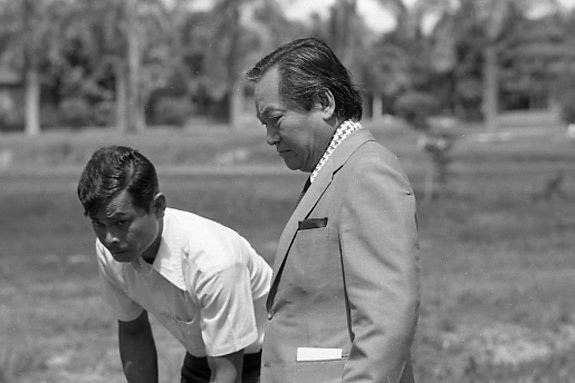
Chatichai Choonhavan
Diplomat, party leader and former prime ministerThe elected prime minister who accelerated economic diplomacy with Indochina and led a booming coalition government until the military removed it in February 1991.Read biography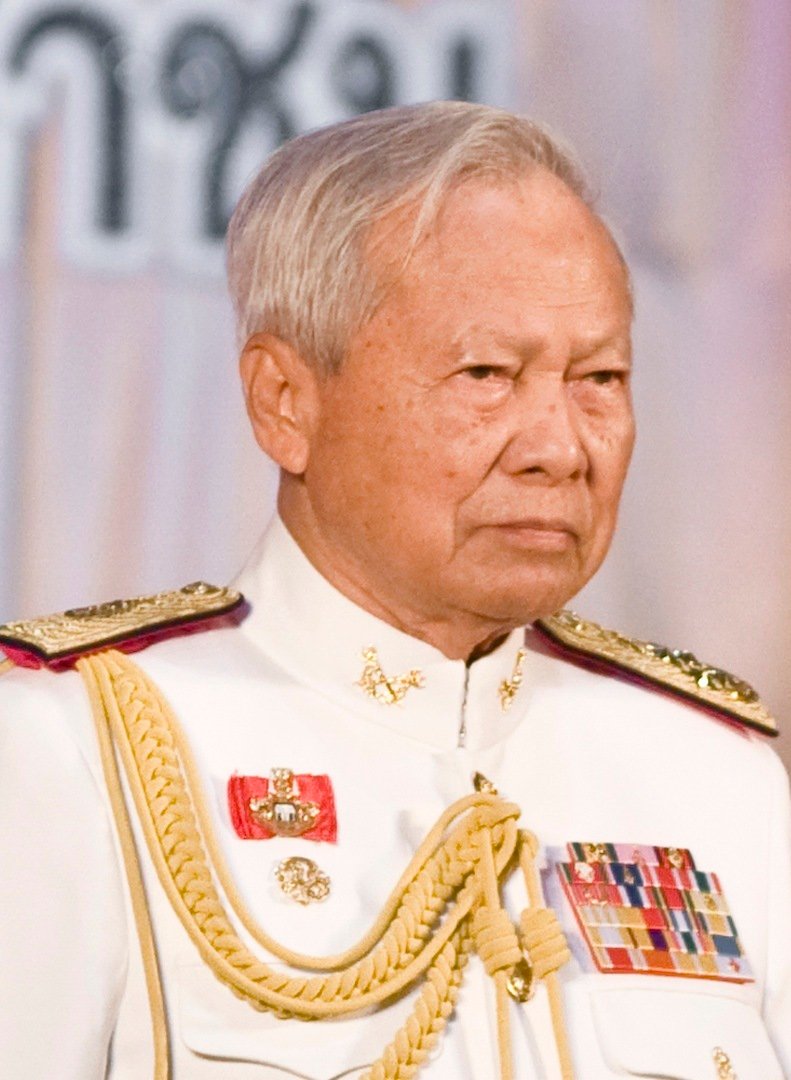 Thailand · Politics
1920—2019
Prem Tinsulanonda
16th Prime Minister of Thailand, 1980–1988The army commander who led Thailand through eight years of parliamentary coalition government before becoming a long-serving royal adviser and regent.Read biography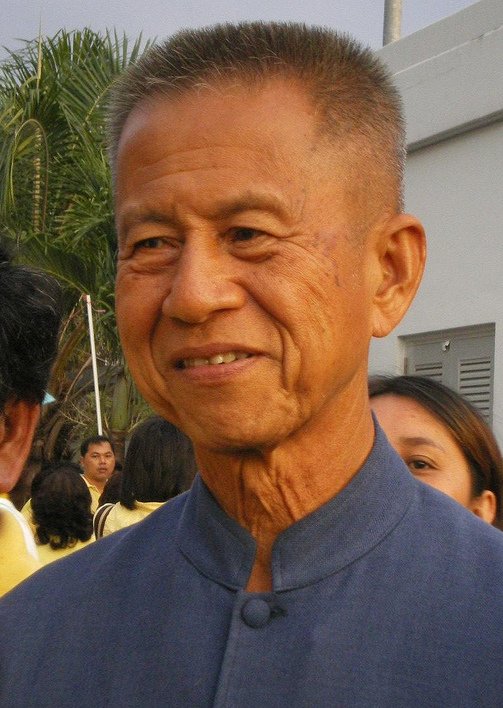 Thailand · Politics
1935—
Chamlong Srimuang
Former Bangkok governor, party leader and democracy activistThe former general and Bangkok governor whose austere public-service image, Palang Dharma movement and Black May leadership made him a major democratic campaigner.Read biography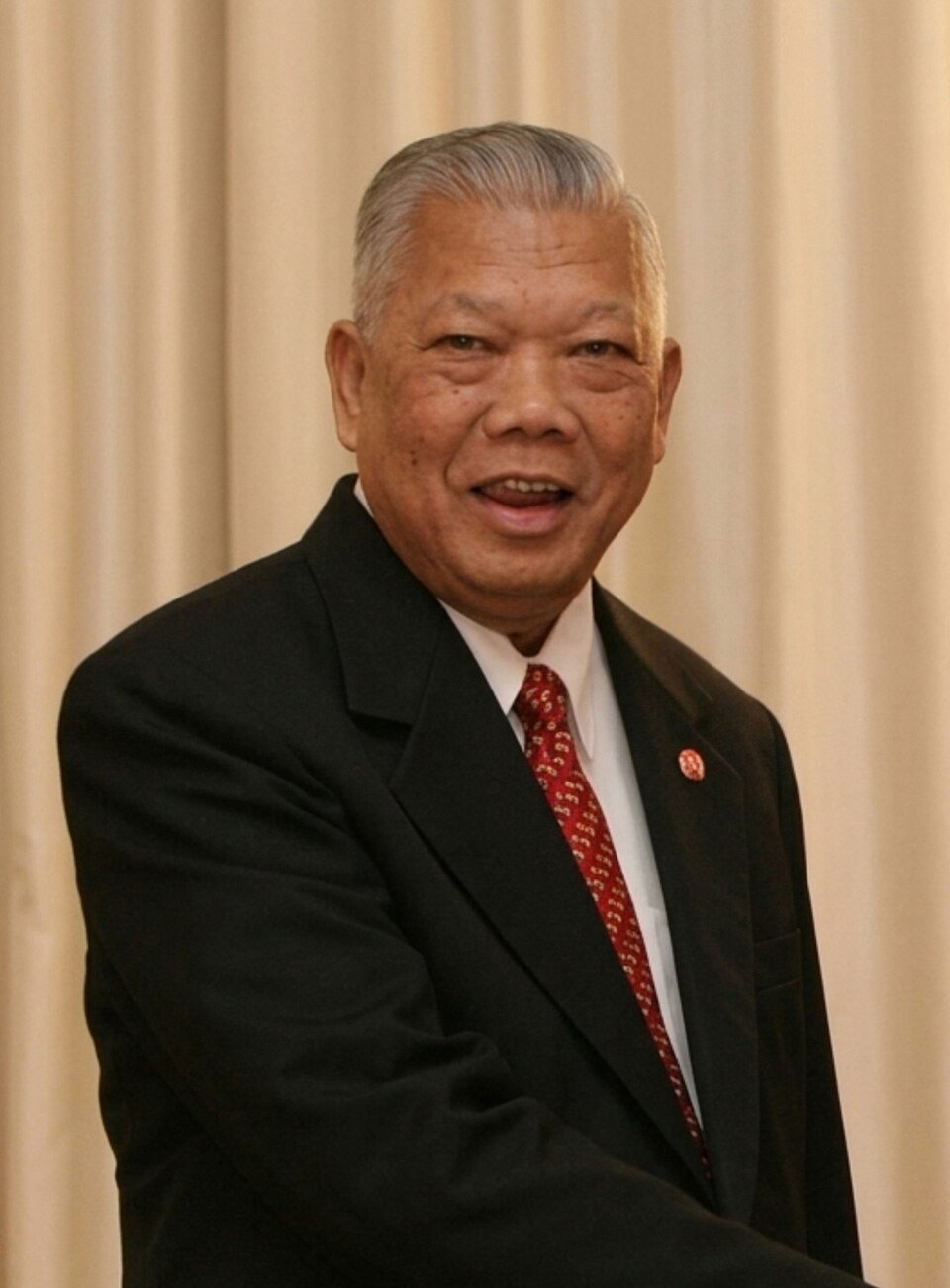 Thailand · Politics
1935—2009
Samak Sundaravej
25th Prime Minister of Thailand, January–September 2008The combative veteran politician, Bangkok governor and television cook who led the first elected government after the 2006 coup before a court ended his premiership.Read biography Thailand · Politics
1932—
Chavalit Yongchaiyudh
Retired general and former prime ministerA former army commander who entered electoral politics, formed the New Aspiration Party and served as prime minister as the baht crisis became a regional financial shock.Read biography Thailand · Politics
1927—2016
Bhumibol Adulyadej
King of Thailand, 1946–2016Thailand’s longest-reigning monarch, whose seven decades on the throne spanned rapid development, repeated political crises and profound social change.Read biographyQuick answers
Common questions
- When was the 1988 Thai general election?
- It was held on 24 July 1988 after the House was dissolved on 29 April.
- Which party won the most seats?
- Chatichai Choonhavan’s Chart Thai Party won 87 of 357 seats, the largest bloc but not a majority.
- What was voter turnout?
- The IPU recorded 16,944,931 voters and turnout of 63.56 per cent.
- Why did Prem Tinsulanonda not remain prime minister?
- Although major parties invited him to continue, Prem declined after more than eight years in office.
- Who became prime minister after the election?
- Chart Thai leader Chatichai Choonhavan became prime minister on 4 August 1988.
- Why was Chatichai’s appointment historically important?
- He was the first elected member of parliament since 1976 to become prime minister, ending the non-party premiership of the Prem era.
Primary and institutional sources
How this history was checked
Dates, legal milestones and historical claims are checked against the official and institutional records below. This article was reviewed on 3 October 2026.
- Inter-Parliamentary UnionThailand parliamentary election, 24 July 1988
- International Studies Center, Ministry of Foreign AffairsBattlefield to Marketplace: Responses to Thailand’s Major Foreign Policy Change
- World BankThailand’s political economy and the Chatichai government
- University of Leeds Thai PoliticsLessons of the 23 February 1991 coup
- Southeast Asian Studies, Kyoto UniversityCoups in Thailand, 1980–1991: Classmates and military factions
- Chulalongkorn UniversityFormation of General Chatichai Choonhavan’s coalition government
- Secretariat of the Prime Minister of ThailandOfficial directory of prime ministers of Thailand
- Wikimedia CommonsChatichai Choonhavan photograph and CC BY 2.0 licence record