In this biography
Quick facts
- Born
- 2 July 1903
- Died
- 9 October 1995
- Birthplace
- Mayfair, London, England
- Country
- United Kingdom
- Nationality
- Not independently established
- Known for
- An aristocratic politician who disclaimed his hereditary peerage and returned to the Commons while prime minister.
- Prime minister
- 1963–1964
- Foreign secretary
- 1960–1963 and 1970–1974
- Peerage disclaimer
- 23 October 1963
- Commons return
- Kinross and West Perthshire, 7 November 1963
Why this life matters
His career reveals how appointment, membership of Parliament, party leadership and inherited status could follow different institutional routes.
Timeline
Key moments
Born in London
Born in Mayfair on 2 July 1903.
Entered Parliament
Elected for Lanark as a Scottish Unionist.
Inherited peerage
Became 14th Earl of Home and moved to the Lords.
Foreign secretary
Began the first of two periods in the office.
Prime minister and Commons return
Disclaimed his peerage and won Kinross and West Perthshire.
Foreign secretary again
Served in Edward Heath’s government.
Death
Died on 9 October 1995.
An aristocratic background and an elected career
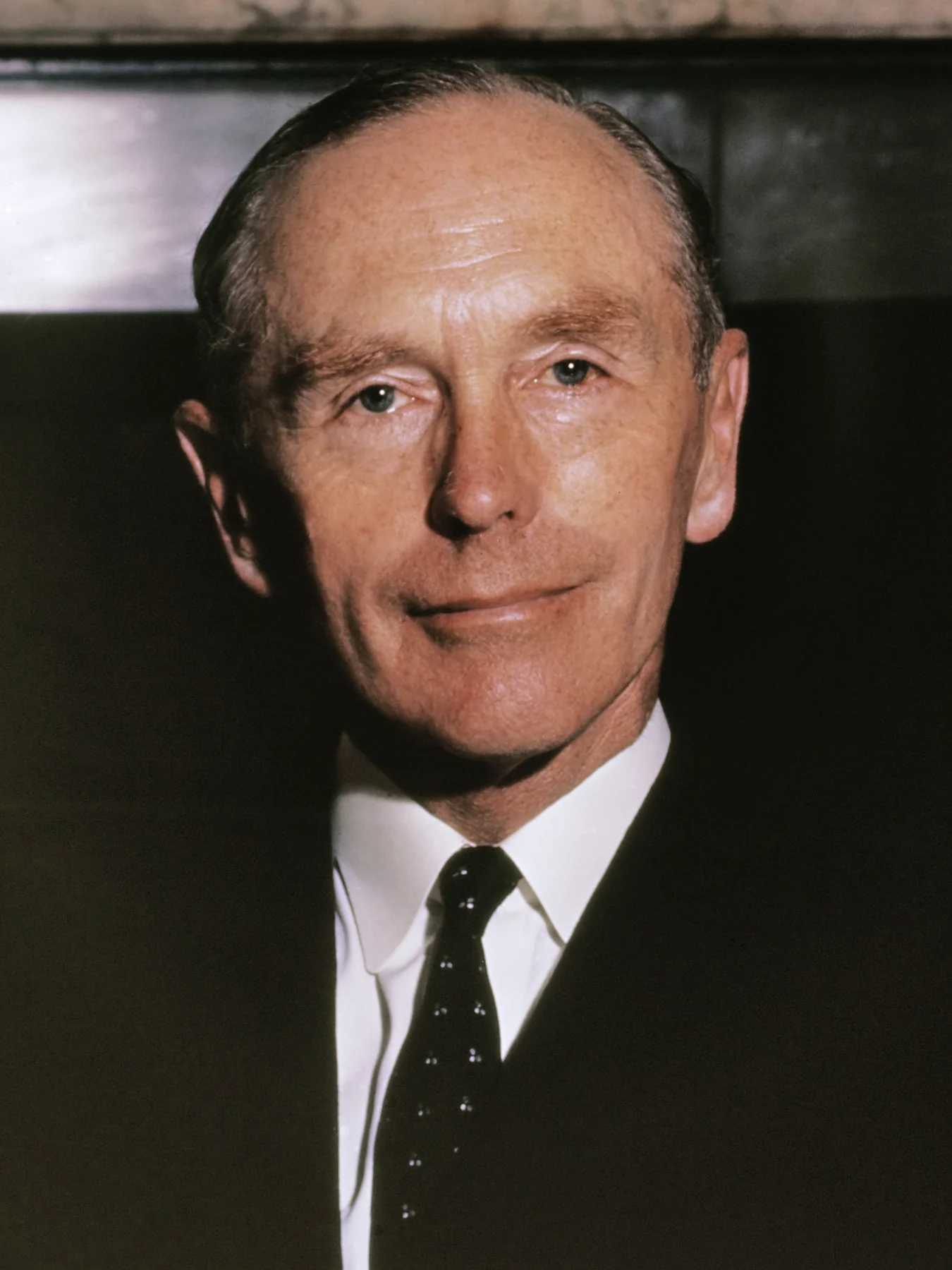
Alec Douglas-Home was born on 2 July 1903 in Mayfair, London, into a family associated with the Scottish aristocracy. He attended Eton and Oxford, studied modern history and played first-class cricket. His later description as a Scottish political figure should not be mistaken for a Scottish birthplace.
He entered Parliament for Lanark in 1931 as a Scottish Unionist. The official biography and John Major’s 1995 Commons tribute place his early public service within both privileged family circumstances and elected representation. Major’s emphasis on obligation and modesty is a memorial assessment, not a neutral measurement of his political achievement.
Chamberlain, illness and a change of chamber
Douglas-Home served as parliamentary private secretary to Neville Chamberlain and accompanied him to Munich in 1938. That role placed him near a major diplomatic decision without making him its principal negotiator. During the war, serious spinal illness prevented the active service he had hoped to undertake.
He lost his Commons seat in 1945 and returned in 1950. In 1951, the death of his father made him 14th Earl of Home and transferred his parliamentary career to the Lords. Subsequent offices included Commonwealth relations and leadership of the House of Lords. He became foreign secretary in 1960, during Harold Macmillan’s premiership.
The 1963 premiership and disclaimer
When Macmillan resigned in 1963, Douglas-Home emerged as his successor. The leadership selection was controversial, but later claims about private manoeuvring should not be treated as findings established by the short official biography. What can be traced more firmly is the sequence connecting his new office with a change in parliamentary status.
He disclaimed his hereditary peerage on 23 October 1963 under the new Peerage Act. On 7 November he won the Kinross and West Perthshire by-election. The official account notes that between those events he belonged to neither House while remaining prime minister. Appointment to government and election to a Commons constituency were therefore separate events.
Section 3 of the Act made a disclaimer operate prospectively from delivery and preserved the peerage’s later devolution. It did not abolish the title for descendants. His case also differed from Tony Benn’s earlier exclusion: Douglas-Home used the new statutory route after becoming prime minister, rather than having an old electoral result automatically revived.
A short government and a further ministerial term
Douglas-Home’s government lasted into the October 1964 election. One substantial domestic measure identified in the official biography was the abolition of resale price maintenance, a reform advanced by Edward Heath at the Board of Trade. Crediting the prime minister’s support should therefore leave the responsible minister and parliamentary process visible.
Harold Wilson’s Labour Party won the election with a narrow majority. Douglas-Home later returned as foreign secretary throughout Heath’s 1970–1974 government. A biography ending with his electoral defeat would miss that second period of senior diplomatic service.
Sources for this section: [1]
Reading reputation alongside institutional evidence
Douglas-Home died on 9 October 1995. Commons tributes praised his personal integrity, humour and commitment to public duty. Such testimony explains why colleagues remembered him warmly; it cannot by itself settle disputed judgments about the Munich settlement, decolonisation or the success of his premiership.
His career is especially valuable for distinguishing status from function. He served in both parliamentary chambers, disclaimed hereditary rank, returned through an election and held major office under another prime minister. The sequence shows adaptation within existing institutions rather than a simple rejection of aristocratic politics.
Quick answers
Frequently asked questions about Alec Douglas-Home
- Was Alec Douglas-Home born in Scotland?
- The official biography gives Mayfair, London, as his birthplace.
- Did disclaiming his peerage elect him to the Commons?
- No. He disclaimed on 23 October 1963 and won a constituency election on 7 November.
Keep exploring
Lives connected to this story
- Harold Macmillan
Douglas-Home was foreign secretary under Macmillan before succeeding him.
- Edward Heath
Heath was a minister under Douglas-Home and later appointed him foreign secretary.
- Tony Benn
Both used the 1963 disclaimer legislation in different political circumstances.
Sources and further reading
Explore the evidence
These references support the biography and offer further reading. Official records, first-person accounts and independent reporting provide different perspectives; image records document attribution and licensing.
- 1. UK GovernmentPast Prime Ministers: Alec Douglas-Home
Complete short official biography and birth/death fields read from saved HTML; leadership-selection speculation is not adopted as established fact.
- 2. UK Parliament, HansardLord Home: Commons tributes, 16 October 1995
Saved Hansard: John Major’s opening tribute, columns 19–22, read for early parliamentary service, illness, return and ministerial progression. Other speeches not used as independently established chronology.
- 3. The National Archives, legislation.gov.ukPeerage Act 1963, original enacted text, chapter 48
All 8 PDF pages extracted and read, with focus on sections 1–6 and Schedule 1. Original enactment, not a representation of current Lords law.